When Two Judges Can Move Thousands of Dogs—but Five Judges Won’t Move on Marriage Equality

India just witnessed something extraordinary: a two-judge bench of the Supreme Court ordered Delhi–NCR to round up every stray dog and move them into shelters within eight weeks, warning of contempt for anyone who resists. The order, passed on 11 August 2025, explicitly rubbishes the government’s own Animal Birth Control (ABC) Rules, 2023—which require sterilise-vaccinate-return (SVR) and bar relocation. Meanwhile, on the fundamental question of marriage equality, a five-judge Constitution Bench in Supriyo v. Union of India (17 Oct 2023) declined to recognise same-sex marriage, saying Parliament must act. The contrast is stark—and troubling.       

The duplicity problem

• On stray dogs (2025): Multiple outlets report the Supreme Court directed MCD/NDMC/Noida/Gurugram/Ghaziabad to remove all street dogs to shelters and never release them back—contrary to ABC 2023’s core SVR principle. Reports also quote the bench calling the “sterilise and return” rule “absurd”, and warning NGOs not to obstruct. Subsequent coverage shows the CJI indicating the Court “will look into” conflicts with earlier SC positions that barred killing/relocation.     

• On marriage equality (2023): A five-judge bench held that recognising same-sex marriage under the Special Marriage Act is for Parliament, not the Court. The Court acknowledged discrimination against LGBTQ+ people but refused to read queer couples into the SMA, instead suggesting a government committee to consider limited benefits.    

If a two-judge bench can, in effect, override a central rule and upend the ABC policy nationwide (de facto, via a Delhi–NCR precedent), why was a five-judge bench unwilling to interpret the SMA to uphold equal citizenship? The institutional posture flips: muscular, near-legislative urgency for dogs; judicial restraint for queer families.

Why the dog order is legally and practically dangerous

• Conflicts with law & policy: The ABC Rules, 2023 (notified under the Prevention of Cruelty to Animals Act) codify sterilisation, vaccination, and return to the same locality. They also provide for designated feeding points and humane management. The SC’s relocation directive collides with this framework.   

• Unworkable on the ground: Delhi–NCR lacks the shelter infrastructure to permanently house tens of thousands of dogs. Civic bodies and activists warn of overcrowding, disease, and cruelty if mass detention is attempted. Even cities outside NCR are saying they simply cannot emulate this model.   

• Counterproductive for public health: ABC’s SVR model is designed to reduce bites and rabies by stabilising territorial packs and maintaining vaccination coverage. Forced removals often trigger ecological gaps, influx of unvaccinated dogs, and more conflict.  

Given these risks, the Court’s willingness to make a sweeping, arguably suo motu-style intervention (as several reports characterise it) feels less like adjudication and more like policy-making.  

Meanwhile, queer couples are told to wait for Parliament

In Supriyo, the Court affirmed dignity and non-discrimination but declined to provide a workable remedy through interpretation—despite doing exactly that in many rights cases. It was content to ask the executive to study “benefits” while keeping the door shut on equal marriage and adoption. For LGBTQ+ Indians, the message is: your equality is a legislative grace, not a judicial guarantee.  

Is this about politics?

I worry this sudden, headline-grabbing “law-and-order” posture on dogs is a political distraction at a time when allegations about election integrity are flaring. Rahul Gandhi and the Congress have launched campaigns on “vote theft,” citing manipulation across dozens of constituencies and fake voters—charges that, if true, strike at the heart of democracy. These remain allegations, and must be investigated transparently; but the timing is conspicuous.   

What the record shows (for readers who want the receipts)

• Stray dog order (Aug 11, 2025): Reuters, Indian Express, DD News and others report the Court directed capture and relocation to shelters within eight weeks; follow-ups note possible review because of conflicting past orders.     

• ABC Rules, 2023 (Mar 10, 2023): Government-notified rules mandate sterilise-vaccinate-return, designated feeding areas, and humane management by local bodies/AWOs.   

• Marriage equality (Oct 17, 2023): Five-judge bench in Supriyo declines to recognise same-sex marriage; says Parliament must decide; suggests an executive committee for limited rights. Official judgment and reputable summaries available.   

• Election integrity claims (Aug 2025): Rahul Gandhi alleges “vote-chori” in 48 seats, protests announced; these are currently claims by the opposition, not findings by a court or inquiry.   

My stance

When courts flex power to reorder city life overnight—but plead restraint on core constitutional equality—the result feels like duplicity. Stray dogs are not pawns in a political game; they are sentient beings protected under our laws. Delhi–NCR should implement ABC 2023 rigorously—high-coverage sterilisation, mass anti-rabies vaccination, monitored feeding points, quick response to aggression—rather than unlawful, unscientific mass detention. And LGBTQ+ Indians deserve more than dignity in theory; they deserve equality in fact.

If we can uproot an entire animal-management regime with two signatures, surely we can find the constitutional courage to read equality into our marriage laws—or at the very least, to stop treating queer rights as someone else’s homework.

Note on sources & fairness: I’ve cited mainstream reporting, government notifications, and the Supriyo judgment. The bench composition and some characterisations (e.g., “absurd” remark on SVR) come from multiple reports; if the Court issues a formal clarification or stay, that will need to be reflected. Allegations of “vote theft” are presented as claims by Rahul Gandhi and the Congress, pending independent verification.         

Vaccinate

I wanted to make sense of the Vaccines, because to me, it was a confusing arena. Especially since my brain is caught up with the heavy stupor or steriods and blood anti-coagulants and antibiotics. So here is what I have drafted, from sources online. If I have made any mistakes, please feel to let me know, in the comments section.

The Table has EIGHT columns.

The Table has TEN rows.

VaccineCovishield (Vaxzevria) (BBV152)Atrazeneca (AZD1222)CovaxinSputnik VPfizer (tozinameran)ModernA (mRNA-1273)Johnson and Johnson (Ad26.COV2.S,)
Main:Serum Institute of India  Oxford University and AstraZeneca,  Bharat Biotech LimitedGamaleya Research Institute of Epidemiology and Microbiology.  BioNTech  ModernaJanssen Pharmaceuticals  
Tool:Viral Vector VaccineViral Vector VaccineInactivated VirusViral 2 Vector VaccinemRNA vaccine  mRNA vaccine  Viral vector vaccine
Contains:Chimpanzee RNA. Inactivated adenovirus with segments of Coronavirus, Aluminium Hydroxide Gel, L-Histidine, L-Histidine Hydrochloride Monohydrate, Magnesium Chloride Hexahydrate, Polysorbate 80, Ethanol, Sucrose, Sodium Chloride, and Disodium Edetate Dihydrate.Chimpanzee RNA.
Inactivated adenovirus with segments of Coronavirus, Aluminium Hydroxide Gel, L-Histidine, L-Histidine Hydrochloride Monohydrate, Magnesium Chloride Hexahydrate, Polysorbate 80, Ethanol, Sucrose, Sodium Chloride, and Disodium Edetate Dihydrate. 
Human RNA Inactivated  Coronavirus, Inactivated polio vaccine. Aluminum Hydroxide Gel, TLR 7/8 Agonist, 2-Phenoxyethanol and Phosphate Buffered Saline [NKA1].    Human RNA, 2 human adeno viruses – common cold virussynthetic messenger RNA no live virussynthetic messenger RNA no live virusHuman RNA Inactivated adenovirus with segments of Coronavirus,
Infections:Viral vectors cannot cause infection with COVID-19 or with the virus used as the vaccine vector.  Viral vectors cannot cause infection with COVID-19 or with the virus used as the vaccine vector.  Not harmfulViral vectors cannot cause infection with COVID-19 or with the virus used as the vaccine vector.     
Time interval:The time interval between two doses – 4 to 8 weeks.  Two doses given intramuscularly (0.5ml each) with an interval of 8 to 12 weeks. The second dose of Covaxin can be taken 4 to 6 weeks after the first.     Single dose  
EfficacyAffects 6 weeks, after first dose around 63% – 2 dose should be delayed to 12 weeks and efficacy improves to 81.3%Affects 6 weeks, after first dose around 63% – 2 dose should be delayed to 12 weeks and efficacy improves to 81.3%Vaccine affects after 6 weeks, after one dose 71% and vaccine efficacy is 81%  After two doses – 85%After 7 days of the second dose – 91.3%After 14 days of the second dose – 94.1%One dose efficacy rate at 66% The vaccine is around 85% effective at preventing severe disease from COVID-19  
Side effects– blood clots – avoid this if you’re younger than 50 years.   side effects are more after the first dose – fever headacheblood clots – avoid this if you’re younger than 50 years.   side effects are more after the first dose – fever headacheheadache, fatigue, myalgia, malaise, pyrexia, chills and arthralgia, nausea  Headache and sorenessside effects are more after second shot – allergic reactions most common  side effects are more after second shot – fatigue, muscle pain, and headache.    – blood clots – avoid this if you’re younger than 50 years. headache, fever, chills, nausea, pain anaphylaxis is rare
If infected post first dose:Wait for 8-12 weeks before second dose Wait for 4 weeks before second dose    
India:Available?Available?NoNo 
  1. Even if you have comorbidities – vaccinate!
  2. If after first dose you have anaphylactic problems. Don’t take the second dose
  3. If you are on Steroids, don’t take.
  4. Pregnant lactating woman should be vaccinated with Pfizer, moderna, no side effects.
  5. Vaccines working against all strains. But with two doses.
  6. If you get infected after the first dose – infection will be mild
  7. WHO states you can wait for 6 months between first and second dose of vaccination.
  8. 80% efficacy after first dose, for that duration, if shortage in vaccination. Do not panic.
  9. If you have been infected by COVID the combination of antibodies (Natural immunity) and vaccine is the best protection – and you may just need one dose of vaccination.
  10. Vaccines don’t work instantly.
  11. Astra is best in efficacy long term
  12. Even if u do vaccinate you may get COVID- it’s 94-95 % effective.
  13. If you have been infected with COVID-19, wait for 6 months to get vaccinated.
  14. Ask the Government to bring in mRNA vaccines!

Made In Heaven

Made in Heaven

I admit I watched Made in Heaven,predominantly, because a dear friend, Anil Lakhwani, worked on the series. I also have a deep respect for the writing and overall aesthetic of Zoya Akhtar (she being my favourite director in Bollywood). I began watching the series with a sense of trepidation, knowing of its premise: the story surrounding the two main leads who are wedding planners, in Delhi. Each episode deals with a different wedding and the stories of the protagonists’ personal lives.

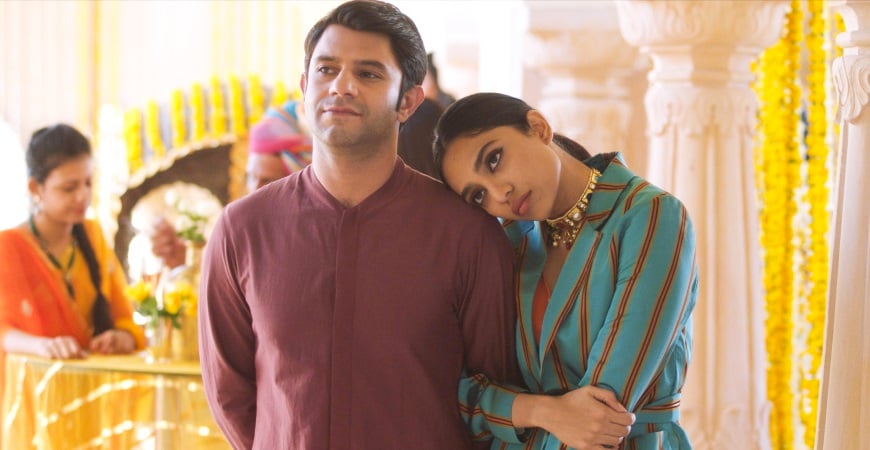
As I watched the first episode, I smiled at the wonderful Neena Gupta, who was such a relatable punjabi lady. And yes, I cringed at the depiction of a gay man, played by a cis-male, Arjun Mathur. Not because of his acting prowess, mind, but, because, I thought, like so many film makers, this depiction would be one that surmised homosexuality as just random sex-seeking and angst, against one’s own different self. The gay kiss was where I rolled my eyes – could they not have found an actor who was comfortable playing a gay man?

Then my friend, who had worked on the series and who I watched the series with, mentioned, “do you know how difficult it is to find an actor who is willing to play a gay man in Indian cinema?” I nodded. I didn’t say anything because I understood and was conflicted. Gay men have been playing straight roles all the time. But that’s our society and a different topic altogether. But a straight man, who should – ideally – value his work ethic and, for that matter, work with someone like Zoya, should jump at this role… Then again, that’s how I think and not how the world operates.

So, I decided to give the series another two episodes, before I called quits on it. However – the second episode got me hooked, and I finished the series, over a night’s viewing. That, in itself, should state how marvellous it is. But if it doesn’t, let me go on with the review.

Each episode deals with a marriage. We have a whole plethora of people being a part of them. Weddings, and the planning of, dealing with the concerns from royal households to that of a common man. Women, who are avaricious and succumb, like all flawed humanity, to the whims of this material world, to women who are empowered and revolt against patriarchal structures, encapsulate this world of marriage, life and love. We are shown grit and determination and then, also, the giving up of the self, love and practicality. Each marriage has something to convey to the Indian milieu – and it’s not just the people speaking English who this refers to. But perhaps, that’s who will end up watching this lovely depiction of the institution that is marriage.

Sobitha Dhulipala, who plays Tara, kept reminding me of Angelina Jolie. And like the latter’s choice of roles, Tara plays this ambitious woman who rises from the lower rungs of society and reaches the place in the ladder she wants to set foot on. Machiavelli would be proud, up to the point, of course, where the character starts her climb and the grey begins to show, soon after.

This is the best part of the show, there is no black and white. There are role reversals and people soaring to loveliness and they being equally capable of plunging into nastiness.

In one of these various shades of grey, falls Arjun Mathur’s character, Karan. Arjun plays the role with an angst unique to the gay subculture. He hits the role with a vulnerability that is discernible, in flashes, to only the most attentive watcher. He makes the character personal and tragic, elevating himself to the stage of coming out and accepting who he himself is. But this journey is not singular, it is taken by all the main leads and is superlative to watch.

The lovemaking doesn’t seem forced (though I will say, Arjun Mathur had to play a top gay man – I guess, showing a passive gay man would push the buck for an actor to pick up the role [?] but then I can also say that showing a femme gay man would also play into one of the many generic stereotypes that gay people have battled against, for so long). Conflict seems to be the name of the game – and alas, life.

Arjun’s love story and the character graph is one of the most intense ones – though I would also say, hurried. It appears most of our lives are encapsulated in nine hours. Most of us gay boys go through what he has gone through. The internalised homophobia, the phobic parent, the sexual abuse by the powers that be, the love gone wrong, the ease of finding sex, the extortion and, yet, the finding of help and succour in the face of adversity. We have all been there in bits and parts. He has brought it out so wonderfully – so sensitively. The scene at the dinner table with his father, where he breaks down and cries, remains my favourite.

I must also talk about the very complex character portrayal of Ramesh Gupta, played by the indomitable Vinay Pathak. The nuanced performance is fantastic, and he deserves a stalwart commendation. He portrays all that could go wrong when one is not true to who he or she is – he is what reality can be.

Homosexual sub culture is neither glamourised nor treated with disdain. It is what it is – another facet of humanity that needs to be recognised and accepted.

It is not just Arjun’s work, but the absolute genius of the side actor casting that needs worthy mention. Ayesha Raza, Kalki Koechlin (shining in a superb portrayal of a kind woman, lost in the understanding of who she is and what she wants), Jim Sarbh (the suave, eligible man who cannot profess his love and cannot be honest about it and so compensates for it in various other ways) – all fantastic!

Two episodes stand out as my favourites: “The Price of Love” where the bride rocks and becomes a personification of women empowerment and “It’s Never Too Late” where Dipti Naval is, as usual, brilliant and such a pleasure to watch. Feminism stands balanced in every episode, with a healthy dose of the portrayal of women who are gentle and cruel, lost and strong, ambitious and content. The best part is that I could feel, as I watched these episodes, that the writers were hardly ever passing judgement. They have tackled the topic of not just feminism and alternate lifestyles but also of drugs, corruption and the helping power of good counselling.

I have not seen such a web series in a very long time. It is, in equal proportions, mature and engaging, liberal and empowering, engaging and staid. I applaud all the makers behind this venture: with a special brava to the writer-directors: Alankrita Shrivastava, Zoya Akhtar and Reema Kagti, and two thumbs up to the other directors: Nitya Mehra and Prashant Nair.

Absolutely cool, will definitely be spreading the word.