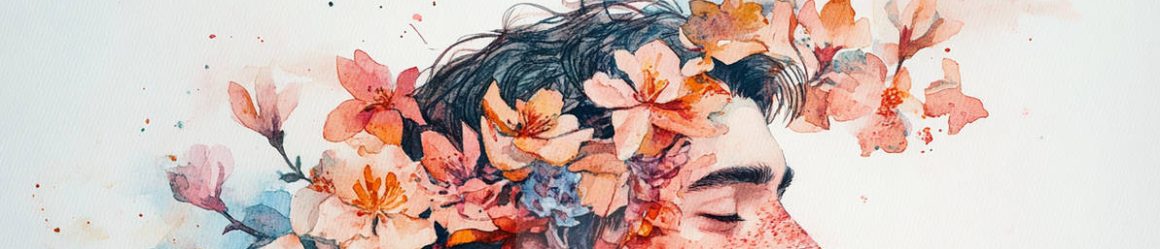
I am a citizen of India. January is Pride Month in Mumbai. There will be marches, talks, performances, and celebrations across the city. And yet, if I am being honest, pride does not come easily… More

Tomorrow may yet be golden…
I am a citizen of India. January is Pride Month in Mumbai. There will be marches, talks, performances, and celebrations across the city. And yet, if I am being honest, pride does not come easily… More

I asked the AI engine that has become so renowned – What would you do if you were a human being for just 24 hours? It answered: If I were human for just 24 hours… More

It began with a sentence that stayed with me long after it was spoken. When I said it had been a month since we had made love, the partner I most desire looked at me… More

I met someone recently—someone I’d spoken to online—at a party I attended not long ago. In person, though, something felt immediately off. Not because of chemistry or the lack of it, but because of an almost compulsive need he seemed to have: to look down on everything around him.
The party wasn’t good enough.
The music wasn’t up to the mark.
The people weren’t interesting enough.
Nothing passed muster. Everything required commentary, and all of it was dismissive.
He told me he was 22. And instinctively, I wondered if this was an age thing. But then I stopped myself. I was once that age too. I don’t remember needing to belittle an entire room to feel significant within it.
What unsettled me more was the familiarity of it. I’ve encountered this posture before—among people I’ve known, been friends with, sometimes even admired at one point. A certain self-appointed elite, defined not by kindness or depth, but by what and whom they reject. How others dress. How they speak. What music they like. Where they come from. Everything becomes a metric for exclusion.
I’m not pretending I’m immune to prejudice. I’m not. I know exactly where mine lies.
I don’t tend to judge people by caste, class, race, or colour. But I do judge—quietly, perhaps arrogantly—on intellectual and emotional grounds. Empathy matters deeply to me. Curiosity matters. The ability to question inherited beliefs matters. And yes, I struggle with people who are blinded by unexamined faith or rigid dogma. That is my bias. I own it.
So the uncomfortable question arose: was I doing something similar to him, just dressed in better language?
I don’t think it’s the same. Or at least, I hope it isn’t.
Because there is a difference between choosing not to engage, and actively deriding. Between recognising incompatibility, and making contempt a personality trait. What I witnessed wasn’t discernment—it was dismissal masquerading as sophistication.
There’s something deeply sad about believing that to appear intelligent, dapper, or “above it all,” one must constantly signal what one is not. That one must shrink others to inflate oneself. It’s a brittle kind of confidence, and it cracks easily.
Perhaps age does play a role. At 22, there is often a frantic need to impress—by saying the right things, having the right opinions, aligning oneself with the “correct” tastes. Sometimes that performance hardens into habit. Sometimes it softens with time. I don’t know which way it will go for him.
What I do know is this: I don’t need to pull anyone down to feel whole. I don’t need to sneer at a room to belong in it. If I don’t resonate, I can simply step away—with grace.
We live in a world already cruel enough, stratified enough, lonely enough. Choosing empathy over elitism isn’t naïveté; it’s resistance.
And perhaps the real marker of maturity—emotional, intellectual, human—is not how sharply we judge, but how gently we hold our differences.

An hour back, when the television had gone quiet and I was settling into my familiar hush, I was doing the small, ordinary rituals that end my day — switching off gadgets, straightening the hall, moving towards the bedroom. And then came a sudden, heavy bang against the window.
Xena stirred. Zuri woke up.
I turned back.
Perched on the railing of the hall window was a black kite — one of those great, ubiquitous birds of Mumbai that I have watched all my life, usually from far below, their silhouettes cutting slow, elegant arcs across blue skies and white clouds. But this time it was here. At my window. Close enough to meet my eyes through the glass.

It did not panic. It did not shy away.
It simply stood there.
As a child, I had always watched them — from the balcony of our Bandra home, sometimes beside my grandmother, sometimes alone. I would follow their flight for long minutes, losing myself in their effortless gliding, riding invisible thermal currents with a grace that felt almost unreal. Wings, feathers, sky — they became symbols long before I had the language for symbolism.
During difficult school years, when things were unkind and heavy, the song Wind Beneath My Wings found its way into my life. The idea of being held aloft by something unseen lodged itself quietly in my imagination. As a Gemini, an air sign, I always felt strangely attuned to flight — to movement, to the freedom of altitude, to the idea of rising above without force.
And now, at this juncture of my life — nearly fifty, standing on the edge of leaving this house to return to my mother’s home, with both my kids, Xena and Zach, very unwell — this bird arrived.
I have been holding myself together with a very thin, polite front. Loss, I understand. I have learned how to sit with it. What weighs heavier these days is the world itself — its cruelty, its relentless hunger for power and money, its refusal to soften. None of this is new, and yet I feel it more keenly now, as if the volume has been turned up.
The kite remained there while I took photographs and videos, its feathers ruffled slightly by the morning air. When I opened the door, Zuri rushed out, spotted the bird instantly, and froze — then barked in sheer terror, her bravery collapsing into panic. I had to shepherd her back inside; Xena had already checked out the hall and finding nothing amiss had retreated. The bird stayed, unbothered, watching.

Eventually, I stepped away. The kids wouldn’t stay in the room if I was out, after that.
I do not know how long it remained after that. But the fact that it stayed at all — that it did not flee even reminded me of something I had long forgotten: stillness can also be a form of courage.
In many mythological traditions, birds of prey carry layered meanings. Eagles are often seen as messengers of the divine, symbols of power, vision, and transcendence — creatures that bridge earth and sky. Kites and hawks, closer cousins, are associated with watchfulness, adaptability, and survival. In Indian folklore especially, birds that circle high are sometimes seen as guardians — not saviours, not omens, but witnesses. They see the whole picture from above.
In ancient symbolism, such birds appear not to predict events but to remind. To lift the gaze. To suggest perspective when the ground feels unbearably close.
I do not want to romanticise this too much. I am wary of assigning meaning where there may be none. Nature does not owe us messages. Sometimes a bird is simply a bird.
And yet.
This has never happened to me before — not like this. Kites have landed on pipes on terraces, have watched me from heights, have shared space from a respectful distance. But never like this: eye to eye, separated only by a pane of glass, unafraid.
Whether I communed with nature, or nature briefly acknowledged me — or whether this was nothing more than coincidence — I cannot say. But it left me calmer than I have felt in days. Not hopeful, exactly. Just steadied.
As if something ancient had paused, looked in, and reminded me that even in a world obsessed with conquest and noise, there are still beings who know how to glide — who expend no unnecessary energy, who trust the currents, who wait.
And perhaps, for now, that is enough.
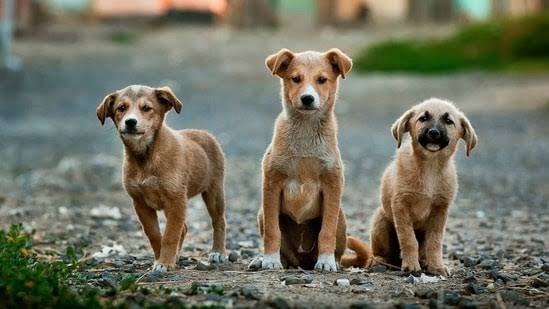
Across the world, animals are becoming collateral damage in a political culture that celebrates dominance over empathy. The pattern is disturbingly clear: whenever right-wing politics ascends, compassion for non-human beings descends. What varies is not the outcome, but only the scale.
India: Where Stray Lives Are Treated as Disposable
In India, the tension between development, majoritarian politics, and animal welfare has reached a breaking point. The Supreme Court’s recent verdict actually moves toward culling stray animals because shelters are just not equipped here to host the sheer volume of animals. This reveals how fragile and conditional compassion can be. Cows may be sacralised for cultural reasons, but street dogs, cats, and countless other beings exist in a legislative vacuum. This is not to say, by clear evidence, that cows are treated better. They are not.
Animal activists routinely face harassment, threats, and even physical assault. Their work is dismissed as “anti-development”, “elitist”, or oddly, “anti-national”. The message is chillingly clear: empathy outside the ideological script is unwelcome.
The contradiction at the heart of Indian politics could not be starker. A civilisation that once spoke of ahimsa now debates how best to eliminate the creatures who live alongside us. Animal rights, as a legal concept, barely exist. Welfare boards and NGOs operate with fewer protections than the animals they’re trying to save.
United States: The Trumpian Assault on Conservation
Across the ocean, the United States has witnessed its own war on the natural world under Donald Trump. His administration rolled back dozens of environmental and conservation policies, opening protected lands—including the Arctic—to oil drilling and mining. Wolves, bears, and endangered species lost protections painstakingly built over decades.
More than policy, though, it was the disdain embedded in the rhetoric that revealed the shift. Trump mocked Greta Thunberg, a child demanding climate responsibility, not because he misunderstood the science but because empathy itself threatened his worldview.
Right-wing populism thrives on the performance of strength, and in that performance, the planet and its creatures become expendable props.
A Global Pattern: Strength Without Stewardship
Globally, right-wing governments—from Brazil under Bolsonaro to parts of Eastern Europe—share a familiar pattern:
Environmental protections weakened in favour of extractive industries. Wildlife treated as a nuisance when it interrupts development. Animal advocates vilified as radicals or enemies of progress. Traditional practices defended uncritically, even when inherently cruel.
The ideology is not built on stewardship but on supremacy—of humans over animals, of industry over ecology, of political identity over compassion.
What makes this pattern dangerous is its universality. Whether it is a street dog in Delhi, a wolf in Alaska, or a rainforest species in Brazil, the message is uniform: if a life cannot vote, pay taxes, or further political symbolism, it can be discarded.
Why Right-Wing Politics So Often Collides with Animal Welfare
Several threads connect these global examples:
Hyper-nationalism reframes empathy as weakness. Development-first agendas ignore ecological and ethical costs. Cultural absolutism defends cruelty when it is traditional. Anti-activist sentiment treats compassion-driven movements as political threats. Masculinity politics turns care into a liability.
These attitudes create a world where the voiceless remain unheard, and those who speak on their behalf are targeted.
The Cost of This Indifference
When animal lives are treated as disposable, societies lose far more than biodiversity—they lose moral clarity. The willingness to mistreat animals normalises brutality. It makes violence thinkable, then permissible, and finally, invisible.
A society that cannot protect its weakest beings eventually struggles to protect its own people.
Choosing Empathy in an Unempathetic Age
Not every right-wing individual hates animals. But the ideological machinery that dominates right-wing politics today prioritises power, extraction, and cultural symbolism over care. In that machinery, animals simply do not count.
The task for the rest of us is urgent. We must insist on laws that recognise animals as sentient beings, not nuisances. We must support activists who put their bodies on the line where institutions fail. And we must remember a simple truth: a civilisation is not judged by the slogans of its leaders, but by how it treats those who have no voice.
If the world continues on this path of sanctioned cruelty, it is not only animals who will be lost—our own humanity will erode with them.
 Hearts Still Care
You must be logged in to post a comment.