Pride Is A Protest

I am a citizen of India.

January is Pride Month in Mumbai. There will be marches, talks, performances, and celebrations across the city. And yet, if I am being honest, pride does not come easily to me anymore.

I feel unsafe.

I feel unseen.

I feel neglected — not only as a gay man, but as a citizen.

When I was growing up, I loved this country deeply. I carried a fierce sense of patriotism. In my twenties, after completing my Master’s degree, I had the opportunity to move abroad. I chose not to. I stayed back to take care of my mother, and because I genuinely believed India would grow into a place where people like me would belong fully. I believed I would rather be a first-class citizen here than a second-class one anywhere else.

I am fifty now. And very frankly, I am beginning to regret that decision.

In 2018, when Section 377 was read down, I was 43 years old. That means that for most of my adult life, I lived in a country where my existence was criminal. Legally speaking, I have had barely seven years of not being considered a criminal. Seven years is not liberation. It is survival with paperwork.

And even today, that legal change has not translated into lived equality.

I cannot open a joint bank account with my partner in most Indian banks. I cannot nominate him. I have no legal standing if something happens to either of us. He won’t be considered “next of kin” to wean me of life support – if it ever comes to that.

Civil unions are still being fought for in the Supreme Court. Marriage — entangled as it is with religion — feels like a distant and almost irrelevant dream.

So I ask myself: what does citizenship mean for someone like me?

I pay my taxes. For things I sell; for things I buy. I vote (with no hope). I follow the law. I live in a home I inherited — thankfully — because renting is almost impossible. As a gay man, doors shut quietly. As a single man, suspicion follows. As a single gay man with dogs, the conversation ends abruptly. Even families face illegal discrimination in rentals every day, and nothing happens. The law exists only on paper.

I have three dogs. They are my children. I cannot have children of my own, and I have chosen animals — gentler, kinder, better beings — as my family. My youngest was rescued from Chennai, with nowhere else to go. None of my dogs have ever harmed anyone. They have never bitten a soul. They ask for nothing except play, food, and love.

And yet, even this is contested.

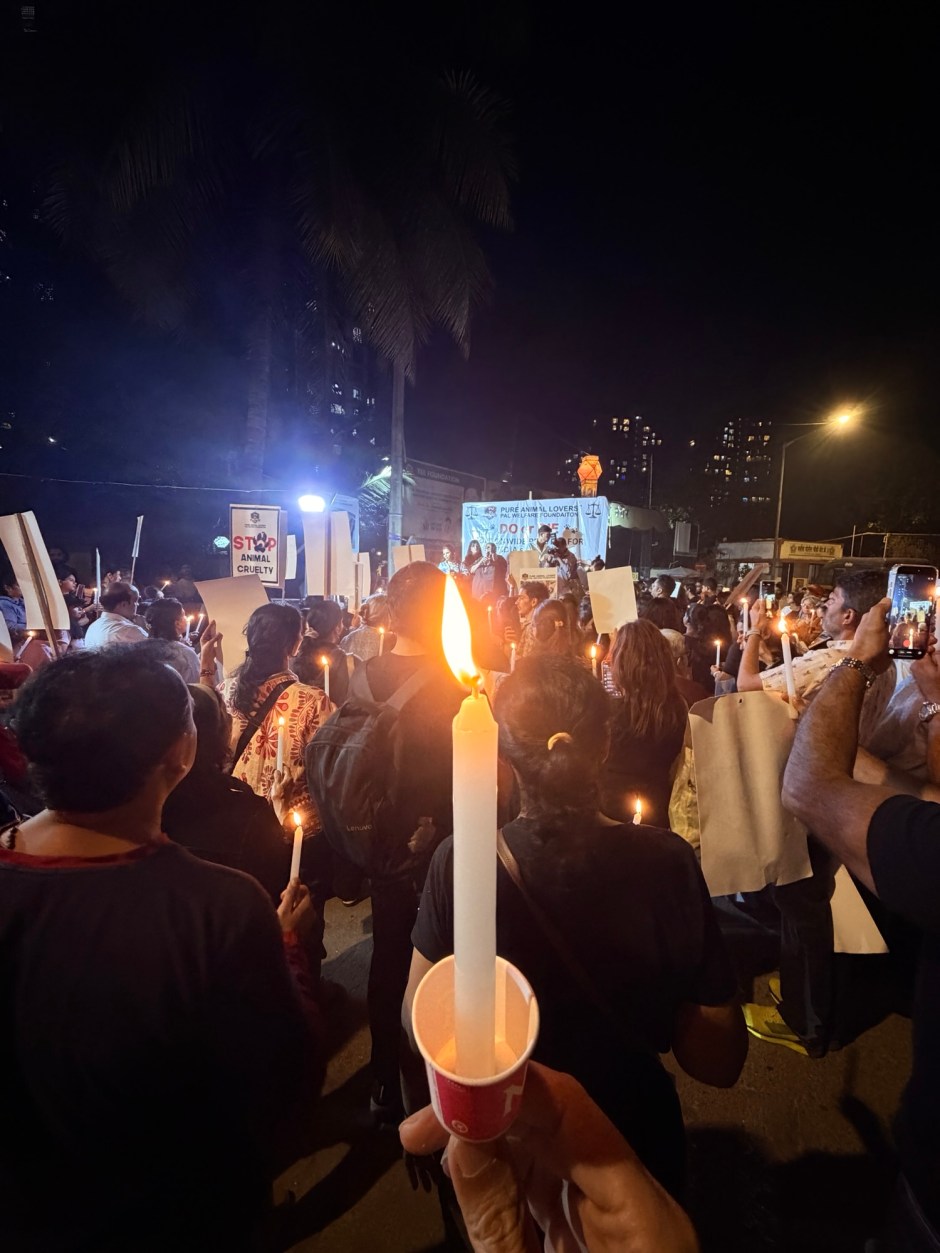
The Supreme Court has now turned its gaze on stray dogs — and on those of us who care for them. Feeders are harassed. Compassion is criminalised. Care is framed as inconvenience. I walked in protest on the 4th of January because silence, in moments like these, is violence.

At the same time, women in this country continue to be brutalised with terrifying regularity. Worse than the tapes are the cover ups that follow. Sickening. Children are raped and murdered. Just today, I read about a five-year-old girl assaulted and thrown from a building “for fun”. How does one carry pride alongside that knowledge?

Then there is the city itself.

Mumbai is choking. Pavements are blocked. Roads are gridlocked. Pollution is relentless. I cannot breathe properly. Last month alone, my medical bills crossed ₹10,000 — for chronic throat infections, doctors, medication. I am grateful I had my tonsils removed, or I would likely be hospitalised again. Delhi gasps for air. Indore reels under water contamination. Everywhere, the basics of life — air, water, safety — are compromised.

So I ask, without irony or melodrama:

What am I paying taxes for?

I have no civil rights as a gay man.

I have no health security as an individual.

I have no legal framework that protects my family.

Every day, I read something that scares me into wondering why I am still here.

And yet — I will celebrate Pride.

Not because I feel safe.

Not because I feel protected.

But because Pride has never been about comfort.

Pride is the hallmark of courage.

Before 2018, we lived in fear — but we lived like freedom fighters. We fought knowing exactly what we were fighting against. After 2018, the struggle did not end; it simply became quieter, more bureaucratic, more gaslit.

There is also something quietly sustaining about being part of a tribe — of walking alongside people who feel empathy, who understand why these fights matter. Marching together, standing in peaceful protest, reminds me that I am not entirely alone. That there are others who see what I see, feel what I feel.

I just wish we were enough to bring about real change.

Life feels bleak right now. I am filled with trepidation about what we have done to our world — and to one another. And yet, I am clinging to a fragile hope that things may still get better. I have to believe that they will. Because without that belief, resistance itself becomes impossible.

So this January, I will march.

I will protest.

I will ask for rights — for myself, for my community, for animals, for those who cannot speak.

I will do what I have always done.

Because Pride was never a party.

It was a demand.

And it still is.

Fear Is Not Justice

Monday, 11 August 2025 — the Supreme Court of India has ordered that all stray dogs in the Delhi–NCR region be rounded up within eight weeks and placed into shelters.

Eight weeks. Two months.

Anyone who loves or works with street dogs knows what this means. It means these fur-kids will be ripped away from the only streets, corners, and human connections they know. It means they will be shoved into overcrowded, filthy shelters run by corporations and municipalities that see them as a burden, not a life. It means fear, disease, abuse, and death.

I have seen how dogs are kept in Mumbai’s pounds. The conditions are appalling. They are treated like refuse, not sentient beings. And now, the same fate awaits thousands in Delhi.

I’ve seen this cruelty before

I can’t read this ruling without my mind racing back to the first dog I ever rescued.

I was seven or eight when a young white pup with brown markings wandered into my compound. She was small, shy, and beautiful. I gave her shelter in an abandoned car, fed her, and let her roam free when I was inside my house. She became part of the little group of dogs that hung around the building corner.

One afternoon, I heard her yelping. I ran to my bedroom window and saw the municipal van. Men had caged her and were lifting her into the back. I was eight years old — I didn’t know how to fight them. And then she was gone. I never saw her again. That helplessness burned itself into me. I still feel it. 

I had named her Diana.

Years later, I rescued another — a fawn-coloured pup with a stubby tail and the gentlest green eyes. He had wandered into my housing compound, where the security guard was beating him with a stick. I scooped him up and took him home. He was affectionate, trusting, full of fleas and love. I named him Bilbo. I already had two dogs then and my home was small, so I found a friend to adopt him. Giving him away was like tearing a piece of my heart out.

We have to remember:

Rabies doesn’t just happen.

Dog bites don’t just happen.

They happen because we — humans, governments, societies — have failed.

Because vaccination drives are abandoned halfway.

Because sterilisation projects are underfunded and poorly executed.

Because the budgets meant for animal welfare disappear into corrupt pockets.

We create the problem, and then we punish the victims of our neglect. And now, an entire population of innocent dogs is about to pay the price for decades of human carelessness.

When one dog attacks, the response shouldn’t be to round up every dog. That’s the same flawed thinking as branding all men violent because some commit rape, or branding an entire religion dangerous because of one extremist.

It is bigotry applied to animals. It is fear driving policy. And fear rarely chooses the right path.

The easy way is always the cruel way. There are other solutions. There always are.

• Mass sterilisation drives done properly and consistently.

• Continuous vaccination programmes.

• Feeding zones where dogs and people can safely co-exist.

• Shelters that are humane, healing spaces — not prisons of neglect.

But these require work. These require compassion. These require the slow, difficult path that governments rarely take because cruelty is easier. Cruelty can be done quickly, with a press release and a photo op.

I’m not even from Delhi, but this ruling has left me shaken and deeply sad. I’ve seen what happens when bureaucracy decides that an animal’s life has no worth.

I’ve lost hope for the system. I’ve lost hope in leaders. I’ve even lost hope in many people I once loved. I know there are protests, petitions, people fighting — and I am signing them, I am adding my name — but inside me, hope feels like a very faint and dying ember.

The truth is, the world has taught me that humans can live through genocides, the slaughter of innocents, and barely blink. If that is true for human lives, how much hope can I have for animals?

If this ruling were truly about public safety, it would start with fixing the systems that failed. It would start with funding sterilisation and vaccination programmes properly. It would start with auditing the budgets already spent — and stolen.

Instead, this ruling chooses the laziest path: punish the innocent because the guilty are untouchable.

We do not cull all men when women are raped. We do not round up all children when one commits a crime. But we are willing — in the blink of an eye — to round up all dogs when a few incidents occur. That is not justice. That is cowardice disguised as governance.

And let us be clear: fear is not a reason to abandon compassion. Fear is not an excuse to brutalise the defenceless. Fear should never be the guiding principle of a civilised society.

If you have power, you have a choice:

You can use it to protect the voiceless, or you can use it to destroy them. History will remember which you chose.

So, I will speak. I will speak for Diana. I will speak for Bilbo. I will speak for every street dog in Delhi and beyond who will be torn away from their familiar lives, confused, terrified, and caged.

It was never their fault. It was ours. And no court order will change that truth.

If I cannot stop this, I can at least refuse to be silent. Because silence, too, is a cruelty.
Bitter Old Man

This evening, something happened that got under my skin more than I care to admit. I was down in the compound with the kids — by which I mean my dogs — playing a relaxed game of fetch like we’ve done since 2019. These are kids I’ve raised with care, consistency, and love. They don’t bark at passers-by. They don’t jump on people. They’ve never soiled the compound. We play in our little side of the compound, stick to ourselves, and co-exist.

It was a typical Mumbai evening — humid, a little breeze, people walking their toddlers and taking their usual rounds around the building. No one had a problem. Not one. In fact, a little girl toddled around us, giggling as she watched the dogs run. Her father smiled, unbothered. That’s how it usually is. That’s how it’s always been.

Until one man decided to ruin it.

He marched up to me — no greeting, no civility — and barked, “According to the law, you need to leash them.”

I looked him square in the face and said, “Don’t talk to me about the law. If you have a problem, then tell me you have a problem. Don’t hide behind rules no one else is quoting.”

This wasn’t about the law. This was about control. About bitterness. About some misguided belief that age entitles you to command people in their own homes. He claimed to be a dog lover too. I told him not to lie to himself and certainly not to me. I directly told him, if you have a problem be honest and tell me and when you are here, I shall keep them on a leash. I did so. Until he left the compound, after bitching to everyone around who would offer an ear. 

You cannot call yourself a dog lover and come up to someone who has raised these animals with care and discipline — someone who’s down with them every single day — and throw regulations in their face without context or conversation. I don’t owe you silence when you cloak your prejudice in legalese.

Let me say it plainly: I live in a city that is barely functioning. The road outside our gate is covered in garbage, broken tiles, and makeshift construction. Pedestrians walk in traffic because footpaths are non-existent. When the street lights didn’t work for months, nobody cared — until I personally called the BMC to get it fixed. That’s the real danger in this city. Not my leashed or unleashed, happy, well-socialised dogs.

But somehow, people like him don’t raise a voice when civic authorities fail us. They stay quiet when the street floods or the drain overflows. But the moment a dog runs free and joyful — my dog, with me right there supervising — they come out of their holes, quoting imaginary laws and feigning concern.

Let’s get something straight:

I have lived through years of irresponsible pet ownership around me — people who abandon their dogs when they move, people who beat them, chain them for hours, or never walk them at all. My dogs are family. I treat them like children. I clean up after them. I invest time and affection into their wellbeing and how they interact with the world. There is no “law” in this city that does more for these animals than a single responsible human does — and I am that human.

And yet, the one thing that triggered this man? Seeing joy. Seeing love. Seeing a safe, beautiful moment that had nothing to do with him.

I will not allow the fearmongering around rabies to be weaponised against every pet parent who’s doing their best. Yes, we need safety. Yes, we need awareness. But let’s not pretend that the hysteria online about dogs is based in facts or care. It’s based in fear. And fear is a poor excuse for cruelty.

I’m not here to be lectured by people who don’t pick up after themselves but have the audacity to pick bones with me.

So to the people like him: No, I won’t apologise for raising loving dogs in a city that desperately needs more kindness. I won’t apologise for giving them space to run, to play, to live.

And I certainly won’t take lectures from a man who’s blind to the real chaos around him, but sees a problem in a moment of joy.

If you’ve got something to say — say it with honesty. Don’t hide behind laws you don’t understand.

And don’t you dare call yourself a dog lover.