Why I Do Not Travel

There are people whose souls awaken at airports.

People who feel restless unless they are planning a trip, booking tickets, standing in immigration queues with headphones on and a passport in hand, convinced that somewhere else — another city, another country, another landscape — life will briefly become more meaningful than the one they currently inhabit.

I have never been one of them.

And for a long time, I wondered if there was something wrong with me because of it.

People around me speak of travel with almost religious intensity. The guys, my mother, my cousin, well, my family, I would say, has that unmistakable “keeda” of travel in them — that hunger to move, to see, to constantly experience new places. I admire it in them. Sometimes I even envy it. I wish I possessed that same excitement at the thought of boarding a plane and disappearing into another country for ten days.

But I don’t.

And I think I finally understand why.

The truth is, I travelled extensively long before I ever considered physically travelling anywhere.

I was a child who read compulsively. History, geography, mythology, politics, anthropology, climate, architecture, literature — I consumed the world through books before social media turned travel into curated montages and aesthetic performances.

I did not merely learn where places existed.

I absorbed their emotional texture.

I read about ancient civilisations, wars, migrations, cathedrals, droughts, changing coastlines, empires collapsing under their own arrogance, cities reshaped by climate and greed. I read about the loneliness of industrial Europe, the silence of old libraries, the smell of rain on African soil, glaciers disappearing, forests burning, rivers shifting course.

I learnt about places not merely as tourist destinations, but as living things shaped by history, violence, weather, memory and human failure.

And perhaps because of that, I never developed the overwhelming urge to “tick off” landmarks from a bucket list.

The Statue of Liberty does not call out to me.
Neither does the Louvre.
Nor the Sistine Chapel.

Of course, there is something profound about standing where Michelangelo once stood. About touching marble another human being shaped centuries ago and whispering quietly to yourself:
“I was here too.”

But he is gone.

The moment is gone.

And strangely, that has always mattered more to me than the monument itself.

I also think my relationship with people complicates travel.

I do not hate humanity. Human beings have also given me poetry, music, cinema, friendship, love and tenderness. I write because of people. I paint because of people. I speak because of people. I care because of people.

And yet people exhaust me.

Their arrogance.
Their prejudices.
Their casual cruelty.
Their certainty about things they barely understand.

Even I irritate myself sometimes.

I can spend hours quietly creating something meaningful — writing, painting, photographing, dancing, caring for animals — and still one unnecessarily rude interaction can poison an entire experience for me.

The other day at the gym, a man was rude for absolutely no reason. I became angry and upset. I could have caused a scene. Perhaps he deserved one. But then the entire space would have become emotionally contaminated for me. It would stop feeling peaceful.

That is what people often do to places.

Online trolls ruin platforms.
Bigotry ruins cities.
Racism ruins entire countries.
One ugly interaction stains what could otherwise have been a beautiful memory.

And travel demands people.

You must coordinate with them, negotiate with them, tolerate them, trust them, explain yourself to them. Airports, hotels, immigration counters, tourists screaming into phones while standing before thousand-year-old monuments, strangers carrying their entitlement into every corner of the earth.

Perhaps I am too sensitive for modern travel.

Or perhaps I simply no longer romanticise movement the way the world expects us to.

The irony is that I did once have a great travel dream.

Africa.

Since childhood, I have dreamt of witnessing the wildebeest migration across the Serengeti and Maasai Mara. That ancient dark river of bodies moving across the earth as they have for thousands of years before human borders existed.

Animals have always moved me more deeply than monuments ever could.

But even that dream now rests quietly in the background of my life instead of burning brightly inside me.

And then there are my children.

The impossible ache of leaving them behind.

People say, “They’ll be fine.”

But they do not understand what love begins to look like after years of routine, grief, healing and attachment.

Zoe and Xena would wait by the door. Like Zoe, Zuri stops eating when her routine changes. Her stomach reacts if I am absent during her walks or feeding times. Their emotional lives are intertwined with mine, and mine with theirs.

I cannot casually hand them over to someone else and fly across the world pretending my heart has remained peaceful.

People speak of freedom as movement.

But love roots you.

And perhaps that is what happened to me.

I built a life where meaning did not exist somewhere else.

It exists here.

In my dogs sleeping beside me.
In old films.
In books.
In late-night conversations.
In rain against the window.
In creativity.
In survival.
In memory.
In familiar streets I know how to emotionally navigate.

And maybe that is the real reason I was never bitten by the travel bug.

I do not feel the desperate need to escape my life.

Vacations, for many people, are temporary relief from lives that feel emotionally lacking, repetitive or disconnected. But my life — with all its flaws, griefs, anxieties and imperfections — has never felt empty to me.

It has felt full.

Deep rather than wide.

And I know that is enough.
Pride Is A Protest

I am a citizen of India.

January is Pride Month in Mumbai. There will be marches, talks, performances, and celebrations across the city. And yet, if I am being honest, pride does not come easily to me anymore.

I feel unsafe.

I feel unseen.

I feel neglected — not only as a gay man, but as a citizen.

When I was growing up, I loved this country deeply. I carried a fierce sense of patriotism. In my twenties, after completing my Master’s degree, I had the opportunity to move abroad. I chose not to. I stayed back to take care of my mother, and because I genuinely believed India would grow into a place where people like me would belong fully. I believed I would rather be a first-class citizen here than a second-class one anywhere else.

I am fifty now. And very frankly, I am beginning to regret that decision.

In 2018, when Section 377 was read down, I was 43 years old. That means that for most of my adult life, I lived in a country where my existence was criminal. Legally speaking, I have had barely seven years of not being considered a criminal. Seven years is not liberation. It is survival with paperwork.

And even today, that legal change has not translated into lived equality.

I cannot open a joint bank account with my partner in most Indian banks. I cannot nominate him. I have no legal standing if something happens to either of us. He won’t be considered “next of kin” to wean me of life support – if it ever comes to that.

Civil unions are still being fought for in the Supreme Court. Marriage — entangled as it is with religion — feels like a distant and almost irrelevant dream.

So I ask myself: what does citizenship mean for someone like me?

I pay my taxes. For things I sell; for things I buy. I vote (with no hope). I follow the law. I live in a home I inherited — thankfully — because renting is almost impossible. As a gay man, doors shut quietly. As a single man, suspicion follows. As a single gay man with dogs, the conversation ends abruptly. Even families face illegal discrimination in rentals every day, and nothing happens. The law exists only on paper.

I have three dogs. They are my children. I cannot have children of my own, and I have chosen animals — gentler, kinder, better beings — as my family. My youngest was rescued from Chennai, with nowhere else to go. None of my dogs have ever harmed anyone. They have never bitten a soul. They ask for nothing except play, food, and love.

And yet, even this is contested.

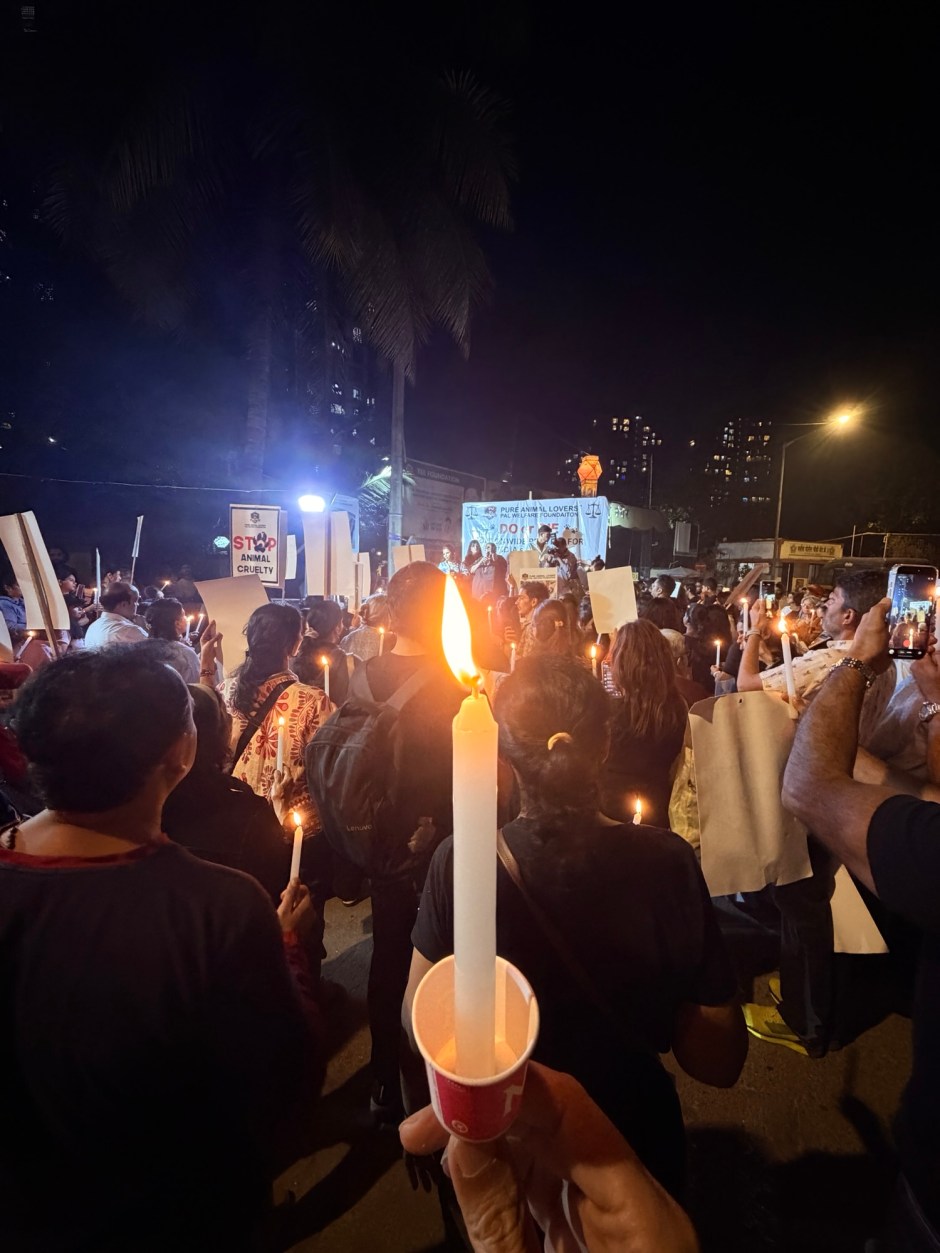
The Supreme Court has now turned its gaze on stray dogs — and on those of us who care for them. Feeders are harassed. Compassion is criminalised. Care is framed as inconvenience. I walked in protest on the 4th of January because silence, in moments like these, is violence.

At the same time, women in this country continue to be brutalised with terrifying regularity. Worse than the tapes are the cover ups that follow. Sickening. Children are raped and murdered. Just today, I read about a five-year-old girl assaulted and thrown from a building “for fun”. How does one carry pride alongside that knowledge?

Then there is the city itself.

Mumbai is choking. Pavements are blocked. Roads are gridlocked. Pollution is relentless. I cannot breathe properly. Last month alone, my medical bills crossed ₹10,000 — for chronic throat infections, doctors, medication. I am grateful I had my tonsils removed, or I would likely be hospitalised again. Delhi gasps for air. Indore reels under water contamination. Everywhere, the basics of life — air, water, safety — are compromised.

So I ask, without irony or melodrama:

What am I paying taxes for?

I have no civil rights as a gay man.

I have no health security as an individual.

I have no legal framework that protects my family.

Every day, I read something that scares me into wondering why I am still here.

And yet — I will celebrate Pride.

Not because I feel safe.

Not because I feel protected.

But because Pride has never been about comfort.

Pride is the hallmark of courage.

Before 2018, we lived in fear — but we lived like freedom fighters. We fought knowing exactly what we were fighting against. After 2018, the struggle did not end; it simply became quieter, more bureaucratic, more gaslit.

There is also something quietly sustaining about being part of a tribe — of walking alongside people who feel empathy, who understand why these fights matter. Marching together, standing in peaceful protest, reminds me that I am not entirely alone. That there are others who see what I see, feel what I feel.

I just wish we were enough to bring about real change.

Life feels bleak right now. I am filled with trepidation about what we have done to our world — and to one another. And yet, I am clinging to a fragile hope that things may still get better. I have to believe that they will. Because without that belief, resistance itself becomes impossible.

So this January, I will march.

I will protest.

I will ask for rights — for myself, for my community, for animals, for those who cannot speak.

I will do what I have always done.

Because Pride was never a party.

It was a demand.

And it still is.

My Children

They are my children — each four-legged canine.

I am human; they aren’t, but they are mine.

Each came to my life, made it softer;

Each has brought its share of love and laughter.

Each pup has known my embrace and promise,

And saved the hope life wanted to tarnish.

They shone — white, or fawn, or tiger brindle —

Each brought a flame that’s forever kindled.

They pulled me back from death, I confess, twice;

Leaving them without me was not a choice.

So they stave my depression with their walks;

Most nights, they engage me in play or talks.

Xena is the smartest, Diana the kindest;

Rolfe often brought my temper to the test.

Zoe, my shadow, I loved the very best;

Bonzo was my first, and Zach’s my first-born,

And each passing gets my heart ripped and torn.

I lost my faith in God when Zoe died,

And when death comes to each, how I have cried.

They taught me early how grave loss can be,

And death seems now almost like family.

My kids have helped build all my empathy,

And love, and valour, and brave sympathy.

They have no clue of hardship, death, and life;

They have indirectly taught me a stray’s strife.

I see and judge the world through their pure eyes,

Because no one in it ever lies or dies.

I give them all the love I have and can,

And each of them makes me a better man.