
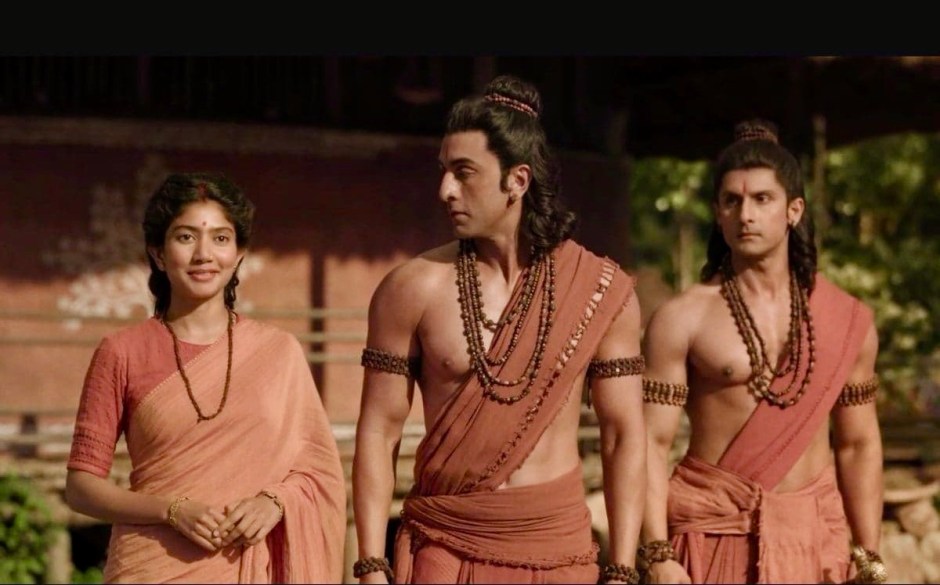
When an Epic Finally Finds Its Cinematic Grandeur
I went into Ramayana with considerable scepticism. Having watched Indian filmmakers repeatedly attempt to compete with Hollywood in the business of spectacle, I have often found myself less than impressed. Bigger budgets, elaborate sets, computer-generated monsters and grandiose battle sequences do not necessarily make a great film. And when the subject is something as culturally and spiritually significant as the Ramayana, the responsibility is considerably greater.
I was therefore pleasantly surprised. In fact, I was floored.
For a change, I felt that an Indian filmmaker had understood the scale of the task before him. Namit Malhotra has given the epic a sense of grandeur, prestige and cinematic ambition that it deserves. There is an evident respect for the material, and, more importantly, an attempt to treat it with the seriousness it demands.
The film is not without its shortcomings, but I came away genuinely moved. There were moments when I found myself crying, and that, to me, is perhaps the greatest compliment I can pay a film.
The performances
Sai Pallavi is an absolute revelation as Sita. I was particularly taken by her restraint and composure. In Kathak, there is a quality called theraav — a certain stillness, control and dignity in movement. It is not about doing less; it is about communicating more through less. Sai Pallavi has that quality in abundance.
She carries Sita’s dignity without making her submissive. Even in the action sequences, she is convincing. There is a quiet strength to her performance that I found immensely appealing.
She also brings an important moral presence to the relationship. Sita is not merely an extension of Rama. She has her own convictions and is capable of challenging what she believes is wrong. Her response when Lakshmana strikes Shurpanakha, questioning whether this is how a man should treat a woman, is a particularly interesting moment.
I do, however, wish the film had explored her decision to accompany Rama into exile with greater emotional depth. Sita chooses to leave Ayodhya. Urmila chooses to remain behind. These are different decisions, and both deserve respect. Sita is not simply being carried into the forest by her husband’s circumstances. She makes a choice and stands by it. I wanted the film to communicate that personal conviction more forcefully.
Ranbir Kapoor, on the other hand, is a more complicated proposition. I think he has the right face and particularly the eyes to play Rama. There is an inherent suitability about his appearance. But I wasn’t entirely convinced by his physical portrayal.
He is so heavily built and muscular that, at times, even his posture seems compromised. I noticed moments when his body language lacked the natural bearing and upright dignity I associate with Rama. Lakshmana, in contrast, seemed to carry himself with greater physical ease and composure.
More importantly, I felt something was missing in Rama’s dignity and divinity. His compassion comes through, and his grief towards the end is beautifully portrayed, but I wanted a little more of the quiet moral authority that defines this character.
Yash, however, takes the cake.
His Ravana has an extraordinary physical presence. His voice, arrogance, demeanour and commanding personality are wonderfully suited to the character. He gives Ravana the kind of authority that makes him a formidable antagonist.
I do not believe the film makes Ravana unnecessarily sympathetic or excuses his cruelty. It gives him the grandeur and vanity that the character requires. And I rather like the idea that a great antagonist should possess qualities that make us understand him, even if we cannot agree with him.
I have never particularly liked the idea of evil being entirely inherent in a person. I have always believed that people become what they are through a combination of circumstances, influences and choices. Even a character as formidable as Voldemort, in the Harry Potter books, never quite appealed to me because of the suggestion of an inherently psychopathic child.
The depiction of Ravana as a musician, alongside his arrogance and ambition, offers an interesting contradiction. A person can possess artistic sensibilities and still be capable of extraordinary cruelty.
The actor playing Lakshmana deserves considerable credit too. He brings the loyalty, protectiveness and devotion that make Lakshmana such an important part of Rama’s journey.
Where the screenplay falters
My biggest reservation is the storytelling.
The Ramayana has layer upon layer upon layer of meaning, incidents, folklore and philosophical thought. It is almost impossible to fit everything into a three-hour film, and I understand that. The decision to divide the story into two parts is sensible. But even then, I felt that some very important episodes and contextual details were sacrificed to the pace.
Shabari is just one such omission. The significance of Panchavati deserved more exploration. There are so many stories and traditions surrounding the places and people Rama encounters that enrich the journey.
The film also rushes through the transformation of Kaikeyi. The emotional relationship between Rama and Kaikeyi is insufficiently established for her sudden change of heart to carry the tragic weight it should.
This is particularly disappointing because the film does give us a glimpse of their affection. The descent from a loving mother figure to someone who wants Rama banished needed considerably more psychological development.
Manthara’s motivations are similarly underexplored. Why does she resent Rama? What are her fears? What makes her so invested in Bharata’s succession?
Devdutt Pattanaik, in Sita, explores Manthara as a lonely woman whose identity and sense of belonging are deeply tied to Kaikeyi. He also explores the idea of responsibility: Manthara may have ignited Kaikeyi’s latent fears, but Kaikeyi remains responsible for exercising her choices.
That is precisely the kind of psychological layering I wish the screenplay had attempted.
I also found the treatment of Rama’s mothers inadequate. Kaushalya is given very little emotional importance. Sumitra is similarly peripheral. In fact, one of the few interactions between Kaushalya and Sumitra concerns clothes.
The relationship between a son and his mother is an important emotional dimension of the Ramayana, and I missed that. Ironically, the emotional relationship between Kaikeyi and Rama is more apparent, which makes her subsequent transformation all the more incongruous.
The women of Ayodhya and Lanka
One observation that particularly struck me was the difference in the agency given to the women of Ayodhya and those of Lanka.
Kaikasi, Ravana’s mother, is a fascinating woman. She is ambitious, strategic and influential in the making of her son. Shurpanakha speaks her mind, challenges her husband and confronts Ravana over his actions. Mandodari is capable of questioning her husband’s judgement and warning him against his decisions.
These women have opinions, ambitions and voices.
In comparison, the women of Ayodhya seem considerably more restrained by their domestic roles. Sita is the exception, but Kaushalya, Sumitra and Urmila are not given nearly enough space.
I found this contrast particularly interesting. I would have liked the film to explore the women of the epic with the same curiosity it brings to its male protagonists.
The spectacle and the emotion
Where the film succeeds magnificently is in its emotional execution.
The Jatayu sequence was one of the moments that moved me most. His sacrifice, his courage and his attempt to protect Sita are beautifully realised. The visual effects in this sequence are particularly effective. As someone who has spent much of his life reading high fantasy and watching fantasy cinema, I appreciated the scale and technical ambition. I had no particular reservations about the climax from a visual standpoint.
Dasharatha’s anguish also works. The tragedy of a father bound by a promise, forced to send away the son he loves, is deeply affecting.
And then there is Rama’s grief.
When Rama breaks down towards the end, I found myself thinking of the prayer Jesus offers to God in the Garden of Gethsemane before his crucifixion. There is something profoundly human about the anguish of a figure who must accept a fate that seems unbearable.
I thought Ranbir did a particularly good job here. The film finally allows us to see the vulnerability in Rama that I felt was missing from much of his earlier portrayal.
The music occasionally becomes too loud and overwhelms the scene it is supposed to support. I suspect there is also a commercial consideration at play, with the score being used to amplify the spectacle. A little more restraint would have served some of the emotional moments better.
The larger philosophical question
What I appreciated most was the film’s ability to remind us of the values that make the Ramayana endure: dharma, duty, sacrifice, love, loyalty and the consequences of keeping one’s word.
I grew up listening to these stories. The idea that a promise, once made, must be honoured has stayed with me. Dasharatha’s predicament and Rama’s acceptance of exile are not merely plot developments. They raise difficult questions about duty, responsibility and the cost of honour.
Pattanaik makes an interesting observation in Sita: Rama is the king who must uphold rules, however distasteful they may be, whereas Krishna, in his subsequent avatar, is the game changer who can move around rules. His interpretation of dharma is not simply about righteous conduct, but about human potential in constantly changing circumstances.
I find this distinction fascinating, and it is one of the reasons the Ramayana deserves more than a straightforward good-versus-evil treatment.
The film does occasionally lean towards the conventions of Hollywood fantasy, particularly in its presentation of certain antagonists. I would have preferred more shades of grey and greater attention to the circumstances that shape people. But I also felt that the film retained enough moral questioning to prevent the epic from becoming merely a battle between heroes and villains.
The final word
I have seen previous Indian attempts at adapting and presenting the Ramayana, and some have been almost impossible for me to sit through. This film is a very different proposition.
It has ambition. It has scale. It has some genuinely wonderful performances. Most importantly, it has moments of real emotional and spiritual resonance.
Would I have liked the director to spend more time exploring the emotional arcs? Absolutely. Would I have liked more of the folklore, the smaller stories and the motivations that give these characters their complexity? Without question.
But one must also recognise the limitations of the medium. How much can one possibly fit into two films when the source material is an entire universe of stories?
I came away impressed, moved and, in many ways, grateful that someone has finally attempted to bring this epic to the screen with such ambition and respect.
I would recommend that everyone watch it at least once.
Not because it is a flawless adaptation, but because it is a sincere and spectacular attempt to give one of India’s greatest epics the cinematic grandeur it deserves.
And perhaps that is enough to make me look forward to the second part.

