
When Masculinity Becomes Justice, and Justice Becomes an Encounter
My thoughts on Meghna Gulzar’s Daayra, starring Kareena Kapoor Khan and Prithviraj Sukumaran.
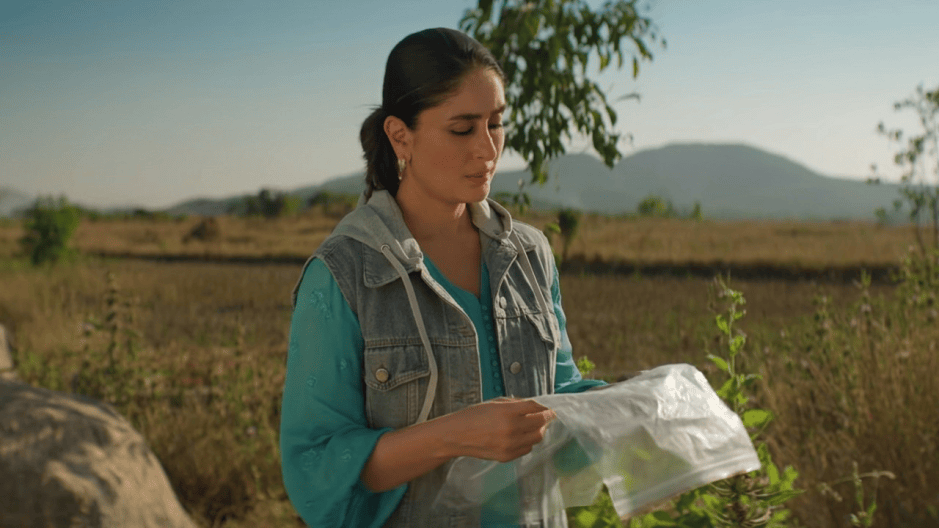
I watched Daayra on Netflix, and I must say that I liked the film. More than anything, I liked what it attempted to say, the questions it raised and, particularly, Kareena Kapoor Khan’s performance. For a change, I found her characterisation and acting particularly engaging. She brings a certain restraint and conviction to DCP Ajooni Kohli, a woman who understands that the law cannot simply be bent to accommodate public sentiment.
But, as is often the case with Bollywood, I found myself thinking about several things that went beyond the actual storyline. And some of these bothered me considerably.
The first is the casual glorification of toxic masculinity.
Prithviraj Sukumaran, who plays DCP Raman Kumar, is introduced with an almost overwhelming dose of machismo. There is an unmistakable celebration of the strong, decisive, no-nonsense male police officer. The man who takes charge, the man who doesn’t hesitate, the man who delivers what society believes the judiciary cannot.
We have seen this character a hundred times in Indian cinema. The macho man who believes that his judgement is superior to the law, whose aggression is interpreted as courage and whose disregard for established procedure is presented as an expression of his masculinity.
And this is where I think we need to pause.
There is another, rather ordinary-looking manifestation of patriarchy in the film that I found equally revealing. Consider Raman’s relationship with his wife.
I have been watching ER recently, and one of the storylines involves Mark Greene and his wife, who aspires to become a lawyer. She has her own ambitions, her own professional aspirations and her own expectations of marriage. She understands that Mark wants to become an excellent doctor and is committed to his career, but she also questions his workaholism and the amount of time he takes away from their relationship.
That is a relationship between two individuals who have careers, ambitions and expectations of their own.
Contrast this with Raman’s wife in Daayra.
When he has to leave her and go somewhere, she is all smiles. When he forgets an important date connected with her career, including her annual function, she is perfectly accommodating. Her response is essentially that they can do it next year.
Really?
Why are we still portraying women as such accommodating accessories to successful men? Why is a wife’s unquestioning support considered an indication of a good marriage? Why does her professional life become something that can always be postponed because her husband’s work is more important?
This is not necessarily about Raman being a bad husband. It is about the cinematic normalisation of a particular gender equation in which the man’s ambitions are consequential, while the woman’s ambitions are negotiable.
And that is patriarchy in one of its more insidious forms. It doesn’t always arrive shouting or imposing itself. Sometimes it arrives smiling, saying, “It’s all right. We can do it next year.”
The real crime in Daayra begins long before the encounter.
The film is loosely associated with the horrific 2019 Hyderabad veterinarian rape and murder case, although Meghna Gulzar has clarified that she drew from several real incidents rather than reproducing one particular case.
The premise is familiar. Four men accused of the rape and murder of a young woman are killed in a police encounter. The officer responsible becomes a public hero. An investigation is subsequently initiated to establish whether the encounter was legitimate or an extrajudicial killing.
But for me, the most disturbing part of the film isn’t the encounter itself.
It is what happens before it.
A mother approaches the police because her daughter is missing. She wants to register a complaint. She wants the police to act. And what does she encounter? Indifference, bureaucratic excuses, jurisdictional confusion and an extraordinary reluctance to take responsibility.
An FIR is delayed. The family is made to wait. The police do not respond with the urgency that the situation demands.
And this, to me, is the real systemic failure.
If the police had acted immediately when the mother first approached them, if they had registered the complaint and initiated the necessary investigation without wasting precious hours, could the young woman’s life have been saved?
We will never know. But that is precisely the question the film makes us confront.
We seem to have developed a policing culture that is considerably more enthusiastic about solving crimes after they happen than preventing them in the first place.
Our police are often reactive when they should be proactive.
I have often wondered about something rather mundane in our everyday lives. Look at traffic policemen in Mumbai. Sometimes they stand away from the traffic signal, almost hidden from motorists, waiting for someone to jump a red light so that they can catch them.
Why are they not positioned where their presence can prevent the violation in the first place?
The same question applies to policing more broadly.
Why are our systems so much better at responding to a crime after it has happened than preventing it from happening?
Why does a missing-person complaint have to become a murder investigation before the machinery of the state starts functioning with urgency?
Why must a family suffer the consequences of police apathy before anyone is held accountable?
This is not simply about individual policemen being inefficient. It is about an institutional culture that has become comfortable with negligence.
And Daayra gets this aspect right.
The failure to register a complaint promptly, the lack of urgency and the casual dismissal of a family’s concerns are not incidental details. They are part of the machinery that allows crimes to happen.
But an inefficient judicial system cannot become an excuse for extrajudicial killings.
Let me make one thing absolutely clear. I am not defending the four accused men. I am not arguing that the crime was any less horrific or that the victim and her family deserved anything other than justice.
What I am questioning is the assumption that the police have the right to become investigators, judges and executioners.
Yes, our judicial system is painfully slow. We know that. Cases drag on for years, sometimes decades. Victims and their families are made to relive their trauma repeatedly. Evidence is challenged, witnesses turn hostile, and loopholes are exploited.
There is a genuine crisis of confidence in the system.
But the solution cannot be to abandon the system altogether.
The moment we allow a police officer to decide who deserves to live and who deserves to die, we have surrendered one of the most fundamental principles of a constitutional democracy.
An encounter is not a trial. A police officer’s conviction is not proof. Public celebration is not a judicial verdict.
And this is where the two sides of Daayra become interesting.
Raman represents the sentiment that justice delayed is justice denied. Ajooni represents the belief that the law must remain the law, even when society is angry, even when the crime is horrific and even when the accused are deeply unpopular.
I find myself agreeing with Ajooni.
Not because I am indifferent to the suffering of the victim’s family, but because I believe that the rule of law must be protected precisely when it is most inconvenient to do so.
Otherwise, what exactly are we protecting?
Kareena Kapoor and the women who hold the film together.
I thought Kareena did a wonderful job. Her character is not constructed around the usual Bollywood template of a female police officer who must constantly prove that she is tougher than the men around her.
She is measured, observant and determined. She doesn’t need to shout to establish authority.
I also particularly liked the performances of the other women in the film, including the women police officers working with her.
And Kshitee Jog, who plays the victim’s mother, deserves special mention. Her portrayal of a mother trying to navigate an indifferent system while dealing with the disappearance and eventual death of her daughter is deeply affecting.
These women give the film its emotional and moral centre.
And perhaps that is what makes the film’s eventual conclusion all the more frustrating for me.
The ending: An opportunity missed?
This is where I have a serious disagreement with Meghna Gulzar.
The film builds towards an investigation that questions the legitimacy of the encounter. Ajooni and her team uncover inconsistencies. The police version is challenged. The evidence raises serious questions about what actually happened.
And then, instead of giving us the satisfaction of seeing Raman and his team held accountable, the film leaves us with an open ending.
We do not see Raman being arrested. We do not see the institutional consequences of the investigation. We do not see the matter come full circle.
I understand the argument for an ambiguous ending. Perhaps Meghna wants the audience to go home and think. Perhaps she doesn’t want to offer an easy resolution to a problem that has no easy resolution in real life.
I understand that artistic choice.
But I also wonder whether, in trying not to take a definitive position, the film ultimately allows the more powerful male character to retain the moral and emotional advantage.
Raman continues to occupy the space of the celebrated police officer. Ajooni, despite her investigation and her convictions, is left without a visible institutional victory.
And that bothers me.
I would have liked to see her take the investigation to its logical conclusion. I would have liked to see the police officers arrested and made to answer for their actions.
Not because the audience needs a conventional Bollywood climax, but because women who stand up to institutional power deserve to see their convictions translate into consequences.
An open ending can be intellectually stimulating. But it can also become a convenient way of avoiding accountability.
I am not suggesting that Meghna Gulzar deliberately set out to protect patriarchy. That would be an unfair assumption about her intentions. But I do think her narrative choice has that unintended effect.
And this brings me to the larger political context in which we are watching films like Daayra.
We live in a country where questioning the establishment, questioning institutions and questioning the exercise of state power can increasingly invite labels and accusations.
Where intellectuals and dissenting voices can be dismissed as dimaagi naxals rather than engaged with on the merits of their arguments.
In such an environment, a film like Daayra becomes particularly relevant.
It asks us to think beyond the immediate emotional gratification of seeing four accused men killed.
It asks us to question why the police failed the victim’s family in the first place.
It asks us whether we can celebrate an encounter without asking whether the law was followed.
It asks us whether the same police force that failed to protect a woman can suddenly become the unquestionable custodian of justice.
And, most importantly, it asks us whether we understand the difference between justice and revenge.
I suspect that audiences who are not accustomed to reading between the lines may come away with a very different interpretation. They might see Raman as the hero who delivered justice and Ajooni as the officer who unnecessarily questions him.
That, in itself, is an interesting commentary on how deeply the idea of the macho, decisive male saviour has been embedded in our collective imagination.
We are so accustomed to celebrating the man who takes the law into his own hands that we sometimes forget to ask why he believes he has the right to do so.
And perhaps that is the most uncomfortable question Daayra leaves us with.
My verdict
I liked Daayra. I liked its premise, its willingness to engage with an uncomfortable subject and its attempt to examine the relationship between public anger, police power and the judicial system.
I particularly liked Kareena Kapoor Khan, Kshitee Jog and the women who bring a certain emotional authenticity to the film.
But I wish Meghna Gulzar had been more courageous with the ending. I wish she had allowed Ajooni to have the last word, not merely in a philosophical exchange, but through the actual consequences of her investigation.
Because the point of a film about how men see women should perhaps also be to show what happens when women refuse to accept the world men have constructed for them.
We cannot keep celebrating the macho policeman, the accommodating wife and the heroic man who believes he knows better than the law.
And we certainly cannot keep confusing an encounter with justice.
A society that cannot protect its women before a crime takes place, and cannot guarantee due process after a crime has taken place, has a much bigger problem than the four criminals it wants to punish.
That, for me, is the real Daayra we need to break.

