Michael

When a Film Becomes Memory, Music, and Something Personal

There are films you watch.

And then there are films that take you somewhere you didn’t expect to go.

Michael did that to me tonight.

I walked into a near-empty auditorium for a midnight preview—barely ten of us scattered across seats—and yet, from the very first beat of “Wanna Be Startin’ Somethin’”, I wasn’t in that theatre anymore.

I was a child again.

The First Time I Met Michael

My earliest memory of Michael Jackson isn’t from a concert or a cassette—it was from television. Someone else’s house. Early 1980s. The first time I ever saw MTV.

And there he was.

Thriller.

I didn’t have the language for what I was seeing, but I knew I was witnessing something… otherworldly. Something that didn’t belong to just music—it belonged to movement, to imagination, to rhythm that travelled straight into your bones.

As I grew up, his music grew with me—

Beat It,

Bad,

Smooth Criminal,

Billie Jean,

and so many more.

And then, in college, I began to understand the man behind the music.

We Are the World wasn’t just a song.

Heal the World wasn’t just melody.

Earth Song and

They Don’t Care About Us weren’t just performances.

They were statements.

He wasn’t just entertaining us—he was speaking to us.

The Film: A Performance Recreated, Almost Too Perfectly

Walking into Michael, I had one hope—that it would do justice to someone who didn’t just define pop culture, but reshaped it.

And surprisingly, it does.

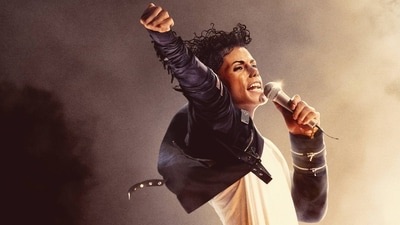
Jaafar Jackson—his own nephew—steps into the role with a kind of precision that is almost unsettling. The voice, the pauses, the body language, the stillness before movement—it’s all there.

At moments, it doesn’t feel like imitation.

It feels like invocation.

The recreations of iconic performances—Thriller, Beat It, his early Grammy stage, the London performances of Bad—are electric. Even in a nearly empty theatre, the energy felt full. Charged.

And yet, I couldn’t help but feel a quiet sadness.

How is a story like this… not filling seats?

How did we forget what global cultural history looks like when it stands right in front of it?

The Parts That Stayed With Me

There were moments I didn’t expect to be affected by.

One of them was the infamous Pepsi commercial accident—the burns, the pain, the shock. I had heard about it before, but the film brings you uncomfortably close to it. Close enough to feel the fragility behind the myth.

But what truly stayed with me was something far more personal.

His childhood.

His father.

The abuse.

There’s a moment where he asks others—lawyers, executives—to speak to his father on his behalf. And I understood that immediately.

Because I’ve lived that.

When you grow up with fear, with authority that crushes rather than guides, you don’t always find your voice directly. Sometimes, you borrow someone else’s.

Watching that wasn’t just watching Michael.

It was watching a version of myself I’ve known too well.

The Mother, The Apology… and What It Opened in Me

There is a scene where his mother says something I have never heard in my own life:

“I’m sorry I couldn’t protect you.”

And in that moment, something shifted inside me.

Because I realised—that absence of apology leaves a mark.

A quiet, persistent fracture.

It made me confront something I still carry. Not anger alone, but the weight of something that was never acknowledged.

This is what powerful cinema does.

It doesn’t just tell a story.

It reveals your own.

The Man Behind the Myth

The film also leans heavily into Michael’s gentleness—his love for animals, his childlike wonder, the softness that existed alongside his genius. His closeness to Barrie’s Peter Pan and the idea of Neverland. Guess what I have tattooed on my left arm. Tinker bell and Peter Pan soaring through the sky in silhouette.

At times, it feels almost too kind. Almost protective. There’s a noticeable absence of anything that might complicate his image.

Is it whitewashing?

Perhaps.

But it also raises a question—what if this was him, at his core?

And if it was, then the world didn’t just lose an artist.

It lost something far rarer.

Direction, Rhythm, and Restraint

From a filmmaking perspective, Michael understands balance.

It doesn’t drown you in music, nor does it strip it away. It moves between performance and personal life with a rhythm that feels intentional. The edits are sharp, the pacing controlled, and the emotional beats are given just enough space to land.

And importantly—it knows when to stop.

The film ends with his London performances, with a quiet suggestion:

His story continues.

And I hope it does.

Because there is so much more left to explore.

Final Thoughts

I walked into the theatre expecting a biopic.

I walked out having revisited my childhood, my relationship with music, and parts of myself I usually sit with.

Michael isn’t perfect.

But it is sincere.

It is immersive.

And at times, deeply, unexpectedly personal.

And perhaps the saddest part of the night wasn’t anything in the film—

It was how few people were there to witness it.
The Death of Dissent

“The price of liberty is eternal vigilance.” – Thomas Jefferson

In India, the assault on artistic freedom is not only cultural—it’s institutional. While earlier, censorship came in the form of social outrage or informal threats, now it often comes with state machinery behind it. The Central Board of Film Certification (CBFC) has become a gatekeeper of ideology, no longer simply certifying films, but often sanitising them.

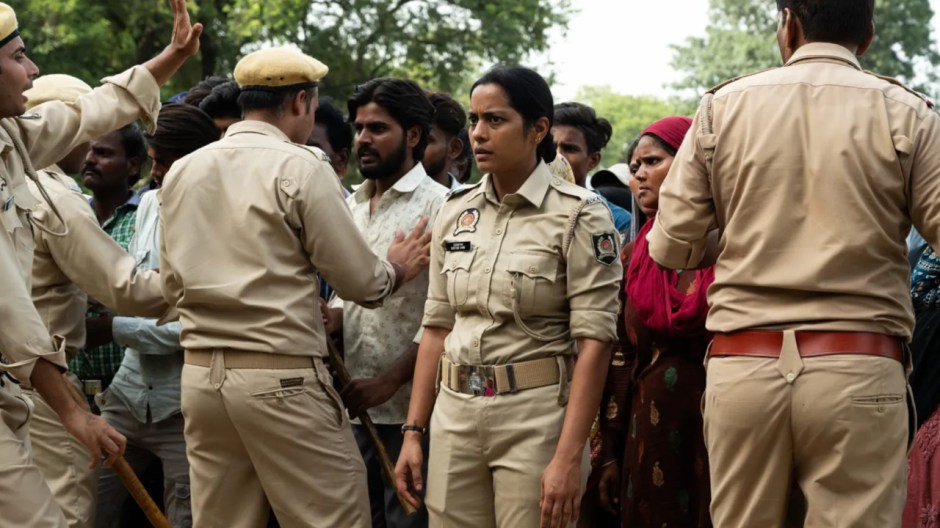
Take the example of the film Santosh, banned even before it could find a wider Indian audience. It was praised internationally for its portrayal of a female police officer navigating gender, caste, and justice in rural India. But its uncomfortable truths and non-heroic depiction of systemic failures did not sit well with gatekeepers of “Bharatiya values”. A narrative that does not serve the nationalist ideal must be suppressed, even if it is fiction.

Similarly, the biopic on Mahatma Jyotiba Phule, an anti-caste reformer and visionary, was throttled before it could breathe. Brahmin groups claimed misrepresentation—not because the facts were false, but because the mirror held up by Phule’s legacy continues to make the privileged castes uncomfortable. Ironically, we celebrate Phule on paper while resisting the full force of his ideas on screen.

Living in India today, it is impossible to ignore the tightening grip of censorship on art and cinema. Again, I reiterate: the recent banning of the film Santosh, and the heavy censorship applied to the biographical film on Mahatma Jyotiba Phule—criticised by Brahmin groups who claim it misrepresents them—highlight how selective our sensitivities have become. When historical depictions of Muslim rulers or the atrocities committed by invaders are shown, even if they date back centuries, they are welcomed or weaponised in the name of truth-telling. But when caste, patriarchy, or power structures within the Hindu fold are critiqued, outrage follows.

This is not about protecting truth—it’s about controlling narrative.

As Aldous Huxley warned, “Dictatorships arise out of war, and during war the people are ready to accept the most authoritarian measures.” And one of the first authoritarian measures is censorship. From banning books and films to suppressing dissenting voices, censorship is the favourite tool of fascist regimes. It doesn’t begin with concentration camps—it begins with the silencing of stories.

But censorship is not new in India. We’ve seen it in past decades too, even in a supposedly liberalised nation:

  • In 1996, Deepa Mehta’s Fire, a quiet tale of love between two women, was attacked by Shiv Sena members who vandalised theatres, calling it “anti-Hindu”.
  • Her next film, Water, which explored the plight of widows in Varanasi, had its sets destroyed by extremists. She was forced to shoot it years later in Sri Lanka.
  • In 2006, Anurag Kashyap’s Paanch was denied release by the CBFC, though it had nothing explicitly illegal—it just dared to be raw, violent, and too real.
  • Parzania, about the Gujarat riots, could not find distributors in Gujarat itself. A film based on a real tragedy was censored through fear, not law.

And then there are the invisible bans—the films that are never made, the books never written, the theatre never staged. The inner censor, born of intimidation, is the most dangerous of all.

  • Throughout history, we’ve seen how dangerous this silencing can be:
  • George Orwell’s 1984 was banned in several countries, including the USSR, for its unflinching portrayal of authoritarianism and surveillance.
  • Bertolt Brecht, the German playwright, fled Nazi Germany because his politically charged theatre was deemed subversive.
  • Pablo Picasso’s Guernica, a powerful anti-war painting, was banned in Spain under Franco’s regime, as it exposed the brutality of the Spanish Civil War.
  • Salman Rushdie’s The Satanic Verses was banned in multiple countries—including India—for alleged blasphemy, resulting in global controversy and threats to his life.
  • M.F. Husain, one of India’s greatest artists, was forced into exile due to threats and court cases from right-wing Hindu groups who took offence at his nude portrayals of Hindu deities.
  • A Clockwork Orange by Anthony Burgess, was pulled from circulation in the UK after being linked to youth violence, despite its complex meditation on free will.
  • Chinua Achebe’s Things Fall Apart was banned in parts of Africa for critiquing colonialism and Christian missionary zeal.
  • Federico Fellini and several Italian directors faced censorship under Mussolini’s fascist regime, where cinema had to conform to state propaganda.
  • Taslima Nasreen, the Bangladeshi author, has faced bans and exile for her feminist and secular writings that critique religious orthodoxy.

These are just ten examples that illustrate the same truth: art threatens only those who fear ideas. Every time power feels threatened, it does the same thing: it controls the narrative. This is how fascism begins—not with jackboots, but with red pens.

Let us also remember what Mahatma Gandhi did: he never demanded the banning of British goods through force. He simply asked Indians to consciously reject them, as an act of moral protest. The power of that choice lay in its voluntary nature. Boycott is democracy. Censorship is dictatorship. Mahatma Gandhi never imposed censorship. It was not a ban imposed by the state but a form of peaceful resistance that invited people to make a conscious choice, a form of protest rooted in ethical conviction. There’s a world of difference between a call to conscience and a top-down silencing.

Today, in India, we are banning fictional films that dare to tell truths. We are not even talking about documentaries that pose political questions based on ground realities—we are banning fiction that reflects uncomfortable realities. Santosh does not conform to the nationalist or upper-caste gaze, and thus it is removed. The Phule biopic threatens dominant caste narratives and so is sanitised. Meanwhile, historical epics glorifying Hindu kings are promoted as truth, not fiction. What then distinguishes our rhetoric from the Abrahamic rigidity we so often critique? Is Hinduism becoming as insecure as the fundamentalism it once stood apart from?

Huxley’s words ring chillingly true today:
“The effects of propaganda on public opinion form the foundation for fascism. If one can control what people hear, see, and say—one can shape how they think and, ultimately, how they behave.”

So, what kind of India are we building? One where truth is dictated by ideology? Where faith is invoked to shut down thought? Where hurt sentiments hold more weight than human suffering? We cannot claim to be a civilised, secular, pluralistic democracy if we only allow art that flatters the dominant caste, the dominant gender, the dominant religion.

True democracy is not only about voting—it’s about being able to tell stories, even uncomfortable ones. Especially uncomfortable ones. Art is meant to disturb the comfortable and comfort the disturbed. We do not need to agree with every artist. But we must defend their right to exist. That is the line between civilisation and censorship.

Salman Rushdie said, “No writer ever really wants to talk about censorship. Writers want to talk about creation, and censorship is anti-creation, negative energy, uncreation.” Neelam Chowdhry, a theatre director, said it best. “The artist does not only need freedom, but also must feel free.”

Censorship does not give this essential freedom. In fact, it brings a false sense of moral righteousness to destroy what one does not understand.

The choice is ours: do we become a nation that silences its artists, or one that listens—even when it’s uncomfortable?