Walking into The Devil Wears Prada 2, I’ll admit—I had expectations. I shouldn’t have. Sequels, especially to something as sharp and iconic as the original, rarely rise to the occasion.
This one doesn’t even try hard enough.
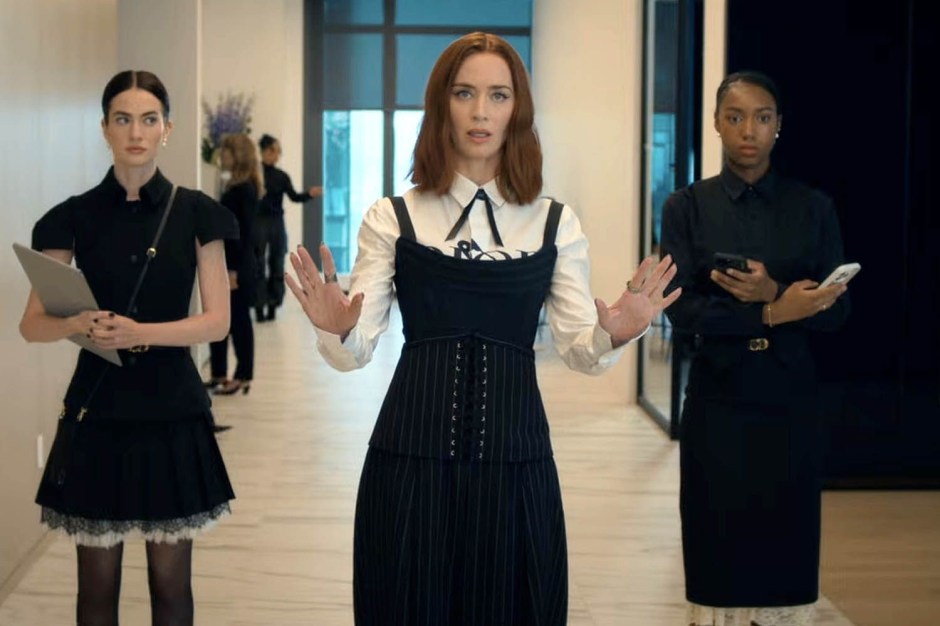
The film brings back Meryl Streep as Miranda Priestly, Anne Hathaway as Andrea Sachs, and Emily Blunt as Emily Charlton—but somewhere along the way, it forgets what made these characters electric in the first place.
What we get instead is a strangely sanitised version of a world that was once cutting, ruthless, and deliciously intimidating.
The bite is gone.
There are no truly sharp observations about fashion, power, or ambition. The iconic one-liners that defined the original film are largely missing—and the few that do land are handed almost entirely to Emily Blunt. She is, quite frankly, the only one who feels alive in this film. She carries the same acerbic energy, the same hunger—and ironically, she ends up framed as a kind of “villain vendor,” which feels both reductive and oddly misplaced. If anything, she feels like the natural successor to Miranda’s throne.
And you can’t help but think: why isn’t she in Andrea’s position?
The film leans heavily into aesthetics—yes, the clothes are stunning. Milan looks gorgeous. Fashion, visually, is still doing its job. But storytelling? That’s where it falters. The narrative feels flat, almost indifferent. The industry that once pulsed with ambition and ego now feels muted, like it’s been softened for comfort.
There’s a sense that as the magazine world fades into digital, the film itself loses its edge—as if human brilliance has been replaced with something safer, more forgettable.
The grit is missing.
The passion is missing.
The chutzpah is missing.
Two moments stand out:
One was Miranda’s conversation with Irv’s son—the voice of a new generation that, much like Timothée Chalamet, seems to believe that opera and ballet are dying art forms. There’s something deeply sad, almost tragic, about that idea. The suggestion that digital media can replace the tactile, emotional experience of magazines feels equally hollow. I still can’t bring myself to read a book on a screen—it lacks soul.
Yes, there are valid concerns about paper, sustainability, and the environment. But what unsettles me more is how quickly we are allowing digitalisation to replace real, human effort. As an editor, I feel this personally—AI is no longer a distant threat; it is already here, already capable of doing what I do.
The film touches on this anxiety, and I appreciated that it acknowledged the shift. But what frustrated me was that Miranda—who has always embodied authority, intelligence, and control—has no real comeback. No defence. No articulation of why craft, legacy, and human curation still matter.
And that silence feels like a loss.
The second moment is Miranda’s monologue referencing The Last Supper, where she speaks to Andrea about betrayal. It briefly rekindles the old magic—a reminder of what this film could have been. But it’s fleeting.
And that’s the tragedy here.
Even Miranda, once the embodiment of intimidating perfection, feels… toned down. As she herself might say—this isn’t New York anymore.
It’s New Jersey.
I dressed for the occasion, fully stepping into the world this film once celebrated. But walking out, I realised something uncomfortable:
I didn’t like it very much.
It’s not a terrible film. It’s just… disappointing. A glossy shell without the soul that made the original unforgettable.
And perhaps that’s the most unfashionable thing of all.
 Hearts Still Care