Made In Heaven

Made in Heaven

I admit I watched Made in Heaven,predominantly, because a dear friend, Anil Lakhwani, worked on the series. I also have a deep respect for the writing and overall aesthetic of Zoya Akhtar (she being my favourite director in Bollywood). I began watching the series with a sense of trepidation, knowing of its premise: the story surrounding the two main leads who are wedding planners, in Delhi. Each episode deals with a different wedding and the stories of the protagonists’ personal lives.

As I watched the first episode, I smiled at the wonderful Neena Gupta, who was such a relatable punjabi lady. And yes, I cringed at the depiction of a gay man, played by a cis-male, Arjun Mathur. Not because of his acting prowess, mind, but, because, I thought, like so many film makers, this depiction would be one that surmised homosexuality as just random sex-seeking and angst, against one’s own different self. The gay kiss was where I rolled my eyes – could they not have found an actor who was comfortable playing a gay man?

Then my friend, who had worked on the series and who I watched the series with, mentioned, “do you know how difficult it is to find an actor who is willing to play a gay man in Indian cinema?” I nodded. I didn’t say anything because I understood and was conflicted. Gay men have been playing straight roles all the time. But that’s our society and a different topic altogether. But a straight man, who should – ideally – value his work ethic and, for that matter, work with someone like Zoya, should jump at this role… Then again, that’s how I think and not how the world operates.

So, I decided to give the series another two episodes, before I called quits on it. However – the second episode got me hooked, and I finished the series, over a night’s viewing. That, in itself, should state how marvellous it is. But if it doesn’t, let me go on with the review.

Each episode deals with a marriage. We have a whole plethora of people being a part of them. Weddings, and the planning of, dealing with the concerns from royal households to that of a common man. Women, who are avaricious and succumb, like all flawed humanity, to the whims of this material world, to women who are empowered and revolt against patriarchal structures, encapsulate this world of marriage, life and love. We are shown grit and determination and then, also, the giving up of the self, love and practicality. Each marriage has something to convey to the Indian milieu – and it’s not just the people speaking English who this refers to. But perhaps, that’s who will end up watching this lovely depiction of the institution that is marriage.

Sobitha Dhulipala, who plays Tara, kept reminding me of Angelina Jolie. And like the latter’s choice of roles, Tara plays this ambitious woman who rises from the lower rungs of society and reaches the place in the ladder she wants to set foot on. Machiavelli would be proud, up to the point, of course, where the character starts her climb and the grey begins to show, soon after.

This is the best part of the show, there is no black and white. There are role reversals and people soaring to loveliness and they being equally capable of plunging into nastiness.

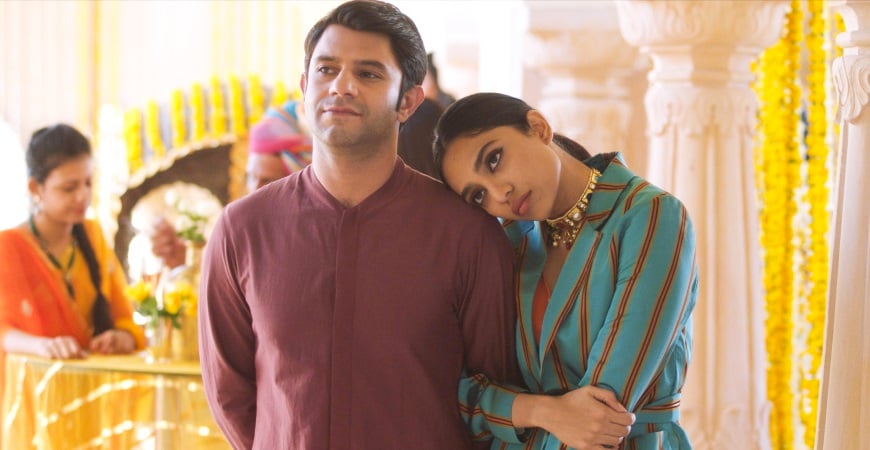
In one of these various shades of grey, falls Arjun Mathur’s character, Karan. Arjun plays the role with an angst unique to the gay subculture. He hits the role with a vulnerability that is discernible, in flashes, to only the most attentive watcher. He makes the character personal and tragic, elevating himself to the stage of coming out and accepting who he himself is. But this journey is not singular, it is taken by all the main leads and is superlative to watch.

The lovemaking doesn’t seem forced (though I will say, Arjun Mathur had to play a top gay man – I guess, showing a passive gay man would push the buck for an actor to pick up the role [?] but then I can also say that showing a femme gay man would also play into one of the many generic stereotypes that gay people have battled against, for so long). Conflict seems to be the name of the game – and alas, life.

Arjun’s love story and the character graph is one of the most intense ones – though I would also say, hurried. It appears most of our lives are encapsulated in nine hours. Most of us gay boys go through what he has gone through. The internalised homophobia, the phobic parent, the sexual abuse by the powers that be, the love gone wrong, the ease of finding sex, the extortion and, yet, the finding of help and succour in the face of adversity. We have all been there in bits and parts. He has brought it out so wonderfully – so sensitively. The scene at the dinner table with his father, where he breaks down and cries, remains my favourite.

I must also talk about the very complex character portrayal of Ramesh Gupta, played by the indomitable Vinay Pathak. The nuanced performance is fantastic, and he deserves a stalwart commendation. He portrays all that could go wrong when one is not true to who he or she is – he is what reality can be.

Homosexual sub culture is neither glamourised nor treated with disdain. It is what it is – another facet of humanity that needs to be recognised and accepted.

It is not just Arjun’s work, but the absolute genius of the side actor casting that needs worthy mention. Ayesha Raza, Kalki Koechlin (shining in a superb portrayal of a kind woman, lost in the understanding of who she is and what she wants), Jim Sarbh (the suave, eligible man who cannot profess his love and cannot be honest about it and so compensates for it in various other ways) – all fantastic!

Two episodes stand out as my favourites: “The Price of Love” where the bride rocks and becomes a personification of women empowerment and “It’s Never Too Late” where Dipti Naval is, as usual, brilliant and such a pleasure to watch. Feminism stands balanced in every episode, with a healthy dose of the portrayal of women who are gentle and cruel, lost and strong, ambitious and content. The best part is that I could feel, as I watched these episodes, that the writers were hardly ever passing judgement. They have tackled the topic of not just feminism and alternate lifestyles but also of drugs, corruption and the helping power of good counselling.

I have not seen such a web series in a very long time. It is, in equal proportions, mature and engaging, liberal and empowering, engaging and staid. I applaud all the makers behind this venture: with a special brava to the writer-directors: Alankrita Shrivastava, Zoya Akhtar and Reema Kagti, and two thumbs up to the other directors: Nitya Mehra and Prashant Nair.

Absolutely cool, will definitely be spreading the word.
Where the lost things go

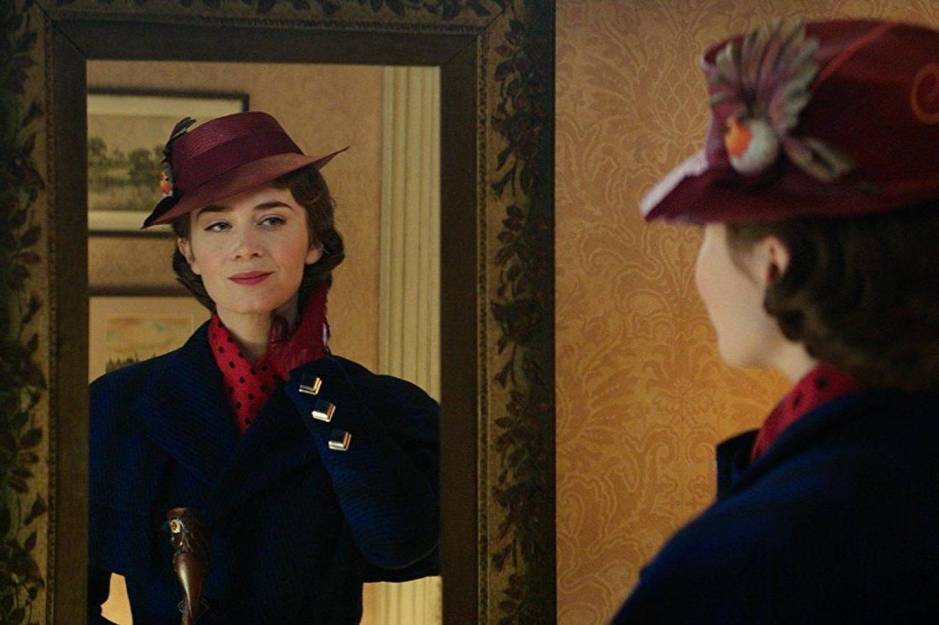
Mary Poppins was a wonderful movie. It took me to a place where the lost things go. It reminded me of why I was called Peter Pan by a friend so many years ago.

In the middle of life, I grew up somewhere, some time, and I lost perspective of the things that mattered.

Friends and siblings have grown up. The conundrum is that I look for independence and maturity in people I choose to build bonds with. I look down upon the ones who don’t think, who hope extensively. But I’ve also realized, especially when faced with people who are alien to emotion and responses based on the heart, I do not think that they will be happy in life.

I set a lot of score in things that have no real tangible source of happiness. A good wad of cash gets good things that are wanted, tangible, things that can be touched and – perhaps even loved. But these things, along with the cash, do not really matter, in the end. We are human beings – unfortunately – and we need love and we need the succour provided by the Other.

Death becomes final, if there is no love. Memory makes the person immortal. Experience and history are what carries you into the future, into existence forever. The poets and the writers and the painters tried to capture this into art and transcribe it into the tangible. I have known people who have moved away from sensibility and into sense, but I have also seen them despondent and eventually, I have seen them float into the sphere of feeling, sometimes unwittingly, sometimes deliberately and sometimes, fighting tooth and nail.

I have seen how sense takes flight and sensibility takes over, with a vengeance. It is almost as if she wants to wreck love with a violence. She seeks to punish, and she feels it is right as is her wont. But I have dealt with emotion my entire life. I grow weary of her. Sense has come to me while sensibility has been told to wait in the corner. I haven’t discarded her. I just wanted to talk a bit with her sister. It is as Mary Poppins says, it is the time between the dark and light. And sensibility hides quietly.

Some people I loved died, and some, tragically, have grown up. Yes. These elite have no need now of sensibility. They haven’t just taken a break from her… or so they like to think. They wish to do without her. They wish to draw boundaries. They wish for rules. Lines. Space. Independence. Finding themselves. But they do not realise that sense isn’t the only thing that will lead them to peace and fruition.

I know that when my child died in the middle of my home, she left for good. The floor she lay on is just a floor. The home she breathed her last is just a house. Sense asks me to know that death is final. Dreams are dreams and fears are unfounded. But somewhere from the dark within, sensibility whispers, gone but not forgotten. Trust, she says. Love, she reminds. And I turn to the dark, searching for the place where the lost things go. And I trust and I love and find her in me – sitting right next to Peter.

Padmaavat

Let me get this clear right at the onset: I am not a Sanjay Leela Bhansali fan. I believe, after Khamoshi, he didn’t do a lot in terms of bringing a really good script to life, with masterful characterization and nuances in human behavior. I have believed he is a virtuouso in creating sets and rendering a brilliant colour palette on screen with the vision of an operatic DOP; apart from that, his story-telling technique failed to make me see how he has been compared to K. Asif and Mehboob Khan.

That being said, I have watched his movies, trying in vain to find the elements that people find and save a few grandly depicted scenes, I was left shaking my head. Then the furor about his latest venture, Padmavati, now Padmaavat, made the democratic principle valid and I had decided to support the movie by being one of the first to watch it.

I did.

I write this blog entry because I feel the movie deserves all the good reviews it can get. So, without further ado, I dive in. If you are not interested in spoilers (but we all know how the movie is going to end…) please do not read further.

The film is based on Rani Padmavati, a legendary Hindu Rajput queen, written about in Padmavat, an Awadhi language epic poem written by Sufi poet Malik Muhammad Jayasi in 1540. A lot from this epic hasn’t been used in the film, for example, the talking parrot Hiraman, which made me a little sad, and the beginning of the movie wasn’t what I expected. I didn’t expect the Sinhalese princess to be running through the trees like Tauriel from The Hobbit, chasing a deer. But it is Sanjay Leela and I expected that the film would require a lot of artistic liberties. Of course, most film makers who deal with recreating epics and epic fantasies should know arrows shouldn’t be pulled out but be pushed through. But I digress, with this being my final lament about accuracy.

Padmavati becomes the wife of Ratan Sen (called Rawal Ratan Singh in later legends), the Rajput ruler of Mewar. Here, begins my journey to being impressed. Sanjay Leela Bhansali doesn’t remove the existence of Nagmati. In fact, it is in the due footage given to the ancillary characters that the film gets an all-rounded perspective and lustre. Nagmati’s struggle as the first wife and yet not the favoured or the more beautiful is well depicted. The struggle resolves without words as she follows Padmavati into her own end in fire.

In 1303, Alauddin Khilji, the Turko-Afghan ruler of the Delhi Sultanate, laid siege to the Chittor Fort in Rajputana. In the depiction of this potentate, the film takes its own darkness. What is a film without a good villain?

Ranveer Singh’s performance as Khilji takes on its own merit by the sheer dominance of character and the creation of it by the actor. Barbarism and carnal sexuality that must be tempered by all that is beautiful in the world are the features that Ranveer imbues into the portrayal. He has very little to help except his own personality. He has no great costumes or sets to support his aura; but from the beginning of the film with him striding in, demanding the hand of Mehrunissa, to the sword play between him and Ratan Singh he creates a monolithic presence filled with raw strength and political caprice.

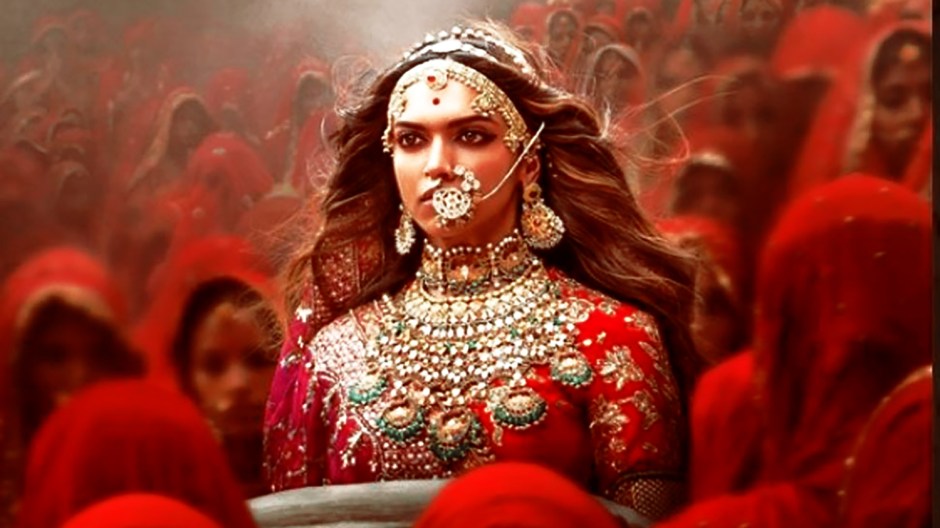
According to Padmavat, Khilji led the invasion motivated by his desire to capture Padmavati. The depiction of this heroic queen is untainted by her flying through trees in the first few scenes. Once married, the manifestation of being a very beautiful woman, dedicated to and wholly in love with her husband shines forth. Costumes, jewellery, make-up all form an intricate mix to create this character. Deepika has done justice to the role and has carried the depiction with élan, grace and dignity. She shines in the very last scenes, where she has no dialogue, but the last shred of her husband, as she walks through the rugged fort towards the pit of fire. She nailed it with a look. Brilliant!

Shahid did the best with what he was offered. Through the movie, he had very little to do except be the hero to the eponymous heroine of the movie. Personally speaking, it is, in the final duel, against Khilji, that he shines. Shahid is a dancer, and SLB has used this very beautifully. His movements against a barbarian who only knows how to hack and maim, are positively graceful. Note his feet as he moves around, they fly and drop. His whole aspect shines in this sequence, and we realise what he could have done, if the world lived by the code of honour and grace, beauty and chivalry.

As mentioned earlier, apart from the principal three, the supporting actors have supported the entire enfolding drama splendidly. Mehrunissa, played by Aditi Rao Hydari, speaks of the anguish of a woman who has no say against a despotic husband, but who rebels in the saving of Padmavati and Ratan Singh – and one cannot fail to think about her journey of loving a tyrant and defying him, when she realizes the futility of her love.

Most surprising was the nuanced performance of Jim Sarbh playing Malik Kafur, Taj al-Din Izz al-Dawla, a eunuch who became the slave-general of Khilji. Jim Sarbh has done a worthy job, though I think the character asked of a more beautiful young man. Whether or not the relationship was historically a sexual one, SLB plays a tricky ball game, by making Malik love Khilji, but Khilji being incapable of love, looks only to him for counsel that ‘always proved appropriate and fit for the occasion’. I said I was surprised because the relationship that SLB portrays here is layered. He has Malik referred to as Khilji’s ‘begum’ by the Rajputs, and yet in the same sequence gives Malik Kafur the standing of a general brave enough to be the sole messenger into enemy territory. There are wonderful dialogues between Khilji and Kafur about unrequited love.

The cinematography takes the scope of the story and yet doesn’t go overboard with it. There are typical shots of war with the enemy clans descending on each other, but the ones to note are the pan shots of single characters walking across the expanse of the screen. Every scene becomes a journey to someone. The lighting is subdued, never harsh, giving the heroic characters a halo and the negative characters a shadow. The songs are unnecessary. Not one remains with you. But the background score is haunting and the one dedicated to Padmavati is riveting in its beauty – a fit descant for a beautiful woman who unwillingly sparked a war and knew how to willingly end it.

The movie is definitely worth a watch. The story doesn’t flag, the pace doesn’t lessen. There are very few moments that seem out of place and they end in the first few minutes of the film. Once the movie picks up in pace, it is unfailing leading up to its crescendo.

***

A note worth mentioning:

A few days ago, I read a brilliant review, feminist in its take and filled with a certain angst that has taken over the modern day world. After reading this, I looked at the movie from how the modern day woman would see it. I remembered the final scenes of the movie and how beautifully they were shot, and I remembered the pregnant woman and the fact that I averted my eyes from the screen. The second time I did that was when Deepika was walking straight into the fire.

For me then, the scenes were laced with a grim pathos, apart from the beauty depicted. I realised what the reviewer meant. I saw the scenes then as someone who was ignorant of a larger world view, where honour and chastity were strict conventions, unbending in their will and nature. I grew morose. I pulled down this review. But then I spoke to my partner, and he brought some perspective from a different angle.

I looked at the movie as what it was: a movie. Based on a poem. Depicted in the best light possible in terms of technique, cinematic skill and artistry. I didn’t see the need to ascribe any social message to it, especially since the furor regarding this very same movie was regarding a conventional social message. I looked at the movie, the way a movie should be looked at. It had no message to entail, except for the narration of a story, like one my grandmother would tell me with no great agenda in mind, but to entertain and disseminate the aspect of humanity.

There are manifold issues involved here, of course. The issue of whether she should have chosen death over dishonour, the issue of how such a choice was celebrated by the movie, the issue of a woman’s right to be. But then, I could talk about my belief in euthanasia, about abortion, about how it is the choice of a person to do what he wills with his own life, and the fact that she did, indeed, have a choice, and she did, indeed, choose.

The movie, like most Hindi movies, was a movie I watched just to entertain and not to have an agenda in mind – except perhaps the right to freedom of expression. And I exercise the same right by keeping this review in place.