We Are a Species at War With Everything That Lives
I haven’t been able to sleep.
A little dog has been occupying my thoughts. I heard her yelp from my kitchen. When I went downstairs, I found that she had been attacked by another dog. She wasn’t from my neighbourhood. Perhaps she had been displaced by the destruction of her habitat. Perhaps she had been abandoned. Perhaps the noise and chaos of Diwali had sent her wandering. I don’t know.
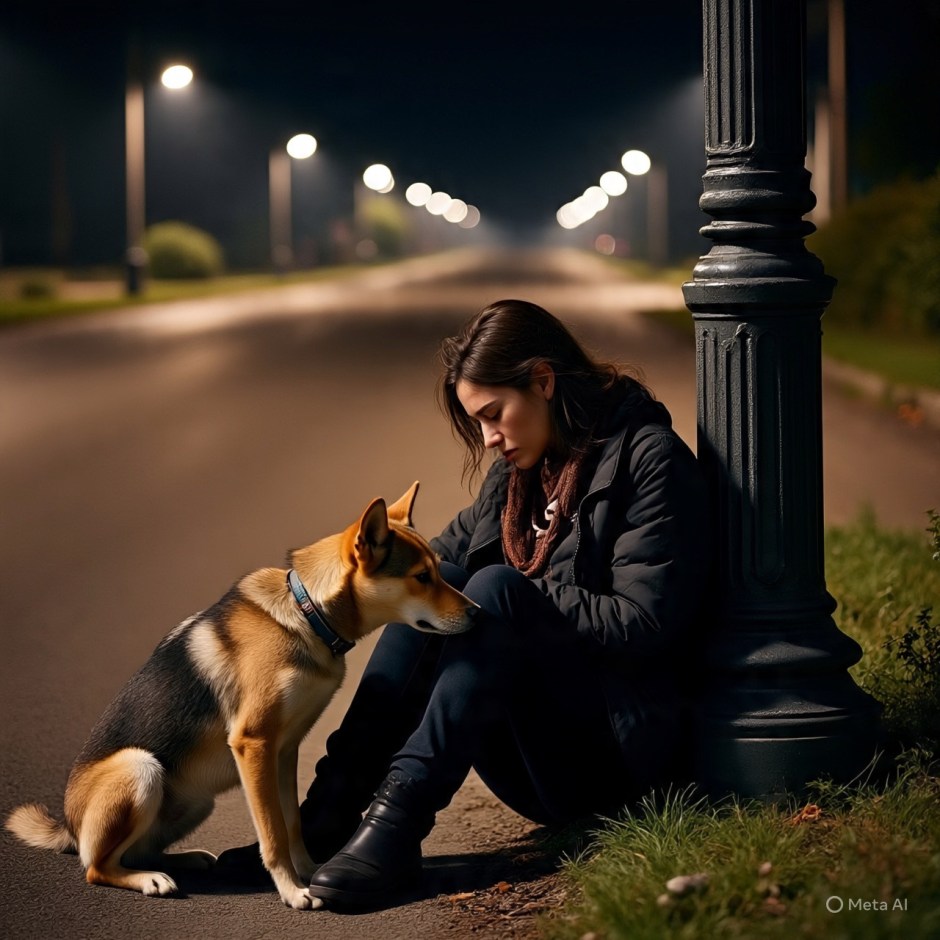
I found her a little further down the road, sitting at a bus stop. I called out to her, and she came. I took some food for her. She must have been hungry and thirsty. She was terribly frightened. I sat with her while she ate.
And then I came home.
That’s all I could do.
But I haven’t been able to stop thinking about her. Where did she go? Is she safe? Will someone feed her tomorrow? Will another dog attack her? Will a car run her over? Will she find somewhere to sleep? Will she even survive the next few days?
And then I made the mistake of looking at Instagram.
One video led to another. Dogs being beaten, kicked, dragged, crushed under cars, deliberately run over. Animals being harassed, poisoned, abandoned and tortured. People threatening those who feed strays. Housing societies inventing arbitrary rules to make the lives of community animals and the people who care for them increasingly difficult.
And the cruelty isn’t confined to animals.
Two days ago, a municipality cut down trees in a park. Trees that had stood for a hundred years. A century of growth, shade, birdsong, nesting, shelter and life, reduced to stumps and debris. All in the name of progress and a coastal road.
A hundred years.
Think about what that means. Those trees were standing long before most of us were born. They had witnessed generations of people come and go. Birds had made homes in them. Insects, squirrels and countless other creatures had built their lives around them. They were part of an ecosystem that took decades to establish and cannot simply be replaced by planting a few saplings.
And we destroy them in a matter of hours.
For what? For whose benefit? Who gets to decide that an existing ecosystem is expendable? Who gets to decide that a neighbourhood’s relationship with its green spaces is less important than another infrastructure project?
We keep invoking development as though the word itself absolves us of every consequence. As though progress means concrete, roads, reclamation and construction, irrespective of what gets buried beneath them.
And when the public questions these decisions, we are told that this is necessary. That it is inevitable. That the greater good demands sacrifice.
But who defines the greater good? And why is it so often nature that must pay the price?
I cannot help wondering how much of this is really about public interest and how much is about money, political interests and the enormous machinery of contracts, construction and profit. We have become remarkably good at dressing up greed as development.
Meanwhile, the animals are left to fend for themselves.
Dogs lose their territories when trees are felled, parks are demolished and neighbourhoods are transformed. They are displaced, frightened and forced into unfamiliar surroundings. They are then blamed for being there. They are treated as nuisances, inconveniences and threats.
We destroy their homes and then complain about their presence.
We make their existence difficult and then punish them for trying to survive.
And the people who feed them? They are harassed, threatened and sometimes treated as though compassion itself were an offence. Imagine having to defend the simple act of putting out food and water for a hungry animal.
What sort of society have we become?
There is also something deeply disturbing about the institutional indifference surrounding animal suffering. Reports of abuse in shelters, the treatment of animals in laboratories, the trafficking and illegal slaughter of dogs, and the lack of meaningful accountability in cases of cruelty should horrify us. When institutions responsible for enforcing the law fail to act adequately, or when proceedings drag on while animals continue to suffer, what message are we sending?
That some lives simply don’t matter?
That suffering is acceptable as long as it happens to a creature that cannot vote, protest, hire a lawyer or speak to a television camera?
And what of the forests, the wetlands, the parks and the trees? They cannot approach a court. They cannot organise a protest. They cannot write an appeal. They simply disappear.
We seem to have constructed a world in which human convenience is the ultimate measure of value. Everything else must justify its existence in relation to us.
Animals must be useful, entertaining, domesticated or profitable. Trees must provide shade, fruit or some quantifiable environmental benefit. Land must generate revenue. Water must be diverted. Forests must make way for roads. Even silence and open spaces seem to have become luxuries we can no longer afford.
And I am tired of it.
I am tired of seeing cruelty presented as an isolated incident when it is so deeply embedded in the way we organise our lives. I am tired of the indifference. I am tired of the excuses. I am tired of people who can watch an animal suffer and walk away without a second thought.
I am tired of the arrogance of a species that believes it has the right to decide which lives deserve protection and which can be sacrificed.
I genuinely feel that humanity is a virus. We spread, consume, occupy, exploit and destroy. We take more than we need, want more than we can use and call our endless appetite ambition. We leave destruction behind us and call it civilisation.
And the most infuriating part is that we know better.
We know about climate change. We know about biodiversity loss. We know what happens when natural habitats disappear. We know that trees are not interchangeable pieces of municipal furniture. We know that animals experience pain, fear, hunger and grief. We know all of this, and yet we continue.
How much is enough?
How many trees must fall? How many animals must die? How many habitats must disappear? How many more roads, buildings, towers, malls and concrete structures do we need before we realise that we are consuming the very things that make this planet habitable?
I don’t have an answer.
I only know that tonight, somewhere in my neighbourhood, there may be a frightened little dog trying to find a safe place to sleep. And I know that a hundred-year-old tree that stood in a park just days ago is no longer there.
These are not unrelated tragedies. They are symptoms of the same fundamental problem: our inability to coexist with anything that doesn’t serve us.
I wish I had the money to buy a large piece of land and turn it into a sanctuary. A place where abandoned, injured and displaced animals could live without fear. Where dogs wouldn’t have to fight for food, where no one would kick them, chase them away or run them over. A place with trees, shade, water and space. A place where life could simply exist without having to justify itself.
I know I cannot save every animal. I know I cannot stop every tree from being cut down. I know I cannot fight every battle.
But I refuse to become indifferent.
Perhaps that’s the only thing I can promise.
I will continue to feed. I will continue to help. I will continue to speak up. I will continue to be angry when I see injustice. I will continue to believe that the lives of animals, the existence of trees and the preservation of our natural world are not optional considerations.
And I will continue to question a definition of progress that requires us to destroy everything that cannot defend itself.
I don’t know how to reconcile my love for this world with my growing disappointment in the species that dominates it.
I look at humanity and sometimes I feel nothing but rage.
Then I look at a frightened dog accepting food from a stranger, a bird building a nest in an old tree, or a squirrel running across a branch, and I remember what this world is supposed to be.
Perhaps the tragedy is not that we share this planet with other living beings.
It is that we have forgotten how.
How much more must we destroy before we understand that this planet was never ours alone?

