The Devil Wears Prada 2

Walking into The Devil Wears Prada 2, I’ll admit—I had expectations. I shouldn’t have. Sequels, especially to something as sharp and iconic as the original, rarely rise to the occasion.

This one doesn’t even try hard enough.

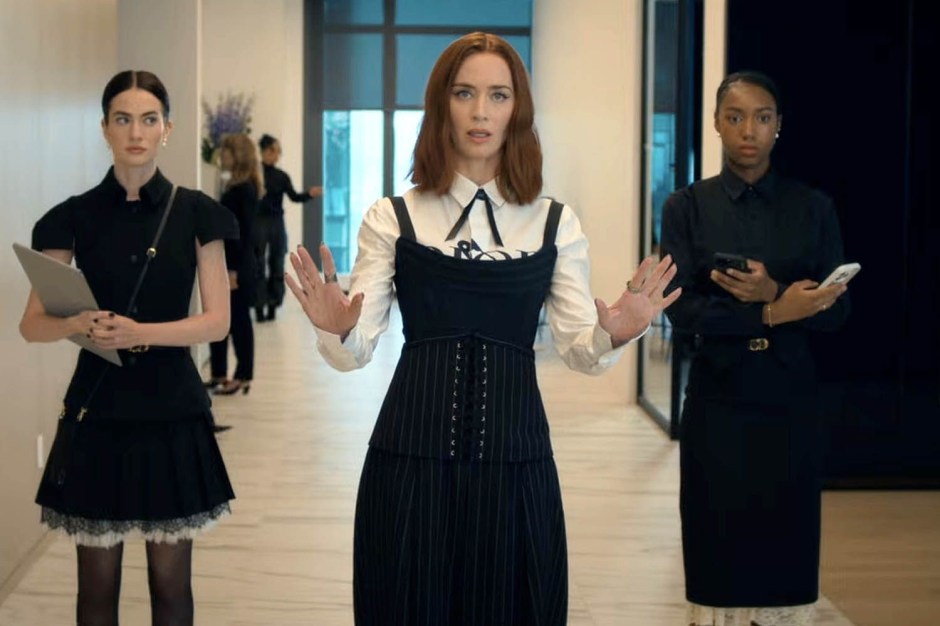
The film brings back Meryl Streep as Miranda Priestly, Anne Hathaway as Andrea Sachs, and Emily Blunt as Emily Charlton—but somewhere along the way, it forgets what made these characters electric in the first place.

What we get instead is a strangely sanitised version of a world that was once cutting, ruthless, and deliciously intimidating.

The bite is gone.

There are no truly sharp observations about fashion, power, or ambition. The iconic one-liners that defined the original film are largely missing—and the few that do land are handed almost entirely to Emily Blunt. She is, quite frankly, the only one who feels alive in this film. She carries the same acerbic energy, the same hunger—and ironically, she ends up framed as a kind of “villain vendor,” which feels both reductive and oddly misplaced. If anything, she feels like the natural successor to Miranda’s throne.

And you can’t help but think: why isn’t she in Andrea’s position?

The film leans heavily into aesthetics—yes, the clothes are stunning. Milan looks gorgeous. Fashion, visually, is still doing its job. But storytelling? That’s where it falters. The narrative feels flat, almost indifferent. The industry that once pulsed with ambition and ego now feels muted, like it’s been softened for comfort.

There’s a sense that as the magazine world fades into digital, the film itself loses its edge—as if human brilliance has been replaced with something safer, more forgettable.

The grit is missing.
The passion is missing.
The chutzpah is missing.

Two moments stand out:

One was Miranda’s conversation with Irv’s son—the voice of a new generation that, much like Timothée Chalamet, seems to believe that opera and ballet are dying art forms. There’s something deeply sad, almost tragic, about that idea. The suggestion that digital media can replace the tactile, emotional experience of magazines feels equally hollow. I still can’t bring myself to read a book on a screen—it lacks soul.

Yes, there are valid concerns about paper, sustainability, and the environment. But what unsettles me more is how quickly we are allowing digitalisation to replace real, human effort. As an editor, I feel this personally—AI is no longer a distant threat; it is already here, already capable of doing what I do.

The film touches on this anxiety, and I appreciated that it acknowledged the shift. But what frustrated me was that Miranda—who has always embodied authority, intelligence, and control—has no real comeback. No defence. No articulation of why craft, legacy, and human curation still matter.

And that silence feels like a loss.

The second moment is Miranda’s monologue referencing The Last Supper, where she speaks to Andrea about betrayal. It briefly rekindles the old magic—a reminder of what this film could have been. But it’s fleeting.

And that’s the tragedy here.

Even Miranda, once the embodiment of intimidating perfection, feels… toned down. As she herself might say—this isn’t New York anymore.

It’s New Jersey.

I dressed for the occasion, fully stepping into the world this film once celebrated. But walking out, I realised something uncomfortable:

I didn’t like it very much.

It’s not a terrible film. It’s just… disappointing. A glossy shell without the soul that made the original unforgettable.

And perhaps that’s the most unfashionable thing of all.
Meryl Streep

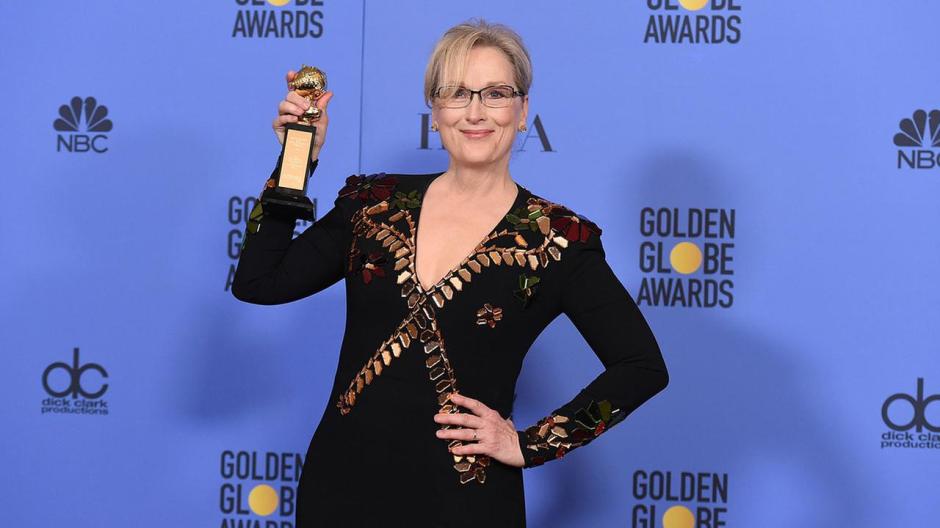
It is seldom that a speech made by a Hollywood Celebrity makes me sit up and applaud. The last time I did that was when Christopher Reeve gave a speech at the Oscars in 1996. I have liked Meryl Streep, I have never been an immense fan, tonight it was a pleasure to hear her speak after she received the Cecille B DeMille award for her contribution to cinema. And she surely has. Through the years, she has amassed a body of work that few actresses can boast of.

Over time, I have felt a strange apathy seeping into me. I have lost faith in humanity, more or less. The ideals that I grew up with, from the works of authors and poets and artists and visionaries and dreamers with much larger sensibilities than the world could hope to replicate, ingrained in me a sense of balance that I find shaken by the times we live in. The people I grew up with and have loved seem to have their moral compasses aligned opposed to mine and I find that it is difficult to be meaningful in a world that is now a strange dystopia.

I keep thinking of Yeats’ The Second Coming:

Turning and turning in the widening gyre
The falcon cannot hear the falconer;
Things fall apart; the centre cannot hold;
Mere anarchy is loosed upon the world,
The blood-dimmed tide is loosed, and everywhere
The ceremony of innocence is drowned;
The best lack all conviction, while the worst
Are full of passionate intensity.

I don’t want to quote the entire poem, it leaves me with an eerie feeling of premonition and I shudder. But tonight, I heard Streep’s speech and she spoke so beautifully that I just had to keep a transcript of it here. So without further ado, here it is:

Please sit down. Thank you. I love you all. You’ll have to forgive me. I’ve lost my voice in screaming and lamentation this weekend. And I have lost my mind sometime earlier this year, so I have to read.

Thank you, Hollywood Foreign Press. Just to pick up on what Hugh Laurie said: You and all of us in this room really belong to the most vilified segments in American society right now. Think about it: Hollywood, foreigners and the press.

But who are we, and what is Hollywood anyway? It’s just a bunch of people from other places. I was born and raised and educated in the public schools of New Jersey. Viola was born in a sharecropper’s cabin in South Carolina, came up in Central Falls, Rhode Island; Sarah Paulson was born in Florida, raised by a single mom in Brooklyn. Sarah Jessica Parker was one of seven or eight kids in Ohio. Amy Adams was born in Vicenza, Italy. And Natalie Portman was born in Jerusalem. Where are their birth certificates? And the beautiful Ruth Negga was born in Addis Ababa, Ethiopia, raised in London — no, in Ireland I do believe, and she’s here nominated for playing a girl in small-town Virginia.
Ryan Gosling, like all of the nicest people, is Canadian, and Dev Patel was born in Kenya, raised in London, and is here playing an Indian raised in Tasmania. So Hollywood is crawling with outsiders and foreigners. And if we kick them all out you’ll have nothing to watch but football and mixed martial arts, which are not the arts.

They gave me three seconds to say this, so: An actor’s only job is to enter the lives of people who are different from us, and let you feel what that feels like. And there were many, many, many powerful performances this year that did exactly that. Breathtaking, compassionate work.

But there was one performance this year that stunned me. It sank its hooks in my heart. Not because it was good; there was nothing good about it. But it was effective and it did its job. It made its intended audience laugh, and show their teeth. It was that moment when the person asking to sit in the most respected seat in our country imitated a disabled reporter. Someone he outranked in privilege, power and the capacity to fight back. It kind of broke my heart when I saw it, and I still can’t get it out of my head, because it wasn’t in a movie. It was real life. And this instinct to humiliate, when it’s modeled by someone in the public platform, by someone powerful, it filters down into everybody’s life, because it kinda gives permission for other people to do the same thing. Disrespect invites disrespect, violence incites violence. And when the powerful use their position to bully others we all lose. O.K., go on with it.

O.K., this brings me to the press. We need the principled press to hold power to account, to call him on the carpet for every outrage. That’s why our founders enshrined the press and its freedoms in the Constitution. So I only ask the famously well-heeled Hollywood Foreign Press and all of us in our community to join me in supporting the Committee to Protect Journalists, because we’re gonna need them going forward, and they’ll need us to safeguard the truth.

One more thing: Once, when I was standing around on the set one day, whining about something — you know we were gonna work through supper or the long hours or whatever, Tommy Lee Jones said to me, “Isn’t it such a privilege, Meryl, just to be an actor?” Yeah, it is, and we have to remind each other of the privilege and the responsibility of the act of empathy. We should all be proud of the work Hollywood honors here tonight.
As my friend, the dear departed Princess Leia, said to me once, take your broken heart, make it into art.