There is a strange fear that comes with grief, one that people do not talk about very often.
We speak of the pain of loss, of the tears, of the emptiness that follows when someone we love leaves this world. But there is another fear hidden beneath the sorrow — the fear that time will slowly take the sharpness of that grief away.
And with it, perhaps, the memory of the one we loved.
That fear has been sitting quietly with me these days.
It has been only six days, since Xena left.
Six days since I last saw her. It feels interminable. Six days since I last held her ears in my hands. Six days since I called out her name across the house the way I had done for twelve years.
“Xena, come in, let’s go to sleep.”
“Xena, come on, let’s go down.”
“Xena, drop the stick.”
“Xena, don’t be irritating.”
“Xena, do susu.”
“Xena, come wash your face.”
Twelve years of small conversations that filled my days and nights.
Before Xena, there was Zoe — a love so deep that when she passed away it felt as if a part of me had been hollowed out. And then Zach and Xena entered my life and slowly they filled that emptiness with other hearts to care for.
For twelve years Xena consumed my days and nights. Her cancer was virulent.
And now she is gone.
When she passed away, Zach had already left just forty days earlier. I was grieving him too, of course. But when Xena went, it felt as if my grief found a new direction. All my tears seemed to move towards her.
Perhaps that is how grief works. It flows towards the most recent absence.
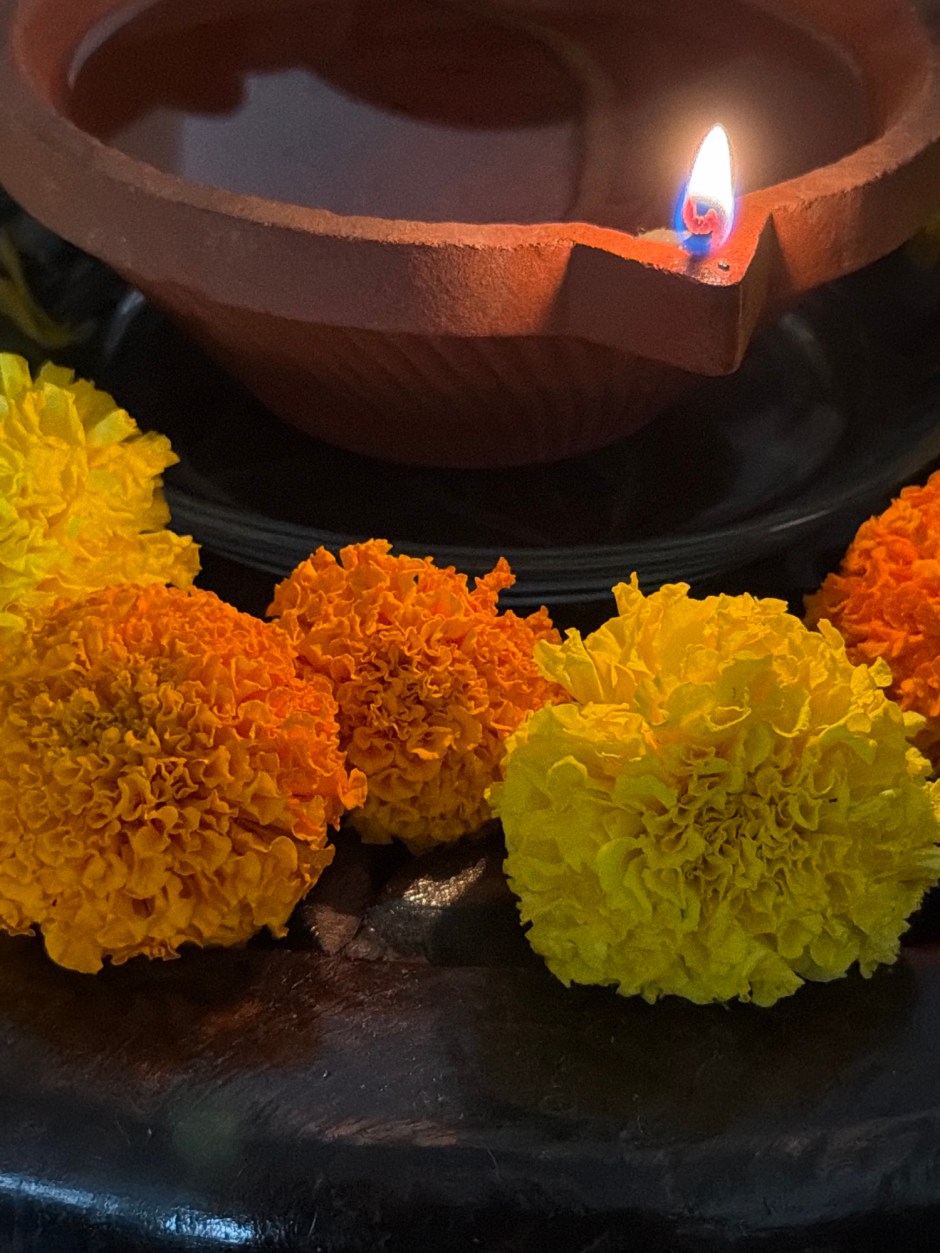
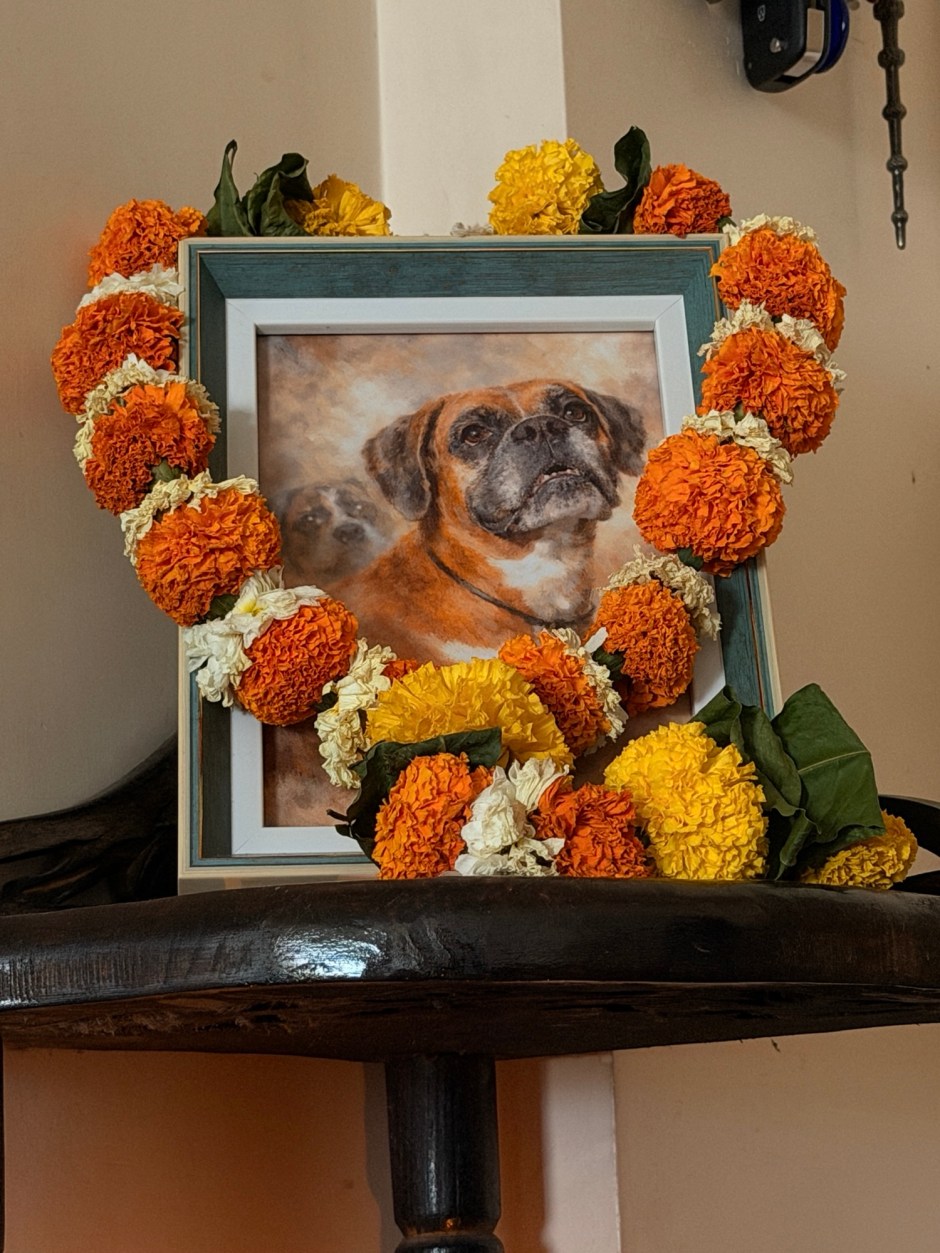
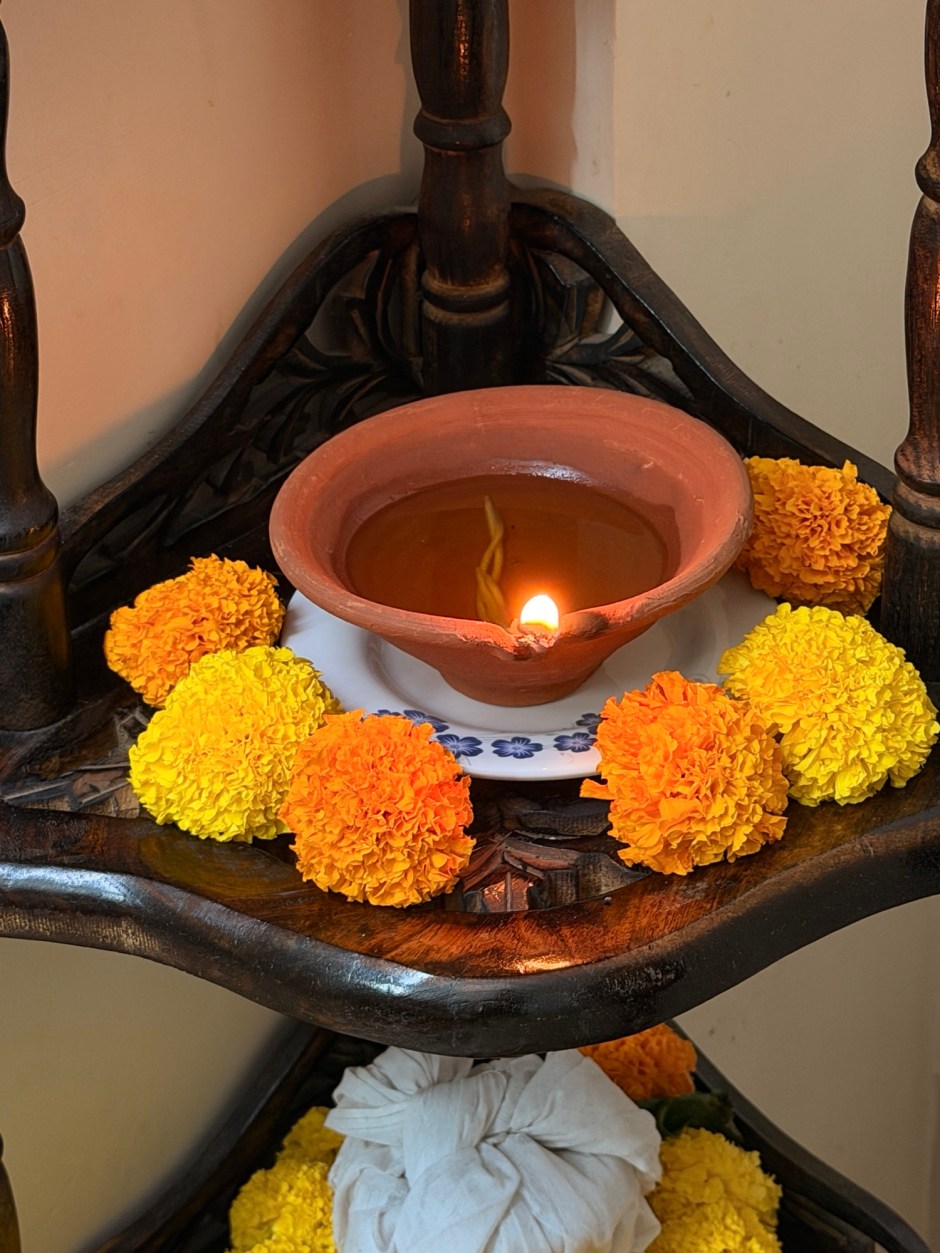
Today her photograph sits in front of me. There is a diya burning beside it. Flowers around the frame. Her ashes resting quietly in a small mud pot.
A card arrived for her from the veterinary hospital where I had taken her years ago. They sent birthday wishes. They did not know she had passed away.
On 22nd March, it will be her 12th birthday.
But she is no longer here.
All that remains are the rituals of remembrance — a photograph, a lamp, flowers, and memories.
Her energy, her vigour, her stubborn personality that filled every corner of the house — gone.
And this is where the strange fear of grief begins.
People say that with time we remember our loved ones even more. But what I have experienced in life is something slightly different.
I do remember them.
I remember Zoe.
I remember Diana.
I remember Rolfe.
I remember Bonzo.
But what remains are fragments — moments suspended in time. A habit. A sound. A particular way they looked at me. A unique bark. A quirk. A memory of how deeply I loved them.
The fullness of their presence slowly dissolves.
And that frightens me.
Because right now Xena is everywhere in my mind. Every corner of the house reminds me of her. Every routine carries her shadow.
But time is relentless. It moves forward without asking permission from the grieving heart.
And I fear the day when she will no longer be present in every thought.
Life, of course, continues. I have Zuri now — gentle, timid, obedient Zuri. She has been a little sad since Xena left. Xena was the dominant one in the house, the loud presence. Zuri lived in her shadow, though she loved her in her own quiet way.
Sometimes I think Zuri might benefit from another companion.
But even that thought carries guilt.
What if a new puppy fills my days the way Xena once did? What if my attention shifts again, the way it did when Xena came and Zach slowly moved into the background of my daily life? Some souls consume your time and energy. Some are quiet loves.
What if loving again pushes memory further away?
And yet that, perhaps, is the strange truth about love.
Each new love does not replace the old one. It simply occupies the present moment more fully.
The past becomes softer, quieter, distant.
Maybe that is not forgetting.
Maybe that is simply how the heart survives.
Still, tonight as the diya burns beside her photograph, I find myself whispering a small hope into the quiet room:
That time may move forward,
that life may demand new love,
that memories may become fragments —
but that somewhere inside me
the love I felt for Xena, for all my kids gone, will never truly fade.
 Hearts Still Care
You must be logged in to post a comment.