Of Fathers and Gay Sons

I always believe that talking about one’s issues detracts much of the power they seem to instill within them. Without portraying myself as a victim, I must talk about what I faced with my father.

I don’t know why the abuse happened. Maybe because while I grew my father realized that I wasn’t what he would term ‘a normal son’. I was effeminate. I loved dressing up in girls’ clothes. I identified as homosexual by the age of thirteen.

I don’t know why the abuse started. I was raised amongst the strongest women I know. My grandmother, my mother and my aunts, paternal and maternal, my sisters – all immensely strong women. I had no great male role models. My father was an alcoholic and jobless, since a couple of years after I was born. So, I never really had a healthy relationship with him. I do remember hoping he would be a good father. Having ideas of him taking care of me and my sister and being there for us. I looked up to him, but my real, first memory of him was punching fists into a wall.

That kind of physical stress was mandatory and I guess he must have had his own frustrations. That being said, I have a very low opinion of people who do not take care of their own responsibilities. He had a family. He had a wife whom he had pursued and won over in college. She was responsible and hard working. He had two children. He had a brave mother and wonderful sisters. But these things were irrelevant.

Now, we know that addiction is a disease. And he may have suffered, too. There was not many a time when he would be sober enough to have even a modicum of a civil conversation. By nature, I suppose he was a bully and the drinking exacerbated that trait within him.

When we lived in a joint family, I was sheltered. My grandmother and nanny would shield me from any outburst. At the point in time, his attacks would be generic. Onto a wall, a yelling match, beating the floor. When my mom took us away from the joint family and into the home she built for herself, he followed us there.

She decided to give the marriage another go. However, that time proved the worst for me. I was reeling under the pain of the separation from a grandparent I loved dearly, the house I grew up and the school I was familiar with. I went into a locality that was not populated, a school where I was bullied mercilessly and a home that felt alien.

My mom and sister would leave in the morning with me. School, for me, ended at one pm. But my sister’s convent had the timing of 9-4pm, so my mom would finish work and come back with her. That generally meant that I was home alone, from one to around five. That also meant I was the only one left to deal with my father.

He would be at home, inevitably drunk, and to a thirteen year old, he appeared terrifying. At school, because of my being effeminate, I would get picked on by the boys. Anyone who has been bullied at school would understand this. I got picked on during recess. It got bad and so I would go and either be by myself in the playground or go and lock myself in the toilet, until recess would end. Two boys, Shakeel and Shoaib, brothers, finally decided to become friends with me and included me in their group.

When I would leave from school, I would get back home, hoping that my father would be passed out on the divan in the hall, so I wouldn’t have to deal with him. I would open the door, praying that he would not be at home. On one of these days, when I got home, I chanced upon my first porn. He had passed out with the porn playing on the television. It was 1988 and I was thirteen.

Dad would bang open doors. That is how he declared he was awake. To this date, if someone slams a door, my heart sinks. He would pick a fight with me, on any pretext. It could be something as simple as getting him a glass of water. He wouldn’t want to do these chores himself. He would want to be served. Most times, I would give him lip. And that would end up with me being shoved around.

The beatings ranged from mild to severe. However, most of the trauma was psychological. His approach. What he would ask for. What he would do. If I wouldn’t listen, he would beat the cupboard or the wall. It reminded me of how a male gorilla throws a tantrum and beats his chest. If I would not acquiesce to his demands, I would get a slap. Or he would catch hold of the flesh of my trapezius muscle and squeeze. Hard. Or he would hold my neck and throw me down on the bed.

This carried on for a few years. I grew up but I was gangly and thin. The fear he had ingrained set in deep. Outwardly, I wouldn’t let it show. I stood up to him, got beat and stood up again. The day he choked me until I blacked out was the day it all changed. You see, my maternal grandparents witnessed this happening and they couldn’t stop him either. So, my mom was told and she took the necessary steps to get him out of our lives.

Years later, I hold no grudges against him. He was not meant to be a father. He was not meant to be much at all. He had his own demons, I would guess. I remember also the time he had hugged me and he had apologized. I had cried in his arms. But he was drunk then, too, so I wonder if he remembered that episode, ever. A few years ago, he said, “I knew you were that way (gay), since you were two.” By that, I assume he remembered a lot.

When he passed away in July 2018, I felt no acrimony, or anger. I cried as I set fire to his pyre, because of all the things that could have been but were not. I cried because like society, or like life itself, he personified all that could go wrong, and despite him, I became who I am today. I prevailed.

I remember all of it. I express it to share my experience. I write this not just as a mere catharsis, but as a testimony to the fact that life does get better. You realise that there are reserves of strength deep within you that can see you through anything – and if I didn’t have a father worth the name, I had a mother who was better than most (of course, it is a whole different issue that she wanted me to join the army).
Familiar Ghosts

I can’t sleep.

Those I lost,

Those I will lose,

Come to me,

For company,

Or to confuse.

My eyes, swollen with sick

And love,

Cannot shut;

And I keep thinking,

If…But…

Visions from the past

Haunt me,

Like drapes in the wind.

I smile to see

Familiar ghosts

Wait,

In some dust;

And I must know

Insomnia and fear

Are ghosts, too.

Made In Heaven

Made in Heaven

I admit I watched Made in Heaven,predominantly, because a dear friend, Anil Lakhwani, worked on the series. I also have a deep respect for the writing and overall aesthetic of Zoya Akhtar (she being my favourite director in Bollywood). I began watching the series with a sense of trepidation, knowing of its premise: the story surrounding the two main leads who are wedding planners, in Delhi. Each episode deals with a different wedding and the stories of the protagonists’ personal lives.

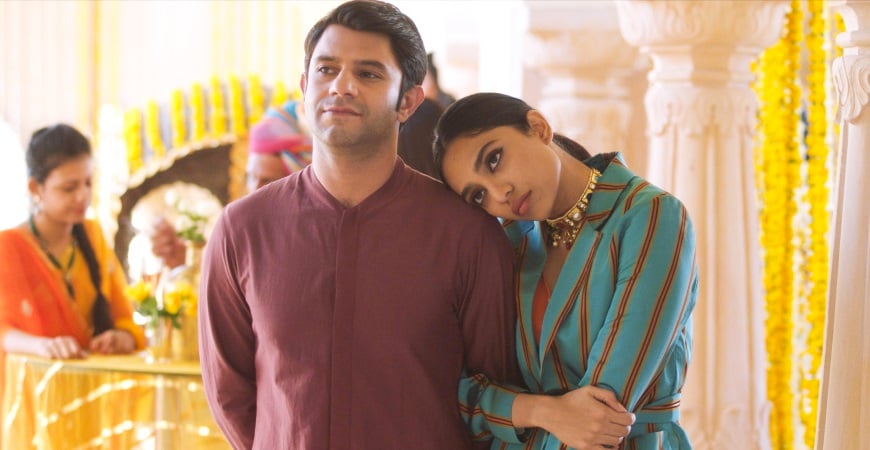
As I watched the first episode, I smiled at the wonderful Neena Gupta, who was such a relatable punjabi lady. And yes, I cringed at the depiction of a gay man, played by a cis-male, Arjun Mathur. Not because of his acting prowess, mind, but, because, I thought, like so many film makers, this depiction would be one that surmised homosexuality as just random sex-seeking and angst, against one’s own different self. The gay kiss was where I rolled my eyes – could they not have found an actor who was comfortable playing a gay man?

Then my friend, who had worked on the series and who I watched the series with, mentioned, “do you know how difficult it is to find an actor who is willing to play a gay man in Indian cinema?” I nodded. I didn’t say anything because I understood and was conflicted. Gay men have been playing straight roles all the time. But that’s our society and a different topic altogether. But a straight man, who should – ideally – value his work ethic and, for that matter, work with someone like Zoya, should jump at this role… Then again, that’s how I think and not how the world operates.

So, I decided to give the series another two episodes, before I called quits on it. However – the second episode got me hooked, and I finished the series, over a night’s viewing. That, in itself, should state how marvellous it is. But if it doesn’t, let me go on with the review.

Each episode deals with a marriage. We have a whole plethora of people being a part of them. Weddings, and the planning of, dealing with the concerns from royal households to that of a common man. Women, who are avaricious and succumb, like all flawed humanity, to the whims of this material world, to women who are empowered and revolt against patriarchal structures, encapsulate this world of marriage, life and love. We are shown grit and determination and then, also, the giving up of the self, love and practicality. Each marriage has something to convey to the Indian milieu – and it’s not just the people speaking English who this refers to. But perhaps, that’s who will end up watching this lovely depiction of the institution that is marriage.

Sobitha Dhulipala, who plays Tara, kept reminding me of Angelina Jolie. And like the latter’s choice of roles, Tara plays this ambitious woman who rises from the lower rungs of society and reaches the place in the ladder she wants to set foot on. Machiavelli would be proud, up to the point, of course, where the character starts her climb and the grey begins to show, soon after.

This is the best part of the show, there is no black and white. There are role reversals and people soaring to loveliness and they being equally capable of plunging into nastiness.

In one of these various shades of grey, falls Arjun Mathur’s character, Karan. Arjun plays the role with an angst unique to the gay subculture. He hits the role with a vulnerability that is discernible, in flashes, to only the most attentive watcher. He makes the character personal and tragic, elevating himself to the stage of coming out and accepting who he himself is. But this journey is not singular, it is taken by all the main leads and is superlative to watch.

The lovemaking doesn’t seem forced (though I will say, Arjun Mathur had to play a top gay man – I guess, showing a passive gay man would push the buck for an actor to pick up the role [?] but then I can also say that showing a femme gay man would also play into one of the many generic stereotypes that gay people have battled against, for so long). Conflict seems to be the name of the game – and alas, life.

Arjun’s love story and the character graph is one of the most intense ones – though I would also say, hurried. It appears most of our lives are encapsulated in nine hours. Most of us gay boys go through what he has gone through. The internalised homophobia, the phobic parent, the sexual abuse by the powers that be, the love gone wrong, the ease of finding sex, the extortion and, yet, the finding of help and succour in the face of adversity. We have all been there in bits and parts. He has brought it out so wonderfully – so sensitively. The scene at the dinner table with his father, where he breaks down and cries, remains my favourite.

I must also talk about the very complex character portrayal of Ramesh Gupta, played by the indomitable Vinay Pathak. The nuanced performance is fantastic, and he deserves a stalwart commendation. He portrays all that could go wrong when one is not true to who he or she is – he is what reality can be.

Homosexual sub culture is neither glamourised nor treated with disdain. It is what it is – another facet of humanity that needs to be recognised and accepted.

It is not just Arjun’s work, but the absolute genius of the side actor casting that needs worthy mention. Ayesha Raza, Kalki Koechlin (shining in a superb portrayal of a kind woman, lost in the understanding of who she is and what she wants), Jim Sarbh (the suave, eligible man who cannot profess his love and cannot be honest about it and so compensates for it in various other ways) – all fantastic!

Two episodes stand out as my favourites: “The Price of Love” where the bride rocks and becomes a personification of women empowerment and “It’s Never Too Late” where Dipti Naval is, as usual, brilliant and such a pleasure to watch. Feminism stands balanced in every episode, with a healthy dose of the portrayal of women who are gentle and cruel, lost and strong, ambitious and content. The best part is that I could feel, as I watched these episodes, that the writers were hardly ever passing judgement. They have tackled the topic of not just feminism and alternate lifestyles but also of drugs, corruption and the helping power of good counselling.

I have not seen such a web series in a very long time. It is, in equal proportions, mature and engaging, liberal and empowering, engaging and staid. I applaud all the makers behind this venture: with a special brava to the writer-directors: Alankrita Shrivastava, Zoya Akhtar and Reema Kagti, and two thumbs up to the other directors: Nitya Mehra and Prashant Nair.

Absolutely cool, will definitely be spreading the word.