Preeti Sikka

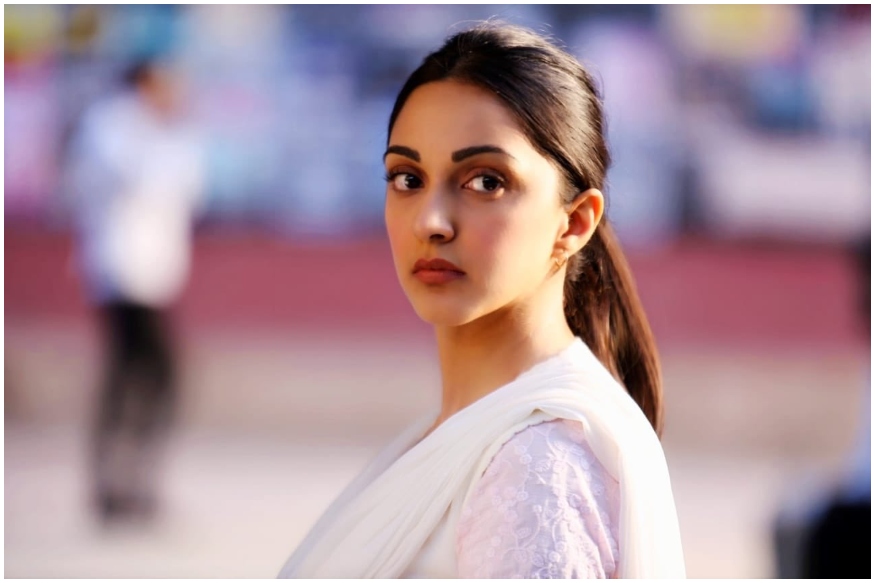
I wasn’t going to write a review on a movie like Kabir Singh. But today, I had another discussion with a friend who liked the movie. I don’t consider it to be a good movie. Socially or technically. The movie should actually be called Preeti Sikka. Because let’s face it, the person who breaks the fourth wall is her.

I know where the movie goes wrong. So many places. But look at the way it seems to be earning bucks. Most of the people on social media seem to be loving it. It was made with a budget of 60 crore and it earned 380 crore at the box office. What was I missing?

I decided to save my opinion until after I saw the movie. I first started watching Arjun Reddy on Netflix, and then after a while, the subtitles and what was going on was too much to process for my mind, so I switched over to Kabir Singh. The same director directed the two and the scenes have been replicated to a letter, so I don’t suppose I missed out on nuances in the original. Though I have been told by a director friend, who has seen both, that Vijay Devarkonda version has portrayed sensitivity – attributing it to Vijay’s depiction of the character. I don’t think I shall be able to see Arjun Reddy though.

Most of the vignettes (if I can call them that) in the movie reek with such machismo that it sets feminism back several decades. I have been told of the culture of med college life, but first year college girls, walking like subjugated slaves, (the heroine in virginal white) isn’t something that I can still quite get over. The movie is like the over-the-top, male-dominated Hindi movies you watch, where the brash hero is filled with such ego that the match stick he flicks from his lips can skewer the villain standing yards away. I guess it’s a different sort of fantasy genre.

Maybe not.

Maybe these things actually happen in our society. Where a woman is taken over without a by your leave and branded as a Texan cowboy would do to his cattle. It’s a fair analogy. Because that is exactly what Preeti becomes, essentially.

If I may, psychologically dissecting the character, her father seems to be no better. So she was raised to be subservient? And of course, when hero and father meet there is a furthering of catastrophe. And then there is a slapping episode. Again, I must note, the scene seems to be the rage on tiktok, with most influencers on tiktok, using Kabir’s dialogues, castigating Preeti. (Sometimes, I wonder if the dark ages really left.) No one really thinks about how overwhelming his ego is. And if they do, they are actually celebrating it. Not a very healthy phenomenon.

I am say that this is also really worrisome, because this sort of thing actually happens. People go catatonic after a break up. I know I did. Of course, I am a different breed, because I didn’t go tearing into my ex’s life, demanding an explanation. I did however demand that he choose between his family and my love … but there was no violence. There was a tearing apart. It was a wrenching so devastating, I could feel what Kabir went through. But once again, I just realized that people love differently, some not so strong enough to withstand pressures of the world, and I let it be at that.

There is that kind of love that makes you break all bonds of sanity and society and head into a turmoil of passion. Some would say, that is what passion and love are. Haven’t romance novels written copiously of strong, hot headed heroes lifting girls and carrying them off to their castles? I should know, I used to read them by the dozen. Have society and age influenced me so strongly that I have forgotten what it was to be in the grips of passion? Of course, if I met my ex, I may ask for an explanation. Because I don’t believe that true love ends. It carries on. As is shown in this movie.

Which is the only part of the movie I liked, the fact that he overcomes his ego enough to take on the girl and her baby – even if it was not his own. And then the about turn by Preeti. Seriously though, the movie should have been named after her. The only character that sticks to her guns and lives by her code. I mean, she could have started drinking and hooking up, too… but I guess that is just too much to ask – to even be thought of for a woman to do. Or maybe, let’s just face it, the movie wanted to portray that women aren’t stupid enough to be so utterly selfish and self-destructive.
Joker

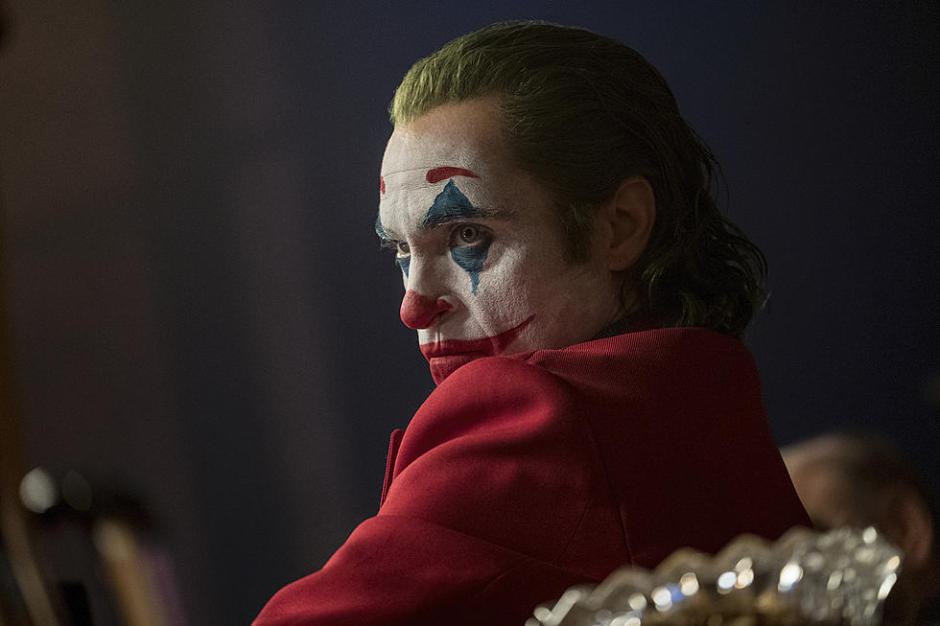
Joaquin will win the Oscar for Best Male Performance, next February. No doubt about it. Unless I see a better contender in the coming months, this is what I take away from Todd Phillips’ Joker. The film extends itself over a diaspora of human emotions and sympathy drenches its frames from the very beginning. There have been many interpretations of the eponymous character, the most defining one being the one portrayed by the indomitable Heath Ledger. However, one can say that The Dark Knight’s Joker would pick up where this one leaves off.

The story is a simple – and I would even call it clichéd – a mix of timeworn retellings that make up of most movies dealing with psychotic breaks and the various triggers that society sets out for the weaker sections that populate it. The average guy once again seizing power in the upheaval that follows through the movie, and the dynamic of nihilism combined with psychosis keeps sparking until it bursts forth in the climax.

When I saw the trailer a few months ago, I knew what I was in store for. There was no light that peeked through any of the script and what most of the fluorescence and shadowed daylight did was show the angled bent of the character’s descent into madness. The cinematography of the movie is superb. The play of light and shadow in a scene with Phoenix at the back of a bus, littered with graffiti, moving down a bridge is one of my favourites. A close second is the overhead shot of Phoenix in the dressing room, in full regalia.

I will not go into the details of the story. The script is a character study. The following of a polite, unassuming, troubled soul into his future. His past keeps cropping up at various moments and his struggles to make sense of it keeps aligning the viewer to his state of mind. The beauty of the madness is the innocence of it. Abuse and neglect by parental figures forms the twisted backbone of the Joker here. Watching disability create isolation is another theme that Phoenix portrays so well.

That laugh. Man, he should get an award for just cultivating that laugh.

The more I speak about Phoenix’s performance, the less it would be. The spiral he goes through as he commits the first murders is surreal, and the surrealism flows out toward you in the following dance. Did I mention it was exquisite? This actor has taken the mantle from Ledger and created another story of the Joker. Just as dynamic, chaotic, deranged and tumultuous – but the difference here is that the bats he faces are all within. It is a psychological war that he loses – it is his faith, his hope and his belief structure. It is a study of a victim who turns inward, finds the bedlam within, and lets it devour himself and the ones around.

In accordance with this, Lawrence Sher’s cinematography sets the tone of the movie. Everything is muted, subdued. It’s just the clowns that pop with their makeup and green hair. Some scenes leave a mark: Phoenix’s close ups, the angled back, the scenes in public transport, the sun hitting a running train, and the curtain call scene. Superlative poetry in picture.

I have mentioned the plot is not great. The segues formulate into clichés more than once. The interesting part to note is the fact that though madness is used as a tool to create situations it doesn’t always do so with absolute certainty – that in itself, grasps the idea of insanity. You can see what the character sees, and feels what he feels with no great clarity given to the ones behind the fourth wall. Your sharing this ambiguity makes his madness logical. There are friends who watched it with me who found this fact unnerving.

I will add something as a personal view. When I observe the protagonist’s descent into madness because of certain circumstance, I understand why it happened and I shudder to note how society ignores and mistreats mental illness that leads to his becoming an antagonist. I understand victim hood. I do not celebrate it leading to murder. One must mark a moment of concern when the audience cheers as he descends the stairs, emblazoned in a red suit, and dances. The dance is exquisite and pathetic, true – but there should be the following of dread in the onlooker, not anticipation.

The rest of the cast are mere extensions of Phoenix. DeNiro stands strong. Conroy is her usual raving characters. No, the film is solely Joaquin Phoenix’. This movie is definitely worth a watch, and once you do, it will stay with you for a long while, settling on your heart as ash settles on fresh snow.

Made In Heaven

Made in Heaven

I admit I watched Made in Heaven,predominantly, because a dear friend, Anil Lakhwani, worked on the series. I also have a deep respect for the writing and overall aesthetic of Zoya Akhtar (she being my favourite director in Bollywood). I began watching the series with a sense of trepidation, knowing of its premise: the story surrounding the two main leads who are wedding planners, in Delhi. Each episode deals with a different wedding and the stories of the protagonists’ personal lives.

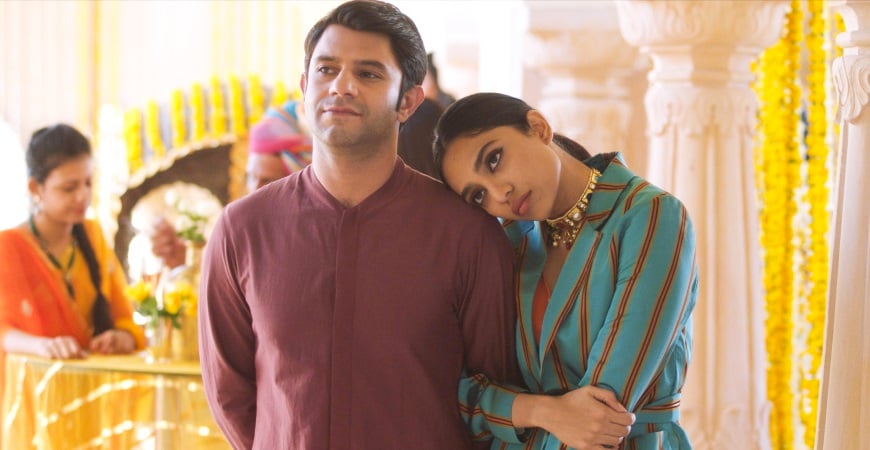
As I watched the first episode, I smiled at the wonderful Neena Gupta, who was such a relatable punjabi lady. And yes, I cringed at the depiction of a gay man, played by a cis-male, Arjun Mathur. Not because of his acting prowess, mind, but, because, I thought, like so many film makers, this depiction would be one that surmised homosexuality as just random sex-seeking and angst, against one’s own different self. The gay kiss was where I rolled my eyes – could they not have found an actor who was comfortable playing a gay man?

Then my friend, who had worked on the series and who I watched the series with, mentioned, “do you know how difficult it is to find an actor who is willing to play a gay man in Indian cinema?” I nodded. I didn’t say anything because I understood and was conflicted. Gay men have been playing straight roles all the time. But that’s our society and a different topic altogether. But a straight man, who should – ideally – value his work ethic and, for that matter, work with someone like Zoya, should jump at this role… Then again, that’s how I think and not how the world operates.

So, I decided to give the series another two episodes, before I called quits on it. However – the second episode got me hooked, and I finished the series, over a night’s viewing. That, in itself, should state how marvellous it is. But if it doesn’t, let me go on with the review.

Each episode deals with a marriage. We have a whole plethora of people being a part of them. Weddings, and the planning of, dealing with the concerns from royal households to that of a common man. Women, who are avaricious and succumb, like all flawed humanity, to the whims of this material world, to women who are empowered and revolt against patriarchal structures, encapsulate this world of marriage, life and love. We are shown grit and determination and then, also, the giving up of the self, love and practicality. Each marriage has something to convey to the Indian milieu – and it’s not just the people speaking English who this refers to. But perhaps, that’s who will end up watching this lovely depiction of the institution that is marriage.

Sobitha Dhulipala, who plays Tara, kept reminding me of Angelina Jolie. And like the latter’s choice of roles, Tara plays this ambitious woman who rises from the lower rungs of society and reaches the place in the ladder she wants to set foot on. Machiavelli would be proud, up to the point, of course, where the character starts her climb and the grey begins to show, soon after.

This is the best part of the show, there is no black and white. There are role reversals and people soaring to loveliness and they being equally capable of plunging into nastiness.

In one of these various shades of grey, falls Arjun Mathur’s character, Karan. Arjun plays the role with an angst unique to the gay subculture. He hits the role with a vulnerability that is discernible, in flashes, to only the most attentive watcher. He makes the character personal and tragic, elevating himself to the stage of coming out and accepting who he himself is. But this journey is not singular, it is taken by all the main leads and is superlative to watch.

The lovemaking doesn’t seem forced (though I will say, Arjun Mathur had to play a top gay man – I guess, showing a passive gay man would push the buck for an actor to pick up the role [?] but then I can also say that showing a femme gay man would also play into one of the many generic stereotypes that gay people have battled against, for so long). Conflict seems to be the name of the game – and alas, life.

Arjun’s love story and the character graph is one of the most intense ones – though I would also say, hurried. It appears most of our lives are encapsulated in nine hours. Most of us gay boys go through what he has gone through. The internalised homophobia, the phobic parent, the sexual abuse by the powers that be, the love gone wrong, the ease of finding sex, the extortion and, yet, the finding of help and succour in the face of adversity. We have all been there in bits and parts. He has brought it out so wonderfully – so sensitively. The scene at the dinner table with his father, where he breaks down and cries, remains my favourite.

I must also talk about the very complex character portrayal of Ramesh Gupta, played by the indomitable Vinay Pathak. The nuanced performance is fantastic, and he deserves a stalwart commendation. He portrays all that could go wrong when one is not true to who he or she is – he is what reality can be.

Homosexual sub culture is neither glamourised nor treated with disdain. It is what it is – another facet of humanity that needs to be recognised and accepted.

It is not just Arjun’s work, but the absolute genius of the side actor casting that needs worthy mention. Ayesha Raza, Kalki Koechlin (shining in a superb portrayal of a kind woman, lost in the understanding of who she is and what she wants), Jim Sarbh (the suave, eligible man who cannot profess his love and cannot be honest about it and so compensates for it in various other ways) – all fantastic!

Two episodes stand out as my favourites: “The Price of Love” where the bride rocks and becomes a personification of women empowerment and “It’s Never Too Late” where Dipti Naval is, as usual, brilliant and such a pleasure to watch. Feminism stands balanced in every episode, with a healthy dose of the portrayal of women who are gentle and cruel, lost and strong, ambitious and content. The best part is that I could feel, as I watched these episodes, that the writers were hardly ever passing judgement. They have tackled the topic of not just feminism and alternate lifestyles but also of drugs, corruption and the helping power of good counselling.

I have not seen such a web series in a very long time. It is, in equal proportions, mature and engaging, liberal and empowering, engaging and staid. I applaud all the makers behind this venture: with a special brava to the writer-directors: Alankrita Shrivastava, Zoya Akhtar and Reema Kagti, and two thumbs up to the other directors: Nitya Mehra and Prashant Nair.

Absolutely cool, will definitely be spreading the word.