Moonlight

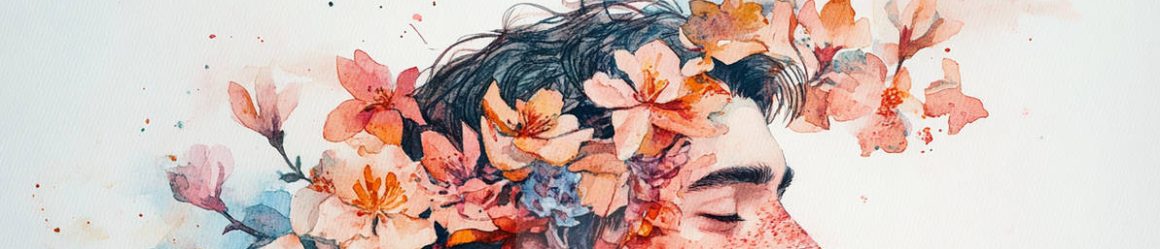
In moonlight, black boys look blue. The moon and being blue, surreal and vibrant. I watched the movie with trepidation, I thought like most movies dealing with homosexuality, the end would be tragic. But it’s actually beautiful. Breath-taking almost.

My favoured colour tones permeate the tone of the movie. Blue, white and black. The movie divides into three.

i. Little – the hounding of a boy thought to be different. The lack of a father figure, and soon, the lack of maternal love. The bullying of other children, because children are instinctual, they sense differences, but most are also doubly cruel because they can. No love forthcoming from the mother who also cannot face with the conclusion she has drawn about her son’s sexuality. She plunges into drugs – and the only consolation Little derives is from, ironically, a drug dealer and his partner.

ii. Chiron – teen years, filled with angst, because the bullying has only got worse. In a world filled with hypermasculinity, Chiron has no recourse but to hide away. The one who should be protecting him, has thrown him into the wild, bereft and alone. The night he spends haunting the metro and the beach because he cannot return home is so tragic that it makes your heart crumple inward. The only hope he receives is from his childhood friend, Kevin. That hope is short-lived and ends in disaster.

iii. Black – a grown man now, embodying that same masculinity that he used to run away from. The sensitivity of Little and Chiron finds its way in nuances of Black. The character has evolved and yet the silver on the teeth is just a façade.

The movie touches each theme so delicately, it’s almost as though it was moonlight itself. Silvery and effervescent. The starkness of reality hits you with such force like the sun shooting directly into your eyes, before the dark envelopes you again. The night provides a respite, whenever we see the character go through the experiences that make him better, we see them happen at night. It is only under moonlight that we see the beauty.

Ashton Sanders is spectacular, as is Naomie Harris. James Laxton has done a wonderful job with cinematography, you feel the emotions through the camera almost as much through the actors.

The world is of a black boy, a black teenager and a black man – but the themes of drug abuse, neglect, imprisonment, poverty, abandonment and bullying are so prevalent that the movie can speak to its audience on any level. The cinematography is brilliant, the dept of fields used create a singular focus on the character presented – the world is myopic and seen through each individual lens. It brings down the larger vision to the inevitability of fate. But pathos is presented in such a fantastic aura of dappled light that makes you understand how poetry is created. Even the ice water used as a cold transition cannot truly wash away the goodness within Chiron. And that is what makes you root for him.

Hacksaw Ridge

I just finished seeing Hacksaw Ridge and I came here to write down my feelings, because I have been moved deeply by the movie. Mel Gibson has always been a favoured director, and though I will say, only Steven Spielberg can make War seem like a Wilfred Owen poem, full of pathos and terrible beauty, Gibson doesn’t fall short of depicting the horror that is War. I still think of Schindler’s List as superlative when we talk of War movies, but Hacksaw Ridge is a very worthy attempt at the genre, and it speaks so beautifully of the central idea of conscientious objection.

Gibson has this knack for bringing light into pain. He did this right from his first directorial venture – he takes every shred of pain and makes it burst from visual sinews on screen. No doubt from the beginning there has always been an element of sadism in his point of view, and the scene where the child uses a brick to lash out, embodies his art, but I will admit, that from this burst of horror we are shown the clamouring into relief. It’s the flagellation of Christ that resurrects the soul and makes beauty burst out of that golden iris, so much so that tears rain down from heaven. It’s like childbirth almost, complete pain, tearing of tissue, viscous and bloody that leads finally up to an ease and love which makes one forget that the pain existed in the first place.

The movie depicts the religious undertones strongly, especially those of baptisms and ascensions, considering the director is after all, Mel Gibson, and though I am an atheist I admit I am a fan of his work, if you couldn’t already tell. Being an atheist, I can still relate to the movie, because peace is something we all desire, irrespective of varying beliefs in theology or the lack thereof. And considering the times we live in, the anti-war theme is bang on.

I think this movie deserves many more accolades than it has already received. I cried through quite a few of its scenes, because being a non-aggressionist and anti-militarist, I could understand the concerns that the movie speaks of. Desmond Doss is certainly a hero, and that is not just because he sticks to what he believes in, but because being a pacifist isn’t the same as being a coward, which he valiantly proves – without intending to, which is the point of it all.

Andrew Garfield has done an exemplary job as this wry young man who has the courage to stick to his convictions, through some pretty rough times. But I will say that Hugo Weaving stays in my mind, he has done some fantastic work in the movie and deserves a special mention, as the soldier from the Great War, who has let his PTSD overtake his life, transforming him into an uncaring and abusive father and husband. His character graph is so well-wrought, leading right up to his being there for his son, when the latter needed him the most.

maxresdefaultMel Gibson is back, and he uses some very good actors, like Vince Vaughn and Sam Worthington, to bring his vision to life. The battle scenes are crafted almost like they echo the burst of a machine gun. I always equate a great battle scene to the first few minutes of Saving Private Ryan, and the battle reenactment of Okinawa, though doesn’t surpass Spielberg, it surely stands beside. The utter chaos of War is what Gibson tried to show and for me he succeeds brilliantly.
This movie makes you cheer for Desmond Doss; it shows the strength of his character, it voices the madness that is War, the bravery of those who participate in it, the cruelty of it by itself and portrays the surreal upliftment of Mercy and Succour.

I am very glad you are back in the Director’s chair, Mel!

La La Land

I get why they called it La La Land. I’ve been reading about this land since my teens… when Gore Vidal, Jackie Collins and Joan Collins were some of the various authors whose works I devoured. I have read Joyce Carol Oates, Huxley and Fitzgerald in my college years. I have been a fan of movies since I could walk. I have been raised in Mumbai, a city that has the similar prestige of fulfilling dreams of fame. I have seen Abhimaan, the theme of which was applicable to La La Land, but in a more rustic way… though the music of the former completely outshines the latter – in my opinion.

But then I could talk about the countless other musicals that I think overshadowed La La Land. Singing in the Rain, The Wizard of Oz, The Sound of Music, My Fair Lady! Or if you must remove ourselves from the times when musicals were fantastic then I shall mention Grease, Moulin Rouge, Mamma Mia and Chicago!

I agree that the dynamics here are slightly different – we want grittier stuff, we want a sad ending, we want (do we?) a series of fade ins and outs, we want more reality, we want more angst – but don’t we also want good dancing, good lyrics, good – er, singing? I must say, I expected more. I expected good songs, dammit. It did divert from other musicals when the predominant focus of the movie was just these two characters, the only other character I remember other than the main leads, is the hero’s sister. So that in itself sets the tone apart from almost all other musicals.

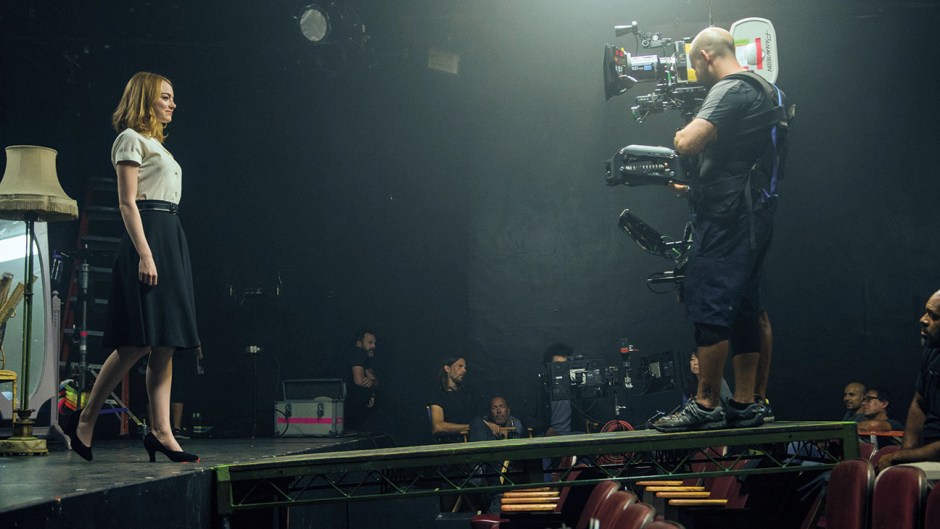
I will point out the good stuff. Emma Stone couldn’t sing – but man, that woman can act! She is dynamic and her face is fluid with emotion. She stole my breath away in quite a few scenes, all of them when she is rife with struggle. She needs an accolade, she did but then so did Ryan Gosling. That brings me to him: He played the piano damn well, in fact, he learned how to make love to the black and white keys in a few months, commendable indeed! But acting? His face is pretty and wooden. So then I keep looking to his eyes then for some glimpse of emotion, but not only is his face stone but his eyes are blank. They had to light up his eyes in the end to get some life in them… He is just dispassionate – and he got an award?

The title track: the lyrics are flat, but the melody is breathtaking. It sits with you. You look forward to hearing it even in the background score. The song that I like (lyrics and music – not the singing, mind) is Audition (The Fools Who Dream). The lyrics are beautiful, it has the quality of I Dreamed a Dream, and Anne Hathaway’s is not the best rendition, yet still so moving… ah well. Audition rests as my favoured song from the movie.

But I would really like to ask, why make it into a musical? If you have a sterling actress and a reasonable plot why transform the genre? She is an actress and he is a pianist. We see episodes of her screen tests (magnificent) and we see episodes of him playing the piano. So shouldn’t that have been enough to lay foundation to character and plot?

Maybe it is a musical because of the last few minutes of the movie, when the narrative spins into a Ginger Rogers – Fred Astaire take on how the movie could have been, and when it actually catapaults you into the space where the movie breathes into a musical personality. It’s cut short however. Maybe then they should have just forgotten about making it into a musical – if it is about music, then it should have worked with predominant jazz, that called to Mia in the first place. Make it about his music and not make it into a musical! But then it’s not just about his music – so frankly, let me push the buck and say making it a musical seems misogynistic.

I admit that life has its idiosyncrasies, how people drift, how love and careers seldom make good bedfellows, but all of this could have been done better. Hell, it has been done better. The movie actually makes a little more sense when I see it from a different angle, it’s never about these two characters and their love for each other, it is about these two characters and their love for their careers and how these two enable that to happen in the course of their few months together. The best scene in the movie (no! it wasn’t them dancing in the “stars”) was the argument that they have at the dinner table, when they both tell each other that their dreams are what makes them tick, and the fact that they shouldn’t be given up for love is left hanging like a guillotine.

So the movie makes us understand that the Real and the Romantic do not mix, which is the truth. In reality, we are all really lousy singers. Passion lasts for about a year. You have to go through heartbreak to be successful. Dreams can be found, if dancing among the stars is forsaken, and there you have the paradox of the movie. No dancing together in the city of figurative, twinkling stars but performing in the city of worldly, rich stars

Also, if you note, she has a boyfriend whom she leaves for Seb, after she essentially hears him play the first time – I mean, who doesn’t have a thing for a talented, tortured musician? Okay, that’s a whole different argument. But coming back to my point, she hears him play when she is married in the end, so chances are she may just go back to him later – hopefully, there isn’t a sequel then. And if there is, please don’t let it be a musical!

(And I still didn’t understand why they didn’t get better lyricists for the movie?)