On Looking Down, and Looking In

I met someone recently—someone I’d spoken to online—at a party I attended not long ago. In person, though, something felt immediately off. Not because of chemistry or the lack of it, but because of an almost compulsive need he seemed to have: to look down on everything around him.

The party wasn’t good enough.

The music wasn’t up to the mark.

The people weren’t interesting enough.

Nothing passed muster. Everything required commentary, and all of it was dismissive.

He told me he was 22. And instinctively, I wondered if this was an age thing. But then I stopped myself. I was once that age too. I don’t remember needing to belittle an entire room to feel significant within it.

What unsettled me more was the familiarity of it. I’ve encountered this posture before—among people I’ve known, been friends with, sometimes even admired at one point. A certain self-appointed elite, defined not by kindness or depth, but by what and whom they reject. How others dress. How they speak. What music they like. Where they come from. Everything becomes a metric for exclusion.

I’m not pretending I’m immune to prejudice. I’m not. I know exactly where mine lies.

I don’t tend to judge people by caste, class, race, or colour. But I do judge—quietly, perhaps arrogantly—on intellectual and emotional grounds. Empathy matters deeply to me. Curiosity matters. The ability to question inherited beliefs matters. And yes, I struggle with people who are blinded by unexamined faith or rigid dogma. That is my bias. I own it.

So the uncomfortable question arose: was I doing something similar to him, just dressed in better language?

I don’t think it’s the same. Or at least, I hope it isn’t.

Because there is a difference between choosing not to engage, and actively deriding. Between recognising incompatibility, and making contempt a personality trait. What I witnessed wasn’t discernment—it was dismissal masquerading as sophistication.

There’s something deeply sad about believing that to appear intelligent, dapper, or “above it all,” one must constantly signal what one is not. That one must shrink others to inflate oneself. It’s a brittle kind of confidence, and it cracks easily.

Perhaps age does play a role. At 22, there is often a frantic need to impress—by saying the right things, having the right opinions, aligning oneself with the “correct” tastes. Sometimes that performance hardens into habit. Sometimes it softens with time. I don’t know which way it will go for him.

What I do know is this: I don’t need to pull anyone down to feel whole. I don’t need to sneer at a room to belong in it. If I don’t resonate, I can simply step away—with grace.

We live in a world already cruel enough, stratified enough, lonely enough. Choosing empathy over elitism isn’t naïveté; it’s resistance.

And perhaps the real marker of maturity—emotional, intellectual, human—is not how sharply we judge, but how gently we hold our differences.

Checking In

An hour back, when the television had gone quiet and I was settling into my familiar hush, I was doing the small, ordinary rituals that end my day — switching off gadgets, straightening the hall, moving towards the bedroom. And then came a sudden, heavy bang against the window.

Xena stirred. Zuri woke up.

I turned back.

Perched on the railing of the hall window was a black kite — one of those great, ubiquitous birds of Mumbai that I have watched all my life, usually from far below, their silhouettes cutting slow, elegant arcs across blue skies and white clouds. But this time it was here. At my window. Close enough to meet my eyes through the glass.

It did not panic. It did not shy away.

It simply stood there.

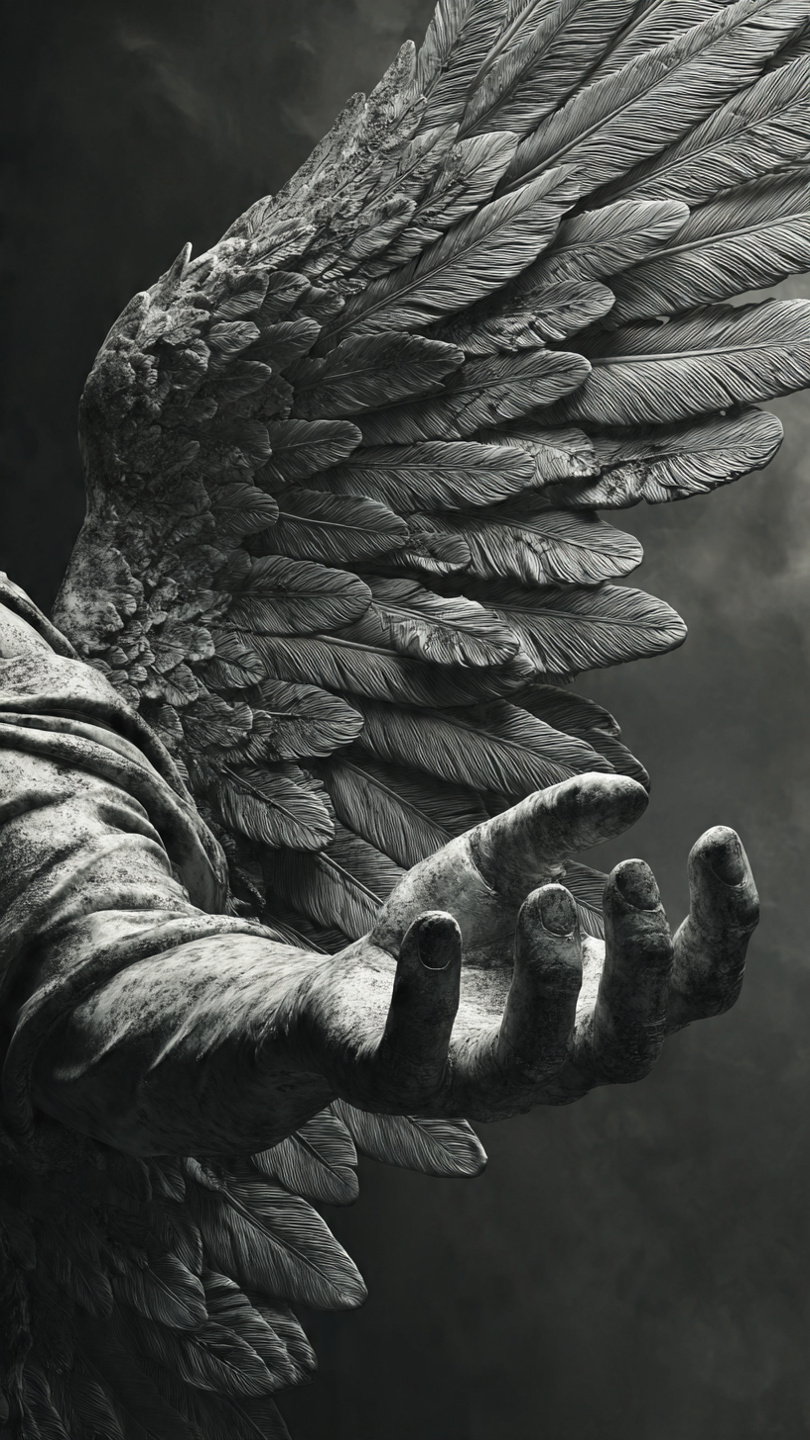
As a child, I had always watched them — from the balcony of our Bandra home, sometimes beside my grandmother, sometimes alone. I would follow their flight for long minutes, losing myself in their effortless gliding, riding invisible thermal currents with a grace that felt almost unreal. Wings, feathers, sky — they became symbols long before I had the language for symbolism.

During difficult school years, when things were unkind and heavy, the song Wind Beneath My Wings found its way into my life. The idea of being held aloft by something unseen lodged itself quietly in my imagination. As a Gemini, an air sign, I always felt strangely attuned to flight — to movement, to the freedom of altitude, to the idea of rising above without force.

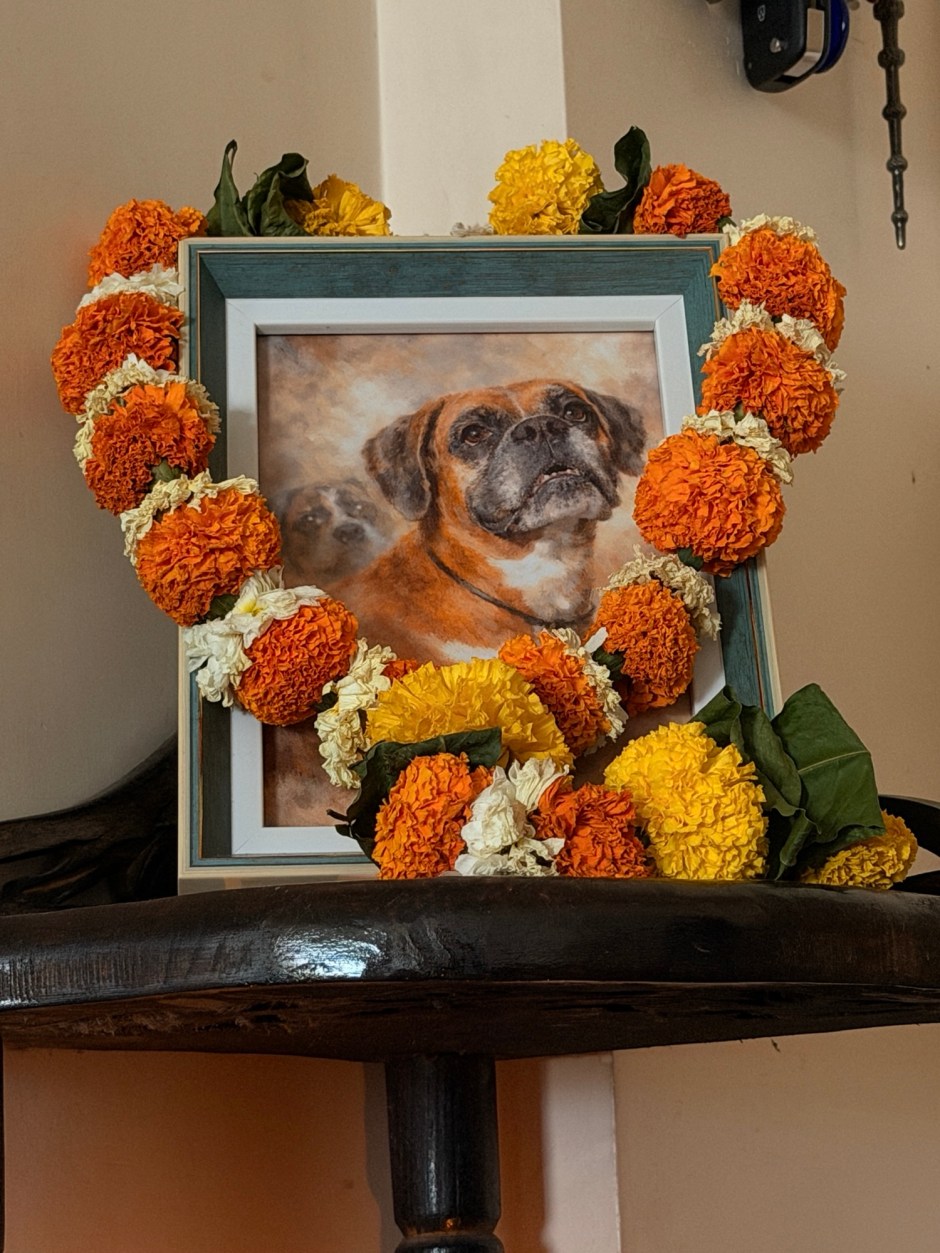
And now, at this juncture of my life — nearly fifty, standing on the edge of leaving this house to return to my mother’s home, with both my kids, Xena and Zach, very unwell — this bird arrived.

I have been holding myself together with a very thin, polite front. Loss, I understand. I have learned how to sit with it. What weighs heavier these days is the world itself — its cruelty, its relentless hunger for power and money, its refusal to soften. None of this is new, and yet I feel it more keenly now, as if the volume has been turned up.

The kite remained there while I took photographs and videos, its feathers ruffled slightly by the morning air. When I opened the door, Zuri rushed out, spotted the bird instantly, and froze — then barked in sheer terror, her bravery collapsing into panic. I had to shepherd her back inside; Xena had already checked out the hall and finding nothing amiss had retreated. The bird stayed, unbothered, watching.

Eventually, I stepped away. The kids wouldn’t stay in the room if I was out, after that.

I do not know how long it remained after that. But the fact that it stayed at all — that it did not flee even reminded me of something I had long forgotten: stillness can also be a form of courage.

In many mythological traditions, birds of prey carry layered meanings. Eagles are often seen as messengers of the divine, symbols of power, vision, and transcendence — creatures that bridge earth and sky. Kites and hawks, closer cousins, are associated with watchfulness, adaptability, and survival. In Indian folklore especially, birds that circle high are sometimes seen as guardians — not saviours, not omens, but witnesses. They see the whole picture from above.

In ancient symbolism, such birds appear not to predict events but to remind. To lift the gaze. To suggest perspective when the ground feels unbearably close.

I do not want to romanticise this too much. I am wary of assigning meaning where there may be none. Nature does not owe us messages. Sometimes a bird is simply a bird.

And yet.

This has never happened to me before — not like this. Kites have landed on pipes on terraces, have watched me from heights, have shared space from a respectful distance. But never like this: eye to eye, separated only by a pane of glass, unafraid.

Whether I communed with nature, or nature briefly acknowledged me — or whether this was nothing more than coincidence — I cannot say. But it left me calmer than I have felt in days. Not hopeful, exactly. Just steadied.

As if something ancient had paused, looked in, and reminded me that even in a world obsessed with conquest and noise, there are still beings who know how to glide — who expend no unnecessary energy, who trust the currents, who wait.

And perhaps, for now, that is enough.

Ghosts Over Trolls

My relationship with the online world didn’t begin with grand ambitions. It began, quite simply, with fun. Facebook since 2007, insta, Snapchat since 2012. 

In 2015, i had about 10k followers on insta and I found myself on Musical.ly — that strange, playful little app where people lip-synced, danced, and made short sketches without worrying about who was watching. It was light, it was silly, and it made me happy.

Around 2018 came TikTok, and suddenly those little videos of mine grew into something bigger. I found a rhythm, a voice, a community — and before I knew it, there were tens of thousands of people following along. 

Somewhere in that same period, someone I loved introduced me to League of Legends. The graphics were fantastic, the characters intoxicating, and the gameplay chaotic in the best way. But the chat? The chat was a battlefield of its own. Vitriol, insults, casual abuse… the kind of ugliness that makes you switch to “versus AI” permanently. I loved the game; I just couldn’t stand the people in it.

By 2020, League itself faded out of my life — and TikTok was banned in India. Almost overnight, I lost a space where I’d been creative, confident, and oddly free. The pandemic arrived like a dark tide. Grief hit. Heartbreak hit. And lockdown pushed all of us into our screens, whether we were ready or not.

Instagram, which I’d casually used since 2012, suddenly became my living room. Reels launched around June 2020, and with TikTok gone, I poured myself into Instagram. I spoke about my identity, my sexuality, my mental health, my history — the things that had shaped me. I went live for hours; sometimes ten, sometimes twelve. I made friends across continents. I healed in front of strangers who somehow didn’t feel like strangers at all.

But then the trolls arrived.

They always do. First they ruined Twitter, then they seeped into Instagram, and now they’re infesting Threads as well. What I endured in school — the taunts, the mockery, the homophobia — began repeating itself in digital form. The cruelty of social media became impossible to ignore. 

And the videos… that was the final blow.

Animals suffering. Forests burning. Humans being monstrous to the planet and to each other.

It crushes something inside me every time I see it. I can last about half an hour on Instagram now before my heart feels scraped raw.

So I began to step away. Slowly. Quietly.

And then came the turning point: late 2023. I bought myself a PS5. A gift, a distraction, a lifeline — I’m still not sure. All I knew was that my mind needed a quieter place to exist.

I entered the world of Hogwarts Legacy first — a universe I had known since my twenties and thirties. The nostalgia soothed me, even though I’ve had to firmly separate the art from the artist. Then Assassin’s Creed Odyssey opened up an entirely different dimension. I roamed through ancient Greece with Kassandra — the Pantheon, the Colosseum, the cradle of the Olympics. Places I had only seen in books were suddenly alive around me. It was a form of time travel I had not known was possible.

And then Ghost of Tsushima arrived — and that, truly, changed everything.

To gallop across fields of purple flowers. To stand beneath ginkgo trees shedding gold. To write haiku beside quiet waters. To sink into a digital hot spring and breathe, slowly, deeply, finally.

These moments — pixelated though they may be — brought me peace that the real world has not offered for a long time.

Gaming, for me, is not escapism.

It is refuge.

A sanctuary from noise, cruelty, and the relentless sadness of what we humans are doing to the planet I love so fiercely.

I don’t know why holding a controller quietens my overthinking mind. But it does. And so I return to these worlds often. Worlds filled with beauty, meaning, and silence.

And perhaps that is enough.

Perhaps that is everything.