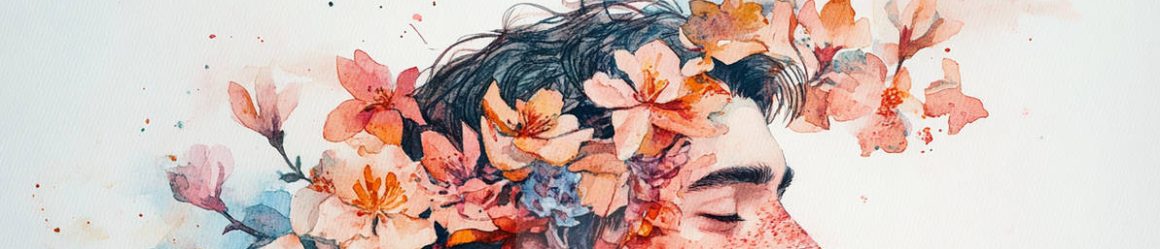
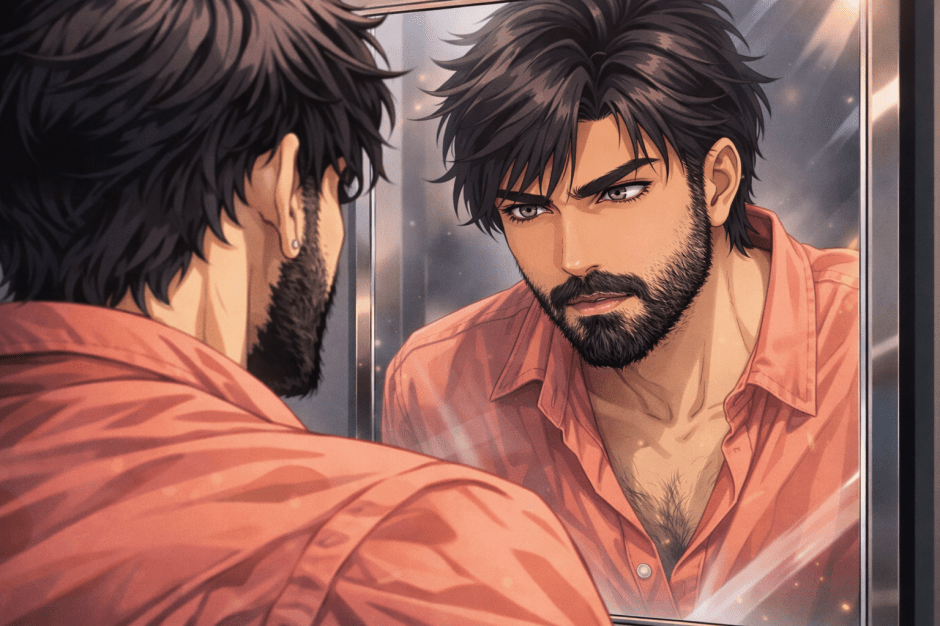
I was sitting in therapy today when my therapist, Adriana, said something that felt both obvious and completely foreign at the same time:
I need to tell myself that I am a good person. As many times as it takes for me to believe it myself.
Not because people around me say it. In fact, despite the fact that most people I love, don’t. But because of the life I have lived, the choices I have made, and the way I have continued to show up in a world that has rarely shown up for me in return.
And I realised how difficult that is for me to say.
Because somewhere along the way, I stopped seeing myself clearly.
⸻
I grew up in Bandra, sitting in my grandmother’s reclining chair on the balcony, looking up at the sky. There were always kites flying — small, distant, free. I remember feeling a strange kind of peace watching them. As if, for a few moments, life was simple and untouched.
Those moments mattered more than I understood at the time.
Because inside the house, things were not simple.
My father was an alcoholic. Violent. Unpredictable. He would beat walls, throw food across rooms, carry rage like it was his second skin. Later, he admitted that he knew I was gay since I was two. I don’t know what that did to him, but I know what it did to me.
It made me a target.
What protected me in those early years was not him, and not even really my mother — it was the other women around me. My grandmother. My aunt. My nanny. Their presence softened the fear.
And then my mother chose to leave that house.
Not just to escape him, but because she felt suffocated being given one room, in my grandmother’s home. We were four of us in that room at night. Ironic, because she is now in quite a similar situation, minus one body count. So, she moved us to a place that was, in every sense, worse. And eventually, she attempted a reconciliation with my father.
That decision changed everything.
Because now I was alone with him.
Afternoons stretched into something I dreaded. I was already being bullied in school. Boys didn’t accept me. Girls laughed at me. I was effeminate, visible, and completely unprotected.
At home, there was bullying.
At school, there was bullying.
And in between, there was silence.
I remember collapsing once on the stairs because the anxiety of going to school had become too much. A neighbour found me and brought me home. And instead of concern, what I heard was that I was pretending. Acting. Avoiding responsibility.
No one asked what was wrong.
No one tried to understand.
⸻
I found refuge where I could.
In books. In imagination. In the idea that somewhere out there was a man who would love me for exactly who I was. I held on to that belief like it would save me.
And for a long time, I was a romantic.
Not in a naïve way, but in a hopeful one.
I believed in love. I believed in honesty. I believed that if you gave the world your truth, it would meet you somewhere close to that.
But life doesn’t work like that.
By the time I was 18 or 19, my father nearly killed me. That was when my mother finally left him. Not during the years of violence. Not during the years of fear. But then.
And something in me shifted.
⸻
I grew up. I loved for the first time. But I was dispensable, even in love. My heart had a catastrophic break at the age of 21. I came close to ending it all then. I didn’t.
Later, I fell in love again with another man. Five years in, my heart broke. But I stayed. I didn’t run. I took that in my stride because love, to me, was not conditional.
Thirteen years in, I discovered he had been cheating on me physically with others while travelling.
That was the death of something inside me.
Not just trust. Not just love.
But the version of me that believed love would be enough.
⸻
I tried again.
I entered a polyamorous relationship, thinking perhaps the rules needed to change for love to survive. But that, too, left me hurt in ways I hadn’t anticipated.
Around the same time, I began losing the people who had once protected me.
My aunts — the ones who had stood between me and the worst parts of my childhood — started slipping away. One of them died in a way that still feels like she was taken from my hands while I was trying to hold on.
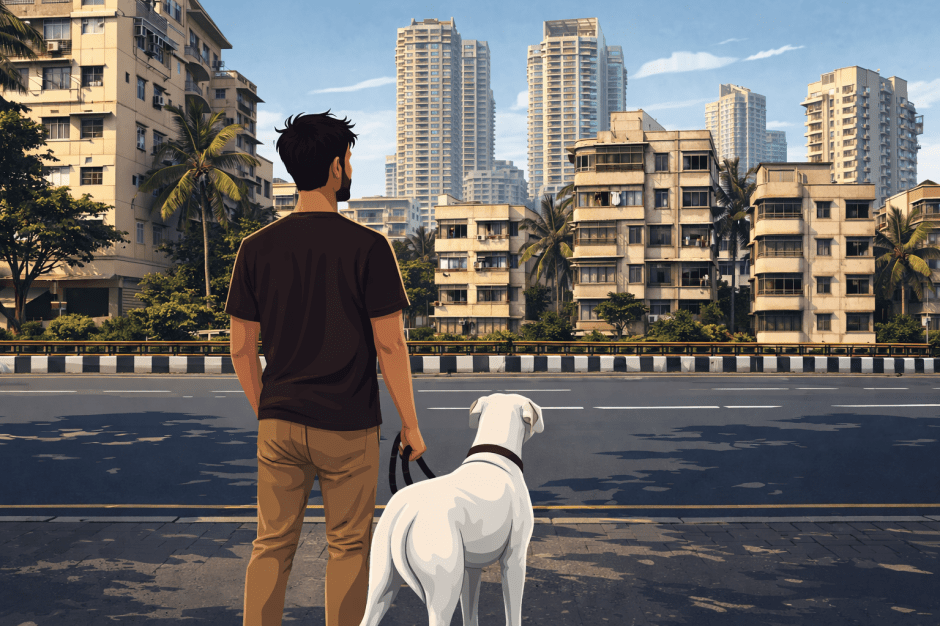
And then there were my dogs. My kids.
Seven of them over the years.
Six gone now.
Two of them just this year — January and March.
Each loss not just grief, but a tearing. A reminder that love, no matter how pure, does not protect you from endings.
⸻
And through all of this, I continued to show up.
For my mother. For my family. For the people in my life.
Not perfectly. But honestly.
I didn’t chase money. I didn’t chase status. I didn’t want big cars or bigger homes. I wasn’t interested in building a life that looked impressive from the outside but felt empty on the inside.
I wanted something real.
Something kind.
Something that felt like those moments on the balcony, watching kites in the sky.
⸻
And yet, today, my mother sits in front of me and tells me that I am not loving enough.
That I have changed.
But she is wrong.
I have not changed.
I may no longer be the 15-year-old boy who absorbed everything quietly. But I was never someone who accepted what was given to me without question. I was never willing to be the emotional ground on which everyone else stands while I collapse underneath.
I learned to say no even to my father — knowing I would be beaten for it.
I learned to call things out early. In the 8th standard, I stood up in class and told a teacher, “I am not a girl.” In college, when a bully asked me if I was gay, I looked at him and said, “Are you asking me out?” In front of a laughing crowd.
That strength was always there.
She just never saw it.
She didn’t know me then. She doesn’t know me now.
And now, when I stand up to behaviour in her that mirrors my father —
She calls it rejection.
⸻
There is love for her inside me.
But there is also resentment.
Because she still does not see me.
She remembers a version of me that was “loving and happy” — but she does not acknowledge the fear, the violence, the loneliness, the confusion. She does not remember what it took for me to survive those years.
Or perhaps she chooses not to.
And I cannot keep trying to make her see what she refuses to look at.
⸻
I reached a point recently where I told her I don’t care anymore.
And I meant it.
Not out of cruelty. Not out of anger.
But out of exhaustion.
There is only so much a person can carry before something inside them shuts down to survive.
And that is where I am.
⸻
In therapy today, I said something that has been true for most of my life:
No one has ever held my hand and said, “I understand. That must have been so difficult for you.”
Not my family. Not my friends. Not the men I have loved.
No one.
Except my therapist.
And maybe that’s why it hit me so hard when she said I need to tell myself that I am a good person.
Because I have spent a lifetime waiting for someone else to say it — and mean it.
⸻
So here it is.
Not as a declaration. Not as a performance.
But as something I am trying to learn to believe:
I am a good person.
Not because I was perfect.
But because I stayed honest in a life that constantly pushed me towards silence.
Because I loved, even when love cost me.
Because I survived things that could have easily destroyed me.
Because I am still here.
And because, finally, I am learning that saying no does not make me less loving.
It means I am no longer abandoning myself.
⸻
Maybe the world is not designed for people like me.
Or maybe I was never meant to bend myself to fit the world.
Maybe the point is simpler than that.
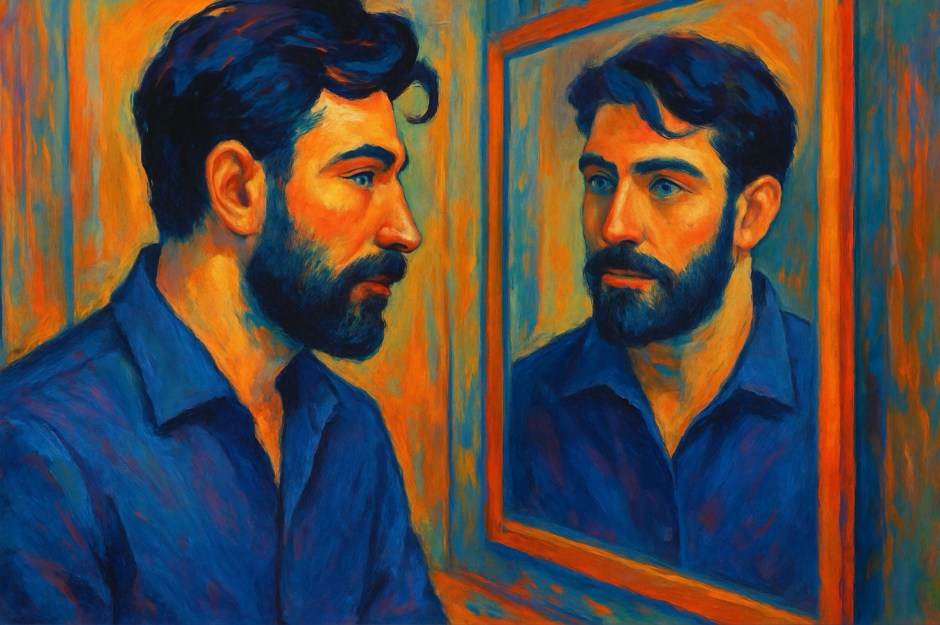
To see myself clearly.
To stand by that truth.
And to protect whatever goodness still lives inside me — not by giving it away endlessly, but by finally holding it close.
 Hearts Still Care
You must be logged in to post a comment.