The Favourite

Growing up, I was incredibly close to my grandmother. I called her Dadan, an affectionate term for Daadi, which means grandmother in Hindi/Punjabi. She was my rock, my constant source of warmth and love. I was also the favourite of both my paternal aunts. The eldest, who had stepchildren, and the youngest, who had no children of her own, poured their affection into me. My youngest aunt, during her courtship days, often took me along on her dates. Together, we visited beautiful hotels and places, and those moments felt magical in my childhood. When she married, I was only six years old, and her absence created a void. I felt as though I had lost a cherished friend.

[l-r]Munni Pua, Dadan, Goodie Pua and me (in the corner)

But my grandmother, my Dadan, made up for that loss in every possible way. She loved me fiercely, making me feel like the sun and the moon in her eyes. I felt it too, deep in my soul. My cousins and sibling often claim, to this day, I was spoiled by her and my aunts. Perhaps I was, but their love shielded me from a harsher reality. My parents were far from ideal. My father was abusive, an alcoholic, and, from the age of 13 to 19, his physical violence escalated, fuelled by his hatred for my sexuality. My mother, meanwhile, was preoccupied with earning a living and running a household. She was emotionally distant, perhaps sensing that I was different and not the son she had envisioned. She redirected her energy towards my younger sister, Geetanjali, who, being four years younger, became the focus of her affection and aspirations.

[l-r] Me, Dadan, Geeta

When my mother left the joint family, taking me away from my grandmother, I was about to turn 13. My sister was barely eight or nine, giving my mother ample opportunity to mould her into the perfect daughter. I, however, remained the imperfect son—a reminder of the family my mother was trying to leave behind. I was the unique link between her new life and the one she had given up, while my sister became her connection to her own family. This duality shaped our relationships, and as the years passed, I felt punished for the love I had received from my paternal grandmother and aunts.

[l-r] Me, mom, Geeta.

At the time, I couldn’t understand any of this. All I knew was that I wanted to maintain my bond with my grandmother and aunts, but distance creates rifts in even the strongest relationships. Back then, mobile phones weren’t available, and my home life became a nightmare of abuse and violence. After a particularly horrific incident, where my father nearly strangled me, my mother finally decided to pursue divorce. This further deepened the distance between me and my paternal family.

Dadan

In my twenties, I reconnected with my eldest aunt. By then, I was navigating the aftermath of a failed relationship and battling severe depression. Our bond took on a deeper, more complex meaning, rooted in shared pain and an understanding that transcended words. But by the time my grandmother passed away when I was 25, I felt as though a part of my heart had been burned away, leaving a scar that would never heal. She had been more of a mother to me in those formative years than my own mother, and her absence left an aching void.

[l-r] Goodie Pua, Me, Munni Pua

Now, as I look back, I realise that my grandmother’s love was the anchor that held me steady. With her gone, and both my aunts having also passed away, I feel as though I have lost the last remnants of unconditional love in my family. Today, it often feels like my mother and sister are united against me. While this may not be entirely true, the feeling of alienation is overwhelming. It’s as if the familial bonds that once nurtured me have unravelled, leaving me adrift.

I wish I could remember more vividly the years between one and twelve when love and warmth surrounded me. Perhaps those memories would balance out the lack of affection I feel now. But dwelling on the past serves little purpose, except to remind me that, for a time, I was truly loved, cherished, and cared for. That knowledge is both a comfort and a sorrow, a bittersweet reminder of what I have lost.
Here

I love the movie. I saw the late-night show. After the movie ended, the audience remained seated as the titles rolled. No one spoke and no one got up to leave, though it was well past 1 am. I came out with my partners from the theatre hall; all three of us were still silent as we got into the car and drove for a good 5 or so minutes without speaking a word.

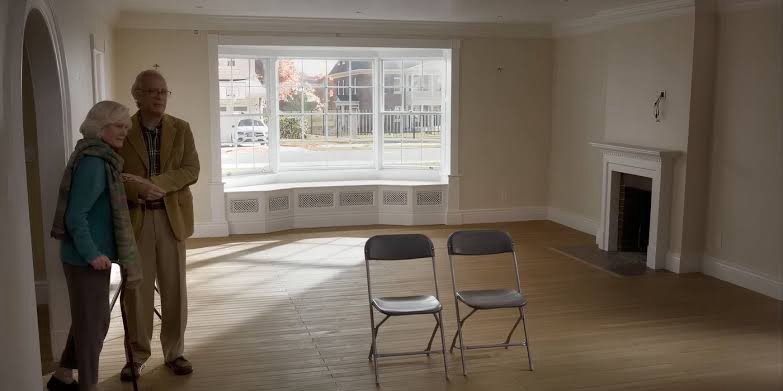
The beginning of the movie is absolutely charismatic. The way the journey through the ages is depicted is mesmerizing. The single, unmoving camera makes it feel as though we have a view into the lives of all those who passed through that house. It’s a surreal, almost voyeuristic experience. The final sequence takes your breath away—that’s when the camera finally moves, panning across, and we see the entire household. It’s almost like a vista of someone’s life opening up before you, and as the camera moves out into the garden and over the sky, giving a panoramic view of the house, it’s amazing. The sight of one kingfisher flying through the air connects ages that have passed. Time flies, time flies, time flies. The movie keeps reminding us of this phenomenon, beautifully captured by the stationary camera, bringing us through all those eras, memories, heartbreaks, bonds, happiness, and sadness—all merging into one big experience. And with the title itself, the director asks you to live in the “here and now”!

In crafting Here, director Robert Zemeckis described how, from the very beginning, every member of the crew had to “commit to the language of the movie.” For Zemeckis and his cinematographer Don Burgess, this meant filming from a single, fixed point, with every bit of set dressing needing to be “right where it needs to be—not just for one scene but for every scene.” The challenge of shooting all the scenes within a single view turned out to be more difficult than anyone anticipated, with Zemeckis calling it “the hardest movie any of us have ever made.” The decision to shoot in a taller 1.85:1 aspect ratio added further complexity, as the team had to spend three months experimenting with lenses to find the one that would best suit the film’s vision. Zemeckis, who famously incorporates active camerawork and computer graphics into his films, noted how his experience with technically complex shots in Contact and What Lies Beneath ultimately prepared him for the restrictions he embraced in Here.

The film drifts through time, shifting from pre-independence America, colonial America, the early 1900s, the Great War, World War II, the Vietnam War, and the Covid pandemic. It moves in a way that sometimes reminds me of a stream of consciousness—flickering between experiences and capturing how the mind flows from one memory to the next. The film doesn’t shy away from portraying the tough conversations that come up in life. One especially poignant scene features a Black father talking to his son about how to stay safe if ever pulled over by the police—a piece of writing that’s terribly heartbreaking, especially because it’s still so pertinent here and now in the lives of people of colour.

The storyline interweaves elements like the Native American experiences, and her necklace that is found centuries later, beautifully connecting different eras. It shows that the nostalgic pieces we leave behind can be a bridge, letting future generations wonder and try to understand the experiences of all those who lived before them.

This movie stirred up a lot of nostalgia in me because I connect so deeply to the homes I’ve lived in. I spent my childhood in a joint household much like the Youngs’, where my grandparents, aunts, uncles, and my parents lived together with us. So many experiences in the movie echoed my own, like the scene where John and Pauline’s daughter stands before the window as Pauline lifts her bags, planning to leave the house. The daughter wistfully says, “I will miss this house.” That moment took me right back to my own childhood home, where I still remember waving to my grandmother as we left. My mother’s experience was quite like Pauline’s, but mine was like the daughter’s. It was an instant connect.

The film’s use of “panels” within each scene adds an evocative layer to the storytelling. Zemeckis explained that these panels were intended to create subtle shifts between scenes, allowing one moment to blend naturally into the next, like the scene where the Beatles first appear on The Ed Sullivan Show, leading into the wedding scene of Wright and Hanks. These transitions, Zemeckis said, weren’t in the script because they would “make the reader’s head explode,” but they were “refined throughout” the film to bring the audience effortlessly from one era to the next. Editing Here became a significant, unexpected challenge. As Zemeckis explained, “You wouldn’t think it would be. You say, ‘Oh, well, aren’t you going to just cut the slates off and assemble everything?’ Well, right? No, that can’t happen.” Each panel’s timing and pacing required intricate care, making the editing process an “elaborate chore.”

The performances are deeply compelling, with the cast delivering authentic, nuanced portrayals that evoke genuine emotion. The dialogue is written with such care, sparking both introspection and connection.

What sets Here apart is its ability to capture the essence of time and memory, weaving them seamlessly into a narrative that feels universal yet personal. The film lingers with you long after the credits roll, as I mentioned earlier, inspiring reflection and conversation. It’s the kind of movie that challenges conventions and speaks to a collective consciousness—a testament to the power of storytelling and its ability to remind us of the profound moments found in the everyday.

The acting in the movie was more than exemplary, but that’s what you expect in a movie by Robert Zemeckis. I was looking forward to this movie, and I was not disappointed in the least. There were several moments that touched me: the scene where Hart’s daughter speaks about missing the house, the story of Alan and Rose, and especially the scene where the housekeeper Raquel dies of Covid. And the very, very last scene, where the camera closes in on the faces of Tom Hanks and Robin Wright as she says, despite all the tears she has shed in that house, just how much she loved it—how much I truly loved it here.

Relationships

In a conversation among friends at a recent gathering, the topic of relationships took center stage. As part of the LGBTQ+ community, we discussed the many ways in which we experience and interpret love and partnership. One particular theme that stood out was the diversity of relationships—ranging from monogamous to polyamorous, open, and asexual arrangements. This led me to reflect on how, historically and presently, human relationships are not one-size-fits-all, nor should they be. For those of us in the LGBTQ+ community, embracing relationship models outside heteronormative boundaries isn’t just personal; it’s also a form of resilience, autonomy, and freedom.

Historically, relationships have evolved alongside societal norms, yet they’ve rarely been as rigid as we might think. As sociologist Anthony Giddens has noted, “intimacy has undergone a transformation from an institutionally defined marriage model to a more personalized form of intimacy based on the principles of equality and self-realization.” This shift is particularly visible today, especially in LGBTQ+ circles, where relationships naturally push against traditional molds and emphasize diversity in partnership structures. However, embracing this fluidity doesn’t mean our relationships lack structure or purpose; rather, it underscores the power of choice and authenticity.

Polyamory, or the practice of engaging in multiple consensual and loving relationships, is one such model that challenges monogamy. Unlike traditional relationships, polyamory centers around the idea that love is not a limited resource. It requires, perhaps more than monogamy, deep levels of communication, respect, and honesty. In polyamorous relationships, all partners are aware of each other, and boundaries are established to maintain emotional wellbeing.

In mainstream society, polyamory is gaining attention. According to a 2020 study by Kinsey Institute researcher Dr. Justin Lehmiller, around 1 in 5 Americans have engaged in consensual non-monogamy at some point in their lives. This statistic reflects a growing acceptance and curiosity about alternative relationship models. Despite this, polyamory is often judged through a monogamous lens, which can make it difficult for those in polyamorous relationships to feel fully accepted. Many in the LGBTQ+ community have embraced polyamory as a means of finding and expressing love in ways that feel authentic, acknowledging that relationships are not confined to the binary of monogamy or celibacy.

For LGBTQ+ individuals, the added layer of heteronormative expectations can create significant pressure to conform to “acceptable” forms of relationships. Heteronormative models tend to uphold monogamy as the ideal and imply that any deviation from this structure is a threat to stability. However, as LGBTQ+ relationships inherently defy heteronormative standards, the community often explores diverse arrangements that align with individual values and lifestyles.

This diversity in relationships is vital to personal freedom, as sociologist John D’Emilio argued: “The capacity to choose and form intimate bonds according to individual desires…is a victory against the social script imposed by dominant norms.” This capacity is particularly empowering within the LGBTQ+ community, where members often need to carve out new paths to love and partnership due to a lack of societal role models that represent them.

Yet, as our discussion highlighted, the tendency to compare LGBTQ+ relationships to straight, monogamous relationships remains prevalent. This comparison can create an unnecessary hierarchy of relationships, implying that monogamous, heterosexual partnerships are the gold standard. Such comparisons are misguided because relationships, whether between heterosexual or same-sex couples, are deeply personal and shaped by individual personalities, lifestyles, and needs. Straight relationships themselves are varied, encompassing everything from strictly monogamous marriages to open marriages, indicating that diversity in relationship structure is not unique to the LGBTQ+ community.

The recognition that relationships differ fundamentally within human spheres emphasizes a central point: there is no universal “correct” way to engage in a relationship. We must resist the urge to place relationship structures on a hierarchy, particularly as doing so can invalidate or marginalize the choices of those who do not fit the mold. As philosopher Michel Foucault famously said, “where there is power, there is resistance,” and the diversity of relationships within the LGBTQ+ community reflects a resistance to the power of societal norms.

The world today is shifting toward a more inclusive understanding of relationships. From growing visibility of polyamorous and open relationships to legal recognition of non-traditional unions, society is gradually moving toward a broader acceptance of varied relationship forms. Still, a long road lies ahead in terms of full acceptance. This journey, however, begins with understanding and respect for each individual’s relationship choices.

In essence, relationships are as varied as the individuals who create them. The LGBTQ+ community, with its unique perspectives on love and partnership, offers a vibrant example of how diverse, autonomous relationships can thrive. Embracing these differences enriches our understanding of human connection and reminds us that love is boundless—transcending labels, societal norms, and any one-size-fits-all standard. In doing so, we affirm that all relationships, regardless of structure, hold their own beauty, dignity, and worth.