Birthday

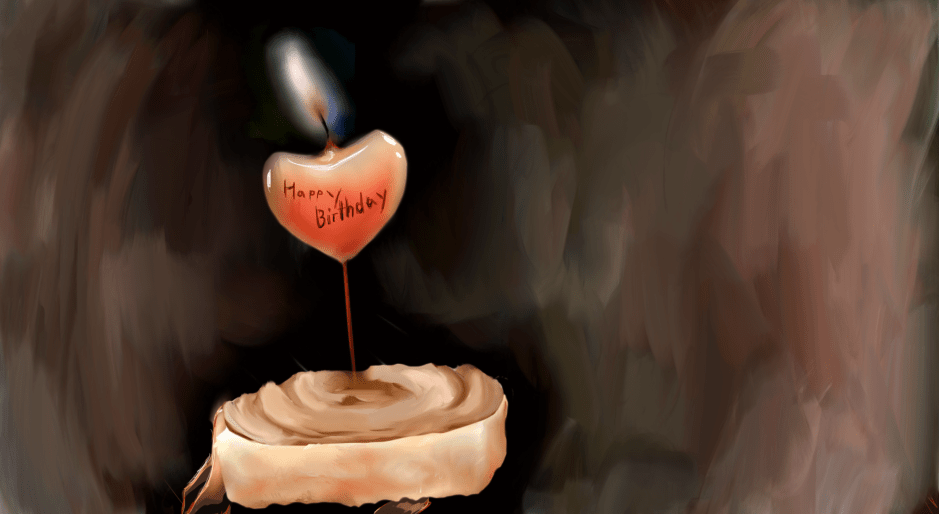
This Sunday, I turn 48 years old. There are people who look at me and ask me questions about my external appearance. Social media is about appearances – and yes, I got on here over a decade ago because I wanted validation. You see, growing up, I was filled with insecurities and self-esteem issues. They have survived in me – like a heart beat that is consistent. I am quite sure even when my heart falters, they will not.

But over the years, I have learnt some valuable things. I have learnt finding and giving forgiveness is necessary. Envy is a waste of time. It is necessary to have a good friend and confidante by your side. It is important to be honest as often and as much as you can. When you feel honesty is hurtful, you need to be honest at the appropriate time, or be forever silent. I have learnt that the best of us are flawed, the richest are insecure, the most beautiful are frightened.

Being a romantic at heart, I found that love can last forever, even if it is not reciprocated. Love solves a multitude of woes, and the loss of it brings on a multitude of woes. I have learnt that time is fleeting. Even though Scarlett O’Hara believed in tomorrow, it cannot be trusted. The time spent with the ones you love is limited, and you need to let them know that you love them.

One important thing about love is that it never lives up to your imagination. It is not what you expect it to be. Life and love are similar that way. They do not stick to the plan, or the expectation. So, the key word to any relationship, even the one you have with your own life, is Compromise. You adapt, and you evolve.

No matter how dark the night, or how tortured the mind, or how torn the heart, time is a great healer. It fills all wounds. Yes, the scars remain. But they must serve as a reminder – not a lesson – as to who you are, what you have and can and will overcome again, if need be.

Death and loss are a part of this life. The fear of losing the ones I love consumes me. Being an atheist, I realise that this is one existence and I need to make the most of it. I need to tie up all loose ends and hope that my life has brought happiness to a few people and animals. My own death does not scare me. I have accomplished all that I have sought to do. I do not leave behind regret, just love.

I have never desired much in life. I was satisfied with what I earned. Ambition is not in my DNA – at least the monetary kind that brings in status. I have goals of a different sort. They deal with interpersonal relationships. Allowing people to be a part of my life and making them happy and giving them love. Yes, I would like to be loved in return.

That brings me to the crux. As I grow older, I hope to reach that place where I do not expect to be loved. A point in life, when I will not need external validation. I will be sure of who and what I am and finally be absolutely comfortable in my own skin. It will be enough for me to just love and live. But I do not see that happening soon, at least. As it is, thinking about tomorrow is not good for peace of mind. So I shall just end with a quiet hope that life will be kind this year. And if it is not, I will find the fortitude to deal with what it has in store for me.
Intimacy

Growing up, I received a lot of physical affection from my grandmother and one of my aunts, on a daily basis. My father was an alcoholic and from the age of 13-18, I lived in absolute terror of his presence. Long story short, he was abusive. My mom was a single parent for all aims and purposes and she was too independent and driven to pay much attention to physical intimacy. She herself came from a home where her childhood was not a very affectionate one.

I realised I was homosexual at the age of 12. I craved for affection from another man. It wasn’t the fact that I lacked love. The complexity of emotion was far deep-seated and interwoven with pathology. I wanted the care and affection of another man – especially since I was gay. It was something as slight as putting his arm around my shoulders or holding my hand as a sign of bestowing importance and love.

It is somewhat tragic that I belong to a generation where I didn’t grow up too fast but learnt faster. Through my formative years, technology’s advancement was progressive and not radical, so I always felt out of place and alienated. I fought for my place in the world, and it feels like I am still fighting a losing battle against a backward mindset. I fell in love with men whose languages of love were no where close to intimate gestures – and the ones who were intimate ended up breaking my heart abruptly in a matter of years. The devastation that the latter inflicted left even deeper scars than those left by my father.

Relationships can be exacting, because they evolve, too. The tragic part is this: during the romantic phase where the other is trying to impress and gain my love, the affection and the intimacy pours out in a flood. It is my foolhardiness encased in romanticism that make me believe that this is not a phase. That this will not change in time. There are moments that bring in undiluted bliss and security. That is how I get pulled into the world that I wanted, because that is all I can see at that given moment in time.

Yesterday, conversing with my lover, I mentioned to him how he appeared to me in chats during the initial phases of our relationship. I said jokingly, this is how you sucked me in. He retorted, you should then have had sense to see how any relationship would start. You should not have allowed yourself to get sucked in. That struck home. There are glimpses of people we see, that they do not realise they are showing. Again, the romantic in me looks at the larger picture. There is of course the fear of abandonment and separation anxiety, because I love forever. It gets hard to be exacting.

So I step back and I sacrifice. I am the first to make my fear and desire known. However, I also realise that the cycle of any relationship is thus… Or are there truly relationships which remain steeped in the romance that they were born into? It is a complicated question. A woke Gen-z would state that I need to put my own needs first. But I also realise that any relationship is made up of at least two people. I have learnt through learning, understanding and observing that relationships should last even through things when they aren’t fun or easy.

Being an out gay man since the age of 16, I must also point out one thing that happens particularly with homosexual men. Since my family knows about me and has come to accept me completely over the years (I wouldn’t have it any other way, much to the chagrin of my sister), the men I fall in love with see me in my home. They see all my moods, my highs, my lows and my outbursts. And with me being me, quintessentially, I make no compunctions to hide who I am right from the start. So all my lovers see what they will get.

I, on the other hand, only see the best of them for the initial months. They enter my personal spaces. I never enter into theirs. So I never get the chance to see them lose their cool with their family members. I never see the way they interact with the people they profess to love and who are linked to them by blood. This happens very gradually for me. All I get to see is the excess of their love. When that thaws, I have already been drawn in, hook, line and sinker. So when they actually start treating me as family, I realise how they actually interact when the romance dies down.

My lover said one thing to me some time back. “I am not afraid of you anymore.” He comes from a patriarchal mind-set and his earlier partners have all been authority figures, who placed him in the back seat. So, when I love him wholly and completely, he sees me as an equal. It is ironic, yes. I would like all the woke people out there to read ‘afraid’ as ‘in awe’. All our illusions dwindle away, in the second year of the relationship.

How many of us make it through the third, without recrimination and with the realisation that the person we are in love with is human, and not Eros, we all set out to be initially?

Tu Jhoothi, Main Makkar

Yesterday I saw TJMM, despite all the reservations I had against what I had hear about the plot of the movie. I have seen the earlier movies directed by Luv Ranjan. I have not appreciated the context in which women are placed and the way their wants and desires are not taken into account whatsoever.

As such, this movie does not deviate much from this formula. But it gives the heroine a brighter mind and a more valuable heart than the hero. The heroine is a strong-minded, independent woman. Pursued by a man who is linked to his family and is entitled by the worth of his own masculinity. The masculinity becomes toxic, eventually, because as an Indian man he is not willing to give up his comfort for the woman he professes to love, above all.

In the case of all love relationships, the couple fall in love with each other, and in the throes of any romantic endeavour they focus on just themselves. Eventually, though, the world steps in. When one has a relationship with someone, one is initially completely focused on the partner. The partners live and love in a cocoon, untouched by the outside world. The moment they make their promises to each other, in the vacuum of this protected space, they feel confident enough to step out of it. But once the world begins its interaction with them again, it is then that the promises come to be tested. And more often than not, the world is heavier than the couple. The promises falter and finally, shatter.

This is what happens with the couple in TJMM. Rohan pursues Nisha. He professes his undying love and makes his promises. She falls in love after this courtship. He introduces her to his family. They take over the relationship. As is the wont of most Indian families, the family becomes overwhelming with its superciliousness and entitlement.

When Rohan and Nisha’s families meet, we understand her desires. Her aunt asks her how she fell in love with a man who is from a “business family” when she wanted a man with a salaried job. Because as most Indians know, children that are brought up to take care of their own family businesses are bound to the infrastructure of that dynamic. There is never any independence. It is like Princess Margaret who wanted to love a commoner but did not wish to stop being a Royal. It’s a nepotism that must be agreeable to all.

In the wake of their overzealousness and their taking over her life, Nisha decides to call it quits. Because she doesn’t want to be in the space where she wants to make Rohan choose between his family and her. The director – intentionally or unintentionally – gives her character a human conflict. She realizes that she will never be a priority in his life – no matter how much she wants him to make her one. So she decides to break it off.

The subplot of his being a “match-breaker” is relevant only to create comic interludes. Without Ranbir Kapoor’s acting prowess, the character of Rohan would have been terribly insipid. But he, as always, pulls the character forward effortlessly. He is always brilliant to watch. Shraddha gives no surprises, she has done a good enough job, but I cannot help but question how Alia would have fared in this role. Dimple gives good slaps, Boney Kapoor is irrelevant. The best side character was Nisha’s mother. Ayesha Mishra has always been brilliant. She has about five minutes of screen time. But the burden of having no agency in her family is depicted beautifully, as she speaks to her daughter about her decision. Her mother’s unfulfilled life is the reason why Nisha wants to branch away from another joint family.

The end is bittersweet for Nisha. But most viewers won’t understand this. It becomes Nisha’s movie, because she is the one who actually loves – because true love is always tested by sacrifice. One party always gives up more than the other. In this case, in the climax, she tells Rohan the reason why she didn’t want to be with him. She did not want to give up her own agency to fit into another joint family. She wanted to be his first priority, not his 7th, to which he himself admits. He refuses to do so. He leaves. And she leaves.

But his family intervenes – they decide again what he should do. Again. And he falls in line. Again. He should have let her go. He had actually. But his family says no, you must have the toy that kept you happy. There is a classic airport scene, but with the entire family, instead of just the two lovers. It is directed well, every one discussing their own mistakes. It is a fun watch, mostly because I am a die-hard romantic myself (sucks for me), but the realist in me also reared his head and felt terribly sad for Nisha. She accepts her lover’s family and her lover – who will always place her 7th in his life.

I also know through bitter experience that this placement will never change for Rohan. Even if the ones he places before her die, she will always remain 7th, because death is never a leveller when it comes to matters of love. It outlasts death, and that is the tragedy of this movie and the mentality that gives it validation.