

Amar Prem Ki Horrible Kahani

Amar Prem Ki Prem Kahani is a colossal disappointment that somehow manages to trivialize every important aspect of the LGBT experience in India. If you’re looking for meaningful representation or thoughtful storytelling, do yourself a favor and re-watch Shubh Mangal Zyada Savdhaan or Badhaai Do. Those films, at least, attempted to address the complex layers of coming out, familial acceptance, and queer relationships with some degree of respect.

This movie, however, is nothing short of a cringe fest. The themes of coming out, navigating family pressures, and the possibility of having an Indian wedding are treated with such laziness that it feels more like a poorly scripted soap opera than a real attempt at tackling these serious issues. Instead of nuanced discussions, we’re handed over-the-top dramatics and dialogue that seem written for shock value rather than sincerity.

The worst offense is that it seems like a desperate attempt to piggyback off the success of Rocky Aur Rani Ki Prem Kahani by throwing in a cheap Bengali-Punjabi rivalry and dressing it up as some sort of “inclusive” remix. But where Rocky Aur Rani had heart and substance, Amar Prem Ki Prem Kahani falls flat. The characters are walking clichés, and the emotional depth of a truly Indian queer experience is completely absent.

The title itself is a disgrace to Amar Prem, Shakti Samanta’s timeless classic that embodied emotional depth and cinematic grace. This sad excuse for a film is not even worthy of being compared. It fails to touch the elegance of comedies like The Birdcage, the searing pathos of Brokeback Mountain, or even the hauntingly beautiful Aligarh, which handled queer struggles in India with heartbreaking precision. Even Kapoor & Sons, a film that showed restraint in not having its gay characters kiss, offered more emotional resonance and subtlety than this hollow disaster.

The end result? A tacky, outdated mess that insults the intelligence of its audience and does more harm than good to the cause of LGBT representation.
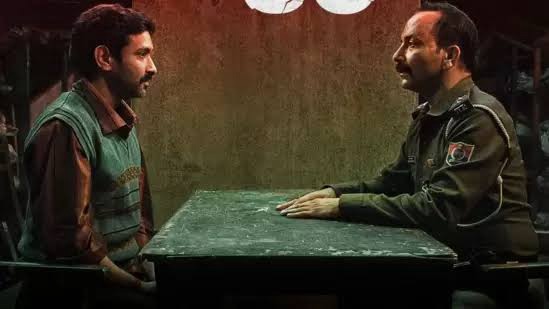

Sector 36

Watching Sector 36, one can’t help but be haunted by the grim reality it portrays—a reality that has unfolded in India over the past two decades. The movie leaves you questioning: how could such atrocities have occurred? And why was there no uproar when they did? The answer is stark and troubling—it didn’t happen because the victims were poor.

In India, wealth and power create shields of protection. The tragedies that befall the underprivileged are often met with indifference. This becomes painfully clear when you compare the muted response to the Nithari killings, where over 30 children were brutally murdered, to the outcry over the rape and murder of a doctor from a higher social standing. Both cases involved massive cover-ups, yet only one sparked national outrage. The victims’ socio-economic status determined the level of public sympathy, a truth that resonates throughout Sector 36.

The film shines a spotlight on the systemic injustice that plagues India. The system is a well-oiled machine, designed to serve the powerful. Crores of rupees are spent on lavish weddings and towering statues, while rapists walk free, and whistleblowers languish in prison. We rage against the system, yet we are the system too, perpetuating the very inequalities we decry.

Over the years, India has witnessed several high-profile rape cases that stirred public conscience and led to legal reforms. The Nirbhaya case, for example, resulted in nationwide protests and swift changes to criminal law. But the hard truth is that justice tends to be swift when the accused lack political connections. Where political power is involved, the wheels of justice grind to a halt. Take the Unnao rape case—BJP legislator Kuldeep Sengar evaded arrest for months until media pressure became too loud to ignore. On the flip side, crimes in opposition-ruled states often face heightened scrutiny, with political rivals quick to weaponize these tragedies for their gain.

Sector 36 forces us to confront the fact that crimes in rural areas or involving marginalized communities, particularly Dalits, often go unnoticed. Media coverage is heavily skewed towards metropolitan incidents, leaving the most vulnerable without a voice. The case of the Hathras gang rape—a Dalit woman raped and murdered by upper-caste men in Uttar Pradesh—barely scratched the surface of national consciousness. In these cases, patriarchal values, victim-blaming, and political protection for perpetrators drown out public outrage, creating a system where justice is reserved for the few.

Vikrant Massey delivers a brilliant performance, as expected, but the surprise standout is Deepak Dobriyal’s portrayal of the inspector who uncovers the horror. The film’s pacing is swift, allowing the story to unfold without lingering unnecessarily on the grisly details of the crimes themselves, though their very nature is horrific enough to leave an indelible mark.

Ultimately, Sector 36 is not just a film about a series of murders—it’s an exposé of India’s deep-rooted inequalities, where the poor remain invisible, the powerful remain untouchable, and justice, for most, remains a distant dream.

Kingdom of the Planet of the Apes.

I liked the first instalment of the franchise. It really had all the makings of an epic. Followed Caesar’s story avidly as the other two sequels came to theatres. There was a cascade of evolutionary processes, where the apes evolved and where the humans devolved. It was good fare.

Then came along the movie I watched last night. It is set about 300 years post the death of Caesar. His fame has turned him into a Prophet and nearly into god for certain ape communities. There are other communities who have returned to the natural habitat and take their evolution as a natural process. They haven’t even heard about Caesar. They have their own system of beliefs. From these come the main protagonists. Noa, Anaya, and Soona. 

The tribe has their own law and Noa struggles to follow them. From the beginning he is shown to be the one who chooses his own path. They are close to nature and the eagles they bond with become the metaphor for all that is natural. 

Some followers of Caesar have become zealots and believe that it is their right to subjugate humanity. But it is not only human beings that they have a problem with. They have turned into evangelistic bullies, like most people who have misplaced faith in one entity do. Caesar has become the equivalent of the Roman Emperor that ruled with autocratic might. There are many megalomaniacs who want that kind of power, but without the honesty and morality that Caesar possessed. He was willing to work with humans for the betterment of the Apes. 

And this is the second part of the analogy. The first being respectful of the natural world. The second the problems that occur when faith turns into fanaticism. This is wonderfully brought out by the perspective of Noa, the human protagonist.

He is astounded by how apes kill apes – something that Caesar had a law about in the first three movies. Then he gets to know Nova, who can speak. There are those humans who do not as well and Nova does not see herself as part of that tribe. In fact, she comes with her own agendas and racial prejudices, and those juxtapose the ones Proximus Caesar has. They both want one race to subjugate the other. Each feels it is their Right to do so.

The themes are well-woven and intertwined with lovely spectacles and hard-hitting action. Each character stands out as unique and they all linger in the mind long after the movie is done. The tragedy of the movie is that human beings are coming back into power and the beauty of the natural world is once again in peril. If only the rise of the Right and the people who push religion down other’s throats in the guise of morality and proper conduct would understand what is being said. The world would be the home that Noa so desperately seeks to build and preserve, devoid of guns.