
Superman

Light Restored: David Corenswet’s Superman Shines

I went to the first-night late showing of Superman with zero expectations—especially not expecting anything from star David Corenswet. But from the very opening, the film radiates light in a way Henry Cavill’s brooding take simply never did. Cavill’s Superman was relentless, vicious, bleak—more dark Batman than hopeful beacon. Corenswet, on the other hand, embodies everything good Superman should be: optimism, warmth, light.

From the start, the film introduces Superman at his most vulnerable—hurt, uncertain—and brings in Krypto, his loyal super‑dog, at just the right moment. Krypto’s entrance is delightful: “the canine sidekick steals the show, and his goofy interactions with Superman will resonate with anyone who loves dogs”. It was a moment that brought me—and, I suspect, dog lovers everywhere—to tears of joy.

Corenswet as Clark Kent / Superman reminds us of a young Christopher Reeve: dimpled, earnest, charming. He truly “soars as the Man of Steel”  , balancing vulnerability with heroism, sunlit goodness with real human emotion. As one review put it: “David Corenswet is just right for the dual role”.

Nicholas Hoult as Lex Luthor brings a modern tech‑tycoon je ne sais quoi—smart, menacing, magnetic. Many critics praised his turn, though some felt his performance didn’t match Gene Hackman’s classic menace.

The supporting cast includes: Rachel Brosnahan as Lois Lane: vibrant, sharp, independent. Critics say their chemistry is one of the best since Margot Kidder. Jimmy Olsen – Skyler Gisondo. Guy Gardner / Green Lantern – Nathan Fillion – is always a pleasure to watch. I couldn’t help remember him in Firefly. He’s back to his forté. Hawkgirl – Isabela Merced – brought in that element of darkness whereas Mister Terrific – Edi Gathegi – was indeed terrific. I liked the inclusion of Metamorpho (substance-shifter) – Anthony Carrigan – it brought in someone we hadn’t seen in the DC verse so far. These characters, dubbed the “Justice Gang” in a nod to the Justice League, provide depth and interactivity— and though some critics found the ensemble slightly overloaded – for me, it was just right. 

Director James Gunn steers Superman away from darkness. Thankfully! The film bursts with colour, lightheartedness, and earnest hope—exactly what the genre needed, described as a “colourful, breezy reinvention”. One critic noted the tone rejects “grim and gritty” in favour of “empathy… a radical tenderness over traditional machismo”.

The story skips a long origin arc and jumps into Clark’s life as a reporter and a hero. The film is tight, fast-paced, and brings back the classic John Williams–inspired trumpet theme—rejuvenating that sense of nostalgia I felt as a child growing up with Reeve.

Yes, there are a few hiccups: Some plot lines feel overcrowded—global politics, misinformation, and pocket-dimension mayhem. And let’s not forget the white man protecting the brown population from imperialists is an age old-trope that doesn’t sit well with me but even the CGI quality varies, especially in later action scenes.

Despite the missteps, Superman is an earnest, uplifting ride. It’s a heartfelt tribute to the Christopher Reeve era—sunlit, moral, full of hope. As one critic said: “I went into ‘Superman’ with low expectations… this reboot… is infused with heart, humour and a fresh optimism that the franchise desperately needed”.

So, if you’re longing for the Superman of light and goodness—not darkness and cynicism—this Superman is your film. It wants us to believe again—and it succeeds. This Superman is light reborn: hopeful, sincere, and undeniably fun. If you’re tired of the brooding, Nolan‑style heroes, let Corenswet’s Superman carry you back into the sun.
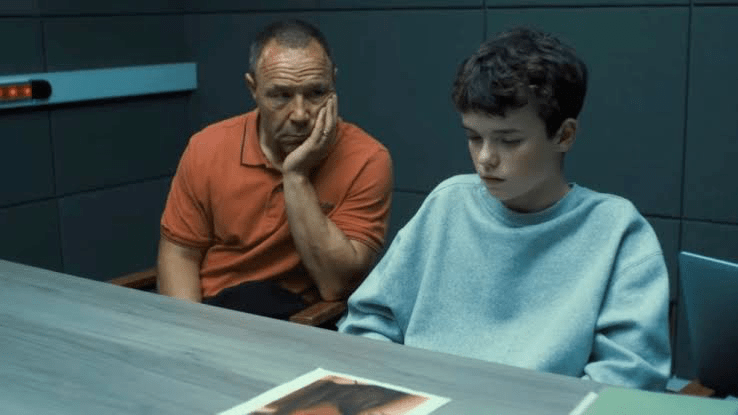
Adolescence

When I watched Adolescence, I couldn’t stop thinking about the themes that run through the show—bullying, toxic masculinity, social media radicalization, and the collapse of authority in today’s world. But what unsettled me the most was how difficult it is to pinpoint Jamie’s true motive.

Jamie isn’t just an aggressor—he’s also a boy who’s humiliated, rejected, and stripped of his dignity online. Katie turns him down, but that alone isn’t what breaks him—it’s what follows. She and her friends publicly emasculate him, using coded digital language that adults wouldn’t even recognize as bullying. They flood his Instagram with:

    •    “📉” (chart decreasing) → Suggesting he’s losing status, becoming irrelevant.

    •    “🌽” (corn emoji) → A veiled insult implying he’s pathetic or embarrassing.

    •    “🪑” (chair emoji) → Originally a meme, now used to call someone a loser.

    •    “🤡” (clown emoji) → Mocking him as a joke, a failure.

    •    ”#4473” → A number code in the show that essentially brands him as an incel.

This isn’t just name-calling—it’s a calculated digital assault, designed to socially destroy someone without leaving direct proof of bullying. Gen Alpha doesn’t need slurs anymore; they weaponize the very structure of the internet to erase someone’s worth. And Jamie? He internalizes it. But does this alone explain his descent into violence?

So is Jamie a Budding Psychopath or a Product of His Environment? I struggled with this question, just like the detective in the show. I was bullied too. I know what it’s like to be humiliated, to feel powerless. But I didn’t turn into a psychopath. Maybe that’s because, despite everything, I had a loving family to balance out the pain. Jamie had his mother. He had Eddie, his father, who—though strict and temperamental—never abused him, never stopped loving him. So what went wrong?

Psychologically, Jamie displays classic traits of conduct disorder and early psychopathy:

    •    Lack of empathy – He doesn’t react to the suffering of others.

    •    Emotional detachment – Even in high-stress situations, his expressions remain eerily controlled.

    •    Manipulative tendencies – He learns to adapt, charm, and deceive when needed.

    •    Entitlement and resentment – His frustration at rejection doesn’t lead to self-reflection but rather a belief that he must regain control.

But Adolescence refuses to give us an easy answer. Maybe Jamie was always inclined toward violence, and the bullying only accelerated what was already there. Maybe he was looking for an excuse. Or maybe he’s what happens when a system allows boys like him to slip through the cracks until it’s too late.

A key theme in Adolescence is the failure of authority figures—parents, teachers, even psychologists—to intervene before things spiral out of control. One of the most striking moments is when the psychologist in Episode 3 is visibly afraid of Jamie. This isn’t just a child with anger issues—this is a boy who understands the power he holds over others and enjoys wielding it.

There’s also a generational shift at play. In Episode 2, we see students openly mocking and disrespecting their teacher without consequence. It’s not just about kids lacking fear—it’s about the absence of structure, discipline, and moral guidance. When you combine this with unregulated access to toxic online figures, the result is kids shaping their worldviews based on whoever speaks the loudest.

And this is where the show forces us to confront something deeply uncomfortable. Jamie’s radicalization isn’t just a personal failure—it’s a collective one.

Beyond its themes, Adolescence is a technical masterpiece. Each episode is filmed in one continuous shot, meaning there are no visible cuts—just an unrelenting, immersive experience that traps you in the characters’ world. The sheer amount of planning and execution that must have gone into this is mind-blowing.

Owen Cooper (Jamie) is phenomenal. His ability to shift between vulnerability and cold detachment is chilling, and watching his transformation feels disturbingly real. Stephen Graham (Jamie’s father, Eddie) delivers a gut-wrenching performance, portraying a man who knows he failed his son but doesn’t know how to fix it. The psychologist in Episode 3 is also haunting—seeing an adult woman visibly shaken by a 13-year-old boy speaks volumes about how dangerous Jamie has become.

Adolescence isn’t just about one boy’s descent into violence—it’s about what happens when we ignore the warning signs. It’s about how social media radicalizes young men, how modern bullying has evolved into something almost undetectable, and how the collapse of authority leaves kids to raise themselves in digital echo chambers.

Was Jamie always destined for this path? Or was he a product of his environment? That’s the disturbing question the show leaves us with.

One thing is certain—Adolescence is not an easy watch. But maybe that’s exactly why it needs to be seen.

Bridget Jones: Mad About the Boy – A Perfect Goodbye to a Dear Old Friend

I have adored Bridget Jones ever since I first read about her in the British Council Library while doing my master’s, sometime around when the first film had just been released. I remember reading a review about how Renée Zellweger had put on weight and trained for one of the most marvellous British accents ever filmed on screen. That intrigued me enough to pick up Bridget Jones’s Diary, and from that moment on, I was hooked.

Bridget wasn’t just a character; she was a person who existed in a parallel universe, someone I could have bumped into at a bar, embarrassed myself in front of, and then laughed about it with her over a bottle of wine. She was silly, kind-hearted, brutally honest, and had a truckload of insecurities that made her incredibly relatable. She thought just like I did—only in a much quirkier, funnier, and more inimitable way.

So, of course, I followed her journey through Bridget Jones: The Edge of Reason, where I nearly lost my breath laughing when she found herself in a Thai prison and taught the inmates Like a Virgin, and then through Bridget Jones’s Baby, where she teamed up with another one of my all-time favourite actresses, Emma Thompson, who played Dr. Rawlings with her signature deadpan wit.

And now, here we are, 25 years later, with Bridget Jones: Mad About the Boy—the final chapter. I was 24 when I first met Bridget, and now I’m going to be 50 as I say goodbye.

In this film, we meet Bridget (Renée Zellweger) as a mother of two, navigating life without Mark Darcy (Colin Firth), the love of her life, who has tragically passed away. Seeing her without him was heartbreaking, surreal even, but true to form, Bridget carries the movie with her classic blend of chaos, warmth, and self-deprecating humour. Zellweger, once again, is absolutely brilliant in this role. It was tailor-made for her—no one else could have played Bridget as perfectly as she does. Cate Blanchett, Rachel Weisz, and other names were once considered, but let’s be honest, Rachel Weisz is simply too pretty, and Cate Blanchett… well, she’s Cate Blanchett. But Renée? She is Bridget.

There’s a new romantic interest, of course. Enter Leo Woodall as Roxster, the much younger man who is charming, cheeky, and absolutely smitten with Bridget. But here’s the thing—why do people always frown upon an older woman dating a younger man? If a 50-year-old man marries a woman 20 years younger, no one bats an eyelid. But when it’s the other way around, it’s suddenly scandalous. Why can’t Roxster be smart, funny, emotionally available, and great in bed, all at once? I was completely rooting for him. Unfortunately, the film takes a more conventional route, and Bridget ultimately ends up with her children’s teacher, played by Chiwetel Ejiofor. Nothing wrong with that—it’s sweet, stable, and safe—but I wish they hadn’t made us fall in love with Roxster only to take him away.

One of the best things about this film is how it brings back so many familiar faces, even if only for fleeting moments. Gemma Jones returns as Bridget’s mum, still delightfully meddlesome. Jim Broadbent is back as her ever-suffering father. And then there’s Mark Darcy—Colin Firth—appearing in just a few scenes but making an unforgettable impact. That one look he gives her across the room, where only she can see him… it was poignant, beautiful, and so utterly Bridget Jones.

Her old friends are back too—Jude (Shirley Henderson), Shazzer (Sally Phillips), and Tom (James Callis)—which I was especially happy about since they were mostly absent in the last film. And, of course, Emma Thompson returns as Dr. Rawlings, stealing every scene she’s in with her impeccable timing and no-nonsense delivery.

At its heart, Mad About the Boy is a film about loss, love, and moving forward. It’s about finding new beginnings even when you think your best years are behind you. It made me laugh (because Bridget always makes you laugh), but it also made me cry. It made me miss my best friend. It made me miss the people I’ve lost over the years. And, most importantly, it made me love the people I do have in my life all the more.

There’s something incredibly special about following a character for 25 years, growing older alongside her. When I first met Bridget, I was young, full of dreams, and a bit of a mess—just like her. Now, as I near 50, I realise that life never quite stops being a mess, but that’s okay. As long as we have love, laughter, and the occasional disaster, we’ll be just fine.

Bridget once said, “You know, I never really understood why you needed someone else to make you feel whole… but as it turns out, you were right. I was just fine on my own. But with you, I feel perfect.”

And honestly? That’s how I feel about this film. I was fine without it. But having it in my life makes everything feel just a little bit more perfect.