Honour My Grief

I have celebrated your faith.
This year, honour my grief.
Do not mistake my exhaustion for indifference.

I have stood beside you every year.
I have honoured your festivals.
I have shown up for your faith even when it was not mine.
I have lit the lights,
shared the meals,
folded my disbelief into respect —
because love does that.

Love makes room.

But this year, my house smells of antiseptic and fear.
This year, celebration tastes like blood from a tumour that will not stop bleeding.
This year, I am not simply “busy” or “moody” or “withdrawn.”

I am bracing.

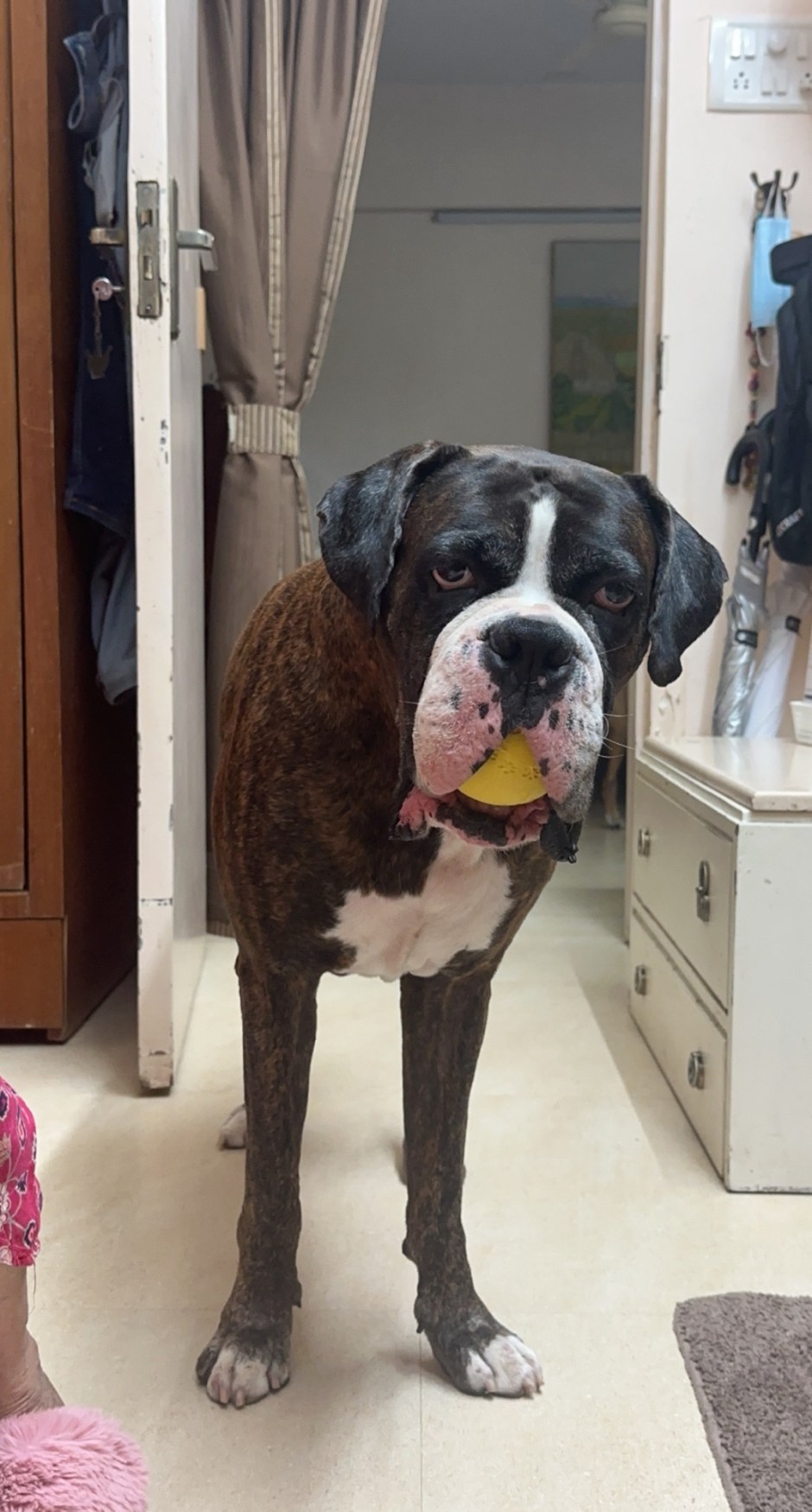
On 26 January, I buried Zach.
Before my heart has learnt that new silence,
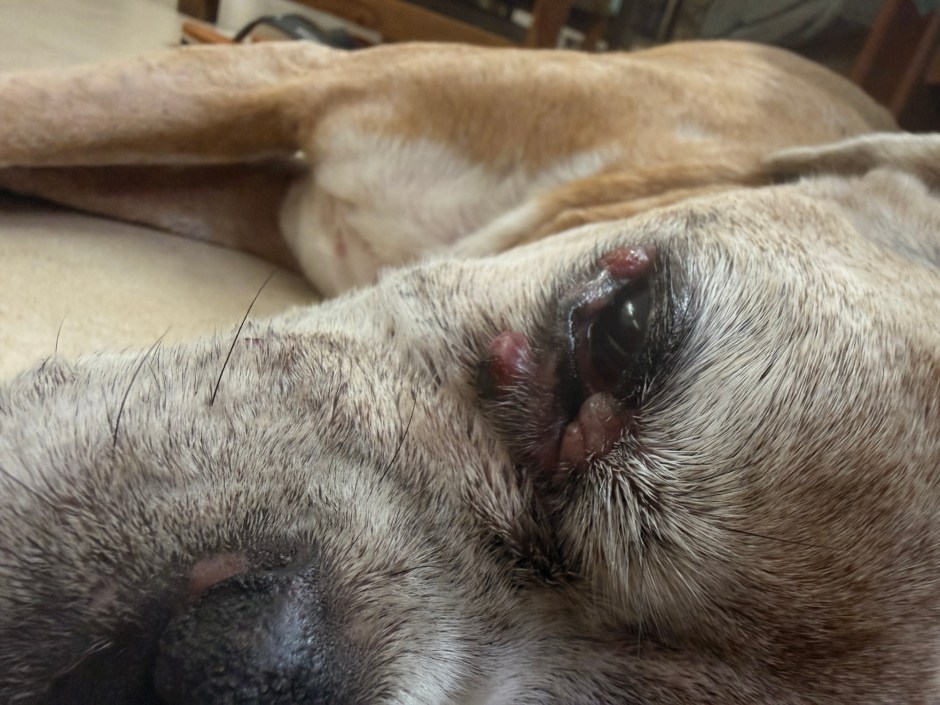
I am watching Xena fade.

Cancer does not wait for calendars.
Grief does not consult festivals.

You say I celebrated Christmas when Zach was terminal.
No.
I hoped Christmas would lighten my grief.
But there is a difference between lighting a tree and feeling light.
There is a difference between attending a party and inhabiting joy.
There is a difference between functioning and celebrating.

I took that tree down before the year even turned. You didn’t remember that, did you?
I smiled because promises had been made.
I showed up because responsibility demanded it.
But inside, I was already saying goodbye.

And now you ask why I cannot summon the same performance again.
Because I am tired of performing strength.
Especially not for you.

Even if you are not an animal lover, you know what they are to me.
You have seen the tumours.
You have seen the bandages.
You have seen me kneel on the floor dabbing blood past midnight.

You have watched me carry the quiet terror of “will today be the day?”
You do not have to love dogs the way I do.
But as my partner, you must know what this love costs me.

This is not about Eid.
It is not about a tailor.
It is not about a birthday cake.

It is about capacity.
Grief shrinks the lungs.
It narrows the world.
It makes joy something you sip carefully,
not something you pour freely.

My therapist tells me: take it a day at a time.
Take the smiles when they come.
Do not drown in tomorrow before it arrives.

So yes — I may laugh at a birthday.
I may sit with someone I call sister and feel warmth.
Because survival sometimes looks like borrowing light.

But that does not mean I am available for spectacle.
As my spouse, I do not want comparison.
I do not want accounting.

I want empathy.
Not understanding in theory.
Empathy in practice.
Empathy that says:

“You do not owe the world festivity while you are fighting loss.”

“Your grief is not inconvenient.”

“I will not compete with your sorrow.”

“I will stand beside it.”

I have celebrated your faith for years.
This year, I expected you to
Honour my grief.

Sit with me in the antiseptic silence.
Hold me when I break at 2 am.
Let me be inconsistent.
Let me be human.

Because partnership is not tested in festivity.
It is tested in funerals we see coming.
When the Body Breaks Before the Heart Does

I am afraid of losing Xena.

And my body knows it before I allow myself to say it aloud.

We have organised our lives around her illness. Anand and I orbit her like anxious moons — checking tumours, adjusting dressings, watching if she paws at the wound, fitting the cone, giving  her with food, measuring medicines, studying her eyes for discomfort. Love has become vigilance.

And now I have fallen sick.

Acid roars in my stomach like a pit of hellfire. It burns up my chest as though grief is rehearsing its entrance. A cold sore blooms at the corner of my lip — a painful eruption that feels like accusation. As if my body is saying: you cannot control this either.

I hate the helplessness.

I hate that my immune system falters under fear. That I am shivering while she lies there with a body at war with itself. I can take paracetamol. I can swallow an antiviral. I can ask for help.

What does she do?

She paws at the tumour that offends her skin. She endures.

I just lost my son. And I am strangely relieved that I believe in no higher power to blame. There is no heaven to petition. No prayer to bargain with. There is only flesh. Biology. Cells that turn rogue. Love that cannot prevent it.

But hell — hell I feel. It sits in my gut, acidic and churning.

I hate death not because it exists, but because it rarely comes gently. It arrives dragging pain and anticipatory grief behind it. It makes you rehearse goodbyes before they are required. It makes you ill before anything has even happened.

And still, she eats. She looks at me. She responds. She plays.

So perhaps this sickness is not prophecy. Perhaps it is fear trying to outrun reality.

I am trying my best. This has to be enough?

After Everyone Leaves

When the funeral is over, and the house finally empties of people, grief does something cruel and ordinary at the same time. Life resumes. Chores return. The day demands to be lived — and that is when the absence announces itself.

Not in grand ways. In small, brutal details.

The food bowls are the first thing I notice. I used to juggle three every day. Now I carry two, one in each hand, and my body still prepares for the weight of the third. Muscle memory has not yet learnt loss.

In the corner of the room, his mattress sits unused. The edges are stiff with dried drool — the very drool everyone used to shy away from. Zach was intensely affectionate. He loved with his whole body. And yet, visitors would dodge him, hold their clothes away, laugh nervously.

“Zach, sit down.”

“Zach, go away.”

He never understood why love had conditions.

The medicine chart still hangs on the fridge — morning, afternoon, night — followed meticulously, desperately, faithfully. A quiet record of how hard we tried. His leash hangs with the others, but his remains vacant. I notice the name tag first. Zachary. Still there. Waiting.

Then comes the first midnight walk without him.

We step out as a family, no one leaving anyone alone. The girls walk beside me, steady and present, as if they instinctively know that this is not a walk — it is an endurance test. I see the spot where Zach always stopped to pee. He took his time. He ambled. He was a big boy. He occupied space without apology.

And now that space is painfully, offensively empty.

I don’t have many grand things to say about our relationship, except this: I loved him. Fiercely. Quietly. In the way fathers often do with sons. It wasn’t demonstrative. It wasn’t dramatic. But it was solid.

Nothing like my relationship with my own father — because Zach always looked to me for help, for reassurance, for safety. And I always told him the same thing: I’ve got your back.

I used to sing to him —

You’re my honey bunch, sugar plum, pimply imply umpkin —

and he would come charging towards me, tail wagging wildly, a weapon that bruised shins and toppled objects. Love, again, without restraint.

The house feels hollow now. Zach was a large presence — lumbering, filling up rooms, claiming corners, leaning his weight into life. The gentlest boxer dog. The sweetest. And according to everyone in the family, one of the most handsome dogs they had ever seen.

He knew my aunts.

He lived through Covid with me.

He witnessed deaths.

He stood beside me through grief before becoming its centre.

He was my baby.

My baby boy.

And he has taken a piece of my heart with him.

People often talk about grief as something that arrives suddenly, but this grief has been rehearsed for months. Living with two terminally ill dogs teaches you anticipatory mourning — the long, slow exhaustion of loving while preparing to lose. And yet, when the moment finally comes, it still catches you unprepared.

Condolences arrive. Kind words follow death easily. But the real work of grief happens afterwards — when no one is watching, when the house is quiet, when memory ambushes you in ordinary moments.

These memories will keep jolting me as the days go on. I know this. I have seen enough death to know that time dulls the sharpest edges. Pain becomes a low ache. Survivable. Livable.

But not yet.

Right now, I am grief-stricken.

Right now, I am wracked with pain.

Right now, love has nowhere to go.

And so it lingers — in empty bowls, unused leashes, dried drool, midnight walks, and a father that remembers him even when the world moves on.