What Then Is Homophobia?

I am gay. I knew what to call myself at the age of thirteen. How? I was teased in school. Before that I knew that I liked guys. Sexually. My sexual awakening happened when I saw Christopher Reeve fly through the sky in 1980 as Superman. He was and still remains a fantasy for me. I didn’t know why I liked him. I just did. Now of course, I know plenty of reasons why I did. Daddy issues, idol issues, the need to be protected by someone larger that life who was male, a plethora of reasons, actually. Almost ascribing to all the clichés one can think of.

No, I found out what to call myself by a boy in school who wanted me. When I didn’t really understand what he was after, he didn’t have the guts to actually voice it out himself, and what followed was him name calling. One of the names being ‘gay’. I began to read about it and what followed was a journey of self discovery. I read and I read and I read. I devoured everything that came my way in book form. The book that really was an eye-opener was Nancy Friday’s “Men in Love” – gosh, that book was really something. I learnt how to notice my body, how men would think, what different kinds of sexual thought pervaded the human mind. I realised early that sexuality is fluid and I wasn’t the only one who fantasized – and that my fantasies were pretty ‘vanilla’.

Through my teens, I was awkward, a book worm, a geek, a nerd, a momma’s boy. Name a derogatory word, in the likes of ‘pansy’, ‘sissy’ and I have been called it. It was difficult growing into someone who wasn’t afraid of the world. I didn’t know I had it in me when I was mocked in front of an entire Economics class, during high school, in what was termed as ‘Icy Day’, a day where boys and girls sent out anonymous mint candies to people they liked. Someone, presumably a secret male admirer, had sent me scores of them and each of them had messages that were read out before the entire class. Pithy messages in Hindi declaring infatuation – and of course, I smiled through it all. Intuitively, I knew I was the butt of a joke. The class laughed and I smiled. Inwardly, I was frozen.

When I left, the class representative, his name was Shiamak, came up to me and asked me, ‘are you gay?’ I looked up at him and said, coolly, ‘why? Are you asking me out on a date?’ Post that burn, he never said anything to me and no one ever teased me in that year.

I learned to walk differently, I dressed differently, I moved out of a zone and into another. Much later, I realised something. Throughout my formative years, I had no real male figure to look up to, I was surrounded by these amazingly accomplished women, who I wished to emulate and be like. So I adopted their mannerisms and affectations. Moreover, I was under the impression that to attract a man one needed to be like a woman.

As I grew and educated myself on the gay subculture, I realised that I could choose to be who I am and I had to act like no specific gender in order to be liked. I read and books like ‘The Persian Boy’, ‘Men in Love’, ‘Maurice’,  and movies like ‘My Beautiful Laundrette’, ‘Get Real’, ‘Victor Victoria’, made me appreciate who I could be, and I became me. The three years of degree college, immersing myself in Literature and Psychology, molded me into someone who had no reservations of being effeminate and no remorse about being manly. I understood that there was no such word as ‘normal’ and one needs to just be true to himself.

I came out to my mother at the age of sixteen. My first step to being out as a gay man. The process wasn’t a painful one, but the anxiety that formed its prologue was agony. The fear of a boy trying desperately not to allow the love his mother has for him change, on account of something he cannot change, is always filled with such pathos and such trepidation. Someone asked me why do gay guys celebrate pride – in my head, there are a million reasons, but the most important one is this: A homosexual child has years of either fear, or resilience, or anxiety, or loss, or merciless browbeating, or sacrifice, or pain, or confusion, or pressure, or regret or all of it together until that moment when he recognises who he is, and takes the step out of a dark closet. That step, to me, is why we have Pride.

Over the years, I have struggled, not greatly, but in the countless, little moments, when a student pokes fun, or when a family member smirks at another, or when the doorman gives you an all-knowing look, or a straight friend makes a casual remark that is hurtful… and these are many… but in effect, these mean little when I expect two entities to appreciate the fact that I have rights just as any straight man. The first being my family and the second being my country.

I have been proud of both, throughout my life. My family is fantastic, anyone who has met them knows this to be true. My country is mine – the place where I was born, the climate I love, the people who recognise me as a part of the earth I played on. I refused to give it up for a land of opportunity. I fell in love with someone who wanted me to move with him to a foreign land… and I gave that up because of these two entities. I do not regret that move. Never have.

Until the Supreme Court verdict upholding Section 377 in 2013. It broke my heart. Then in 2014, my family supported a rise to power that spoke clearly against homosexuality. That shook my belief in the support system I had. It wasn’t cataclysmic, it was insidious and it was there. I didn’t understand the logic behind it. My faith was shaken.

The second time that happened was from the only other safe ground I have left to me. The Community. I have always looked to the gay subculture as my second family. I got into the ‘circuit’ when I was recovering from the heartbreak of a first love. I could never gain complete succour from people who loved me but were straight. Somehow in my mind, they didn’t really understand what had happened. They blamed the boy I was in love with as having a bad character, but it was deeper that that. He wanted to be famous and his career wouldn’t make any concession for his being gay. He was scared, true, but he was scared because he was gay. He had something to lose, something he wanted desperately. Only another gay person could relate to this feeling of seclusion, and yet of being one. It is a paradox.

So I found my place to be, at twenty-two, at a meeting I was randomly invited to. You know the feeling where you hear people speak a language and you instantly recognise it as your own? That was what happened. I revelled at finding this safe zone. This place where I could talk and be heard and more importantly, be understood, because of the advantage of common experience. It felt liberating.

Over the years, I realised that human beings do not think collectively. Which is fine. But they also do not like to think about a thought opposed to their own. In the past few months, I have realised this to be glaringly apparent. On gay dating apps, there are words like ‘straight-acting’, ‘no fems’, ‘no sissies’… these transport me back into that corridor outside that classroom with that boy whose sole purpose at that point in time was to belittle my spirit, to hollow out something that he would never understand. I am instantly transported back to that time when a gay friend of mine says that walking the Pride is unnecessary but he will be there at the party that happens post it.

But of late, that corridor seems to be the world, including the one in which I thought I was safe and secure. The term internalised homophobia has more than one meaning. It’s not necessarily self-hate because of being queer, it could just as easily be hate towards the other, because the rainbow flag apparently has begun to discriminate from within. People see what they want to see, blinders can also be rainbow coloured. The plight of common experience is not enough anymore to bind people together. We are caught up with our own petty grievances. This is what enrages me.

I have been cheated. Over and over and over.

Where is this united front that we talk about? We smile at each other, the way I smiled so long ago, on that day of those icy declarations that froze my heart. People say I love you and go and vote for someone who agrees with the fact that I am a criminal. We decide to walk hand in hand in Pride, but cannot wait to accuse the other for personal gain, when the gain basically is for part of the larger community any which way. We cannot see beyond the circles of what we consider Right. Common experience has no value. A common enemy has no prestige. Different though is irrelevant. But one’s own differences should be appreciated?

I will walk the Pride. I will continue to love my families, the straight and the gay. But this year, I will do this with a part of me dead.
Love

I was listening to an old Hindi song. It was Meera telling Krishna that, in essence, he loved only Radha, and yet people blame her for loving him – unrequitedly.

श्याम तेरी बंसी पुकारे राधा नाम
लोग करे मीरा को यूँ ही बदनाम

To which he replies:

सावरे की बंसी को बजने से कम
राधा का भी श्याम वो तो मीयर्रा का भी श्याम

This is an element of love I think that very few people realise. Apparently, it’s something that I happened to learn after forty years of living and loving. Though I knew I was the kind of person who never “fell out of love”. Truthfully, I believe if someone can do that he or she wasn’t in love in the first place.

Romantically, in my life thus far, I have been in three relationships. And I still love all three men. How is that possible? Easy. Each person is an individual. Each person has his own unique and utterly different character. I loved M because of his passion, his voice, his energy, he was my first love. I remember the first time we kissed. I remember the times we shared. I remember his smile, his handwriting, his hair. So the love I have for him is unique, it was custom made for him. It manifested out of me, because of him.

When he left me, I was devastated. I was bereft. I felt as if a part of me was wrenched away. The feeling of loss surrounded me for over years… but I never stopped loving him. I couldn’t even think of him negatively. He had broken my heart, but ironically, the love in it never broke.

The same happened the second time I fell in love… Anders was a Dane. A quintessential dream come true. Blue eyes, strawberry blond, taller than I, mature and calm. An architect. The first movie we saw together was The Horse Whisperer, in Sterling. I remember the first time we kissed, too, we were both actually trembling. The way he made me feel was so different from the way M had made me feel.

At that point in time, at the age of twenty-three, I couldn’t really tell the difference in what I felt. I believed love was love, and like Meera, I would be left bereft. Of course, he loved just me, and truly and deeply – in all the ways love songs would describe it. But after M, I didn’t trust love and, since he was from abroad, I thought that this relationship would meet with the same fate. However, he did return from Denmark. He bought me the most beautiful Christmas tree, all the way from there, because he knew how much I love celebrating Christmas. He had come to spend the holidays with me, and this time it was I who broke a heart.

I was protecting myself, and I was trying to be the mature one. I didn’t think that it would work out because of geography and because of cultural differences. He was willing to try, and I was afraid to. I didn’t realise then that the way he made me feel only he could, and that he was he and not M. I remember his tears, and I remember holding his face against my neck, my hands in his hair, and wondering how I could do that. But I did. Not because I did not love him, but because I was afraid that this love would end the same way the last one did. That was my terrible error. Our relationship ended, but I have not stopped loving him.

When I fell for a guy seven years my junior, I was just beginning to give up on preconceived notions on how love should be. Of course, at twenty-five, I was jealous, possessive and had set views on how love should form its nature. I didn’t realise then that each love forms its own path when two individuals walk it. I tried for many years to make Anand see love through my perspective. I couldn’t understand that romance had nothing to do with love. Passion had nothing to do with love. Jealousy had nothing to do with love. Possession had nothing to do with love.

When he cheated on me thirteen years later, I was not as upset about the physical tearing but about the fact that he couldn’t tell me what was going on with him. By then I had evolved enough to know the difference between the hurt felt post the breaking of trust as opposed to him having sex with another man. So we made a compromise – amongst the hundreds already done – and moved on with love in tow.

Through my teens, and my twenties, I tried incorporating all that I had read and seen in my relationships. There are knights in shining armours, but not always riding horses, or wearing armours. There are love confessions on tall buildings, but those can happen in a quiet bedroom as well. There are beautiful sunsets and hands intertwined in silhouettes but the intertwining can happen on a casual walk to an ice cream shop. I didn’t realise all of this earlier, and I would be upset.

I have learnt that I cannot mold another person to love me in the way he is not capable. But in no way does that mean he doesn’t love me. Love cannot be gauged. It can only be felt.

Over the years, I have come across many men. I related to them over poetry, music, movies, families, events, spaces and thoughts. I realise now that each of them spoke to a side of me that no one else could. Each of them cajoled and satisfied a part of my heart that had hitherto been neglected. In my own way then, I loved and love so many who came across my path. And none of this love ever tampered with the love that already existed in different spaces of my heart.

This is what I understand now. Love isn’t restrictive. It is surely exclusive, but it forms a new facet to include a new exclusion. Who says that love happens once? It happens all the time. That’s the best part of it. It is like this ever expanding light, it reaches out and forms new lights, like some mythic orbit of newly created stars. Each star shining with its own light, special and its very own.

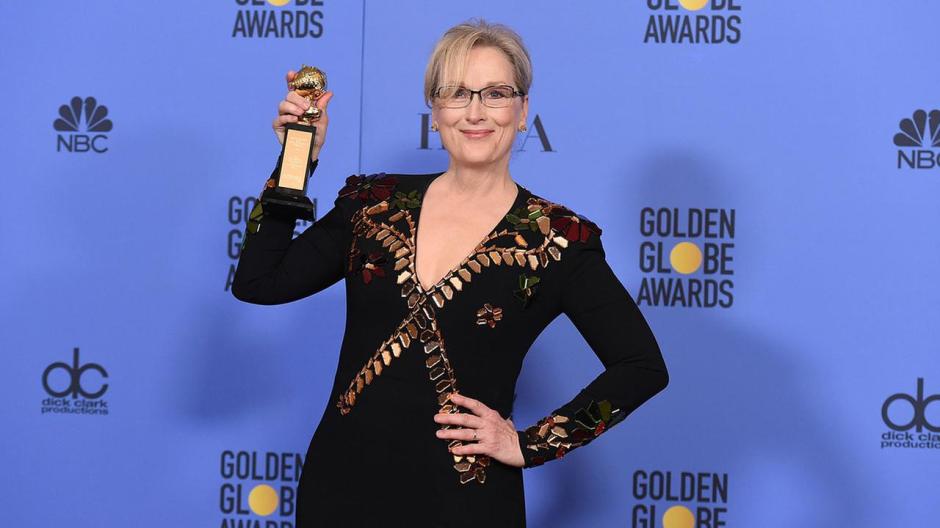
Meryl Streep

It is seldom that a speech made by a Hollywood Celebrity makes me sit up and applaud. The last time I did that was when Christopher Reeve gave a speech at the Oscars in 1996. I have liked Meryl Streep, I have never been an immense fan, tonight it was a pleasure to hear her speak after she received the Cecille B DeMille award for her contribution to cinema. And she surely has. Through the years, she has amassed a body of work that few actresses can boast of.

Over time, I have felt a strange apathy seeping into me. I have lost faith in humanity, more or less. The ideals that I grew up with, from the works of authors and poets and artists and visionaries and dreamers with much larger sensibilities than the world could hope to replicate, ingrained in me a sense of balance that I find shaken by the times we live in. The people I grew up with and have loved seem to have their moral compasses aligned opposed to mine and I find that it is difficult to be meaningful in a world that is now a strange dystopia.

I keep thinking of Yeats’ The Second Coming:

Turning and turning in the widening gyre
The falcon cannot hear the falconer;
Things fall apart; the centre cannot hold;
Mere anarchy is loosed upon the world,
The blood-dimmed tide is loosed, and everywhere
The ceremony of innocence is drowned;
The best lack all conviction, while the worst
Are full of passionate intensity.

I don’t want to quote the entire poem, it leaves me with an eerie feeling of premonition and I shudder. But tonight, I heard Streep’s speech and she spoke so beautifully that I just had to keep a transcript of it here. So without further ado, here it is:

Please sit down. Thank you. I love you all. You’ll have to forgive me. I’ve lost my voice in screaming and lamentation this weekend. And I have lost my mind sometime earlier this year, so I have to read.

Thank you, Hollywood Foreign Press. Just to pick up on what Hugh Laurie said: You and all of us in this room really belong to the most vilified segments in American society right now. Think about it: Hollywood, foreigners and the press.

But who are we, and what is Hollywood anyway? It’s just a bunch of people from other places. I was born and raised and educated in the public schools of New Jersey. Viola was born in a sharecropper’s cabin in South Carolina, came up in Central Falls, Rhode Island; Sarah Paulson was born in Florida, raised by a single mom in Brooklyn. Sarah Jessica Parker was one of seven or eight kids in Ohio. Amy Adams was born in Vicenza, Italy. And Natalie Portman was born in Jerusalem. Where are their birth certificates? And the beautiful Ruth Negga was born in Addis Ababa, Ethiopia, raised in London — no, in Ireland I do believe, and she’s here nominated for playing a girl in small-town Virginia.
Ryan Gosling, like all of the nicest people, is Canadian, and Dev Patel was born in Kenya, raised in London, and is here playing an Indian raised in Tasmania. So Hollywood is crawling with outsiders and foreigners. And if we kick them all out you’ll have nothing to watch but football and mixed martial arts, which are not the arts.

They gave me three seconds to say this, so: An actor’s only job is to enter the lives of people who are different from us, and let you feel what that feels like. And there were many, many, many powerful performances this year that did exactly that. Breathtaking, compassionate work.

But there was one performance this year that stunned me. It sank its hooks in my heart. Not because it was good; there was nothing good about it. But it was effective and it did its job. It made its intended audience laugh, and show their teeth. It was that moment when the person asking to sit in the most respected seat in our country imitated a disabled reporter. Someone he outranked in privilege, power and the capacity to fight back. It kind of broke my heart when I saw it, and I still can’t get it out of my head, because it wasn’t in a movie. It was real life. And this instinct to humiliate, when it’s modeled by someone in the public platform, by someone powerful, it filters down into everybody’s life, because it kinda gives permission for other people to do the same thing. Disrespect invites disrespect, violence incites violence. And when the powerful use their position to bully others we all lose. O.K., go on with it.

O.K., this brings me to the press. We need the principled press to hold power to account, to call him on the carpet for every outrage. That’s why our founders enshrined the press and its freedoms in the Constitution. So I only ask the famously well-heeled Hollywood Foreign Press and all of us in our community to join me in supporting the Committee to Protect Journalists, because we’re gonna need them going forward, and they’ll need us to safeguard the truth.

One more thing: Once, when I was standing around on the set one day, whining about something — you know we were gonna work through supper or the long hours or whatever, Tommy Lee Jones said to me, “Isn’t it such a privilege, Meryl, just to be an actor?” Yeah, it is, and we have to remind each other of the privilege and the responsibility of the act of empathy. We should all be proud of the work Hollywood honors here tonight.
As my friend, the dear departed Princess Leia, said to me once, take your broken heart, make it into art.