October

October has never been kind to me.

My father was born in this month, and from my very first bond with a Libran, I learnt what cruelty and rejection felt like within the walls of my own home. My teenage years — already fragile — were turned into a living hell under his shadow. That wound still bleeds into the way I view this month.

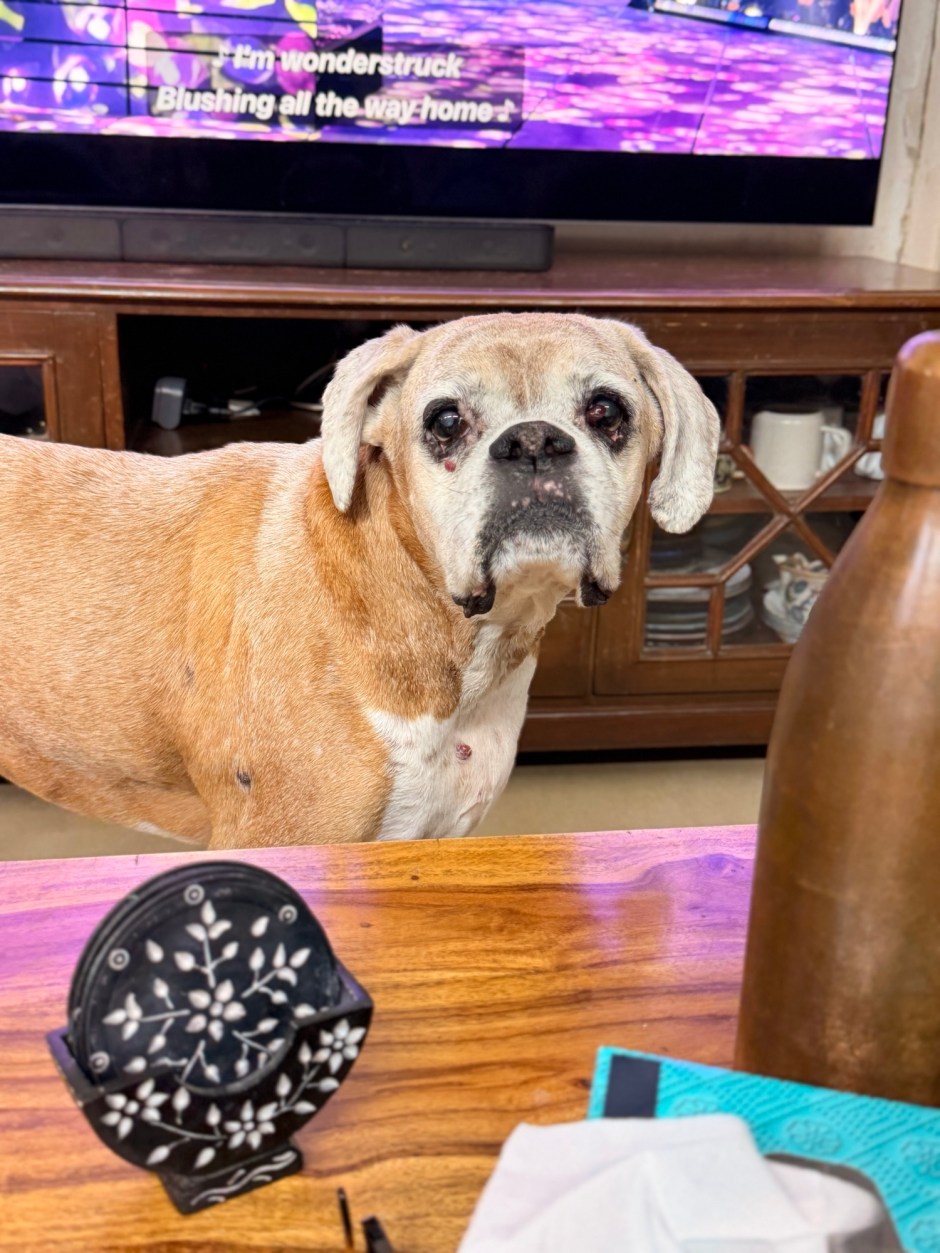
October also carries news that cuts too deep. It was in October that I first heard the words my mother has cancer. It was in October that I watched the fur child I loved most slip away, after weeks of suffering from degenerative myelopathy. She left me on 28 October, and the grief still claws at me.

Even Diwali, a festival I love so much, often lands in October. Its lights and laughter bring me comfort — but they also stand as bittersweet reminders, because while the lunar cycle moves, the weight of this month never does.

It isn’t just one or two bad memories that colour this month for me. It’s a series of them. A pattern. A cycle of loss, fights, pain, and news that bruises. Only yesterday, I had a big fight with my partner, and today I realised the date — the second of October. This month has barely begun, and already it has reminded me of its shadow. Even my body joined in, with a sharp catch in my neck that makes every movement hurt.

October always feels heavy, dark, restless. It begins with promise — a dinner with a friend, a small spark of joy — but it almost always slips into something else. Something harder to hold. Something that leaves me waiting, tense, counting down until the calendar finally turns.

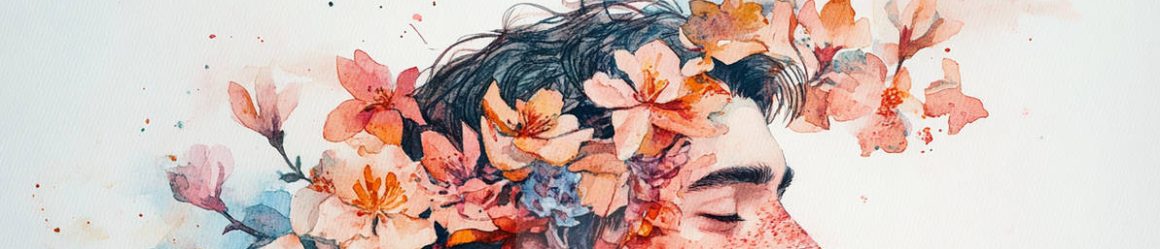
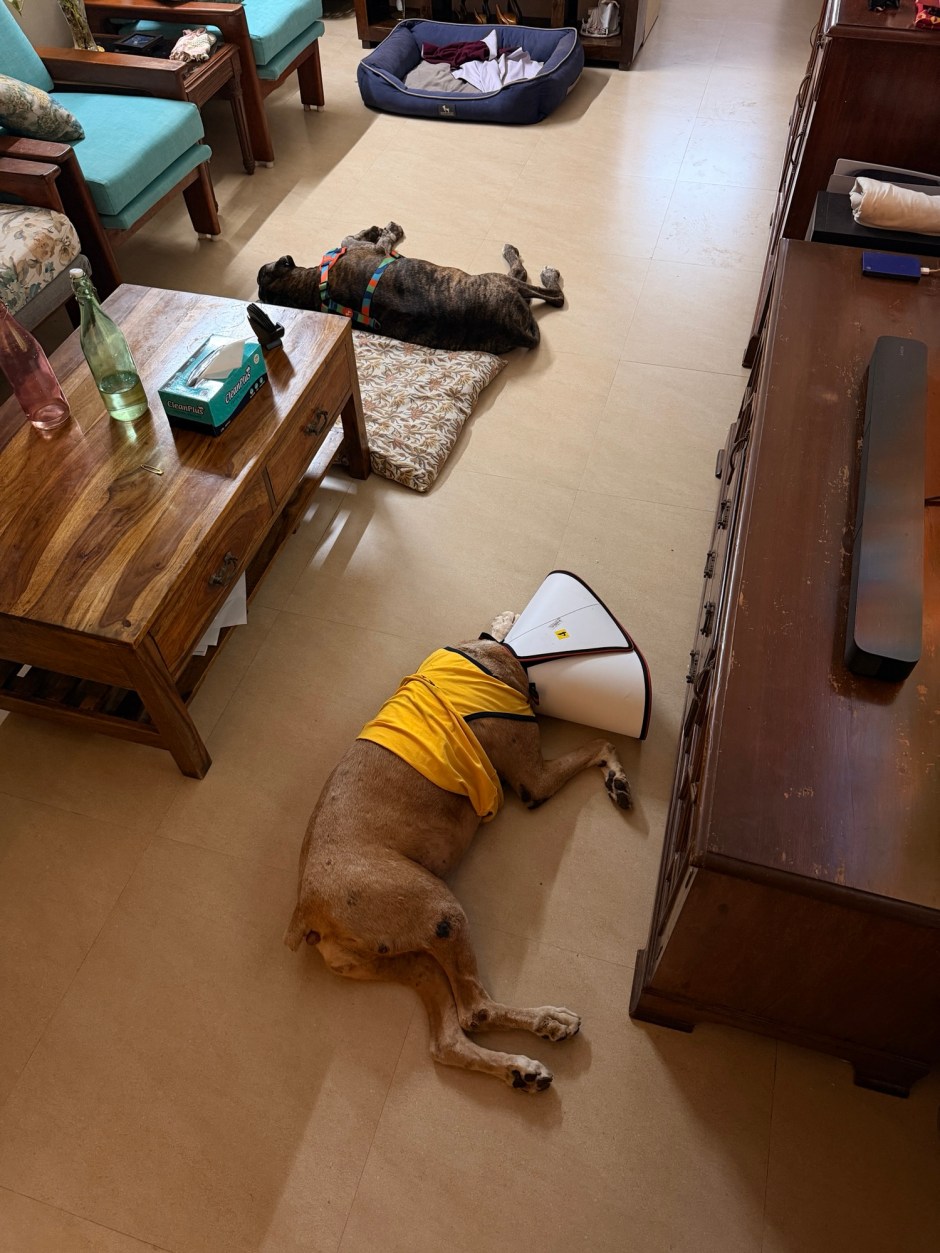
These are the images I’m putting out — fragments of how this month feels inside me. A collage of memory, pain, and resistance.

Sabar Bonde

I watched Sabar Bonda at its 4:20 show at PVR Andheri — an experience that turned out to be more than just cinema, but a mirror. What most gay men go through, irrespective of class. A simple thing like a parent being worried about the future of his gay son. 

It began with death. A father passes away, and rituals immediately take over: what to wear, what to eat, how to mourn, what to suppress. That opening sequence pierced me deeply because my bua — whose birthday coincidentally fell on the day of my viewing — was like a father to me. The grief, the weight of conduct, and the demands of tradition all struck a profoundly personal chord.

What makes Sabar Bonda so powerful is that the protest it mounts is whisper-quiet. It doesn’t erupt in melodrama; it lingers in what society insists upon — in colour, rules, and ritual. A grey shirt Anand is told to change. Much like how people ask us to change, to convert. The slippers he wears – bringing comfort to his feet – but only in the company of his lover, because ritual forbids it. The shadows of who he is, pressed against the mould of what he’s “supposed” to be. The film reveals itself in the texture of small moments: Balya’s gift of cactus pears, the shared silences, the tension between city and village, heartbreak and love, grief and continuity.

Anand’s mother is the film’s moral and emotional backbone. She loves, supports, and resists in her own way. His father’s eventual acceptance, Balya’s steady care, and the hesitancy threaded through each character are rendered human. There is no villain here — only systems and traditions, and people trying to navigate them quietly.

Critics have largely echoed these impressions. Moneycontrol calls it “a gentle story of grief, memory, and love told with quiet honesty. It lingers in the silences and small moments …” Times of India writes: “to enjoy the sweet taste of cactus pears, you must first carefully remove the sharp spines from the skin of the fruit … meant to be savoured exactly like that.” That metaphor mirrors the story’s truth — love, identity, and acceptance are like a fruit you crave, but you must first tend to the pain. Indian Express highlights the film’s visual poetics: the still camera, wide frames, and static gaze that holds ritual, grief, and distance until intimacy seeps in. Hindustan Times calls it “a tender, deeply moving study of queer love in one of the year’s best films,” noting how customs, everyday pressures, and quiet longing are handled with exquisite precision.

Where my own experience diverges is in how deeply the symbols resonated. The cactus pear, unlike the peach in Call Me By Your Name, isn’t about erotic awareness, but about care, concern, and tenderness — love that is rare, difficult to find, but sustaining. The rituals aren’t simply a backdrop; they are choreography, dictating what must and must not be done. Anand’s protest is not loud — it is embodied in small refusals, in gifts, in a silent embrace.

Long after leaving the theatre, certain truths lingered. Rituals and rules aren’t just external constraints; they are the inner architecture Anand must resist and reshape. The sensory texture — touch, clothing, light, the sound of goats, footsteps, and fields — builds an emotional world as vivid as any dialogue. There is the courage of saying no to what one is “meant” to be, and yes to a hidden version of self. And there is the way family, particularly the mother, becomes both an anchor of tradition and a wellspring of possibility.

Some critics have noted the film’s pace is slow. I felt that too — but its slowness isn’t a flaw. It forces us to sit with grief, longing, and ritual as the characters themselves must. It may not satisfy those expecting dramatic peaks, but its reward is in its lingering — in the way it teaches us to notice what we otherwise overlook.

The caresses are felt through the screen. The running of hands in the hair. The embrace to ward off the cold. The closeness found at last in the privacy of the city. They permeate through the screen and fall into your hands and heart. The emotion there becomes visceral and that’s what makes the movie brilliant – it’s like reading a book, you are pulled into deeper nuance and feeling.

Sabar Bonda doesn’t shout its declarations. It doesn’t need to. Instead, it builds a space where grief, yearning, and identity coexist in fragile balance, where society’s insistence collides with the quiet affirmations of love and humanity. It reminds us that love can be radical, even when soft. That rituals can suffocate as much as they anchor. That resistance doesn’t always roar — sometimes it whispers, gently, persistently, and all the more powerfully.

If I were to give it a frame, I’d say: Sabar Bonda is a film of small revolutions. It doesn’t overthrow. It loosens. And in that loosening lies its beauty — because it allows tenderness the room to breathe.

Thade Rahiyo

The journey with this performance began almost two years ago, when I first rehearsed and performed this song properly at my 49th birthday party. It became, in many ways, a tie-in to two extraordinary actresses of the 50s and 60s — Madhubala and Meena Kumari.

Since childhood, I have been emulating such iconic women. Growing up as a femme boy, it was difficult for me to model myself after men, especially given the lack of worthy male figures in my life. Instead, I was drawn to strong women — their magnetism, their aura, their power. Watching them on screen felt natural, and I found myself dancing to songs from Bollywood, long before I understood what it all meant. Film, song, and dance were always welcome in our home — though, of course, the “men” disapproved. Kathak became my artistic release, my stage of truth, and I performed for many years.

Later, when I entered the gay community, I realised quite young — at around 16 or 17 — that gender fluidity must always be welcome. I am glad to be living in an age now where Gen Z has embraced this with ease, not stigmatised it as my generation often did. I identify as a cis male gay man, but I am more than happy to allow my femme side to breathe. I love the alta, the dupatta, the grace of an anarkali draped just so. It is not drag in the traditional sense — it is fluid, playful, freeing.

So, for the Gay Bombay Talent Show on 21st September, I chose to honour both Madhubala and Meena Kumari through their iconic songs — Pyaar Kiya Toh Darna Kya and Thade Rahiyo. Initially, I went back and forth between Inhi Logo Ne and Thade Rahiyo, but my heart leaned towards Meena Kumari ji’s sheer elegance in the second. 

I even designed costumes for each piece. For Pyaar Kiya Toh Darna Kya, I sourced nearly 16 metres of fabric with heavy work along the hem. It looked magnificent but proved impossible to manage during the pure Kathak sequence of the first two minutes — the skirt was simply too heavy. That’s when I decided to let it be the costume for Thade Rahiyo, and I’m glad I did. As you can see it in the pictures. 

Everything came together so beautifully. I recreated the film sequence on stage, with my “muh-boli bahen” Christina as Gauhar Jaan and my friends stepping into the roles of Nawabs. We rehearsed at a cosy space called Little House in Yari Road, about four times, before taking it to stage. Everyone came dressed in white, with touches of red and pink to reflect the Nawabi splendour, and Christina stunned in a brand-new sharara.

When the performance began, some in the audience were unfamiliar with the song. At one point, when a Nawab “stormed off” as part of the act, people genuinely thought he was leaving in anger — only to realise it was woven into the choreography. With gunshots, bi-plays, and grandeur, it unfolded like living cinema. Under the stage lighting, it looked epic.

The pictures capture only glimpses — the costume, the styling, the mood — but the full video (which I’ll share once edited) tells the story. It was seamless, majestic, and made possible by my incredible co-performers: Christina, Savio, Ankush, Vishal, Saif, Gary, Urzaan, and Abhinav.

I’m exhausted, yes, but also deeply fulfilled. The entire talent show was a triumph — spectacular performances all around — and being on stage again felt brilliant. This is just the beginning. I think I shall keep doing this.