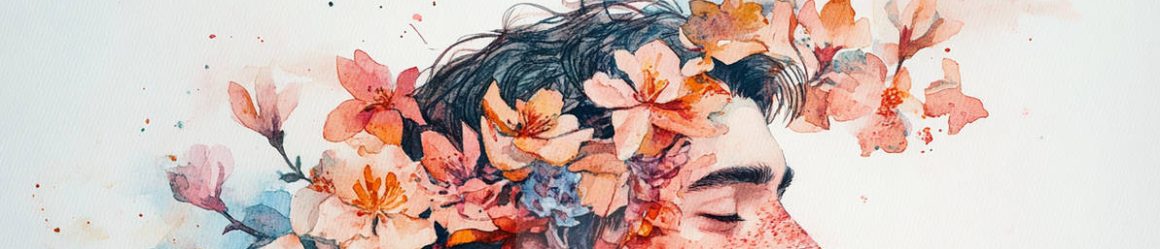

Decades

I could offer the ten-year-old me
Who looked upon cloudy skies
And ran with yellow butterflies
Among the cosy lanes of a childhood
Sheltered by Superman
And fed on Enid Blyton’s breakfasts.

But then I would also offer
The bullying that went hand in hand
Because of the way he looked
And talked and walked and danced
The fear of attending school
Mixed with that of disappointing family.

I could offer the twenty-year-old me
Who believed in a right and a wrong
In the stories of hope and phoenixes
And that all love lasted because it was strong.
A wisp of a boy man who refused sex and drink
For he wondered what people would think.

But then I would also offer
The nights of turmoil and of bitter hope
The achings and the longings
The tragedy that is first love
The giving up of his body to someone
Who disregarded it all shortly.

I could offer the thirty-year-old me
Who saw all that truth had to offer
The filtering of nostalgia
Into something larger than life
The build up of friendships and stress
With the growing of love that was endless.

But then I would also offer
The disillusionment of dreams and
All the detriment of hopes and desires
The understanding that everything comes
With a deliberate price and weight
That finds you any place, soon or late.

I could offer the forty-year-old me
The vagaries of life that always amaze me
The finding of new avenues to love
The idea that age is not just a number
It breathes with purpose and shares wisdom
That is hard won and not given to all.

But then I would also offer
The fact that the heart can still break
Because though wisdom comes laced with death
The softness of the heart can yet remain
Because in the warmth of it lies the rub
That the giving of love must be infinite.

49

I have lived and I have loved;
I have laughed and I have cried;
I have grown through the fast years,
And mourned them all, as they died.

Hope has always been a friend
And love has been my queer guide;
I believed them to be true –
Yet, all this time they have lied.

It’s hard to trust the flowers;
It’s hard to forget the past;
Though I know no matter what
No flower will ever last.

I carry my wounds around,
All are quite welcome to see
How they ooze and seldom heal
This heart, beating, inside of me.

But, I am surrounded by those,
Who cannot feel and do not see;
So I find myself asking lovers,
If they have ever truly loved me.

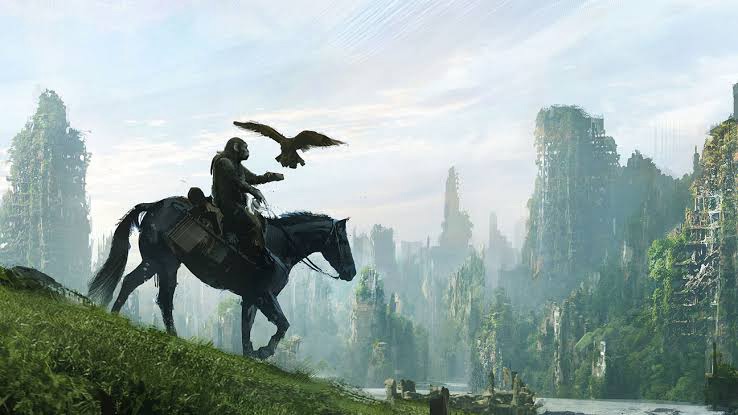
Kingdom of the Planet of the Apes.

I liked the first instalment of the franchise. It really had all the makings of an epic. Followed Caesar’s story avidly as the other two sequels came to theatres. There was a cascade of evolutionary processes, where the apes evolved and where the humans devolved. It was good fare.

Then came along the movie I watched last night. It is set about 300 years post the death of Caesar. His fame has turned him into a Prophet and nearly into god for certain ape communities. There are other communities who have returned to the natural habitat and take their evolution as a natural process. They haven’t even heard about Caesar. They have their own system of beliefs. From these come the main protagonists. Noa, Anaya, and Soona. 

The tribe has their own law and Noa struggles to follow them. From the beginning he is shown to be the one who chooses his own path. They are close to nature and the eagles they bond with become the metaphor for all that is natural. 

Some followers of Caesar have become zealots and believe that it is their right to subjugate humanity. But it is not only human beings that they have a problem with. They have turned into evangelistic bullies, like most people who have misplaced faith in one entity do. Caesar has become the equivalent of the Roman Emperor that ruled with autocratic might. There are many megalomaniacs who want that kind of power, but without the honesty and morality that Caesar possessed. He was willing to work with humans for the betterment of the Apes. 

And this is the second part of the analogy. The first being respectful of the natural world. The second the problems that occur when faith turns into fanaticism. This is wonderfully brought out by the perspective of Noa, the human protagonist.

He is astounded by how apes kill apes – something that Caesar had a law about in the first three movies. Then he gets to know Nova, who can speak. There are those humans who do not as well and Nova does not see herself as part of that tribe. In fact, she comes with her own agendas and racial prejudices, and those juxtapose the ones Proximus Caesar has. They both want one race to subjugate the other. Each feels it is their Right to do so.

The themes are well-woven and intertwined with lovely spectacles and hard-hitting action. Each character stands out as unique and they all linger in the mind long after the movie is done. The tragedy of the movie is that human beings are coming back into power and the beauty of the natural world is once again in peril. If only the rise of the Right and the people who push religion down other’s throats in the guise of morality and proper conduct would understand what is being said. The world would be the home that Noa so desperately seeks to build and preserve, devoid of guns.