Amar Prem Ki Horrible Kahani

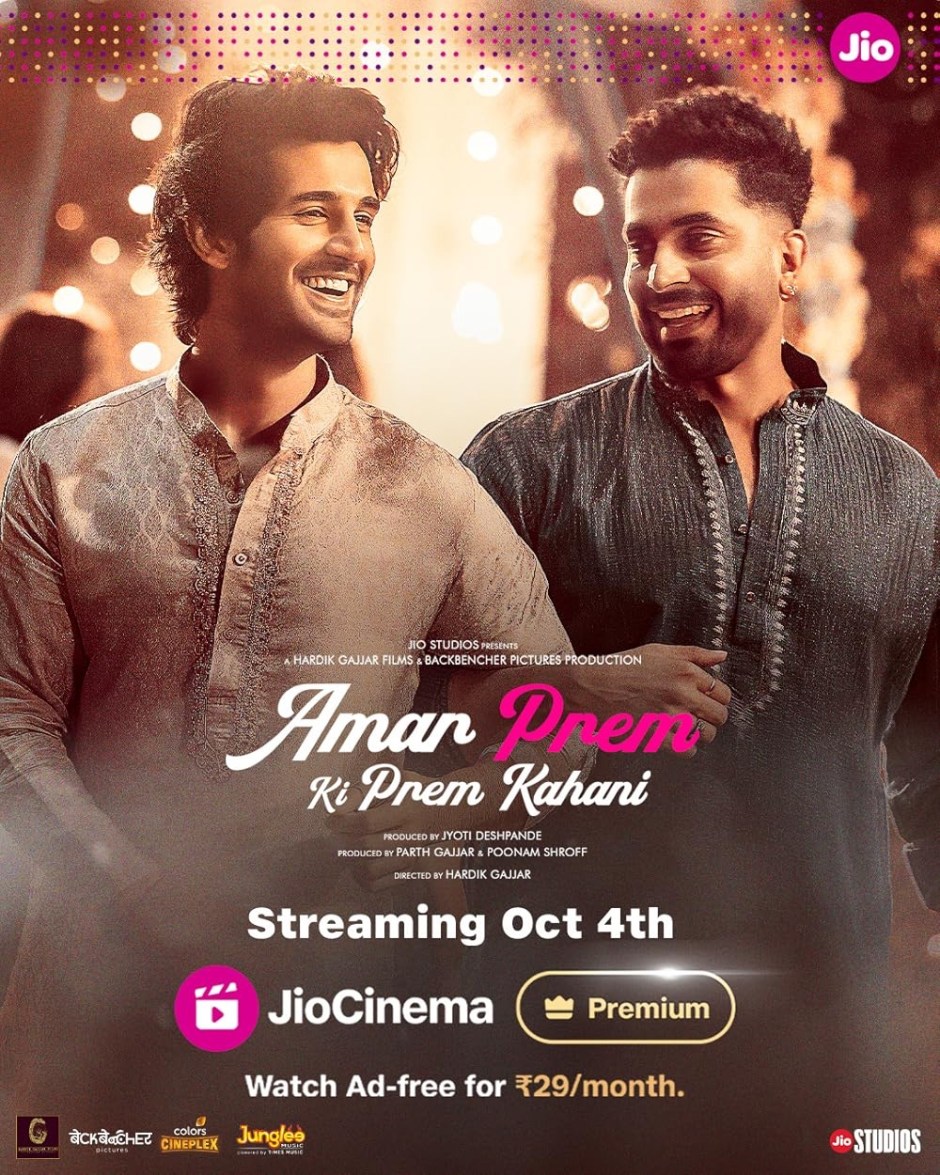
Amar Prem Ki Prem Kahani is a colossal disappointment that somehow manages to trivialize every important aspect of the LGBT experience in India. If you’re looking for meaningful representation or thoughtful storytelling, do yourself a favor and re-watch Shubh Mangal Zyada Savdhaan or Badhaai Do. Those films, at least, attempted to address the complex layers of coming out, familial acceptance, and queer relationships with some degree of respect.

This movie, however, is nothing short of a cringe fest. The themes of coming out, navigating family pressures, and the possibility of having an Indian wedding are treated with such laziness that it feels more like a poorly scripted soap opera than a real attempt at tackling these serious issues. Instead of nuanced discussions, we’re handed over-the-top dramatics and dialogue that seem written for shock value rather than sincerity.

The worst offense is that it seems like a desperate attempt to piggyback off the success of Rocky Aur Rani Ki Prem Kahani by throwing in a cheap Bengali-Punjabi rivalry and dressing it up as some sort of “inclusive” remix. But where Rocky Aur Rani had heart and substance, Amar Prem Ki Prem Kahani falls flat. The characters are walking clichés, and the emotional depth of a truly Indian queer experience is completely absent.

The title itself is a disgrace to Amar Prem, Shakti Samanta’s timeless classic that embodied emotional depth and cinematic grace. This sad excuse for a film is not even worthy of being compared. It fails to touch the elegance of comedies like The Birdcage, the searing pathos of Brokeback Mountain, or even the hauntingly beautiful Aligarh, which handled queer struggles in India with heartbreaking precision. Even Kapoor & Sons, a film that showed restraint in not having its gay characters kiss, offered more emotional resonance and subtlety than this hollow disaster.

The end result? A tacky, outdated mess that insults the intelligence of its audience and does more harm than good to the cause of LGBT representation.

FRIENDS

The sitcom Friends has long been celebrated as a cultural touchstone for its humor, iconic characters, and portrayal of friendships in New York City. However, watching it again two decades later, the show reveals some cringe-worthy moments, especially for those of us in the LGBTQ+ community. As a proud and out gay man, it’s hard to ignore the problematic tone the show adopts in several episodes.

One of the most glaring issues is Chandler’s attitude toward his father, who is portrayed as transgender. Instead of accepting or even attempting to understand his father’s identity, Chandler often resorts to jokes and derision, feeding into outdated stereotypes.

Throughout the series, Chandler is frequently mistaken for being gay, and he constantly reacts with exaggerated discomfort or anxiety. This recurring joke plays into the idea that being seen as gay is embarrassing or something to be avoided, which subtly reinforces homophobic attitudes. There’s even a flashback episode where Chandler talks about being afraid of “turning gay” because his parents got divorced. This comment reduces complex personal issues to a baseless fear of homosexuality, implying that being gay is something undesirable or linked to emotional trauma.

This discomfort with LGBTQ+ identities is a recurring theme throughout the series, with many characters expressing unease around gay people, whether through homophobic jokes or dismissive attitudes.

Take, for example, the episode where Ross and Brad Pitt’s character cruelly joke that Rachel is a hermaphrodite. The comment isn’t just off-color; it shows a total disregard for sensitivity and the real-life experiences of intersex individuals. When Carol and Susan get married, the ceremony is treated as a novelty, with some characters expressing awkwardness about attending. Though the show deserves credit for airing a lesbian wedding at a time when this was rarely seen on TV, it was still framed in a way that made the audience feel like it was an oddity.

Similarly, Monica and Chandler’s treatment of their maid—accusing her of stealing Monica’s clothes—feels not only overblown but abusive. The way Monica handles that situation, fueled by her insecurities, highlights a troubling power dynamic.

Joey’s character, known for his womanizing ways, also offers moments of toxic masculinity that now feel outdated. He’s perfectly fine with sleeping around, but when it comes to his sister being pregnant, he can’t handle it. Then there’s the issue of his discomfort with grooming and self-care, reinforcing the stereotype that men who take care of their appearance are somehow less masculine. In one episode, Phoebe even calls Joey a “woman” for grooming himself, though Monica rightfully stands up for him. Similarly, Joey’s comments about men doing their eyebrows being “sissy” is another eye-rolling moment.

Joey often makes offhand comments that imply being gay is something to be avoided, like when he jokingly warns Ross about the dangers of hanging out with his lesbian ex-wife and her partner. He treats the idea of being around gay people as if it’s a threat to his own masculinity. Whenever Chandler or Joey show affection toward each other, it’s often accompanied by homophobic jokes or awkwardness, as if two men expressing close friendship must be shielded by humor to avoid any “gay” connotations.

The show is littered with subtle (and sometimes not-so-subtle) homophobia. Ross, in particular, stands out in his awkwardness and unease with anything that challenges traditional masculinity. He’s irritated by Sandy, the male nanny, despite Sandy being the perfect caregiver for his child. Rachel defends Sandy, but in the end, he’s still written off because he doesn’t fit into Ross’s heteronormative idea of a nanny. And when they hire a different nanny, Ross’s immediate reaction is sexual—only to find out she’s a lesbian, which Joey, predictably, finds exciting.

There are countless other moments: Mona’s date commenting on Ross’s pink shirt, the ridicule of a gay colleague at Ross’s conference, and the laughter at Ross’s speech when he uses the term “homo erectus.” These are moments that might’ve seemed harmless to straight audiences at the time but are painful and alienating for LGBTQ+ viewers today. Imagine how I felt when these scenes came up when I was struggling to find acceptance in a homophobic society.

In retrospect, Friends often worked for its straight, cisgender audience by reinforcing the norms of the time. But for those of us who see these jokes and storylines through the lens of experience and pride in our identities, the show feels outdated and at times deeply offensive. What was once a comfort watch has become a reminder of the work still needed to challenge and change these ingrained cultural narratives.

Sector 36

Watching Sector 36, one can’t help but be haunted by the grim reality it portrays—a reality that has unfolded in India over the past two decades. The movie leaves you questioning: how could such atrocities have occurred? And why was there no uproar when they did? The answer is stark and troubling—it didn’t happen because the victims were poor.

In India, wealth and power create shields of protection. The tragedies that befall the underprivileged are often met with indifference. This becomes painfully clear when you compare the muted response to the Nithari killings, where over 30 children were brutally murdered, to the outcry over the rape and murder of a doctor from a higher social standing. Both cases involved massive cover-ups, yet only one sparked national outrage. The victims’ socio-economic status determined the level of public sympathy, a truth that resonates throughout Sector 36.

The film shines a spotlight on the systemic injustice that plagues India. The system is a well-oiled machine, designed to serve the powerful. Crores of rupees are spent on lavish weddings and towering statues, while rapists walk free, and whistleblowers languish in prison. We rage against the system, yet we are the system too, perpetuating the very inequalities we decry.

Over the years, India has witnessed several high-profile rape cases that stirred public conscience and led to legal reforms. The Nirbhaya case, for example, resulted in nationwide protests and swift changes to criminal law. But the hard truth is that justice tends to be swift when the accused lack political connections. Where political power is involved, the wheels of justice grind to a halt. Take the Unnao rape case—BJP legislator Kuldeep Sengar evaded arrest for months until media pressure became too loud to ignore. On the flip side, crimes in opposition-ruled states often face heightened scrutiny, with political rivals quick to weaponize these tragedies for their gain.

Sector 36 forces us to confront the fact that crimes in rural areas or involving marginalized communities, particularly Dalits, often go unnoticed. Media coverage is heavily skewed towards metropolitan incidents, leaving the most vulnerable without a voice. The case of the Hathras gang rape—a Dalit woman raped and murdered by upper-caste men in Uttar Pradesh—barely scratched the surface of national consciousness. In these cases, patriarchal values, victim-blaming, and political protection for perpetrators drown out public outrage, creating a system where justice is reserved for the few.

Vikrant Massey delivers a brilliant performance, as expected, but the surprise standout is Deepak Dobriyal’s portrayal of the inspector who uncovers the horror. The film’s pacing is swift, allowing the story to unfold without lingering unnecessarily on the grisly details of the crimes themselves, though their very nature is horrific enough to leave an indelible mark.

Ultimately, Sector 36 is not just a film about a series of murders—it’s an exposé of India’s deep-rooted inequalities, where the poor remain invisible, the powerful remain untouchable, and justice, for most, remains a distant dream.