There Is Some Good Out There… But I’m Tired

Lately, I’ve been feeling anxious and depressed every time I open Instagram. The algorithm knows me too well — it knows I’m a dog lover, an animal lover, a climate change activist. It sends me videos that confirm all of it.

And as someone who speaks about what’s wrong with society, I feel a responsibility to see what’s wrong. But I just can’t bear it anymore — the torture, the violence, the unthinkable pain that human beings inflict on animals. Every day, I see it. And I don’t know what to do. Should I stay away from it for the sake of my sanity, or should I keep watching because I mustn’t look away?

It’s such a painful conundrum.

I feed strays. I rescue them. I get them adopted. I’ve done this for years. And at home, I have my three doggos — my children. They’re loved, protected, and cherished. Their presence is the most dominant part of my life. And yet, when I see what’s happening out there, I feel sick — because I know that somewhere, another creature like them is crying, burning, or bleeding.

The truth is, the world feels like a shitty place. And human beings — shittier than ever.

Every time I think people can be kind, I see the opposite. Behind the smiles and the “be kind” slogans, I see the toxicity — people so lonely, so trapped in their own pathology, that they lash out at the weakest, at animals who can’t even speak. It’s nothing new. It’s been happening for millennia. And it’ll continue as long as the human species does.

But then I think of The Lord of the Rings. I think of Frodo asking Sam, “What are we fighting for?” And Sam says, “Because there’s some good in this world, and it’s worth fighting for.”

And I want to believe that.

But most days, I feel more like Frodo — tired, disillusioned, and hopeless.

I was talking to my psychologist today about this — about the state of the world, and the leaders who think only of themselves, never of the collective. It’s heartbreaking.

Even in music, there was a time when artists came together — when Michael Jackson, Tina Turner, Cyndi Lauper, and so many others sang We Are the World. There was hope then. There was unity. Now, everyone’s just singing about themselves. Everything feels so individualistic. The collective pulse is gone.

The world I grew up in had its own horrors, yes — but there was empathy. There was a sense that we could still care for one another. Now, even when people care, it’s often transactional. Everyone has an agenda, a motive.

It’s so hard not to become jaded. So hard not to see through the façade and still hope. Because most times, what’s underneath feels like a black hole.

And that’s what really upsets me.

I’m upset right now.

And maybe that’s all this post is — a vent, a cry, a reminder to myself that I still care, even when it hurts too much to look.

Noise and Smoke

The evening sky glowed. Then the air thickened.

Each year I brace myself for the onslaught. I can almost feel it before the breeze shifts — that moment when the last sparkle dies out and the air turns heavy, coarse, irritable. The night when celebration becomes assault. The festival of lights is meant to uplift; for me, it often signals a descent into discomfort.

This year, with the Supreme Court of India easing the ban on fire-crackers and permitting “green crackers” under stipulated windows, I hoped for the best but feared the worst. The data have shown me fear was justified.

When “green” isn’t green enough

The idea behind “green crackers” is solid: less noise, fewer harmful chemicals, lower immediate emissions. According to experts, they reduce particulate emissions by around 30-50 % compared with conventional fireworks. 

But—and this is a big but—the real world hasn’t cooperated. Enforcement is patchy, bursting continues outside the permitted hours, and even at 30% less the residual emissions are still very high.

In cities like New Delhi the numbers speak loudly. The particulate matter PM₂.₅ levels have soared: one report flagged spikes of up to nine times the national standard on Diwali night.  One analysis found ambient PM₂.₅ and PM₁₀ to increase by 2-6 times versus normal levels. 

And for me, that means a proper struggle: wheezing, heavy lungs, scratchy throat, the constant fear of the next asthma flare-up when the air turns toxic.

The human and animal toll

My allergies flare. Cats hide under the bed, ears flat, quivering at the noise and smell. Dogs shiver through the bursts, pacing. Many times running away from familiar territory to strange ones where they are attacked and/or beaten. Some times to death. To them it’s chaos — fireworks that should sparkle become thunderous and frightening.

Beyond my home: emergency rooms are filling. In Gujarat, for instance, burns cases rose by 53% during the festival period.  Fire-service and police records report fires caused by fire-crackers, injuries, trauma. 

And the air? It becomes an agent of harm. Fine particles penetrate deep into lungs. One study tracking personal exposure during fire-cracker bursting found PM₂.₅ levels reaching 4 860 µg/m³ to 64 500 µg/m³ during individual cracking events. (By comparison, safe annual average limits are in single digits per WHO guidelines.) 

Those particles carry metals, sulphur-dioxide, nitrogen-oxides. For vulnerable people (asthma sufferers, children, elderly) the risk is stark. Sounds frightfully personal to me.

My plea — for the sound of silence and clean air

I ache for a lighter sky. For the moment when celebration does not come at the cost of my breath or my pets’ comfort. When a festival doesn’t mean I spend the next two days in a haze of coughs and half-open windows.

I understand traditions matter, joy matters. But surely they matter less than basic rights: to breathe, to live without fear of lung constriction or silent harm.

I write this to say: yes, green crackers might help somewhat, but we need stricter compliance, fewer bursts, earlier windows. We need enforcement, but more deeply we need empathy — for those whose bodies oppose the smoke, whose animals dread the acoustics.

If you celebrate: try shimmering lights instead of booming bangs. Spare a thought for the dog cowering in the corner, the cat who won’t come out, the neighbour whose lungs are already tired.

Let’s light the sky — but let’s also clear the air.

Becoming Charlotte

So, I’ve just returned from the doctor. Diagnosis: vertigo.

I suppose it’s been coming. I’ve been running non-stop since July — organising the talent show, editing videos, coordinating graphics, managing everything down to the last detail. Add to that the preparations for Mum’s home, the interiors, the errands, the hours of standing and walking, and you’ve got the perfect recipe for the world literally spinning around you.

Yesterday, while putting up Diwali lights, the room suddenly began to tilt. My balance went, my blood pressure dropped, and I had to lie down, feeling as if gravity had decided to play games with me. I took my fluids, rested, and eventually felt better. But this morning, it happened again — so off I went to the doctor, and there it was: vertigo, my uninvited festive guest.

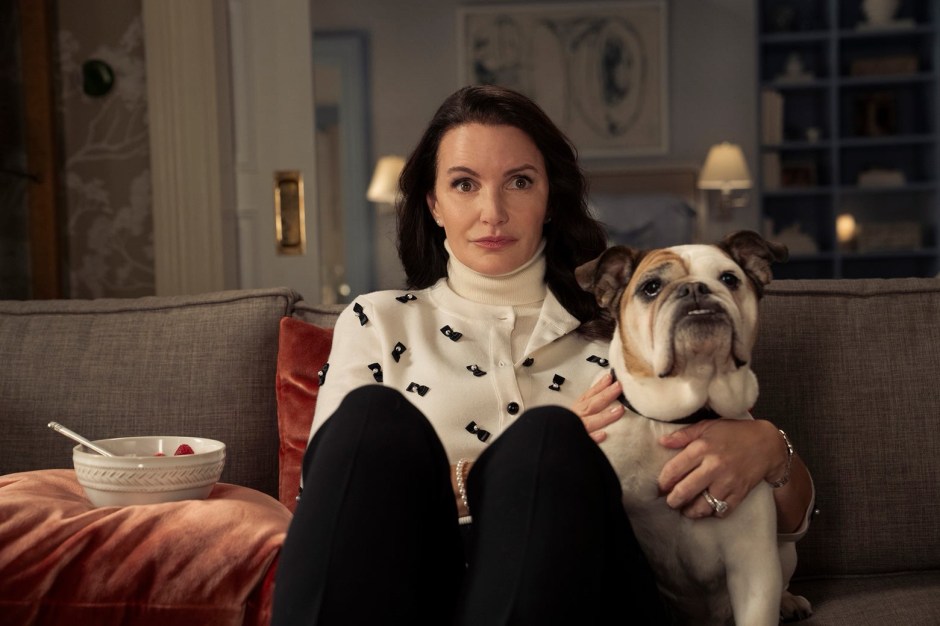
As I sat there, I couldn’t help but laugh — the kind of quiet, knowing laugh that comes with age. You see, for years I’ve imagined myself as Carrie Bradshaw — the free-spirited, stylish writer from Sex and the City, twirling through life in fabulous shoes and clever words. But apparently, I’m not Carrie anymore. I’ve become Charlotte.

Charlotte, with her house, her husband, her children, her dog — the woman who found meaning not in the city’s dazzle but in her home’s quiet rhythm. She used to seem naïve to me, a bit too proper. Now, I see her differently. She’s the one who stayed grounded. She’s the one who built something that lasted.

It’s funny how growing up changes the lens. We stop chasing glamour and start craving peace. We stop looking for the story’s hero and begin to value the ones who hold everything together behind the scenes.

I used to think being a Gryffindor was the dream — all courage, drama, and heroic flair. I loved the idea of it. In my twenties, Gryffindor felt like home — the house of Dumbledore, the house I believed even J.K. Rowling herself would be sorted into. That world shaped my imagination, fuelled my creativity, and gave me a sense of belonging when I needed it most. But as I grew older, something changed. When I saw Rowling’s transphobia emerge in 2019, the world I had held sacred began to crack. It felt like watching a piece of my youth crumble — the very magic that once inspired me revealing its darker corners.

Yet, perhaps that’s what growing up really is — learning to see hate for what it is, prejudice for what it is. I realised that maybe a Hufflepuff would have recognised this truth from the beginning — that kindness and empathy matter more than hero worship. The illusion of the flawless hero shattered, leaving behind something steadier: practicality, wisdom, and compassion.

Maybe that’s what life teaches us when it makes us dizzy — literally and metaphorically. That balance matters more than bravery. That it’s not about shining constantly, but about being there when it counts.

And honestly, as I start my medication and take a deep breath before the next round of festive madness, I realise something: I’ve built a life with roots. A life where, when I fell, four people rushed to help. A home where family still asks what I want for breakfast, because I am not up to making it myself. A circle that cares when I’m unwell.

For all the spinning, the world has never felt steadier.

Here’s to the Charlottes, the Neville Longbottoms, and the Hufflepuffs among us — the ones who may not seek the spotlight but who make sure the lights stay on.