The Quiet Tiredness of Love

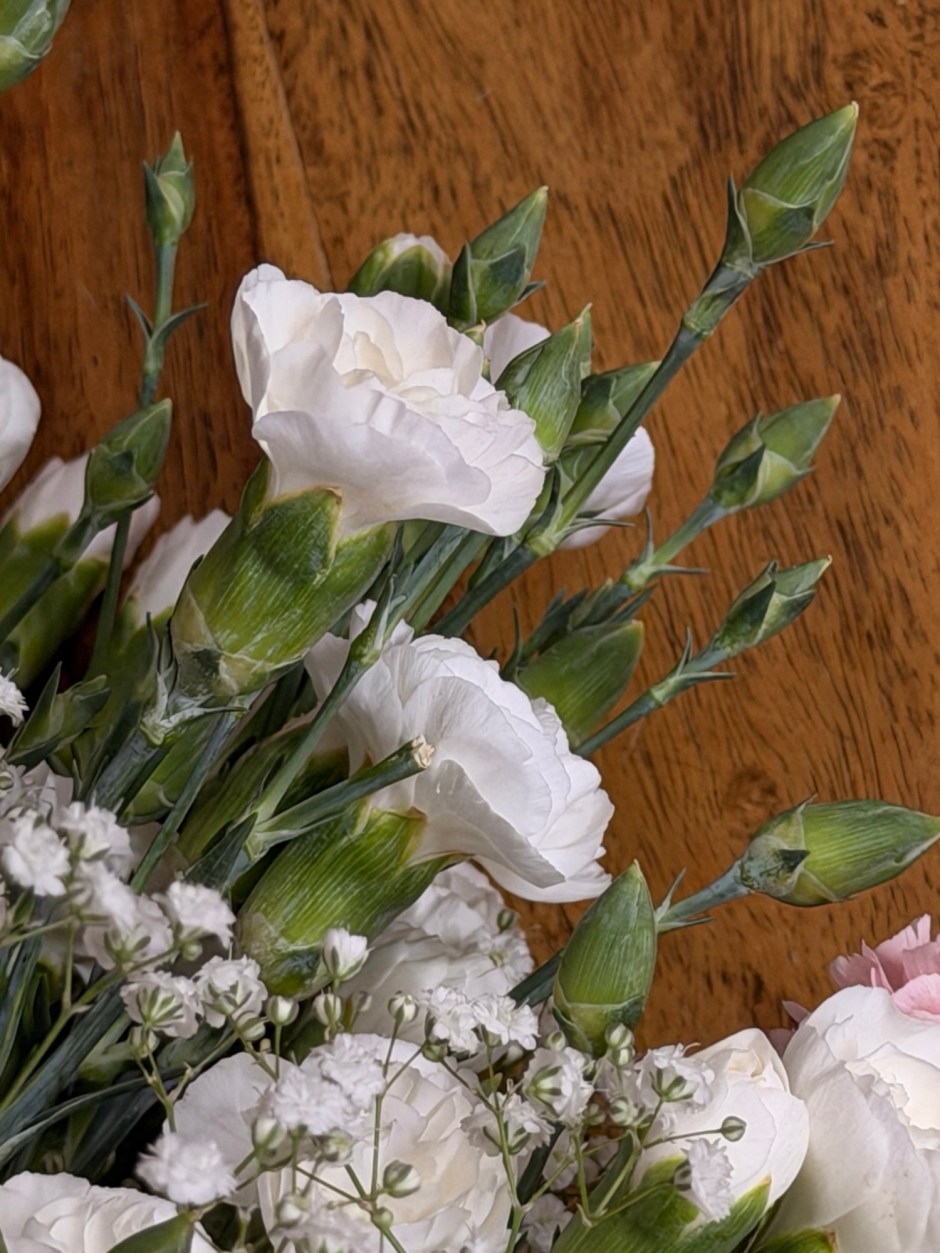
This Valentine’s Day, I bought clothes for a partner. I took both out for dinner. I brought them flowers. I did what I always do — I made the day deliberate, visible, celebratory.

What I received was a card from A. Inside it, he had written only two names: mine and his. Nothing more than what the printed card already said.

There was no added line. No awkward attempt at poetry. No private joke. No scribbled sentiment.

And I realised something I have known for years but rarely allow myself to articulate: I am the romantic one. I am the initiator. I am the one who leans in first for a kiss. I am the one who asks for intimacy. I am the one who creates the moment and then steps into it, hoping someone will meet me there.

This is not a complaint. It is a truth.

I have seen straight men forget birthdays, forget anniversaries, forget tenderness altogether. In comparison, I know I have been fortunate. I have partners who are kind. Partners who are steady. Partners who chose me. That matters.

But romance is a different language. And in that language, I often feel like I am speaking alone.

The past month has been relentless. Zach’s illness. Zach’s death. Now Xena’s illness. Fear has become a permanent hum in the background of my days. Grief sits at the foot of the bed.

Both my partners know this has been hard. They have seen it. They have lived beside it. And yet there has been no unexpected embrace, no quiet pulling into arms without being asked, no coming into bed and simply holding me because they sensed I was tired.

That is all any of us want, isn’t it?
To be seen without having to announce ourselves.
To be understood without having to explain the wound.

Instead, Valentine’s felt like another day suspended between fear and memory.

And then I feel small for even thinking this way. Because the world outside is burning. There are horrors unfolding as I write this. There is cruelty without accountability. There are griefs that dwarf my own.

Who am I to long for a kiss when there is so much suffering?

But feelings do not obey global hierarchies. Pain does not queue politely behind larger catastrophes. My problems are still my problems. My loneliness, even inside love, is still mine.

I no longer have a wide circle of friends. I have my mother. I have my sister. I have my partners, who are my chosen family. And having once been hurt by chosen family, I carry a quiet fear of losing again.

Perhaps that fear makes me hold back from saying, “I am tired.”
Perhaps it makes me soften my needs so they do not feel like demands.

But tonight, I will say it gently.

I am tired.
Not of love — never of love — but of always being the one who reaches first.

I do not need grand gestures. I do not need theatrics. I only need to be gathered sometimes without asking.

Valentine’s Day is supposed to celebrate romance. For me, it became a reminder that even inside devotion, one can feel a small, private ache.

And still — I choose love.
I choose my family.
I choose to stay.

But I also choose to acknowledge that even the one who gives the flowers sometimes wants to receive them without having to hint.

That is not selfish.
That is human.
And perhaps that, too, is a form of courage.
Loving Them All the Way

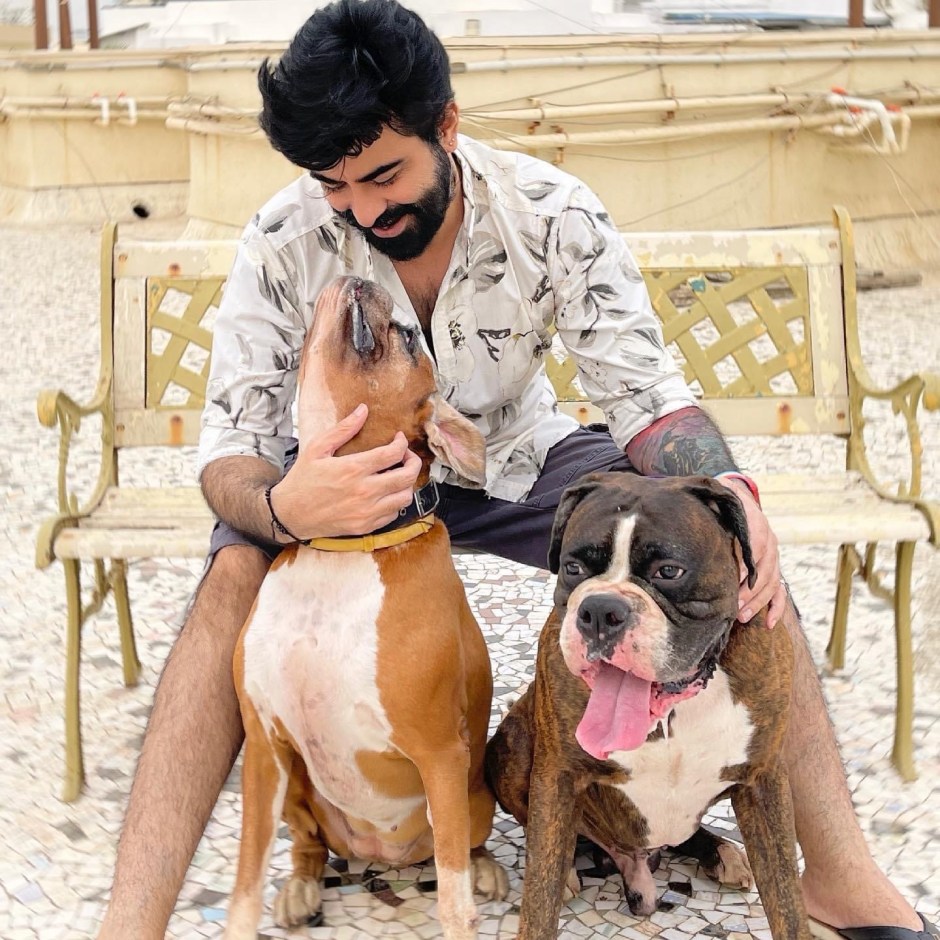
Tonight, I gave Xena a bath.

I cleaned away the remnants of blood from last week — not because they bothered her anymore, but because I wanted her to feel fresh, clean, held. I dried her gently, blow-dried her fur, and then sat with her the way I do every night, performing what has now become ritual.

Cleaning her mast cell tumours.

Bandaging the ones that still bleed.

Cleaning her anus and the lipoma around it.

Cleaning the mast cell near her eye.

Only while writing this did I remember that I forgot to apply the Fur Fresh ointment around her eye. The cone is on, though. I’m sitting right here. She’s safe. Sometimes caregiving is like this — you do ninety-nine things right and then your heart races over the one you missed.

Beyond the physical work lies the real weight.

The daily fear of losing her.

The anxiety of that dreaded call — again.

The kind of love that doesn’t sit quietly but presses against your chest until breathing feels incomplete.

Xena has been my heart and soul since she stepped into my life in 2014, after Zoe passed in 2013. And now Zach is gone too. Losing him shattered something in me that I’m still gathering up, piece by piece. Taking care of two dogs with terminal illnesses has taken a toll — on my back, my knees, my head, my heart.

Sometimes, in the middle of work, I just start crying.

I look at Xena and think of Zach.

A song plays, and I’m undone.

I am hurting. I am exhausted. I am terrified of the inevitability I don’t want to name. And still, every day, I choose to show up and make her comfortable — because this is what love demands when it is no longer convenient or pretty.

I don’t expect help from friends. I’ve made my peace with that. But my family and my partners have risen in ways that matter. My sister has been a pillar. Her husband, who was close to Zach, sees now — truly sees — the toll this has taken on me. Anand is grieving too, even if his grief speaks a different language than mine.

And me? I am so tired.

So anxious.

So stretched thin that sometimes I can’t take a full breath.

I want to write this because I want the world to understand something simple and brutal: loving an animal doesn’t mean loving them only when they are young, beautiful, playful, and easy. Loving an animal means going all the way. It means staying when they are old, sick, inconvenient, and breaking your heart.

This is the first time I’ve had two senior dogs at the same time. I’ve always had one elder and one younger — balance, continuity, hope. But losing Zach and knowing Xena may follow within months has cracked something open in me.

Six months apart.

Two souls.

One heart learning, again, what it means to love without conditions.

This is not a story about strength.

This is a story about staying.

When My Child Dies, the World Ends

On loving animals in a world that refuses to take that love seriously

There is a particular kind of grief that has no language in public life. It is a grief that is often minimised, politely ignored, or brushed aside with well-meaning but hollow phrases. It is the grief of losing an animal you love not as a possession, not as a companion, but as a child.

My dogs are my children.

I do not say this metaphorically. I say it as a lived truth. I cannot have children of my own, and the love that might have gone into raising a human life has found its home in them — in their care, their safety, their health, their fears, their joys, and their complete dependence on me.

They matter to me more than any human being in my life. This is not a comparison I arrived at casually, and it is not something I say to shock or provoke. It is simply how my heart is structured. They are my heart and soul. When one of them dies, it is not a chapter closing. It is my world crashing.

This is where most people stop understanding.

We live in a world that insists on hierarchies of worth. At the top stands the human being — rational, vocal, educated, entitled. Beneath us, everything else exists to serve, support, or be sacrificed. This belief is so deeply embedded that it is rarely questioned, even when it causes immense suffering. Animals are expected to endure quietly, to disappear quietly, and when they die, for the humans who loved them to “move on” quickly and without fuss.

But animals do not have voices. They do not have free will in the way humans do. They cannot leave bad situations, argue for their rights, seek therapy, or explain their pain. They love unconditionally, without strategy or self-interest. Their dependence is total. And it is precisely this dependence that creates a bond unlike any other.

Human beings can choose whether or not to love us back. Animals do not calculate. They give themselves entirely.

I have attended many funerals in my life. I have lost human family members I loved deeply. In those moments, the compassion I received was immense and generous, and I am grateful for it. Society understands human grief. It knows the rituals, the condolences, the appropriate responses.

But when one of my dogs dies — when my child dies — the response is different. Muted. Awkward. Sometimes absent. There is an unspoken assumption that this loss is somehow smaller, less legitimate, less deserving of space.

I understand that not everyone shares my relationship with animals. I do not expect people to feel what I feel. I do not expect constant presence, elaborate gestures, or performative sympathy.

What I do expect is consideration and understanding.

Friendship, to me, is not just about shared laughter or history. It is about knowing what the other person values, what holds their life together, what breaks them when it is taken away. If someone says they care about me, then they should know that my dogs are not peripheral to my life — they are my life.

When that understanding is missing, I notice. And something shifts.

This is not about punishment or resentment. It is about clarity. Loss has a way of revealing people — not their cruelty, necessarily, but their limits. And once you see those limits, you cannot unsee them. I cannot feel the same depth of connection with someone who dismisses or minimises the deepest grief I am capable of experiencing.

In recent times, we have seen institutions decide the fate of countless animals while framing the issue entirely around human inconvenience and human suffering. The irony is staggering. Humans, for all our flaws, have agency. Animals do not. Yet it is always animals who are expected to pay the price for human failure, fear, and neglect.

For me, love does not operate on a species hierarchy. Grief does not recognise one either.

When my dog dies, I am not losing “just an animal”. I am losing a child I raised, protected, worried over, and loved every single day. I am losing a being who trusted me completely in a world that often does not deserve that trust.

And if that truth makes people uncomfortable, so be it. My grief does not exist to be convenient. My love does not exist to be explained away.

This is not a demand for understanding. It is a statement of who I am — and how I love.