The Last Goodbye

There’s a certain silence that settles on you after watching a limited series about murder—not the kind that titillates or distracts, but one that lingers like a bruise on your spirit. This one told not just the story of the crime, but of the families left behind, trying to stitch together lives torn apart by a loss too brutal to make sense of. And in it, there was a scene I cannot forget.

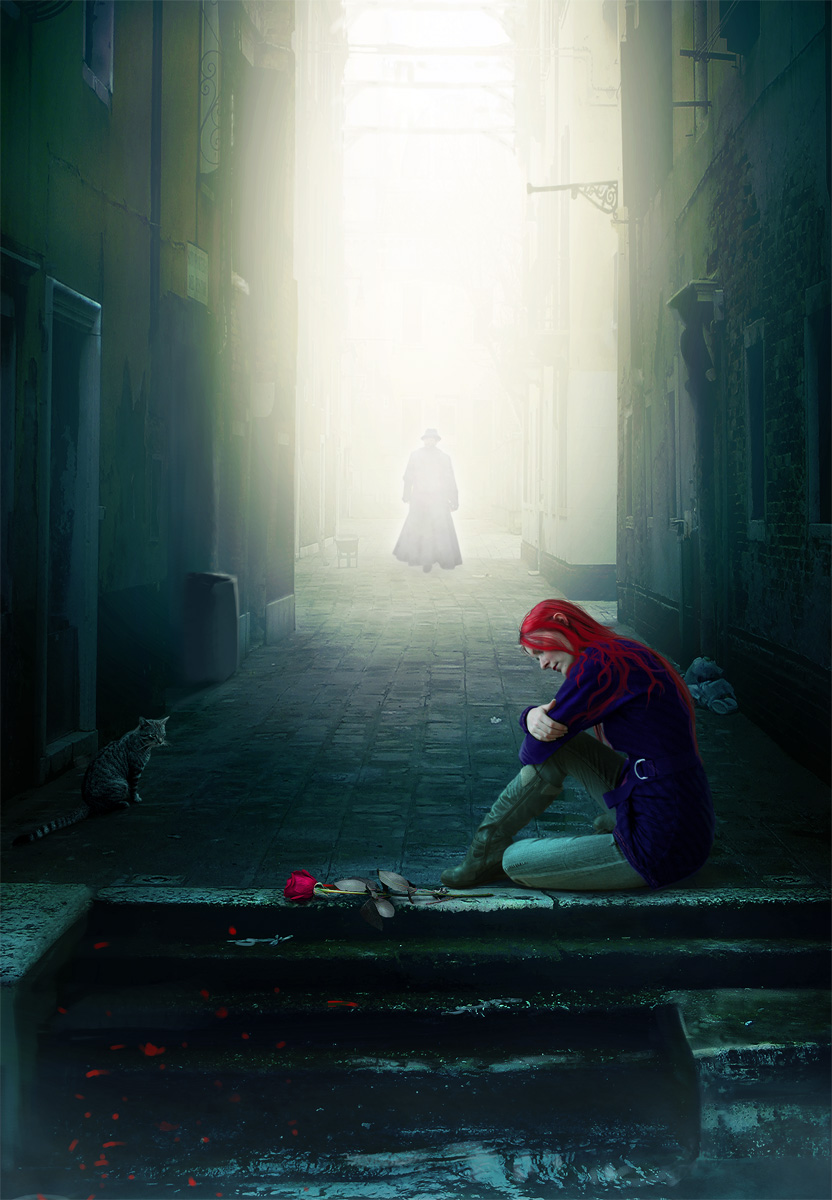
A girl, just before she falls victim to the murderer, says goodbye to her best friend during a fight. That argument, however mundane or emotional, becomes the last memory her friend is left with. A goodbye laced with hurt—an ending no one knew was final.

It made me think of my own farewells, the ones I didn’t know were final. We never do, do we?

The last time I saw my best friend was at a Starbucks café. We hugged, and I told her I loved her very much. I meant it. She meant the world to me, and I let her know. That memory sits differently in my heart—not as a regret, but as a bittersweet treasure. Even though she later ended our friendship over a text message, I am grateful that in person, I had the presence to say what I needed to say.

But not every goodbye is as kind.

In 2021, during the harrowing COVID wave, I placed my aunt into an ambulance. She was struggling to breathe, and I was too unwell to accompany her. That was the last time I saw her alive. Later, I saw her only on a video call, silent and masked with machines. That was our final moment, and there were no words. She died that night. I couldn’t even hold her hand or see her body, because I was barely surviving myself.

And another aunt—her death still blurs in my memory. I don’t recall our last conversation. Did I say something mundane? Did I forget to say I love you? That absence of memory torments me more than harsh words ever could.

“Parting is all we know of heaven, and all we need of hell.” – Emily Dickinson

Death, especially sudden or violent death, robs us of preparation. It rips away the chance to mend, to soften, to love a little more. It leaves people with echoes—of words left unsaid, of touches not given, of forgiveness postponed.

And I keep thinking about those who die in such violence—their final hours, their final fears, the last person they saw. I can’t fathom the terror. I can’t help but feel a bone-deep empathy for them and their families, left behind with broken narratives.

We walk through life pretending we have time. We part ways assuming we’ll see each other again. But life doesn’t always work that way.

“The bitterest tears shed over graves are for words left unsaid and deeds left undone.” – Harriet Beecher Stowe

I wish, for those I love, I could always leave things with kindness—with clarity. That even in my moments of sadness and depression, I could still remind them of how fiercely they are held in my heart. Because if anything circumvents time and death and silence, it is love.

Love is the only constant thread in this ever-shifting tapestry of mortality. It endures the erasures of memory, the noise of regret, and even the stillness of death.

“Love is how you stay alive, even after you are gone.” – Mitch Albom

So I suppose this is both a reflection and a reminder: to say I love you more often, to forgive more freely, and to part with kindness whenever possible. Because we never know which goodbye will be our last.

And if we can’t always control the endings, may we at least live in a way that keeps our love echoing in the hearts of those we leave behind.

Grumpy

The song came on. Our song. “Tera mera pyar amar…”

I looked at Keshav.

He didn’t look up once.

Mum says Keshav is lonely. But then, I’m lonely too—lonely even with two men in my life.

They don’t talk. They don’t communicate.

Even Arif, whom I thought would be a cuddler, turned out to be aloof in bed.

Making love needs a time table now, making me feel completely unattractive. 

Trust has always felt like a one-sided street in my relationships.

I’ve been cheated on.

That led me to open up my relationship, in the hope of finding honesty somewhere in the blur.

But I was left heartbroken by someone I thought would stay.

He didn’t.

Then someone else came along. He looked at me like I walked on air.

He loved being with me, was in awe of me.

He isn’t anymore—and oddly, I don’t mind that.

I don’t need to be idolised.

I’ve always known that love fades, or rather, softens at the edges. The awe wears off. The gold tarnishes.

But what I miss is the warmth.

He used to hold me like he needed to. He couldn’t wait to be with me.

He was the first man I surrendered to completely in bed. I let go.

He never judged me.

But today, he snapped at me.

Called me grumpy.

I live with depression.

Every day. If people knew what it took to put on a smile and charm, they’d know it’s like clawing at rock. With people I love, I get to say I am in pain. But all I do is not smile much. 

Then I have a terrible shoulder injury. Been going through physiotherapy and I’m in constant pain. So it’s difficult to smile. Yet I do. Many a time. I’m the teaser. The fun child. It’s hard not to be – because if I am not – it would be endgame.

And some days I wonder—am I capable of being loved for who I am? Not for the home I create or the material comfort I provide. Just me.

If I were that bad, they wouldn’t be with me.

Would they? I don’t know. Even my best friend didn’t choose me for me. 

So, I doubt.

Worse—I doubt myself. Even though I know I should not.

I’ve seen love born. I’ve seen it die.

I’ve seen it change. I’ve seen it try.

I only wish we could sometimes step over our own lines to enter someone else’s comfort zone—and comfort them.

I wish I could say, “I can do it myself.”

Because I can.

In heartbreak, I somehow become outwardly beautiful—enigmatic, even.

But when I’m in love, I shine from within. The facade becomes one of comfort.

And still, this shifting—between the inside and the outside—feels constant.

We’re never just one thing, are we?

But I deal.

I talk.

I work through it.

I still think of him when I hear a song and glance his way.

I still want to be held.

And I still melt when an arm wraps around me at night.

Support Structures

As I stand at the cusp of my fifties, I find myself reflecting on the arc of relationships that have shaped me: the people I’ve grown up with, the ones I’ve grown beside, those I’ve grown distant from, and those I continue to grow with. Most of them have been friends, some family, all deeply woven into the fabric of who I am. Because I’ve always loved with the entirety of myself.

For the longest time, I used to be devastated when relationships fell apart. I took every loss as a personal failure—proof that something in me had failed to be worthy of the love I so readily gave. But with time—and a great deal of heartbreak—I’ve come to see it differently. Now I know: I did the best I could. And so did they. No one is to blame. Life simply moved us in different directions.

Last year, I lost a 32-year-old friendship. It hurt, yes. But I don’t regret it. I stood up for who I am, for what I believe in, and I realised that I was not being treated with the respect I offered so freely. I had accepted my friend entirely, even her flaws. But she couldn’t meet me where I was. That wasn’t my fault. It wasn’t even hers. She simply wasn’t equipped to hold what I was bringing to the table.

Today, another moment came—and passed. An altercation with my partner, Anand, someone I’ve spent 25 years of my life with. We’ve seen some truly destructive storms together and somehow, we’ve always found our way back. Today was no different. He left. I felt the ache, but I didn’t crumble. Because here’s what I’ve learned: the things we believe will destroy us rarely do. The will to survive, to mend, to continue, is always stronger.

I saw it in myself. But I saw something younger in my family. As they watched the disagreement unfold, they became emotional, scattered, concerned not just for me but for him as well. That mattered. What is more important t o note: My family stood by not just me, but the man I love. And in that moment, I saw something I never expected to: the social scaffolding we so often deny queer people in this world—support—had quietly, finally, taken shape around me.

Even my other partner, (I am one in a throuple) asked me to call Anand. And I did. Not out of guilt or obligation, but because I knew there had been no malice in me, no cruelty and I wanted their anxiety to abate. What had occurred was a light-hearted joke misread, so I told Anand to come back if he believed in the word I gave him. And he did.

But it’s not just about that trivial argument. What moved me was everyone who stood by me and said: bring him back home. That’s what mattered. That home is not a place—it’s a choice people make, together, for one another.

In this Pride Month, I want to say this: queer relationships are not made of fairy dust and rebellion. They’re made of daily effort, missteps, recovery, repair. And while straight couples often have the privilege of familial support—two clans coming together to protect the sanctity of their union—queer couples are often left to navigate that terrain alone. When something goes wrong, it’s just the two of us, lost in a storm we’re often too young to steer through.

I see that now. At 50, I have an ingrained emotional sustenance I didn’t have in my twenties or thirties. Now I don’t need my family’s support. But standing slightly apart, observing with a kind of fourth-dimensional wisdom, I realise how rare and necessary it is that they choose to give it anyway.

That’s the heart of this. I’ve become my own person. I no longer need people to feel whole. But I choose them. That’s the truest form of intimacy, of maturity: to choose someone not from need, but from selfhood.

And to anyone reading this during Pride Month: remember that queer love thrives not just on passion, but on structure. On support. On society showing up for us the way it so readily does for others. When a queer couple falters, we too deserve a circle that rallies and restores, that says: bring him back home.