50

This Wednesday, I turn fifty.

Fifty years on this planet. Five whole decades of living, loving, losing, and learning. It feels both like the blink of an eye and an eternity.

I still remember that child. The little boy who used to come home with fifteen comic books from the library — Richie Rich and Archie comics tucked under one arm — rushing to the hall sofa, just in time for the setting sun to cast its golden light through the balcony. That glow, those pages, that sense of having the entire evening mapped out in joy — I remember it vividly. I was so happy then, so content with that small treasure trove of stories.

I remember Diana, the dog I once had, who was taken away by the municipality. I couldn’t stop it. I was a child. And I remember Appu, the black and white dog who lived at the street corner. I remember going down every morning to play with Mithun Chakraborty’s dogs, their tails wagging in a chorus of companionship.

I remember the rains — always a little joyous, always a little sad. June rains meant school would begin. But even that brought its own delight: brown paper book covers, my mother’s careful hands helping me prepare for the term. School was, for the most part, a happy place. I remember my aunts. I remember my uncle. My grandmother. Mornings steeped in calm. Nights cloaked in childhood’s imagined fears. A home filled with noise and ideas and art. A black and white TV that turned into a colour one because of my aunt’s gift.

I remember my childhood with startling clarity. And I remember my teenage years with equal intensity — only that those were darker years. Years of confusion. Of trying to understand my place in a world that seemed to offer me none. Years of grappling with a truth I couldn’t speak aloud just yet. Of learning about my sexuality. Of facing bullies. Of surviving an alcoholic father. Those years taught me that if I had to live in this world, it would have to be on my own terms. Because the world’s terms were unacceptable.

And then came books. Oh, the saving grace of books. Moving from Bandra to Versova, I moved from Famous Five to Johanna Lindsey, to Jude Deveraux, and then into the warm, vast embrace of literature. I read and read — and through those pages, I escaped. I built myself through the words of others. I found my best friend. I found my tribe. I found love. My first love brought me dance — something I had always dreamt of — and then he brought me heartbreak. At twenty, my world cracked open.

My 20s were a storm of romance, heartbreak, yearning. They were about finding my place in the spectrum of the LGBT+ mantle. Finding my tribe. I met the love that would last a lifetime. I lost a huge love when I lost my gran. My first furkid died. Then my second. Then my third. The decade made me understand things about death that would only broaden my mind and understand my existence better.

My 30s were about trying to understand friendship, loyalty, and my place in the broader social world. I faced severe body image issues. I learned that love doesn’t come with promises of the future. There is no happily ever after, just the here and now and what I could and would make of it. I understood what cancer was when it attacked my mom and our family. I understood how it felt to be cheated on and what I could do with shattered dreams. I accepted that there were more ways of being in a relationship with a man that I love without sticking to what I was told and learned through heteronormativity.

And then came my 40s — a decade of awakening. I realised I was the creator of my own destiny. I had power. I had choice. I grew into the man I always hoped I would be. I still carry insecurities — about the way I look, the way I speak, the way I behave. But I have come to love my skin. And I’ve learnt not to care too much about those who don’t like what I say or do. That’s their business.

Yes, I had another heartbreaking love in my 40s. I lost my best friend. I lost my aunts, women who were like second mothers to me. I’ve buried people I loved. I’ve buried four children — the dogs who were my family. Death has become a familiar companion. But I no longer see it as a finality. I think we carry the people we love with us. And as long as we do that, they live on. Perhaps that’s how immortality works.

Even today, someone banged into my car — a delivery boy, clearly poor, clearly terrified. I could have raised hell. I had the power. But I didn’t. I just told him sternly to be more careful and let him go. That’s where I am now. I no longer feel the need to shout or punish. Everything is so temporary. And kindness is what stays.

I’ve lost homes. I’ve moved often. But I’ve learnt that home is not a place. It’s people. Wherever the ones I love go, that becomes my home.

And now my 50s begin. I know there will be more challenges. That’s the nature of life. But I also know I am ready for them. Everything changes. Everything passes. Even the hardest times. Even the best ones.

But here I am — at the doorstep of fifty — with no regrets. Because I have lived. And more importantly, I have loved. Fiercely. Freely. Deeply. I have been loved in return. I have said the things I needed to say. I have done the things I wanted to do.

And if this is the final stretch, I go into it with a full heart.

So here’s to another decade — of becoming, of letting go, of still loving, still dancing, still dreaming. I’m ready.

And I’m grateful.
Style & Struggle

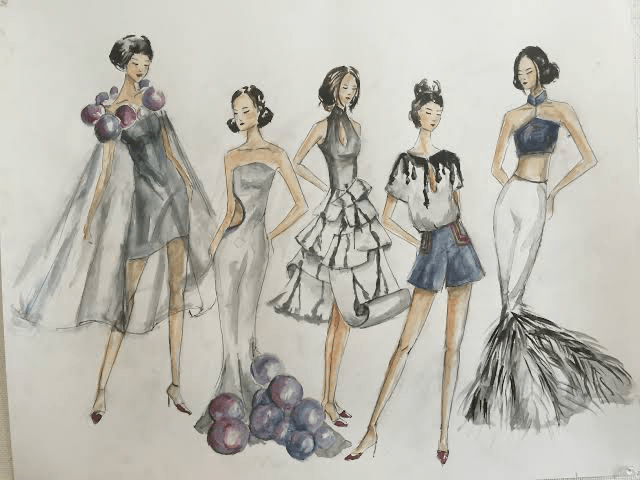
I’m not a rich man. I make do. But if there’s one thing I’ve always had in abundance, it’s a sense of style—and a longing to express myself through fashion.

As a child, I was captivated by the elegance of those I saw on screen—actors, actresses, runway icons. In high school, I was utterly devoted to supermodels like Linda Evangelista, Cindy Crawford, Naomi Campbell. I hoarded magazines like Vogue, GQ, Cosmopolitan, rifling through the glossy pages, dreaming of what it would be like to wear such clothes. Fashion, for me, wasn’t about brands or money. It was about transformation, self-expression, imagination.

Over the years, I cultivated an instinct. I can look at someone and tell whether what they’re wearing works—whether the clothes complement their body, their spirit. Friends come to me in moments of style crisis. What top goes with what bottoms? Which shoes balance a jacket? What accessory lifts an outfit into something unforgettable? I find joy in helping them—and I’ve extended that styling instinct to my family as well.

My sister doesn’t quite agree with my flamboyant, Western, modern aesthetic. But my mother does. I’ve been styling her for years, and it’s something we share and delight in. I suppose being a homosexual man has brought with it a sensitivity to aesthetics—an eye for detail, a yearning for beauty that sits slightly outside the norm.

But here’s the paradox: while I can style others with ease, when it comes to myself—particularly for significant occasions like my birthday—I find it exasperating. I imagine the outfit in my head with utter clarity. I can see the drape, the silhouette, the movement of fabric in the light. And yet, somehow, the final product never quite captures what I saw in my mind.

Take this year’s birthday, for instance. The theme is white. I had envisioned a pristine tuxedo—a well-fitted white suit with a wingtip collared shirt, a shawl-collared vest, a sequinned white tie, sleek trousers, and the kind of presence that turns heads. I had it tailored. I spent good money. But when I wore it, it felt wrong. Lifeless. Not me.

So I returned to the drawing board, reimagining something oversized, flowing—a dreamy, dramatic white ensemble with a mid-thigh-length sequinned shirt, an open vest, and wide trousers. It was meant to be poetic, airy, and opulent. I didn’t find the silver shoes I wanted, so I settled on a bold red pair and for back-up (I loved the shoes!) a shiny gold one. But again, when I wore the outfit, something felt off. Not terrible, not hideous. Just not quite the vision I had carried in my heart.

And this is where it becomes difficult—fashioning dreams into reality when funds are limited. The cloth costs a bomb. Tailoring costs more. And there’s no going back once it’s stitched. Unlike prêt-à-porter, where you see, try, and buy, tailor-made clothes require you to visualise, communicate, and gamble.

Maybe I’m still learning how fabric falls. Maybe I struggle to translate vision into language for the tailor. But it breaks my heart when I fail to materialise what I imagined.

Still, I persevere. I don’t create to impress others. I dress for the mirror—for the moment when I look at myself and think, Yes. That’s the man I want to be. That’s the man I see in my mind’s eye.

It’s not about vanity. It’s about honouring the person I am, the artist within me, the child who once dreamed in magazine spreads. I want my 50th birthday to reflect who I’ve become. Not perfect. But honest. Eccentric. Elegant. Me.

And yes, perhaps people do laugh sometimes. Maybe they always will. But I’ve learnt—especially now, as I near 50—that their opinion isn’t the point. If I can look at myself and feel beautiful, powerful, present—then that’s enough. More than enough.

So back to the drawing board I go. One week to go. And this time, I trust I’ll get there.

Because at the heart of it, fashion—like life—isn’t about having it all. It’s about creating beauty with what you have, daring to imagine more, and showing up in the world as exactly who you are.

Change

It started with me observing my father. He was an alcoholic. No matter what anyone told him—his mother, his sisters, his wife (my mother)—he just wouldn’t let go of the drink. He would promise us he’d quit, and for a week or two we would believe him. And then he’d start again. The disappointment would settle in all over again, and everyone’s heart would quietly break.

As I grew up, I came to a painful realisation: people don’t really change. What we call change is often just a layer of polish applied to the same underlying self. We are social animals, and in order to survive in society, we pretend to adapt, to evolve. We pretend for jobs, for families, for relationships. But at the core, the essence of who we are remains untouched.

People often say things like, “You’ve changed,” or even the opposite, “You’ve not changed at all.” They might be talking about your physical appearance, your personality, or the way you react to the world. Personally, I feel I haven’t changed much at all. My beliefs, my sensitivities, my emotional responses—they’re more or less what they were when I was a teenager.

What has changed is not me, but how I cope. Life has toughened me. Society has handed me situations that have demanded survival and response. I’ve learned to better manage my emotions, to recognise patterns, to pre-empt reactions. But the wound still hurts.

For example, when I was teased in school or college, it devastated me. I would carry those words home and let them sit like shame on my shoulders. Even today, if someone says something cruel, it cuts me. The difference is, I’ve learned how to respond. I don’t lash out. I try to understand where the other person is coming from—their insecurities, their unresolved pain. This has helped me understand others better, but more importantly, it’s helped me understand myself.

But that doesn’t mean I’ve changed. It just means I’m more prepared for the inevitable blows. I still feel the sting—I’ve just learned how to wear armour.

A friend of mine once said, “Change is the only constant. If you don’t change, you can’t grow.” But I find myself wondering—what is growth, really? Are we talking about the physical changes in our body, the slow disintegration of the flesh as wrinkles deepen, as the eyes dull and the heart grows heavier? Or are we talking about spiritual or emotional maturity, and if so, how much of that is truly transformation and not just better performance?

Jean-Paul Sartre once wrote, “Man is nothing else but what he makes of himself.” But what if we keep making ourselves from the same mould, over and over again, just dressing it differently each time?

There’s a strange sort of permanence to us. Statues carved millennia ago have worn down over time, but they still stand. The ideas behind them still stand. The people they represent may be long gone, but their essence—what they symbolised—still survives. And I believe that’s true for people too.

So why do we expect people to change?

If your partner has lied to you once, chances are, he’ll lie to you again. And we know that. Yet we hold on to the hope that “this time” will be different—because we want to believe that love changes people, that commitment and loyalty make them better. But the truth is, if we truly love them, we may also have to learn to love them with their flaws.

Of course, there are limits. There are lines that must not be crossed. And those lines are different for each of us. That, too, is part of who we are. So if I choose to forgive a liar, that’s because of who I am. And if I choose not to, that’s also because of who I am.

Our choices, our tolerances, our reactions—they don’t show how much we’ve changed. They show how well we know ourselves.

So how do we break this cycle? How do we stop spinning the same wheel? Maybe we don’t. Maybe all we can do is try to be better—not necessarily different, just better. Try not to hurt others, even if we end up hurting ourselves. That kind of self-restraint is difficult. It’s a discipline.

But perhaps the real point is this: you have to accept who you are. You don’t need to constantly reinvent yourself just to meet someone else’s idea of growth. It’s enough to live in your own skin—even as it fades, wrinkles, and grows weary.

Your DNA doesn’t change. No amount of therapy or cosmetic surgery or self-help books can replace that essential code of being.

As Albert Camus said, “Man is the only creature who refuses to be what he is.”

And maybe that’s the problem. We refuse to accept ourselves. We glorify change and call it growth, but what if we’re simply resisting the truth of who we are? Maybe real growth isn’t about becoming someone else—it’s about finally becoming okay with being yourself.

So no, people don’t change. Not really.

The trick is to just learn how to live with one’s self.