The Lift, the Law, and the Limits of Human Decency

I am tired.

Not the kind of tired that a night’s sleep fixes, but the bone-deep exhaustion that comes from having to fight—again and again—for the most basic decency.

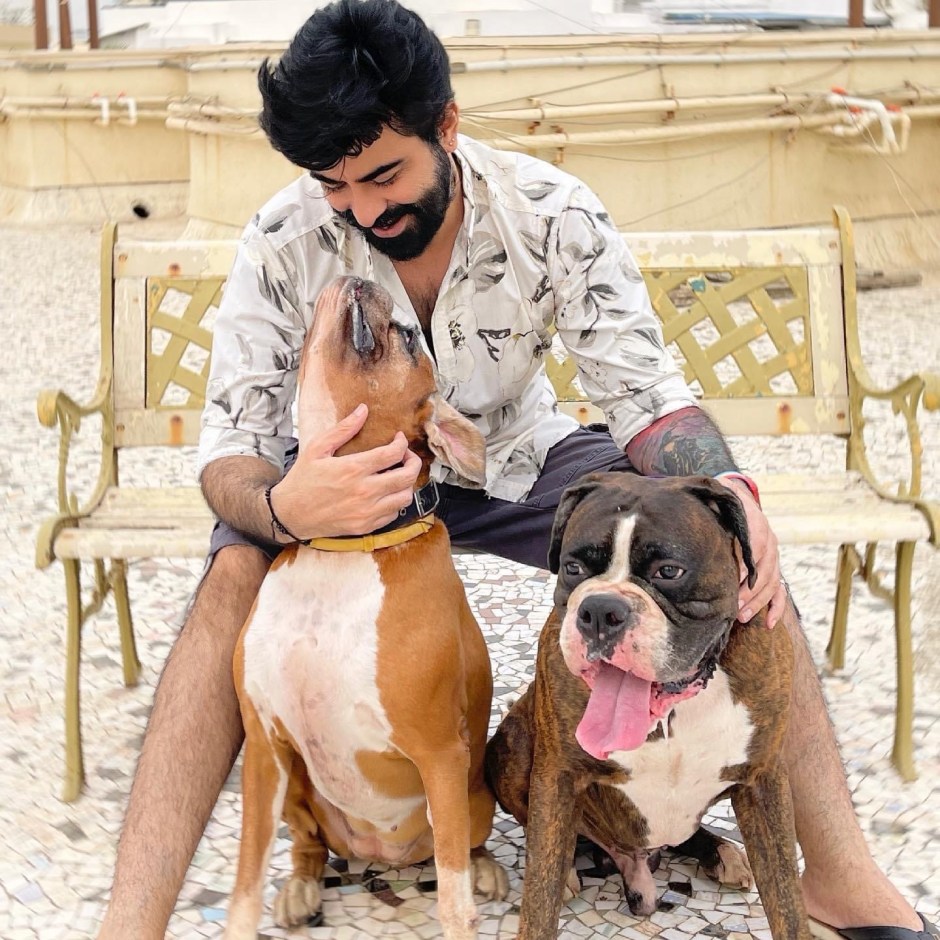
We’ve just taken possession of my mother’s new flat in a Cooperative Housing Society. A Bank of India colony, no less. Two lifts: one passenger, one service. And already, the managing committee has decided that pets are not allowed in the passenger lift. We are to use the service lift—the one meant for goods, for furniture, for trash.

Apparently, our dogs are objects now.

When I heard the news, anger wasn’t my first emotion—it was weariness. I had expected this, of course. The script is always the same. First comes the suspicion, then the whispering, then the notice on the board. “Pets not allowed.” Always the pets. Always the easiest targets.

It took a week in my current home. When we first came in, in 2019, someone immediately complained that a bit of my boxer’s drool had fallen on the lift floor. A couple of small gobs of saliva—nothing more. We cleaned it, naturally. Since then, we’ve been cleaning the lift every time we use it. Fair enough. But when greasy fingerprints line the walls of the lift or the corridors, nobody blinks. When food wrappers are left behind, when someone’s child drops chocolate, when oil marks stain the walls—silence. But dog drool? Outrage.

And now in the new building, a notice appears. Without the secretary’s consent—without even her knowledge. My mother is the secretary, incidentally. Certain members of the managing committee went ahead anyway, decided on its own, and printed that smug, illegal diktat.

She was furious. I was furious. She tried reasoning with them, but words faltered. So I spoke. I told one of them that this was illegal—that no society in India can ban pets from passenger lifts or common spaces. The Animal Welfare Board of India has made this clear. He brushed it aside. “Other buildings do it,” he said. As if illegality becomes law through repetition.

When I pressed him, he cut the phone.

Cut. The. Phone.

That’s what bullies do when logic corner them—they run.

I called a friend, who put me in touch with a lawyer. The lawyer told me I had been too respectful. He was right. He said I should have demanded they put their order in writing. Because once it’s in writing, it’s actionable. Illegal. Enforceable—in court, against them. He was ready to take it up if they dared formalise their prejudice.

And then I realised what this truly was: not about dogs, not about hygiene, not about drool. It’s about control. About people desperate to assert dominance over what they don’t understand.

They will tolerate drunks, loud music, cracker noise, domestic violence, gossip, hypocrisy—everything that corrodes the soul of a community. But not dogs. Not love. Not innocence.

It made me wonder why I even bother calling this place home.

I’ve fought my whole life—since I was a child—for the right to exist, to love, to be. I’ve been beaten, bullied, spat on, mocked—for being gay, for being different, for daring to be myself. I fought then. I fight now. And I will keep fighting.

Because this isn’t just about my dogs. It’s about what kind of people we have become. We cage compassion and call it order. We humiliate empathy and call it discipline. We dress up cruelty as “society rules.”

But I refuse to shrink.

I will speak up—for my dogs, for the voiceless, for those who cannot explain that drool dries and hearts break. I will call out hypocrisy when I see it, even if it’s etched in a printed notice on a lift door.

Yes, I’m tired. But I’d rather be tired from fighting for what’s right than be comfortable in the company of cowards.

So here’s to the next battle.

Because peace, apparently, must always be earned from the people who fear kindness the most.

Zach’s Galaxy

We all knew Zachary had mast cell tumours on his back. I know the signs — the tiny swellings, the quiet signs that the body gives when it’s fighting something deeper. I also knew I didn’t want to put him through invasive surgeries or chemotherapy. He’s twelve now — he crossed that milestone on the 21st of September — and at this age, peace matters more than intervention.

Recently, we found two new lumps on his throat and another big one on his shoulder. The biopsy was done — it could be a goitre from the thyroid gland, or it could be metastasis. We don’t know yet. I’ve taken it in my stride, because Zach has already defied time. He’s the first boxer who’s lived this long with me.

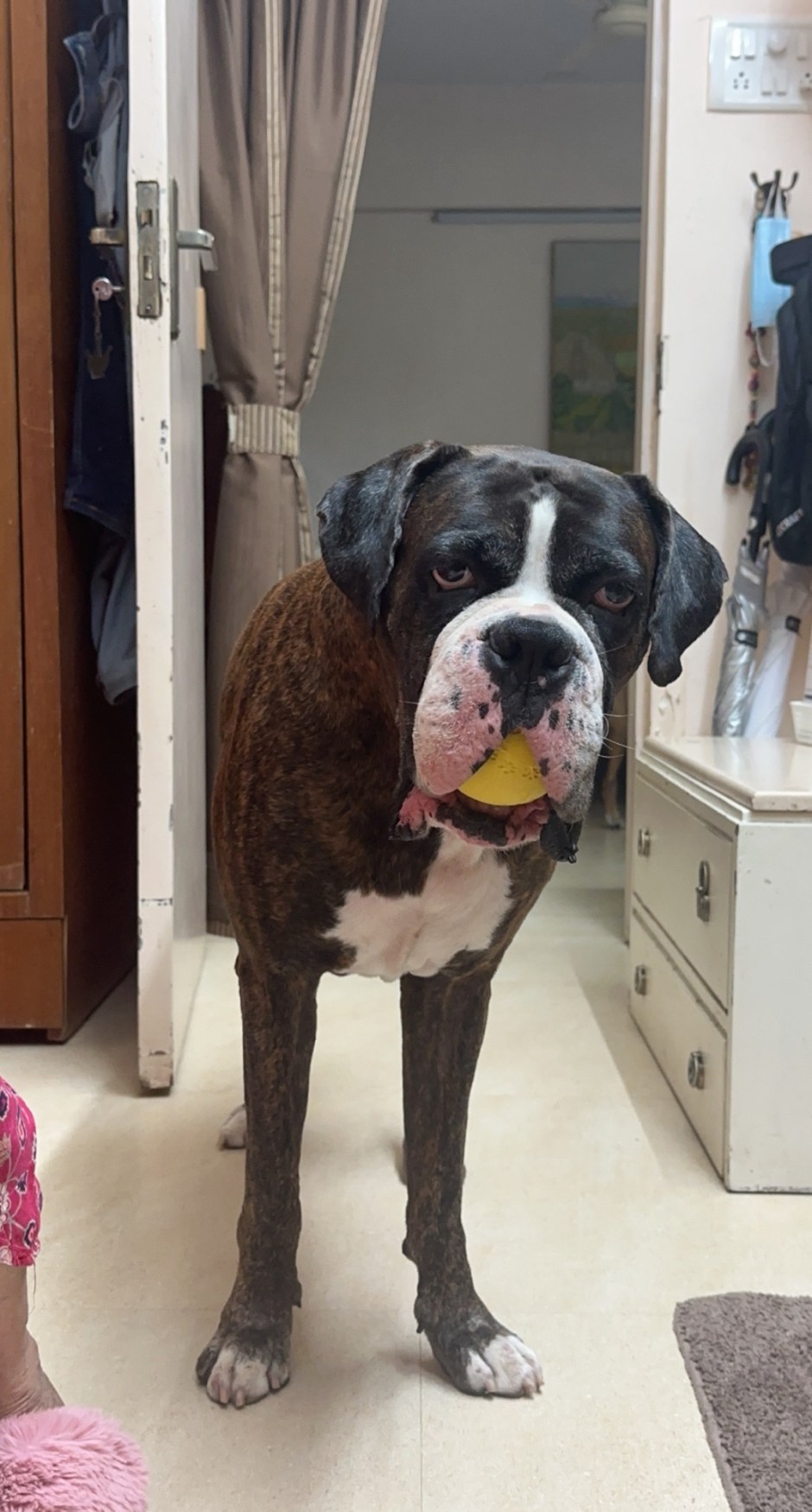
I lost Rolfe at six. Diana at ten. Zoe at eleven. But Zachary — my Zacho Whacko — has crossed twelve. He still eats well, plays with his ball, and his eyes still light up when we go down together.

This morning felt ordinary. I went hunting for tiles and granite for the new home — the kind of simple domestic errands that keep life moving. When I returned, Anand casually mentioned he’d cancelled his trip to Delhi. A small thing, really — but it hit me with unexpected force. Because somehow, it made everything suddenly real.

I went to take a bath and ended up crying — the kind of quiet, unstoppable crying that comes from a place deeper than thought. Because loss is loss. It doesn’t matter how many times you experience it; it never gets easier.

I don’t even have the biopsy results yet, but I know. He’s old. And I’ve always prepared myself for the worst — I’ve always been that kind of person. Still, it hurts. Zach and Xena are the last of my dogs who ever met my aunts — Munni pua, Goodie pua, Cecilia. They’re the only ones who’ve seen that part of my life, that chapter when everything was still whole.

Zoe belonged to the Amruttara years.

Zach and Xena belong to Raj Mahal — the home where I was truly happy.

And now, as time shifts again, I feel that ache of knowing that endings are near, even when love continues.

I’m fifty now. My body reminds me of it — the aches, the stiffness, the quiet hum of age that settles into the bones. And yet, I carry all of it with me — not just the years, but the memories.

Most of those I’ve loved have gone — except for my mother, my sister, Anand, and Atif. But I’ve lost so many others — people and dogs alike. Now I have Zuri, the youngest in our home, but she’s never known my aunts. And it reminds me that everything comes with a time limit — even memory.

Because memory lives only as long as those who share it do. And when they’re gone, even the memory begins to fade. I like to think it doesn’t die, though. Maybe it goes somewhere — into a kind of galaxy of memories, where all our shared moments turn into light. Coiling and floating together — brilliant stars in a quiet Milky Way of remembrance.

When I look at Zachary now — slower, softer, but still full of heart — I realise that grief is just love with nowhere to go. Every wag of his tail, every breath he takes, feels like a reminder that life isn’t measured in years but in moments of trust and togetherness. One day, when he’s no longer beside me, I’ll still feel him — in the walk in the evening, in the sound of glomping that he brought in quiet places, in the stains of his saliva that dab all our walls and all of the memory that becomes love. And maybe that’s what love really is — the part of us that refuses to die, even when everything else must.

October

October has never been kind to me.

My father was born in this month, and from my very first bond with a Libran, I learnt what cruelty and rejection felt like within the walls of my own home. My teenage years — already fragile — were turned into a living hell under his shadow. That wound still bleeds into the way I view this month.

October also carries news that cuts too deep. It was in October that I first heard the words my mother has cancer. It was in October that I watched the fur child I loved most slip away, after weeks of suffering from degenerative myelopathy. She left me on 28 October, and the grief still claws at me.

Even Diwali, a festival I love so much, often lands in October. Its lights and laughter bring me comfort — but they also stand as bittersweet reminders, because while the lunar cycle moves, the weight of this month never does.

It isn’t just one or two bad memories that colour this month for me. It’s a series of them. A pattern. A cycle of loss, fights, pain, and news that bruises. Only yesterday, I had a big fight with my partner, and today I realised the date — the second of October. This month has barely begun, and already it has reminded me of its shadow. Even my body joined in, with a sharp catch in my neck that makes every movement hurt.

October always feels heavy, dark, restless. It begins with promise — a dinner with a friend, a small spark of joy — but it almost always slips into something else. Something harder to hold. Something that leaves me waiting, tense, counting down until the calendar finally turns.

These are the images I’m putting out — fragments of how this month feels inside me. A collage of memory, pain, and resistance.