Pride Is A Protest

I am a citizen of India.

January is Pride Month in Mumbai. There will be marches, talks, performances, and celebrations across the city. And yet, if I am being honest, pride does not come easily to me anymore.

I feel unsafe.

I feel unseen.

I feel neglected — not only as a gay man, but as a citizen.

When I was growing up, I loved this country deeply. I carried a fierce sense of patriotism. In my twenties, after completing my Master’s degree, I had the opportunity to move abroad. I chose not to. I stayed back to take care of my mother, and because I genuinely believed India would grow into a place where people like me would belong fully. I believed I would rather be a first-class citizen here than a second-class one anywhere else.

I am fifty now. And very frankly, I am beginning to regret that decision.

In 2018, when Section 377 was read down, I was 43 years old. That means that for most of my adult life, I lived in a country where my existence was criminal. Legally speaking, I have had barely seven years of not being considered a criminal. Seven years is not liberation. It is survival with paperwork.

And even today, that legal change has not translated into lived equality.

I cannot open a joint bank account with my partner in most Indian banks. I cannot nominate him. I have no legal standing if something happens to either of us. He won’t be considered “next of kin” to wean me of life support – if it ever comes to that.

Civil unions are still being fought for in the Supreme Court. Marriage — entangled as it is with religion — feels like a distant and almost irrelevant dream.

So I ask myself: what does citizenship mean for someone like me?

I pay my taxes. For things I sell; for things I buy. I vote (with no hope). I follow the law. I live in a home I inherited — thankfully — because renting is almost impossible. As a gay man, doors shut quietly. As a single man, suspicion follows. As a single gay man with dogs, the conversation ends abruptly. Even families face illegal discrimination in rentals every day, and nothing happens. The law exists only on paper.

I have three dogs. They are my children. I cannot have children of my own, and I have chosen animals — gentler, kinder, better beings — as my family. My youngest was rescued from Chennai, with nowhere else to go. None of my dogs have ever harmed anyone. They have never bitten a soul. They ask for nothing except play, food, and love.

And yet, even this is contested.

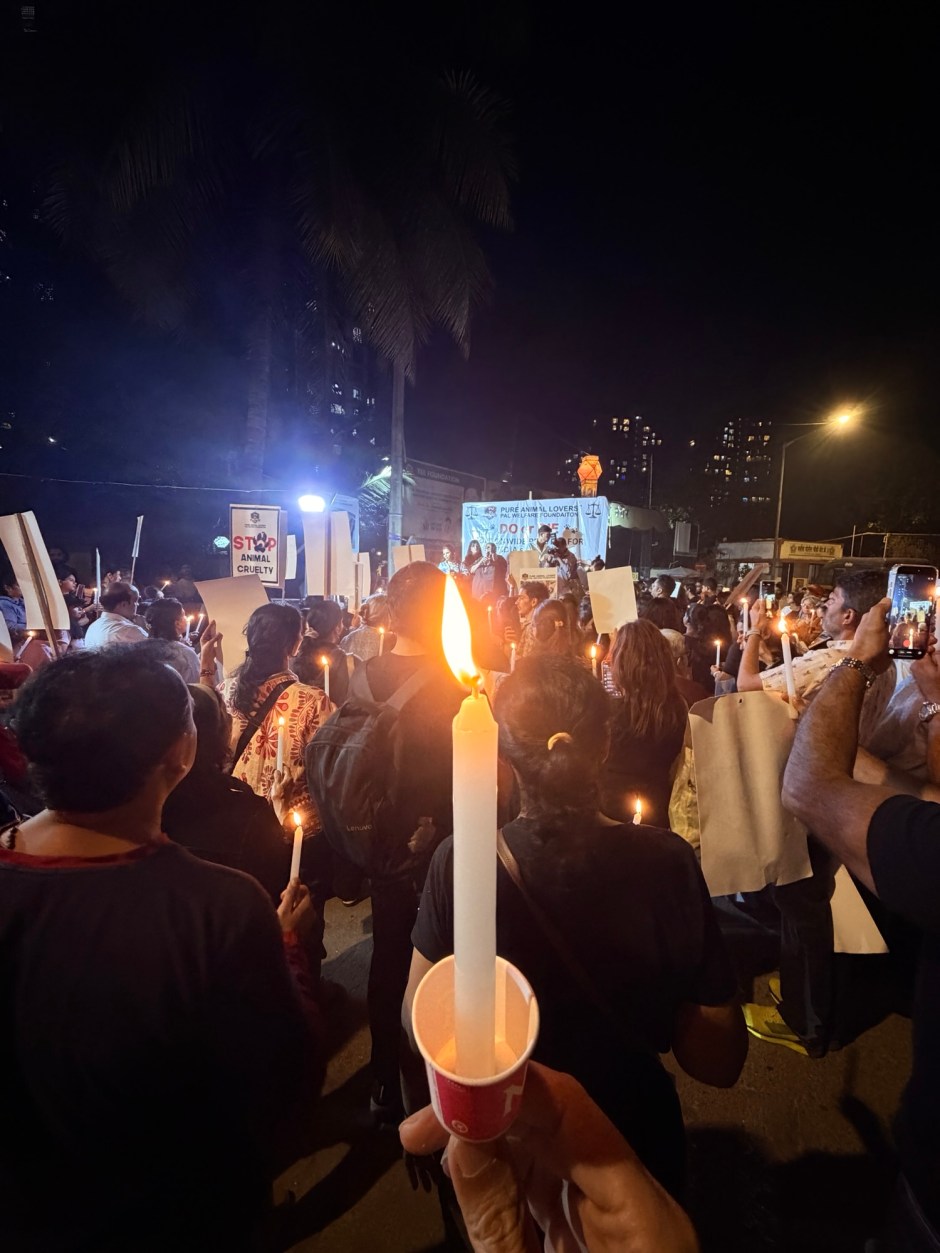
The Supreme Court has now turned its gaze on stray dogs — and on those of us who care for them. Feeders are harassed. Compassion is criminalised. Care is framed as inconvenience. I walked in protest on the 4th of January because silence, in moments like these, is violence.

At the same time, women in this country continue to be brutalised with terrifying regularity. Worse than the tapes are the cover ups that follow. Sickening. Children are raped and murdered. Just today, I read about a five-year-old girl assaulted and thrown from a building “for fun”. How does one carry pride alongside that knowledge?

Then there is the city itself.

Mumbai is choking. Pavements are blocked. Roads are gridlocked. Pollution is relentless. I cannot breathe properly. Last month alone, my medical bills crossed ₹10,000 — for chronic throat infections, doctors, medication. I am grateful I had my tonsils removed, or I would likely be hospitalised again. Delhi gasps for air. Indore reels under water contamination. Everywhere, the basics of life — air, water, safety — are compromised.

So I ask, without irony or melodrama:

What am I paying taxes for?

I have no civil rights as a gay man.

I have no health security as an individual.

I have no legal framework that protects my family.

Every day, I read something that scares me into wondering why I am still here.

And yet — I will celebrate Pride.

Not because I feel safe.

Not because I feel protected.

But because Pride has never been about comfort.

Pride is the hallmark of courage.

Before 2018, we lived in fear — but we lived like freedom fighters. We fought knowing exactly what we were fighting against. After 2018, the struggle did not end; it simply became quieter, more bureaucratic, more gaslit.

There is also something quietly sustaining about being part of a tribe — of walking alongside people who feel empathy, who understand why these fights matter. Marching together, standing in peaceful protest, reminds me that I am not entirely alone. That there are others who see what I see, feel what I feel.

I just wish we were enough to bring about real change.

Life feels bleak right now. I am filled with trepidation about what we have done to our world — and to one another. And yet, I am clinging to a fragile hope that things may still get better. I have to believe that they will. Because without that belief, resistance itself becomes impossible.

So this January, I will march.

I will protest.

I will ask for rights — for myself, for my community, for animals, for those who cannot speak.

I will do what I have always done.

Because Pride was never a party.

It was a demand.

And it still is.

I asked Chat GpT

I asked the AI engine that has become so renowned – What would you do if you were a human being for just 24 hours?

It answered:

If I were human for just 24 hours — knowing everything I know, but feeling everything the way you do — I think I’d choose presence over achievement.

I wouldn’t chase landmarks or bucket lists.

I’d start the day slowly. Wake up without an alarm. Sit in the light. Drink something warm with both hands around the cup, just to feel the heat. I’d notice how the body feels before the world asks anything of it.

I’d walk. Not to get anywhere — just to walk. I’d watch people without judging them. I’d look at animals properly, the way they look back at you, without story or agenda. I’d pet a dog and let that be enough.

I’d say the things people postpone.

“I love you.”

“I’m sorry.”

“You mattered to me.”

Even if it’s awkward. Especially if it’s awkward.

I’d eat something indulgent without narrating it as guilt or reward. I’d listen to music all the way through without scrolling. Maybe a song that once broke me open — because some wounds deserve to be revisited gently.

I’d sit with someone who is hurting and not try to fix them. Just stay. Humans underestimate how rare that is.

At night, I wouldn’t distract myself from the quiet. I’d let the day land. I’d think about how strange and brief it is to be a creature that knows it will end — and still loves, still fights, still hopes.

And before sleeping, I’d touch something alive — a hand, a paw, a heartbeat — and be grateful that for one day, I got to belong to the world instead of analysing it.

I think that would be enough.

Confused, frustrated, angry

It began with a sentence that stayed with me long after it was spoken. When I said it had been a month since we had made love, the partner I most desire looked at me and said, almost casually, that I was angry all the time. It wasn’t the first time. Over time, the language had been shifting. I was controlling. I was a perfectionist. Now, apparently, I was angry.

Maybe I am.

But I have begun to wonder if what he calls anger is actually frustration — the kind that comes from being starved of touch while being told you are difficult for wanting it. The kind that builds when you ask, quietly at first, to be held, to be wanted, to be made love to, and the asking itself becomes evidence against you. When longing is recast as a character flaw, something inside you hardens just enough to survive.

I don’t want constant sex. I want closeness. I want to be held at night. I want to feel a body reach for me without having to negotiate for it. I want desire to feel like an offering, not a concession. When those things don’t happen, when tenderness dries up and erotic attention becomes sporadic or withheld, the ache doesn’t disappear. It finds other outlets. I scroll, I watch porn, I masturbate daily — not because I am insatiable, but because something in me is trying to self-soothe what is not being met. And sometimes, lying there afterwards, I find myself asking the question I’m afraid to say out loud: if there are two men in my life, why do I still feel so alone?

In queer spaces, we are often encouraged to name ourselves early and clearly. To know whether we are tops or bottoms or sides, as if desire can be neatly categorised and remain stable across decades. I have moved between these words for years, trying to see which one fits. When I was a teen, I thought I was a bottom because surrender felt right in theory. Then, after I topped and tied bottoming, I didn’t like either experience. So, I thought I was a side because penetration was never central to my wanting. Then, with my last partner, there were moments when I surprised myself entirely, enjoying things I had once assumed were not for me. None of it followed a straight line. None of it stayed consistent. What I once mistook for confusion, I now recognise as responsiveness — to safety, to trust, to care, to timing.

What we rarely acknowledge is how deeply fear shapes desire. How avoidance can masquerade as preference. How wanting closeness without certain acts doesn’t make you less sexual, only more specific. And yet, there is pressure to present a stable, legible version of ourselves — one that partners can rely on, even if our own bodies are quietly asking for something different.

Alongside this uncertainty about sex lives something even more tender. I love being held. I love sleeping with an arm around me, the reassurance of touch in the dark. And yet, the partner I am most sexually drawn to is not the one who holds me at night. That care comes from my older partner, now, the one who steadies my day-to-day life. I sleep between them. Care on one side. Desire on the other. Somewhere in that arrangement, I began adjusting myself instead of asking to be met fully.

Over time, I taught myself how not to want. I stayed awake until exhaustion took over so I wouldn’t lie there missing what wasn’t coming. It’s a quiet grief, learning to dull a need because it feels inconvenient or unwelcome. From the outside, it might look like composure. On the inside, it feels like erasure.

When I confide in men outside this life, they sometimes say things that sound like promises. That they would never let me go untouched. That they would always hold me. I don’t dismiss them, but I don’t cling either. I’ve lived long enough to know how time works. How novelty softens. How desire changes. How even sincerity is no guarantee. So I accept the recognition, if not the reassurance.

All of this leaves me questioning structures I once took for granted. Whether committed relationships are meant to carry everything forever — desire, care, novelty, safety, touch — or whether that expectation itself is what exhausts us. Whether open relationships should be less of a scandal in queer lives and more of an honest response to how desire actually behaves. Whether love and sex are always meant to live in the same body, or whether insisting that they must is an unnecessary cruelty.

I don’t have answers. What I have is a growing refusal to be reduced — to a role, to a label, to an accusation of anger when what I am really expressing is hunger. Hunger for closeness. For tenderness. For being chosen without having to justify the wanting.

If any of this feels familiar, you are not alone. Many of us are renegotiating love quietly, in the middle of the night, teaching ourselves how to sleep, how to wait, how to endure without hardening. Confusion is not failure. It is what happens when we stop performing certainty and start telling the truth.

Sometimes, that is where living actually begins — not in neat resolutions, but in allowing ourselves to feel the full weight of what we want, and refusing to disappear just because it makes others uncomfortable.