

The Ambition of Love

Be careful how much you tolerate, because you are teaching others how to treat you. I learned this lesson the hard way. I’ve been giving of myself for as long as I can remember. I came from a broken home where my father was abusive, and this fostered an inferiority complex early on. This feeling of inadequacy grew into an overpowering need to be loved, especially by men. It suppressed my will to shine.

I am talented. I speak well, I write well. I used to paint and still sketch occasionally. I’m a good photographer, with a keen eye for style. People often come to me for fashion advice. I can orate. I am intelligent— and I am aware of how rare a quality that truly is. I am courageous. I’ve stood up to bullies, for as long as I can remember. I am a survivor, enduring my father’s regular abuse from the age of 13 to 19. I never show that I’m scared, even when I’m in the midst of an anxiety attack. Despite knowing I didn’t have to hide my fear, I did.

I haven’t succumbed to depression, though I came close. At 21, I was on the verge of taking my own life but stopped myself, realising that life isn’t just about one experience, one decision, or even today. I came out to my mum at 16, and by 19, my whole family knew. I was out and proud.

Human relationships became paramount in my life, and I placed a high value on abstractions like love and fidelity. I looked down on those who struggled with the pursuit of material ambition. I used to dismiss their drive for money, believing it paled in comparison to the importance of human connection. During my studies in English literature, I came across the famous lines in Paradise Lost, where Lucifer (Satan) declares in defiance:

“Better to reign in Hell, than serve in Heaven.”

This quote, from Book I, reflects Satan’s refusal to submit to God’s authority and his preference for ruling over his own domain, even if it meant enduring eternal damnation. His ambition and desire for power were central to his rebellion.

Over time, however, I stopped believing in God. I began to read what various religions had to say about ambition, because I was free from the tethering to one. Most theologies encourage ambition, but only when it’s rooted in moral, spiritual, or altruistic goals—serving others, improving oneself, or seeking knowledge. And, unchecked or self-centred ambition—linked to pride, greed, or ego—is frequently seen as a source of suffering, spiritual downfall, or ethical corruption. A balance of ambition with humility, selflessness, and alignment with higher principles is a common thread across these belief systems.

While ambition in both material and relational spheres can be noble, it is still bound by human limitations. No matter how altruistic the goal, human fallibility—whether one’s own or others’—can lead to suffering. The pursuit of meaningful relationships, like any other ambition, sometimes results in disillusionment.

This realisation led me to further reflection. If both material and relational pursuits are prone to failure, what remains? Perhaps this hints at the need for a broader acceptance of impermanence, acknowledging that all human endeavours—whether rooted in religion, ambition, or love—are inherently transient. The sense of abjection I’ve experienced after nearly 50 years of human interaction points towards the same fundamental truth found in spiritual teachings: that suffering arises from attachment. This time, however, the attachment wasn’t to material gain but to relationships themselves.

In this sense, the ideology I have developed may be evolving towards a philosophy where the emphasis is not just on ambition or relationships but on a broader equanimity. The wisdom lies in accepting that ambition—whether spiritual or secular, whether tied to relationships or success—is part of the human experience, but it is not its endpoint. Life’s impermanence flows through everything we pursue, and the challenge is to navigate ambition and relationships with care, knowing they too are temporary.

The trajectory of my life shifted from religious ambition to the pursuit of human connection, only to discover that even these relationships, which I once saw as the ultimate goal, are susceptible to profound loss. This ideology grapples with the limits of ambition in any form—religious or secular. The ultimate challenge seems to be finding peace in the space between striving and letting go. While the ambition to cultivate relationships is meaningful, it must also come with the understanding that even the best connections can be lost.

In the end, it is only the self that can truly be relied upon. Even though we need wider sustenance—whether in the form of money or love from the outside world—what we fold into ourselves remains ours. This, perhaps, is what I’ve learned. There is no right or wrong way to live. In the end, everything crashes and burns, only to build up again. And that’s life.
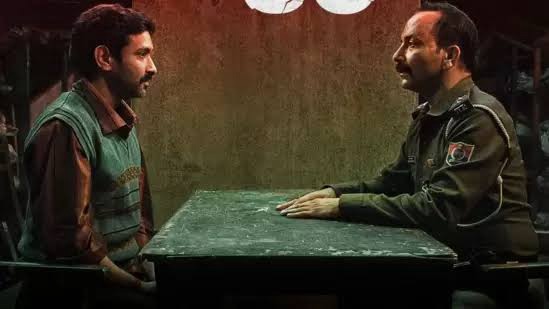

Sector 36

Watching Sector 36, one can’t help but be haunted by the grim reality it portrays—a reality that has unfolded in India over the past two decades. The movie leaves you questioning: how could such atrocities have occurred? And why was there no uproar when they did? The answer is stark and troubling—it didn’t happen because the victims were poor.

In India, wealth and power create shields of protection. The tragedies that befall the underprivileged are often met with indifference. This becomes painfully clear when you compare the muted response to the Nithari killings, where over 30 children were brutally murdered, to the outcry over the rape and murder of a doctor from a higher social standing. Both cases involved massive cover-ups, yet only one sparked national outrage. The victims’ socio-economic status determined the level of public sympathy, a truth that resonates throughout Sector 36.

The film shines a spotlight on the systemic injustice that plagues India. The system is a well-oiled machine, designed to serve the powerful. Crores of rupees are spent on lavish weddings and towering statues, while rapists walk free, and whistleblowers languish in prison. We rage against the system, yet we are the system too, perpetuating the very inequalities we decry.

Over the years, India has witnessed several high-profile rape cases that stirred public conscience and led to legal reforms. The Nirbhaya case, for example, resulted in nationwide protests and swift changes to criminal law. But the hard truth is that justice tends to be swift when the accused lack political connections. Where political power is involved, the wheels of justice grind to a halt. Take the Unnao rape case—BJP legislator Kuldeep Sengar evaded arrest for months until media pressure became too loud to ignore. On the flip side, crimes in opposition-ruled states often face heightened scrutiny, with political rivals quick to weaponize these tragedies for their gain.

Sector 36 forces us to confront the fact that crimes in rural areas or involving marginalized communities, particularly Dalits, often go unnoticed. Media coverage is heavily skewed towards metropolitan incidents, leaving the most vulnerable without a voice. The case of the Hathras gang rape—a Dalit woman raped and murdered by upper-caste men in Uttar Pradesh—barely scratched the surface of national consciousness. In these cases, patriarchal values, victim-blaming, and political protection for perpetrators drown out public outrage, creating a system where justice is reserved for the few.

Vikrant Massey delivers a brilliant performance, as expected, but the surprise standout is Deepak Dobriyal’s portrayal of the inspector who uncovers the horror. The film’s pacing is swift, allowing the story to unfold without lingering unnecessarily on the grisly details of the crimes themselves, though their very nature is horrific enough to leave an indelible mark.

Ultimately, Sector 36 is not just a film about a series of murders—it’s an exposé of India’s deep-rooted inequalities, where the poor remain invisible, the powerful remain untouchable, and justice, for most, remains a distant dream.

My Atheism

As an atheist, I’m often asked why I celebrate festivals of all kinds. Many people assume that atheism, defined as the absence of belief in gods or deities, would naturally exclude participation in religious or traditional festivals. However, I believe it’s precisely because of my atheism that I can embrace and celebrate all festivals, appreciating their cultural, historical, and communal significance without being bound to the religious beliefs behind them.

Atheism and the Freedom of Tradition

Atheism is often misunderstood as an outright rejection of anything religious, including the festivals and traditions that come with various faiths. However, as philosopher Alain de Botton states in Religion for Atheists, “One need not believe in God to find the practices and insights of religion useful, interesting, and consoling.” Atheists can find value in rituals, festivals, and cultural traditions without subscribing to the theological narratives tied to them.

In this way, atheism allows me to approach festivals from a place of open curiosity and appreciation for their essence. For instance, I can enjoy Diwali for its celebration of light and community, Christmas for its warmth and spirit of giving, and Eid for its focus on family and compassion—without feeling the need to partake in the religious doctrines associated with them. This perspective is echoed by many atheists who view festivals as an opportunity to connect with loved ones, participate in shared joy, and honour heritage without any theological obligations.

Celebrating the True Nature of Festivals

I wasn’t always an atheist. In fact, I grew up with a deep love for Krishna, Ganapati, and even Jesus. These epic figures were a source of comfort, and I cherished the stories and lessons they embodied. I still hold affection for them, as powerful symbols of human ideals and values. Over time, as I delved deeper into science and developed a broader understanding of the human condition, I gradually grew into atheism. My journey wasn’t a rejection of spirituality, but rather an evolution of thought. I began to see life as part of a larger collective consciousness, akin to Carl Jung’s ideas, where the divine exists not in the supernatural, but within the shared experiences and psyche of humanity. This understanding has enriched my appreciation for the world around me, allowing me to engage with it more fully, free from the constraints of dogma.

For me, festivals are more than religious events—they are moments of collective joy, opportunities to reflect on shared values, and a way to stay connected to cultural heritage. By removing the religious connotations, I am free to appreciate their true nature: the symbolic representations of harvest, renewal, and community. This view aligns with Richard Dawkins’ argument in The God Delusion, where he suggests that “there is no reason why secular humanists cannot engage in cultural practices as long as they’re detached from the supernatural beliefs that often accompany them.”

Take Holi, for example. While rooted in Hindu mythology, it is ultimately a celebration of colour, joy, and the victory of good over evil. The festival’s deeper message is universal, and as an atheist, I can celebrate the spirit of renewal and community without any reference to divine forces. Similarly, Christmas has long transcended its Christian origins for many, becoming a time of family gatherings, gift-giving, and goodwill. These themes are not tied to religious belief, but are part of the human experience.

Festivals as Human, Not Divine, Creations

From an atheist perspective, festivals can be seen as human creations rather than divine mandates. Historian Yuval Noah Harari notes in Sapiens: A Brief History of Humankind, “All large-scale human cooperation is based on shared myths,” and festivals are one way we manifest these shared narratives. Whether religious or secular, these traditions have been passed down through generations, evolving over time and adapting to new cultural contexts.

By recognising festivals as human constructs, I can participate in them as celebrations of our shared humanity, creativity, and resilience. Festivals serve as reminders of the values we cherish—whether it’s love, kindness, or the changing of seasons—and participating in them allows us to reconnect with those around us, irrespective of our beliefs.

Atheism and Inclusivity

One of the misconceptions about atheism is that it is inherently exclusionary. However, my atheism has opened the door to inclusivity, allowing me to celebrate not just one or two festivals but all festivals, from different cultures and religions. As atheist author Hemant Mehta notes, “Atheism isn’t about rejecting the world; it’s about accepting that this is the only world we’ve got, and we should make the most of it.” By participating in a wide array of festivals, I’m able to embrace the diversity of human culture and experience without feeling constrained by any particular belief system.

Celebrating different festivals is, for me, an expression of unity in diversity. I can partake in Eid, Hanukkah, or Christmas not as a follower of those religions but as a fellow human being who shares in the joy, togetherness, and values these festivals embody. This inclusivity enriches my life and allows me to connect with others across cultural and religious boundaries.

Atheism as a Path to Universal Celebration

Far from alienating me from the world’s traditions, my atheism has allowed me to celebrate festivals in their purest form—as moments of joy, reflection, and community. Free from religious dogma, I can engage with the rich tapestry of human culture and participate in celebrations that honour our shared values and experiences.

In the end, festivals are not just religious events—they are expressions of human creativity, resilience, and unity. And as an atheist, I feel privileged to be able to embrace them all.