Gangubai Kathiawadi

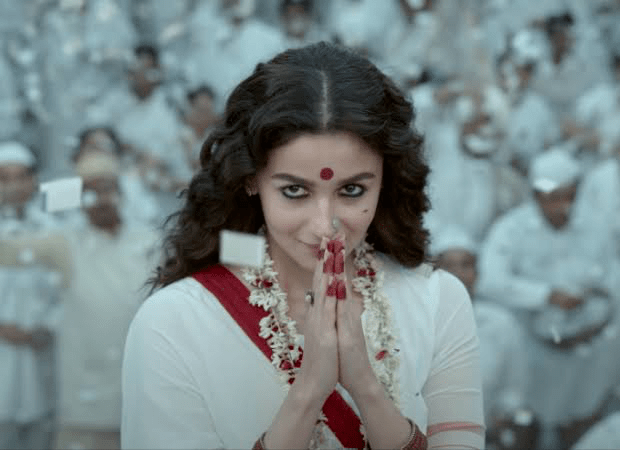
The movie is Alia Bhatt. I am aware of the actor’s prowess. The role of Gangubai Kathiawadi didn’t seem to be a fit for the petite frame, or the age, Alia possesses. Yet, I went in to see the movie because of her. And as usual, the lady doesn’t disappoint.

Apart from the tragic – and horrific – circumstances of how her character falls into prostitution, the entire movie depicts (sometimes with shades of heroic grandeur) the stoicism of Gangubai Kathiawadi. The story is truly dark and morbid – something the opus of a Bhansali production probably needed. His typical, over the top direction depicting royalty even when the plot has no traces of royalty seems toned down because of its very subject. It’s a good pairing this: Bhatt and Bhansali. They make for good film.

The writing is compact and has great monologues. I particularly like the one that talks of the different shades of white. The metaphors in it are stark and vivid. Like the tones of this movie, muted greys and blues. The whites stand out like beacons in the dark. The writers, Prakash Kapadia and Utkarshini Vasishtha, hand in glove with Sudeep Chatterjee have created brilliance again.

It’s a woman-centric film. The supporting cast does a worthy job – Seema Pahwa deserves an honourable mention – but the film belongs to Alia. Though I shall mention that without the cameo of Ajay Devgan, the quintessential, hindi-hero character, Gangubai wouldn’t have scaled the heights her character reached. But given the era and of course, filmdom being misogynistic, a man had to ultimately be the saviour. Although it’s important to note two things. One, Karim Lala did help Gangubai in the way depicted in the film. Two, all the men in the movie have their own price tags. A good innuendo.

I will note, being from the LGBT community myself, that depicting a Hijra as the main antagonist could cause more prejudice against the community. A community that already faces enough ignorance, violence and hatred. The character could have just as easily been another female. And if indeed depicting the antagonist as trans was necessary, why Vijay Raaz? Why wasn’t a trans person considered and cast? These questions shall have their excuses as answers. Like one that said that Vijay Raaz is a phenomenal actor. Agreed. So why not cast him as Gangubai? (Just following the line of argument.)

Apart from this, the movie resonated with me. After Khamoshi, I think Bhansali has done something truly worthy. And it is this film. But I end how I began: most of the credit should definitely go to the phenomenally gifted Alia Bhatt.
Dune

I saw the movie a couple of hours ago. It’s still resonating in my brain and heart. Like melange – the planet’s addictive spice itself. The movie is just breath taking. Each visual. The cinematography. The landscapes. The vision. Absolutely spectacular.

The mythology in the books has been so well woven in the script that the explanation of it is effortless. It seems part of the fabric of a rich tapestry of sand gold. The movie soars into the air from the very first frame and it just feels like a ballet that shouldn’t ever stop. I was spell bound by everything in it.

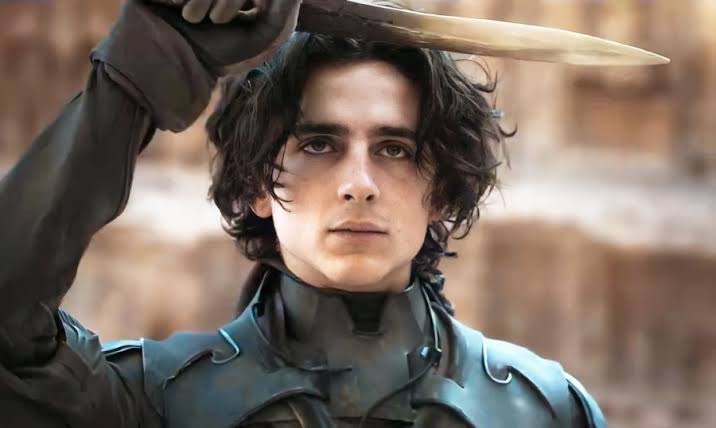
Timothée is astounding – as he always is. He is intense yet sensitive. The scene where he is about to be assassinated stands out with its laser lights and his eyes. His face with its clear cut angles seem made for the movie with its sandstone framework. Ever since I saw him in Call Me By Your Name I have been spellbound by his prowess as an actor and there’s not a single movie in which he has been that has disappointed. This movie was hand crafted for him. He is Paul.

The other magnificent creature that sets the screen ablaze is Rebecca Fergusson. Her duty as a Bebe Gesserit and her love for her son are wounds that threaten to tear her apart. She keeps gnawing at them through the movie and speaks of the control of her fear – much like each of us does at some point in our lives.

Zendaya is a dream that hardly has time to manifest. Though I do not mind for the wait for the manifestation. Each scene is nuanced in its calibre. The sand worms find their own larger than life status and they form the antithesis to melange in the deserts of Dune. Paul Lambert and his team have done a phenomenal job at the special effects and Hans Zimmer matches the spectacle of the movie with his musical score.

There’s not a thing wrong with this movie and almost all of the credit must go to the director, Denis Villeneuve for envisioning this opus. What Peter Jackson was to The Lord of the Rings, Denis Villeneuve is to Dune. The script is tightly woven and nothing is set loose like the sands it talks of. “Dreams make good stories,” says Jason Momoa’s Duncan Idaho, “but everything important happens when we’re awake.” Villeneuve makes sure that time, dreams and sand make their way, winding like the worms, surely and rightly, through Herbert’s narrative.

I regret not seeing this movie in IMAX – but I will not be seeing it for the last time for sure. It is worthy to be placed on repeat mode.

Badhaai Do

I’ll just say at the onset what I was thinking as I was watching this movie. I thought, and then said it aloud to my partner, who was sitting next to me in the theatre, “Would you have thought we would be seeing movies like this being made in India, during our lifetime?” He shook his head in the negative.

Badhai Do speaks of a marriage of convenience between a gay man and a lesbian woman. The movie is set in small town India, and the main protagonists hail from middle-class, upper caste families. Much like in the depiction of Shubh Mangal Zyada Savdhan. I loved SMZS – because it dealt with the story of two gay men in love, with a fervour and a zeal that made it over the top – like most pioneering statements with a hope for a better future. Badhai Do comes as a strategic step ahead.

It is nuanced and delves within character. There is not much of a back story of the two main protagonists. There is no explanation as to the whys or to the wheretofores of character buildup. They just are and the movie deals with a look into the future prospects of the characters of a certain age. The time when marriage pressure in India comes to a head. That in itself sets the score for the movie. It already comes from a space that looks ahead instead of looking behind.

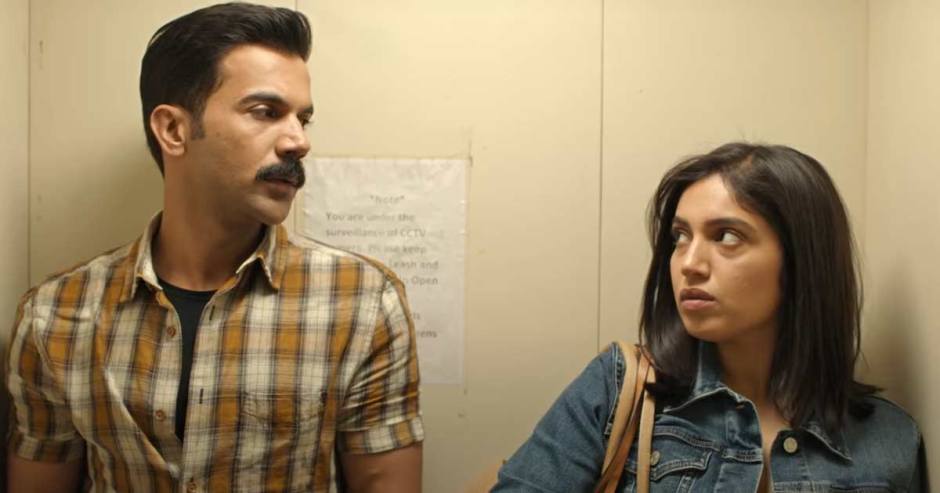
Raj Kumar Rao and Bhumi Pednekar have done spectacular work in crafting the characters of Shardul Thakur and Sumi Singh.

Raj Kumar essentially brings in the angst of being a homosexual man in a “tough man job” and is in love with an MBA student. The fight portrayed between Shardul and Kabir in a motel room made me rethink about my own past. It may not have happened exactly in the same context, but the feelings of insecurity and need were bang on. In this relationship, ageism – that is such a deep-seeded fear in the homosexual community – also becomes the underlying issue – as Shardul mentions. It is almost karmic. It is so quietly mentioned that only those who have felt it will feel it. It’s the slightest touch of feeling – that leaves such a tremendous impact.

Bhumi’s depiction of a woman caught in a job that most in india would say is unsuitable for a woman talks about misogyny just as much as homophobia. Her sense stands head to head with Raj Kumar’s sensibility.

And then there is the question of living up to family expectations that don’t just end with marriage; but post the milestone of marriage there is the pressure build-up of having children. Something we as Indians, living in the second most populated country of the world, should have taken into hand – but no. It doesn’t just end with marriage, yo! Then there is the take on how women have to face the brunt of not getting pregnant. The whole family must consult a fertility specialist on her account. The man’s virility also comes into question – with jokes about his size and stamina. Apparently, it takes ‘one shot’ for ‘real men’ in our country. It’s just sad and it is so well done it is applaudable. The director Harshvardhan Kulkarni has actually done a brilliant job.

I must not forget to mention how important it is – for those who live a closeted life to meet those who live out of the closet. Both the main protagonists fall in love with out individuals. Self-assurance is hailed. And rightly so.

The coming out of the main characters takes its toll, as it always does. It is wonderfully portrayed – with the strength and gravitas that is needed to come out itself. But then, there in, I find a flaw within the narrative. For things to become alright, post leaving the closet, is the adoption of a child. It would seem without the adoption of a child there would be no forgiveness – no reconciliation – no acceptance. Then again, as I said earlier to my lover, a movie like this is big in itself – why ask for more?

But I think I shall. Maybe in the next venture, there won’t be a lavender marriage, there won’t be an adoption. There will just be love. And that will be enough.