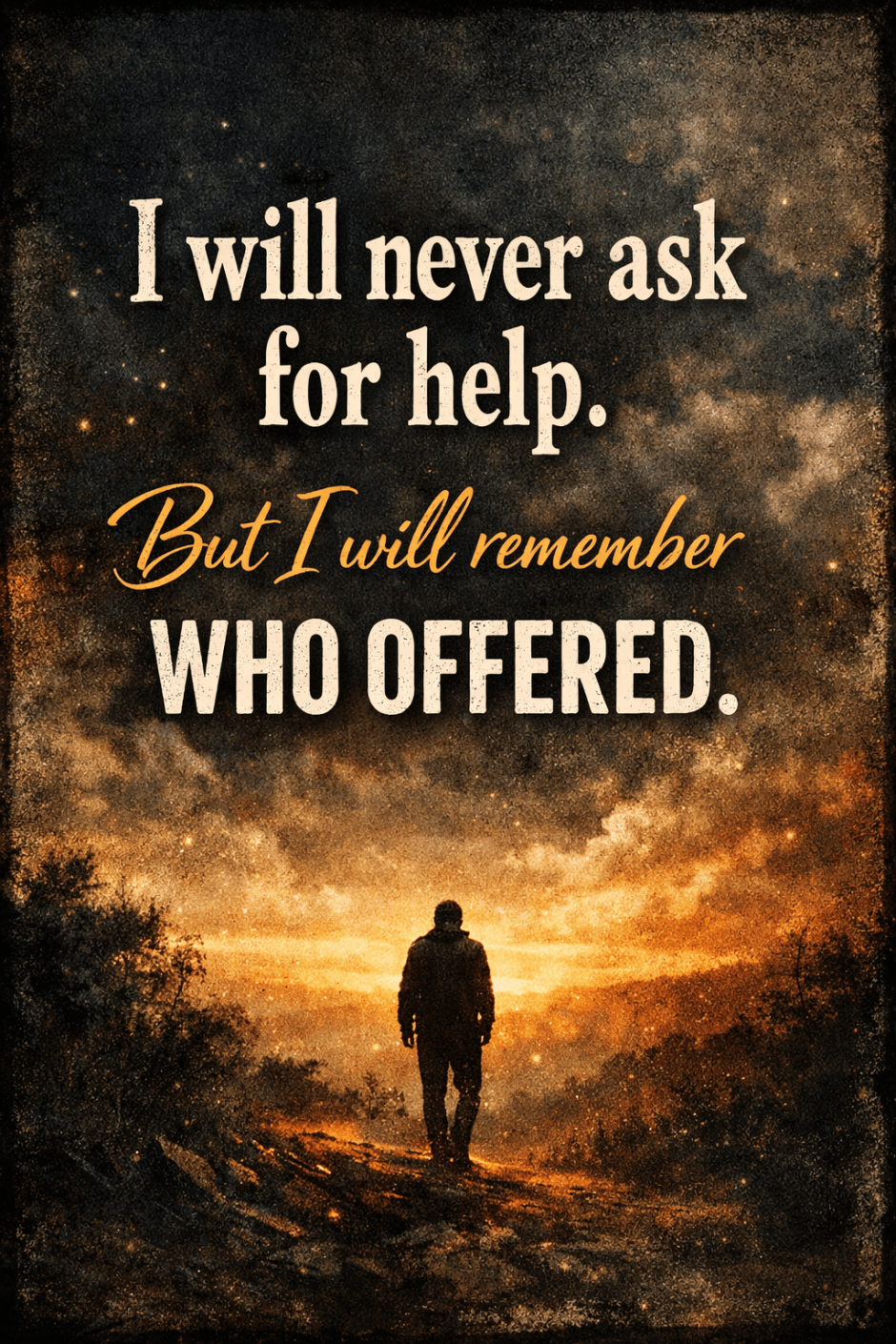
I Will Never Ask for Help. But I Will Remember Who Offered.

I have learnt something about grief that no book, no well-meaning quote, and no condolence message ever teaches you.

When death finally arrives, people show up. Messages pour in. Words of sympathy arrive from corners you didn’t even expect to remember you. “So sorry for your loss.” “Heartbreaking.” “Sending love.” And I am grateful for every single one of them. Truly.

But grief does not begin at death.

Grief begins long before — in the months when you are carrying the unbearable quietly.

For months, I have been living with two terminally ill dogs. Not metaphorically. Not dramatically. Literally. With medication schedules that rule the clock. With hospital visits that fracture sleep. With anxiety that sits in the body like a permanent ache. With fear that never quite leaves the room, even on good days.

I spoke about it. I posted about it. I did not cloak it in poetry or optimism. I said plainly: this is hard. This is exhausting. This is breaking me in ways I didn’t anticipate.

And that is where the silence lived.

Very few texted to ask, “Are you managing today?”

Very few dropped by unannounced, just to sit on the floor and see the reality.

Very few said, “Can I take one thing off your plate?”

Very few said, “You don’t have to talk — I just want to be there.”

Just a handful. A precious, unforgettable handful. Thanks, Christina, Anil, Madhvi, Jatin, Husain, Priti.

They didn’t ask for permission to care. They didn’t wait for tragedy to be official. They came when things were messy, unresolved, ongoing. When there was nothing to mourn publicly yet, and no neat ending to respond to.

That is what I will remember.

Because help that arrives after loss is kind — but help that arrives during suffering is love.

We live in a world that is comfortable with outcomes, not processes. Death makes sense to people. It has language. It has rituals. It has scripts. Long-term caregiving, anticipatory grief, emotional depletion — these things make people uncomfortable. They don’t know what to say, so they say nothing. They don’t know what to do, so they disappear.

And I understand that too. I really do.

But understanding doesn’t erase the knowledge that settles in your bones when you realise how alone endurance can be.

I have learnt that asking for help is not natural to everyone. For some of us, it feels like exposure. Like burdening. Like weakness. So we don’t ask. We speak honestly and hope that someone listening will hear the invitation between the lines.

Sometimes they do.

Most times, they don’t.

And that is life.

Zach is gone now. And yes — the messages have come. The kindness has come. The sympathy has come. I receive it with grace.

But what stays with me are the names of the people who showed up when there was nothing to say sorry for yet. When there was only tiredness. Only fear. Only a house holding too much.

Those are the people grief reveals.

I will never ask for help.

But I will always remember who offered.

And I will carry that knowledge forward — quietly, without bitterness — knowing exactly how I want to be when someone else is surviving something long, invisible, and unbearably human.
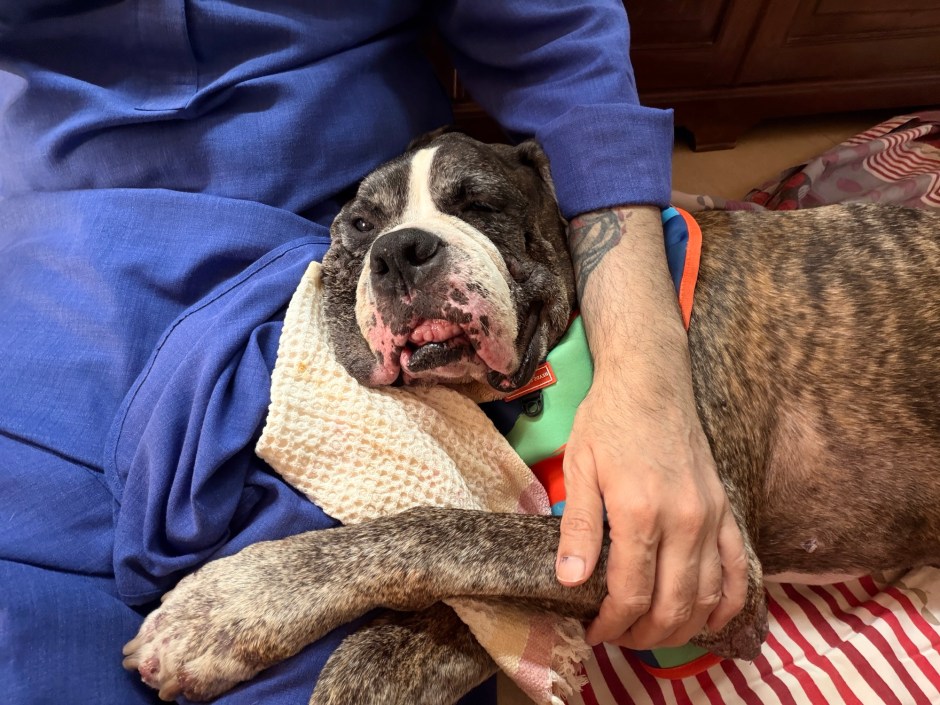
Zach

I placed salt in the south-east corners of the house.

On the window sills.

Outside the main door.

I circled it around the bodies of those I love — seven times each — some asleep, some awake. Ancient gestures, borrowed hope. The small human instinct to bargain with forces we do not understand when life begins to slip through our fingers.

But love does not always win by force.

My baby boy continued to deteriorate. The mannitol that was meant to help only added new indignities — pressure on his bladder, blood where there should have been none. Blood in his urine. Blood in his stools. The body, brave for so long, began to quietly surrender.

The doctor told me it was time.

You can prepare for that sentence all you want. You can see it coming days, weeks, even months in advance. But when it finally arrives, it still lands like a blow to the chest. It is always difficult to hear. Always harder to witness — the slow, visible unravelling of someone you love.

I have stood at this threshold many times now. One would think death would feel familiar, even friendly. But death never comes alone. He brings grief with him — vast, consuming — and the promised relief feels like something that belongs to a future too far away to touch.

Before the end, I took Zach to Old Raj Mahal Lane — the place where he was happiest. He walked off the leash, free, unburdened, until his legs could no longer carry him. We went home after that. I fed him pizza, his favourite tuna slices from Joey’s. He ate every morsel with quiet devotion, as if marking the moment, as if saying thank you.

Now I wait.

I wait for the doctor to come home, carrying the injection of relief. Relief for him — and perhaps, someday, for me too. When my own body can no longer go on. When I am tired beyond repair. When I am surrounded by those who love me enough to let me rest.

That is what my baby boy is being given today.

And I wish — with every fibre of my being — that it did not have to be my decision. But love, when it is real, does not cling. It listens. It watches suffering honestly. And if ending pain is the last act of care left to us, then we take that burden onto ourselves so they don’t have to carry it any longer.

This is not cruelty.

This is mercy.

This is love that chooses to hurt so another does not have to.

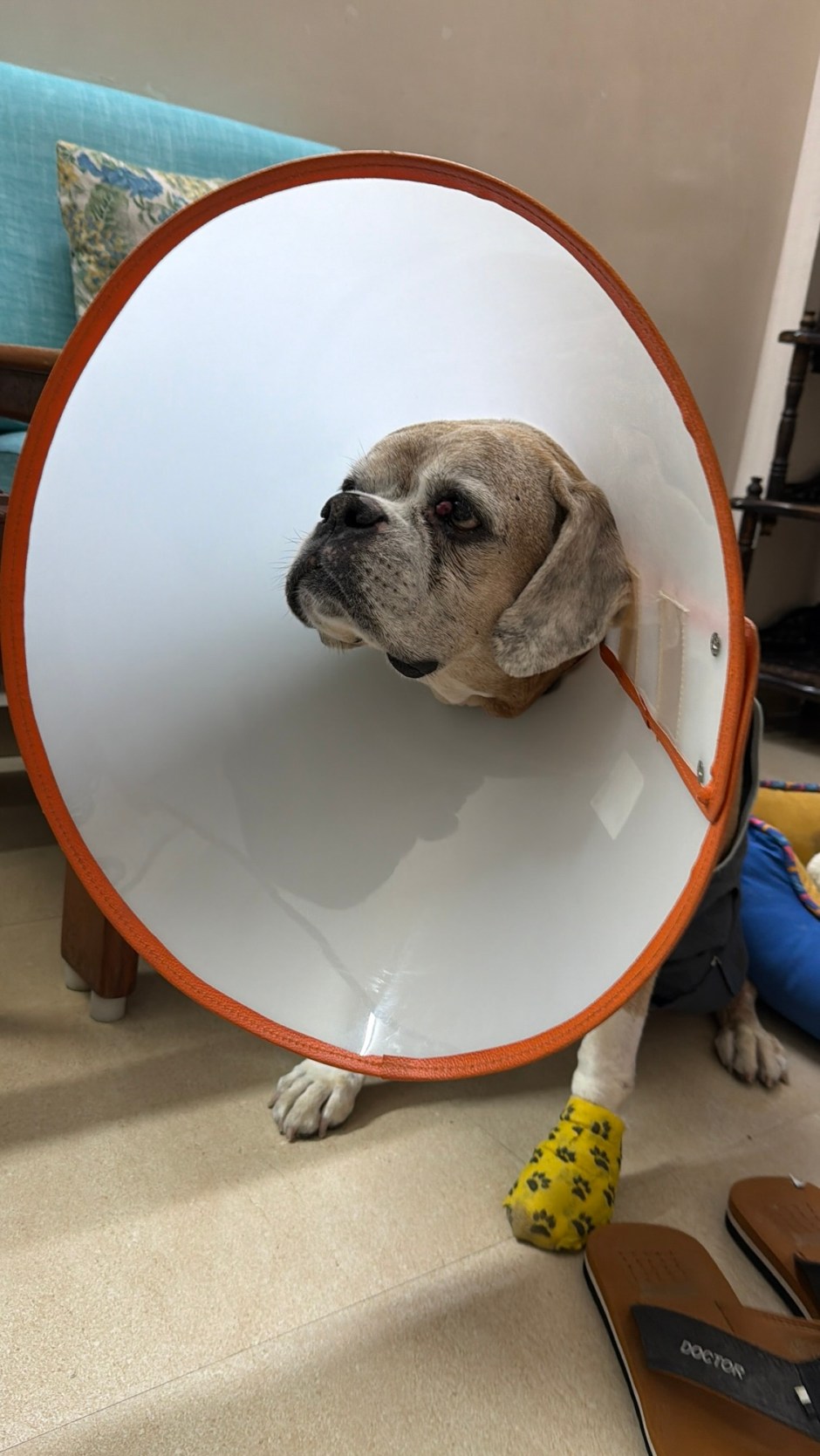
Xena

You look behind to see if I am coming.

You would take your toy and come to me running.

You are a grumpy little thing with bat-like ears.

You came to me at a time that was filled with tears.

You journeyed through miles, quite a valiant feat.

When I held you, you made my family complete.

I named you a warrior princess, not a guest.

You have more than passed the strongest of tests.

Life has a few more in store for you, I’m afraid,

but I can count on all the victories you’ve made.

So tomorrow may frighten the hell out of me,

but the warrior in you shall fight valiantly.

I love you the most, my daughter, and that you know,

for every glance you give me tells me so.

Know I’ll be there if, on the table, you feel alone,

waiting outside the doors to take you right back home.

So keep your strength and let them cut the cancer out.

Fight and be strong, and you’ll win — I have no doubt.

My heart aches for all the battles you must fight,

but being your dad, that falls as my right.

Just know, as I see you stick your head out of the cone,

the moment I held you, you stopped being on your own.