We Go On…

I am living inside inevitability.

Two of my senior dogs are dying slowly of cancer. There is no emergency, no dramatic collapse — only a steady narrowing of the world, measured in medications, mobility, and attention. I know where this leads. What I refuse to allow is suffering to arrive unnoticed.

So I put on a brave face for the family.

And when I can’t, I put on vigilance instead.

A House That Runs in Shifts

Care in our home does not happen all at once. It moves like a relay.

Anand carries the mornings and the day.

I take over from late afternoon and keep watch through the night — from about 4 pm until 9 am.

Between us, nothing slips through.

Zach: Learning the Language of Decline

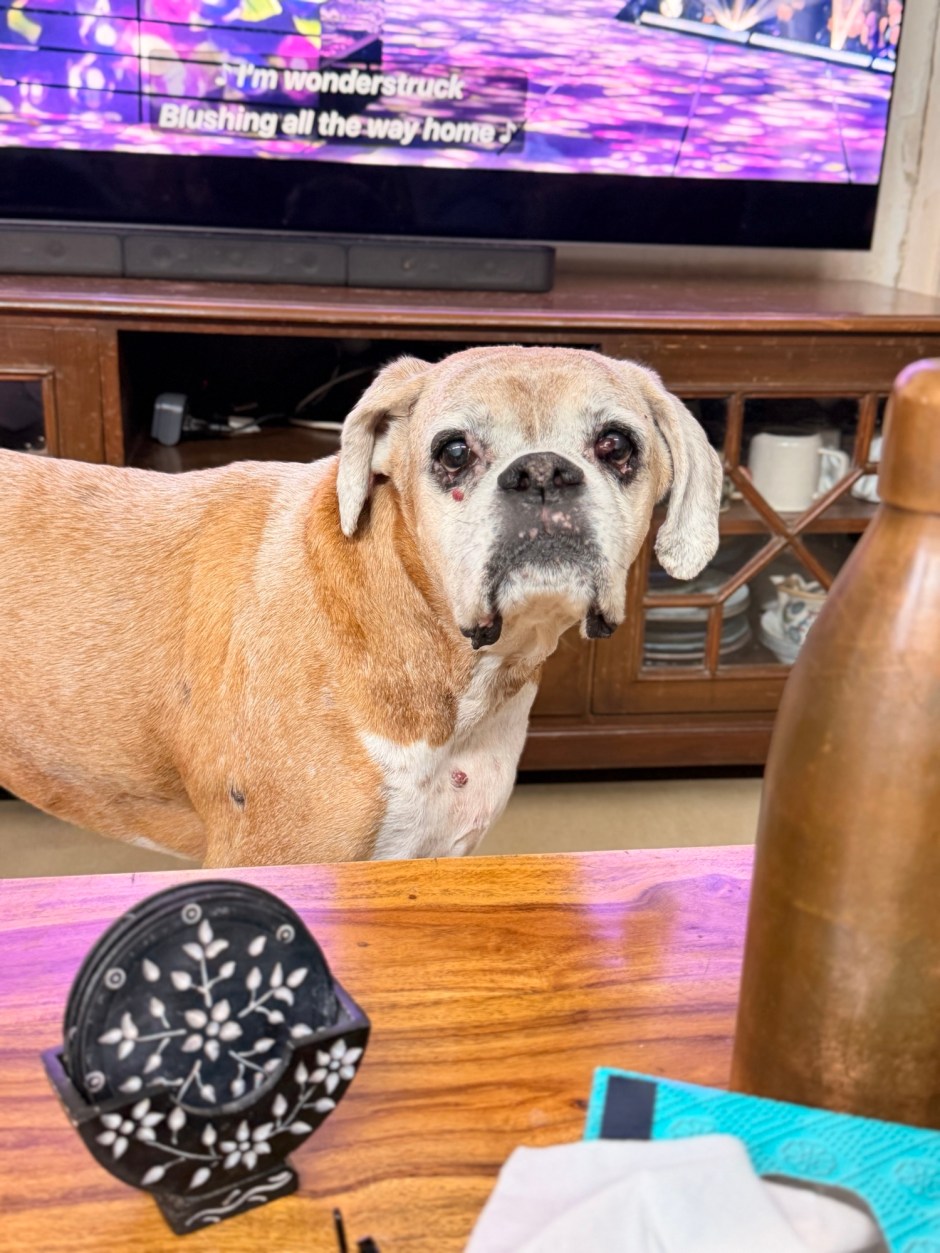
Zach has lymphoma. His body is changing in very specific ways.

He no longer walks much for pleasure. When we go downstairs, he does his job and immediately wants to come back home. Once standing, his hind legs still carry him — but they can no longer lift him up from the floor. I now have to help him stand. He can still rise from mattresses on his own, where the body remembers leverage and comfort.

This isn’t collapse.

It’s negotiation.

His day begins with Anand, who gives his medications without ceremony:

Morning

Pan 40 Uripet Intense Syrup – 5 ml Viusid – 7 ml Deep TBR Vibact Wysolone 20 mg Moxikind 625

Wounds are checked. Cleaned. Redressed. Anand waits for Zach to catch up with himself. There is no rushing a body that is learning its limits.

By afternoon, the watch passes to me.

I help Zach move when he needs to. I clean wounds again if required. I speak to him even when he doesn’t lift his head, because recognition does not need eye contact.

Today, while I was dressing one of his wounds, I stroked his cheek.

He lifted his left paw and placed it on my hand.

There was no weakness in it.

Just intention.

Something broke inside me then — completely and quietly.

But I didn’t cry.

Because he was watching.

And because sometimes love asks for stillness instead of collapse.

Evening

Uripet Intense Syrup – 5 ml Condrovet Dental Powder

Night

Uripet Intense Syrup – 5 ml Wysolone 20 mg Moxikind 625 Deep TBR Gabapentin 300 Vibact

At night, his hind legs fail him more often. I help him settle. I make sure he never feels abandoned by his own body.

Xena: Illness Without Surrender

Xena’s story is different — and that contrast is its own cruelty.

She has mast cell disease, now spread across her body. She has already been through multiple surgeries. I will not put her through more. Her eye carries a tumour growing into the third eyelid. Her chest has two large, problematic masses. The disease is everywhere — but her spirit has not retreated.

She is full of vigour.

She wants to play.

She wants to join Zuri. But she can’t. She has a large sore under her left paw that needs to be protected.

She hates it when I give Zuri the toy and barks ferociously, jealous as ever.

That jealousy is not a problem.

It is proof of selfhood.

Morning

Bladder Plus Wysolone 15 mg Cetirizine 10 Viusid – 6 ml

Her eye is cleaned gently. Drops and ointment are applied patiently. She is spoken to, not restrained. She is still herself.

Afternoon

Keppra 250 Famocid 20

She still wants her walks. I don’t let her decide the distance. I try and make peace with her energy.

Evening

Condrovet Omega Oil Dental Powder Cetirizine 10

Night

Bladder Plus Keppra 250 Cetirizine 10 Avil (pheniramine) Gabapentin 100 Wysolone 15 mg

At night, her eye now itches more. The tumour becomes restless when the house quietens. I will have to put a cone on her before bed — not as restraint, but as protection.

Tonight, because I was awake, I caught the bleeding in time.

If I hadn’t been —

I don’t know what might have happened.

That is why I stay awake.

What This Life Is — And Is Not

This is not denial.

This is not heroism.

This is not clinging.

This is two people refusing to let suffering arrive unaccompanied.

Zach is teaching me once again, how the body lets go before the heart does.

Xena is teaching me once again, how life can blaze even while it is failing.

I know how this ends. I have known for a while.

What I will not allow is panic, violence, or unnecessary intervention to steal what remains.

When the time comes — before pain, before fear, before indignity — I will let them go.

Until then, this is my work:

Following charts.

Measuring doses.

Lifting bodies.

Cleaning wounds.

Watching eyes through the night.

Holding paws when they ask.

Not crying when they are watching.

This is what love looks like at the end.

Not loud.

Not dramatic.

Just present.
Does My Vote Count?

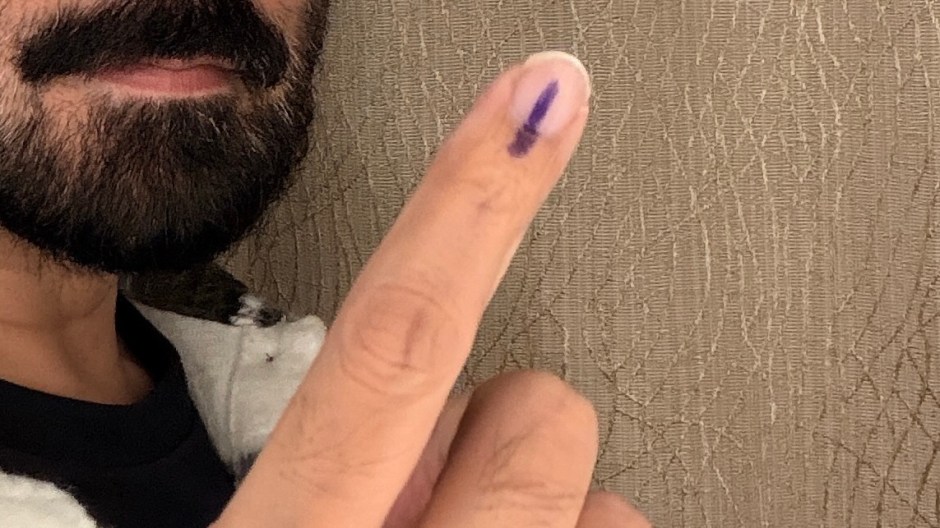
Today, Mumbai votes in the BMC elections.

And I almost didn’t go.

Not because I don’t care — but because I am exhausted by a society that has lost its moral compass, and by institutions that no longer protect the innocent — human or animal.

I am an animal lover.

And what I’m witnessing in this country — especially in my city — feels like a slow, sanctioned slide into brutality.

Stray animals are being turned into a convenient villain.

Dogs who have lived alongside humans for generations are suddenly being described as a “menace”, a “threat”, something to be eradicated. Not managed. Not cared for. Removed.

And this language is no accident.

It is the language of a society that no longer wants responsibility — only control.

Instead of investing properly in Animal Birth Control programmes, vaccination, civic education, and enforcement of existing animal welfare laws, we are watching a dangerous narrative take hold: that animals must disappear so humans can feel comfortable.

That is not civilisation. That is moral regression.

What has shaken me most is not social media hysteria — it is the Supreme Court of India itself.

Judges of the highest court — the very institution meant to protect the voiceless — are asking animal welfare advocates to “take the dogs home”.

As if compassion is a private hobby.

As if the state has no responsibility towards animals it has failed to manage humanely.

During hearings, judges made remarks about dog bites that were steeped in fear, prejudice, and anecdote, not evidence or constitutional values. One judge asked whether a person bitten by a dog would have to “live with that mental state for life”.

To which Menaka Guruswamy, an advocate fighting for animal rights, calmly replied that she herself had been bitten many times — and stood before the court in perfectly good health.

That response should have prompted reflection.

Instead, what followed felt plebeian, reactionary, and disturbingly dismissive of science, law, and empathy.

This is the same court that speaks eloquently about dignity and rights — yet seems willing to reduce animals to disposable nuisances to appease public anger.

If the highest court can be swept up by populist cruelty, where does that leave the rest of us? And the animals we care for?

Mumbai Is Being Strangled — And No One Is Listening

In my own city, the assault is everywhere.

Relentless construction has turned daily life into a health hazard.

Protected mangroves — our natural lungs and flood barriers — are being cut down in the name of “development”.

The air is toxic. Pollution has kept me sick for months. My entire family is unwell.

Walking is an obstacle course.

Pavements are dug up. Roads are cratered. Traffic screams into your face, horns blaring without pause.

I cannot walk my dogs properly.

Sometimes, I cannot walk myself.

And yet, when people complain, they are bullied into silence — reminded of the “powerful people” others know, the influence they wield, the consequences of speaking up.

I won’t even get into how trees from the Sanjay Gandhi Park were cut down years ago or how the Aravallis are now in danger. 

This is happening because there is no fear of the law anymore. Only machismo. Only intimidation.

Fear Is the Default State for Women

My mother and my sister live with fear — especially after dark.

Not abstract fear. Practical fear. The kind that makes you change routes, rush home, avoid confrontation, and stay quiet.

Women are not safe in this country.

And the most terrifying part is not crime — it is the belief that justice is reserved for those with money and power.

A woman was reportedly picked up outside a police station itself in Rajasthan — and nothing could be done.

If safety cannot be guaranteed there, what does law enforcement even mean?

Taxes Paid, Dignity Denied

I pay taxes — heavily.

And what do I get in return?

A city that makes you sick.

Institutions that sound cruel and careless.

A society eager to eliminate animals rather than confront its own failures.

A civic system where votes feel like deposits into a bottomless pit of corruption and indifference.

Every election promises change.

Every election delivers more money to those in power — crores of rupees were spent on the BMC elections right now — and more suffering to those without voice.

Including animals.

So Why Did I Vote?

Honestly?

I don’t know if my vote will change anything.

But not voting felt like surrender — and I am not ready to surrender my belief that compassion still matters, even if the world around me seems to be abandoning it.

This is not just about governance.

It is about who we are becoming.

A society is judged not by how it treats the powerful — but by how it treats the vulnerable.

And right now, we are failing — badly.

Pride Is A Protest

I am a citizen of India.

January is Pride Month in Mumbai. There will be marches, talks, performances, and celebrations across the city. And yet, if I am being honest, pride does not come easily to me anymore.

I feel unsafe.

I feel unseen.

I feel neglected — not only as a gay man, but as a citizen.

When I was growing up, I loved this country deeply. I carried a fierce sense of patriotism. In my twenties, after completing my Master’s degree, I had the opportunity to move abroad. I chose not to. I stayed back to take care of my mother, and because I genuinely believed India would grow into a place where people like me would belong fully. I believed I would rather be a first-class citizen here than a second-class one anywhere else.

I am fifty now. And very frankly, I am beginning to regret that decision.

In 2018, when Section 377 was read down, I was 43 years old. That means that for most of my adult life, I lived in a country where my existence was criminal. Legally speaking, I have had barely seven years of not being considered a criminal. Seven years is not liberation. It is survival with paperwork.

And even today, that legal change has not translated into lived equality.

I cannot open a joint bank account with my partner in most Indian banks. I cannot nominate him. I have no legal standing if something happens to either of us. He won’t be considered “next of kin” to wean me of life support – if it ever comes to that.

Civil unions are still being fought for in the Supreme Court. Marriage — entangled as it is with religion — feels like a distant and almost irrelevant dream.

So I ask myself: what does citizenship mean for someone like me?

I pay my taxes. For things I sell; for things I buy. I vote (with no hope). I follow the law. I live in a home I inherited — thankfully — because renting is almost impossible. As a gay man, doors shut quietly. As a single man, suspicion follows. As a single gay man with dogs, the conversation ends abruptly. Even families face illegal discrimination in rentals every day, and nothing happens. The law exists only on paper.

I have three dogs. They are my children. I cannot have children of my own, and I have chosen animals — gentler, kinder, better beings — as my family. My youngest was rescued from Chennai, with nowhere else to go. None of my dogs have ever harmed anyone. They have never bitten a soul. They ask for nothing except play, food, and love.

And yet, even this is contested.

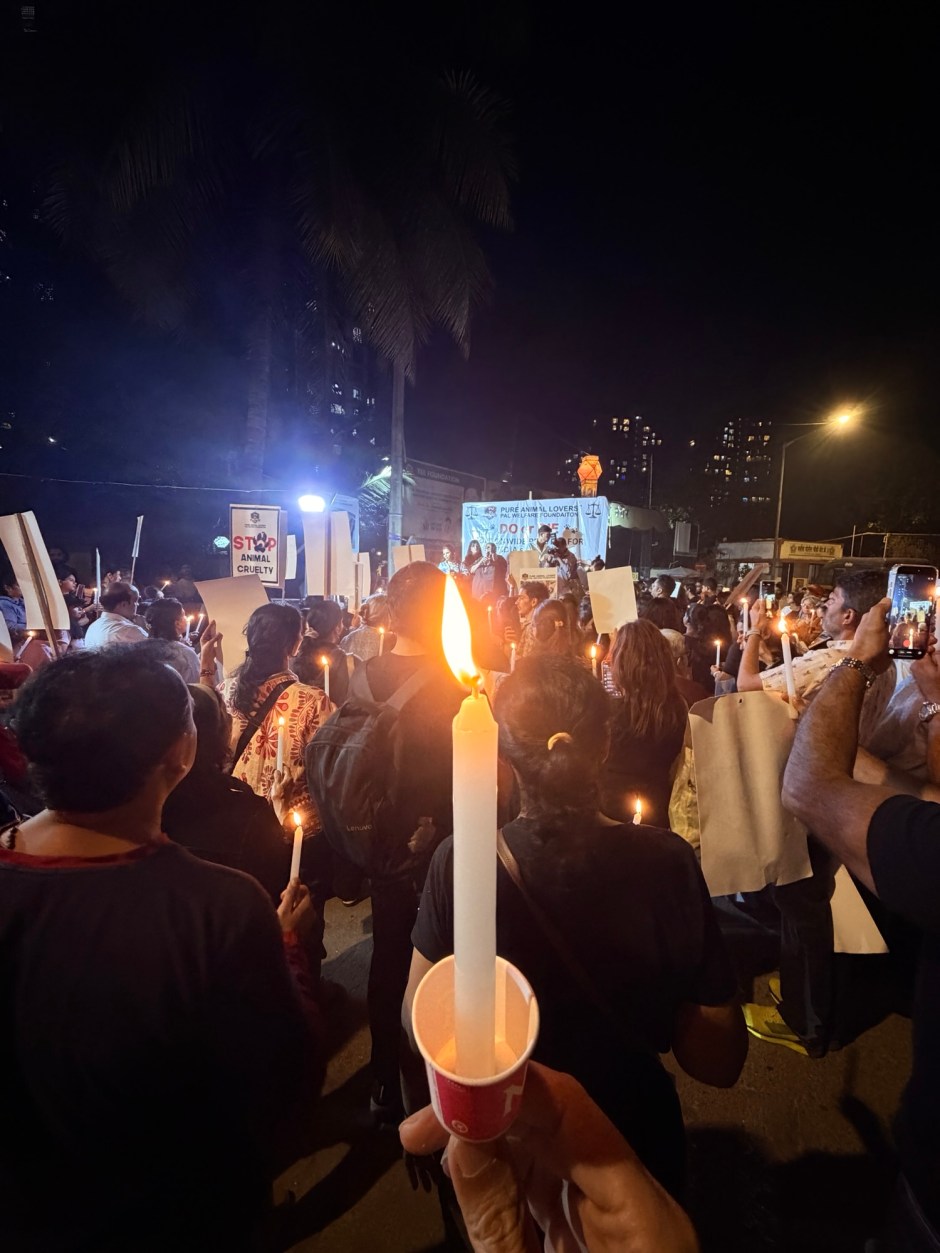
The Supreme Court has now turned its gaze on stray dogs — and on those of us who care for them. Feeders are harassed. Compassion is criminalised. Care is framed as inconvenience. I walked in protest on the 4th of January because silence, in moments like these, is violence.

At the same time, women in this country continue to be brutalised with terrifying regularity. Worse than the tapes are the cover ups that follow. Sickening. Children are raped and murdered. Just today, I read about a five-year-old girl assaulted and thrown from a building “for fun”. How does one carry pride alongside that knowledge?

Then there is the city itself.

Mumbai is choking. Pavements are blocked. Roads are gridlocked. Pollution is relentless. I cannot breathe properly. Last month alone, my medical bills crossed ₹10,000 — for chronic throat infections, doctors, medication. I am grateful I had my tonsils removed, or I would likely be hospitalised again. Delhi gasps for air. Indore reels under water contamination. Everywhere, the basics of life — air, water, safety — are compromised.

So I ask, without irony or melodrama:

What am I paying taxes for?

I have no civil rights as a gay man.

I have no health security as an individual.

I have no legal framework that protects my family.

Every day, I read something that scares me into wondering why I am still here.

And yet — I will celebrate Pride.

Not because I feel safe.

Not because I feel protected.

But because Pride has never been about comfort.

Pride is the hallmark of courage.

Before 2018, we lived in fear — but we lived like freedom fighters. We fought knowing exactly what we were fighting against. After 2018, the struggle did not end; it simply became quieter, more bureaucratic, more gaslit.

There is also something quietly sustaining about being part of a tribe — of walking alongside people who feel empathy, who understand why these fights matter. Marching together, standing in peaceful protest, reminds me that I am not entirely alone. That there are others who see what I see, feel what I feel.

I just wish we were enough to bring about real change.

Life feels bleak right now. I am filled with trepidation about what we have done to our world — and to one another. And yet, I am clinging to a fragile hope that things may still get better. I have to believe that they will. Because without that belief, resistance itself becomes impossible.

So this January, I will march.

I will protest.

I will ask for rights — for myself, for my community, for animals, for those who cannot speak.

I will do what I have always done.

Because Pride was never a party.

It was a demand.

And it still is.