I am a citizen of India.
January is Pride Month in Mumbai. There will be marches, talks, performances, and celebrations across the city. And yet, if I am being honest, pride does not come easily to me anymore.
I feel unsafe.
I feel unseen.
I feel neglected — not only as a gay man, but as a citizen.
When I was growing up, I loved this country deeply. I carried a fierce sense of patriotism. In my twenties, after completing my Master’s degree, I had the opportunity to move abroad. I chose not to. I stayed back to take care of my mother, and because I genuinely believed India would grow into a place where people like me would belong fully. I believed I would rather be a first-class citizen here than a second-class one anywhere else.
I am fifty now. And very frankly, I am beginning to regret that decision.
In 2018, when Section 377 was read down, I was 43 years old. That means that for most of my adult life, I lived in a country where my existence was criminal. Legally speaking, I have had barely seven years of not being considered a criminal. Seven years is not liberation. It is survival with paperwork.
And even today, that legal change has not translated into lived equality.
I cannot open a joint bank account with my partner in most Indian banks. I cannot nominate him. I have no legal standing if something happens to either of us. He won’t be considered “next of kin” to wean me of life support – if it ever comes to that.
Civil unions are still being fought for in the Supreme Court. Marriage — entangled as it is with religion — feels like a distant and almost irrelevant dream.
So I ask myself: what does citizenship mean for someone like me?
I pay my taxes. For things I sell; for things I buy. I vote (with no hope). I follow the law. I live in a home I inherited — thankfully — because renting is almost impossible. As a gay man, doors shut quietly. As a single man, suspicion follows. As a single gay man with dogs, the conversation ends abruptly. Even families face illegal discrimination in rentals every day, and nothing happens. The law exists only on paper.
I have three dogs. They are my children. I cannot have children of my own, and I have chosen animals — gentler, kinder, better beings — as my family. My youngest was rescued from Chennai, with nowhere else to go. None of my dogs have ever harmed anyone. They have never bitten a soul. They ask for nothing except play, food, and love.
And yet, even this is contested.
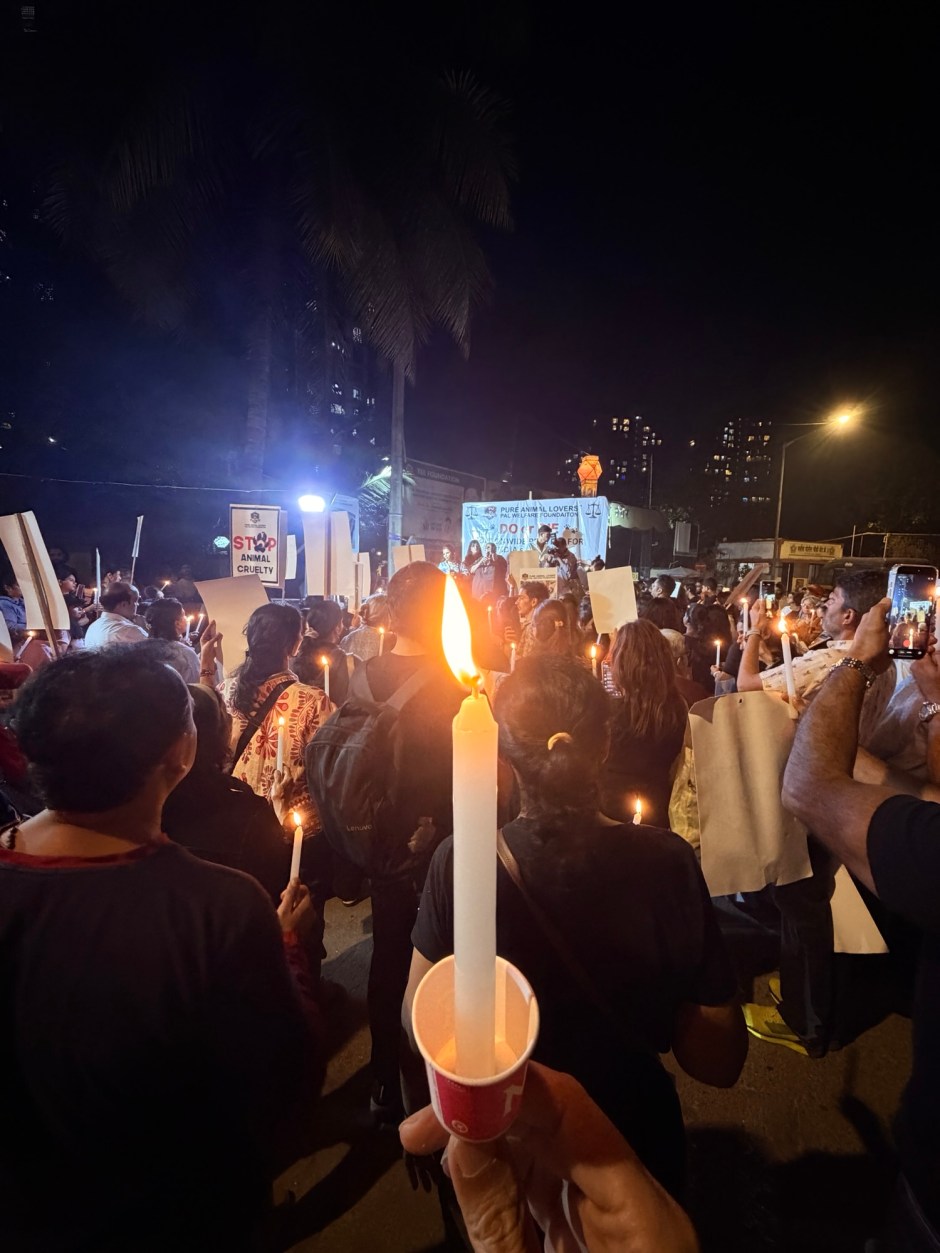
The Supreme Court has now turned its gaze on stray dogs — and on those of us who care for them. Feeders are harassed. Compassion is criminalised. Care is framed as inconvenience. I walked in protest on the 4th of January because silence, in moments like these, is violence.
At the same time, women in this country continue to be brutalised with terrifying regularity. Worse than the tapes are the cover ups that follow. Sickening. Children are raped and murdered. Just today, I read about a five-year-old girl assaulted and thrown from a building “for fun”. How does one carry pride alongside that knowledge?
Then there is the city itself.
Mumbai is choking. Pavements are blocked. Roads are gridlocked. Pollution is relentless. I cannot breathe properly. Last month alone, my medical bills crossed ₹10,000 — for chronic throat infections, doctors, medication. I am grateful I had my tonsils removed, or I would likely be hospitalised again. Delhi gasps for air. Indore reels under water contamination. Everywhere, the basics of life — air, water, safety — are compromised.
So I ask, without irony or melodrama:
What am I paying taxes for?
I have no civil rights as a gay man.
I have no health security as an individual.
I have no legal framework that protects my family.
Every day, I read something that scares me into wondering why I am still here.
And yet — I will celebrate Pride.
Not because I feel safe.
Not because I feel protected.
But because Pride has never been about comfort.
Pride is the hallmark of courage.
Before 2018, we lived in fear — but we lived like freedom fighters. We fought knowing exactly what we were fighting against. After 2018, the struggle did not end; it simply became quieter, more bureaucratic, more gaslit.
There is also something quietly sustaining about being part of a tribe — of walking alongside people who feel empathy, who understand why these fights matter. Marching together, standing in peaceful protest, reminds me that I am not entirely alone. That there are others who see what I see, feel what I feel.
I just wish we were enough to bring about real change.
Life feels bleak right now. I am filled with trepidation about what we have done to our world — and to one another. And yet, I am clinging to a fragile hope that things may still get better. I have to believe that they will. Because without that belief, resistance itself becomes impossible.
So this January, I will march.
I will protest.
I will ask for rights — for myself, for my community, for animals, for those who cannot speak.
I will do what I have always done.
Because Pride was never a party.
It was a demand.
And it still is.
 Hearts Still Care