I love the movie. I saw the late-night show. After the movie ended, the audience remained seated as the titles rolled. No one spoke and no one got up to leave, though it was well past 1 am. I came out with my partners from the theatre hall; all three of us were still silent as we got into the car and drove for a good 5 or so minutes without speaking a word.
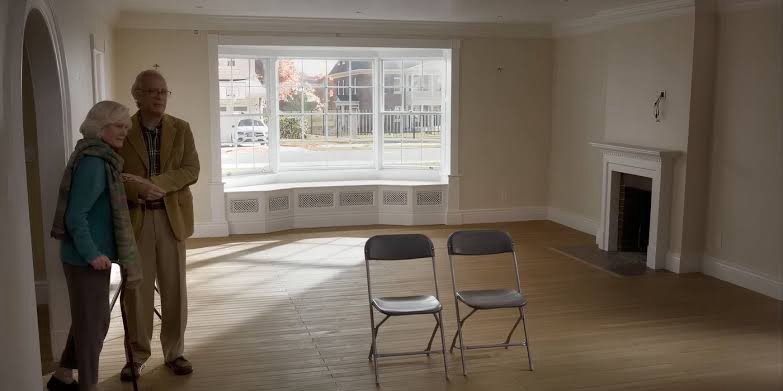
The beginning of the movie is absolutely charismatic. The way the journey through the ages is depicted is mesmerizing. The single, unmoving camera makes it feel as though we have a view into the lives of all those who passed through that house. It’s a surreal, almost voyeuristic experience. The final sequence takes your breath away—that’s when the camera finally moves, panning across, and we see the entire household. It’s almost like a vista of someone’s life opening up before you, and as the camera moves out into the garden and over the sky, giving a panoramic view of the house, it’s amazing. The sight of one kingfisher flying through the air connects ages that have passed. Time flies, time flies, time flies. The movie keeps reminding us of this phenomenon, beautifully captured by the stationary camera, bringing us through all those eras, memories, heartbreaks, bonds, happiness, and sadness—all merging into one big experience. And with the title itself, the director asks you to live in the “here and now”!
In crafting Here, director Robert Zemeckis described how, from the very beginning, every member of the crew had to “commit to the language of the movie.” For Zemeckis and his cinematographer Don Burgess, this meant filming from a single, fixed point, with every bit of set dressing needing to be “right where it needs to be—not just for one scene but for every scene.” The challenge of shooting all the scenes within a single view turned out to be more difficult than anyone anticipated, with Zemeckis calling it “the hardest movie any of us have ever made.” The decision to shoot in a taller 1.85:1 aspect ratio added further complexity, as the team had to spend three months experimenting with lenses to find the one that would best suit the film’s vision. Zemeckis, who famously incorporates active camerawork and computer graphics into his films, noted how his experience with technically complex shots in Contact and What Lies Beneath ultimately prepared him for the restrictions he embraced in Here.
The film drifts through time, shifting from pre-independence America, colonial America, the early 1900s, the Great War, World War II, the Vietnam War, and the Covid pandemic. It moves in a way that sometimes reminds me of a stream of consciousness—flickering between experiences and capturing how the mind flows from one memory to the next. The film doesn’t shy away from portraying the tough conversations that come up in life. One especially poignant scene features a Black father talking to his son about how to stay safe if ever pulled over by the police—a piece of writing that’s terribly heartbreaking, especially because it’s still so pertinent here and now in the lives of people of colour.
The storyline interweaves elements like the Native American experiences, and her necklace that is found centuries later, beautifully connecting different eras. It shows that the nostalgic pieces we leave behind can be a bridge, letting future generations wonder and try to understand the experiences of all those who lived before them.
This movie stirred up a lot of nostalgia in me because I connect so deeply to the homes I’ve lived in. I spent my childhood in a joint household much like the Youngs’, where my grandparents, aunts, uncles, and my parents lived together with us. So many experiences in the movie echoed my own, like the scene where John and Pauline’s daughter stands before the window as Pauline lifts her bags, planning to leave the house. The daughter wistfully says, “I will miss this house.” That moment took me right back to my own childhood home, where I still remember waving to my grandmother as we left. My mother’s experience was quite like Pauline’s, but mine was like the daughter’s. It was an instant connect.
The film’s use of “panels” within each scene adds an evocative layer to the storytelling. Zemeckis explained that these panels were intended to create subtle shifts between scenes, allowing one moment to blend naturally into the next, like the scene where the Beatles first appear on The Ed Sullivan Show, leading into the wedding scene of Wright and Hanks. These transitions, Zemeckis said, weren’t in the script because they would “make the reader’s head explode,” but they were “refined throughout” the film to bring the audience effortlessly from one era to the next. Editing Here became a significant, unexpected challenge. As Zemeckis explained, “You wouldn’t think it would be. You say, ‘Oh, well, aren’t you going to just cut the slates off and assemble everything?’ Well, right? No, that can’t happen.” Each panel’s timing and pacing required intricate care, making the editing process an “elaborate chore.”
The performances are deeply compelling, with the cast delivering authentic, nuanced portrayals that evoke genuine emotion. The dialogue is written with such care, sparking both introspection and connection.
What sets Here apart is its ability to capture the essence of time and memory, weaving them seamlessly into a narrative that feels universal yet personal. The film lingers with you long after the credits roll, as I mentioned earlier, inspiring reflection and conversation. It’s the kind of movie that challenges conventions and speaks to a collective consciousness—a testament to the power of storytelling and its ability to remind us of the profound moments found in the everyday.
The acting in the movie was more than exemplary, but that’s what you expect in a movie by Robert Zemeckis. I was looking forward to this movie, and I was not disappointed in the least. There were several moments that touched me: the scene where Hart’s daughter speaks about missing the house, the story of Alan and Rose, and especially the scene where the housekeeper Raquel dies of Covid. And the very, very last scene, where the camera closes in on the faces of Tom Hanks and Robin Wright as she says, despite all the tears she has shed in that house, just how much she loved it—how much I truly loved it here.
 Hearts Still Care