
Change

It started with me observing my father. He was an alcoholic. No matter what anyone told him—his mother, his sisters, his wife (my mother)—he just wouldn’t let go of the drink. He would promise us he’d quit, and for a week or two we would believe him. And then he’d start again. The disappointment would settle in all over again, and everyone’s heart would quietly break.

As I grew up, I came to a painful realisation: people don’t really change. What we call change is often just a layer of polish applied to the same underlying self. We are social animals, and in order to survive in society, we pretend to adapt, to evolve. We pretend for jobs, for families, for relationships. But at the core, the essence of who we are remains untouched.

People often say things like, “You’ve changed,” or even the opposite, “You’ve not changed at all.” They might be talking about your physical appearance, your personality, or the way you react to the world. Personally, I feel I haven’t changed much at all. My beliefs, my sensitivities, my emotional responses—they’re more or less what they were when I was a teenager.

What has changed is not me, but how I cope. Life has toughened me. Society has handed me situations that have demanded survival and response. I’ve learned to better manage my emotions, to recognise patterns, to pre-empt reactions. But the wound still hurts.

For example, when I was teased in school or college, it devastated me. I would carry those words home and let them sit like shame on my shoulders. Even today, if someone says something cruel, it cuts me. The difference is, I’ve learned how to respond. I don’t lash out. I try to understand where the other person is coming from—their insecurities, their unresolved pain. This has helped me understand others better, but more importantly, it’s helped me understand myself.

But that doesn’t mean I’ve changed. It just means I’m more prepared for the inevitable blows. I still feel the sting—I’ve just learned how to wear armour.

A friend of mine once said, “Change is the only constant. If you don’t change, you can’t grow.” But I find myself wondering—what is growth, really? Are we talking about the physical changes in our body, the slow disintegration of the flesh as wrinkles deepen, as the eyes dull and the heart grows heavier? Or are we talking about spiritual or emotional maturity, and if so, how much of that is truly transformation and not just better performance?

Jean-Paul Sartre once wrote, “Man is nothing else but what he makes of himself.” But what if we keep making ourselves from the same mould, over and over again, just dressing it differently each time?

There’s a strange sort of permanence to us. Statues carved millennia ago have worn down over time, but they still stand. The ideas behind them still stand. The people they represent may be long gone, but their essence—what they symbolised—still survives. And I believe that’s true for people too.

So why do we expect people to change?

If your partner has lied to you once, chances are, he’ll lie to you again. And we know that. Yet we hold on to the hope that “this time” will be different—because we want to believe that love changes people, that commitment and loyalty make them better. But the truth is, if we truly love them, we may also have to learn to love them with their flaws.

Of course, there are limits. There are lines that must not be crossed. And those lines are different for each of us. That, too, is part of who we are. So if I choose to forgive a liar, that’s because of who I am. And if I choose not to, that’s also because of who I am.

Our choices, our tolerances, our reactions—they don’t show how much we’ve changed. They show how well we know ourselves.

So how do we break this cycle? How do we stop spinning the same wheel? Maybe we don’t. Maybe all we can do is try to be better—not necessarily different, just better. Try not to hurt others, even if we end up hurting ourselves. That kind of self-restraint is difficult. It’s a discipline.

But perhaps the real point is this: you have to accept who you are. You don’t need to constantly reinvent yourself just to meet someone else’s idea of growth. It’s enough to live in your own skin—even as it fades, wrinkles, and grows weary.

Your DNA doesn’t change. No amount of therapy or cosmetic surgery or self-help books can replace that essential code of being.

As Albert Camus said, “Man is the only creature who refuses to be what he is.”

And maybe that’s the problem. We refuse to accept ourselves. We glorify change and call it growth, but what if we’re simply resisting the truth of who we are? Maybe real growth isn’t about becoming someone else—it’s about finally becoming okay with being yourself.

So no, people don’t change. Not really.

The trick is to just learn how to live with one’s self.
When Sinners Preach Sanctity

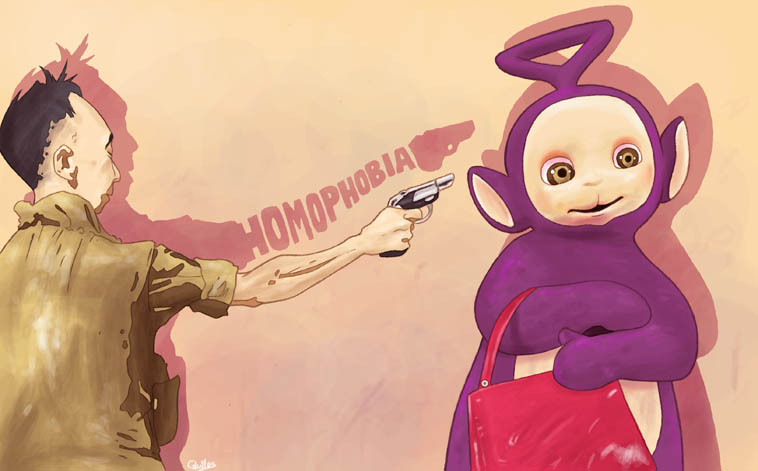
Religious faith has long been considered a moral compass, guiding individuals on how to live righteous lives. Yet, history and modern reality prove that some of the most vocal defenders of religious purity are also the worst offenders of the very principles they claim to uphold.

From conservative Hindutva proponents who are secretly gay to Muslim men leading double lives, from Christian priests accused of sexual abuse to ultra-Orthodox Jewish leaders involved in scandals—this hypocrisy is not exclusive to any one faith. It is a pattern seen across religions, where individuals who should be champions of morality use their power and influence to condemn others while indulging in the very acts they claim to oppose.

As an openly gay man who values honesty—especially with those I love—I find this behaviour deeply reprehensible. Not because people struggle with faith and identity (many do), but because these individuals actively harm others to maintain their false facade of righteousness.

In India, the rise of right-wing Hindutva ideology has led to an aggressive push for so-called “traditional values,” often at the expense of LGBTQ+ rights. Ironically, many of the most vocal proponents of this ideology are themselves closeted gay men who weaponise religion to mask their own identity. Reports have surfaced of right-wing influencers and politicians using gay dating apps like Grindr while simultaneously advocating for laws and policies that suppress queer visibility. Instead of standing in solidarity with LGBTQ+ individuals, they become enforcers of homophobia, believing that condemning others will prevent scrutiny of their own lives.

In deeply conservative Muslim communities, homosexuality is often criminalised or considered a grave sin. Yet, time and again, stories emerge of married Muslim men engaging in same-sex relationships in secret while maintaining a facade of religious piety. Some of these men actively promote patriarchal religious norms, oppressing women and policing public morality while secretly violating the very rules they impose on others. Their hypocrisy is glaring—they demand the privilege of secrecy while ensuring that openly queer people face persecution.

Perhaps the most well-documented example of religious hypocrisy comes from Christianity, particularly within the Catholic Church. The Vatican has faced countless allegations of sexual abuse by priests, bishops, and even cardinals—men who preach celibacy and moral purity yet have used their positions of power to exploit the vulnerable. The systemic cover-up of these crimes, where the Church has moved abusive priests instead of holding them accountable, is a testament to how religious institutions prioritise image over integrity. Evangelical preachers in the U.S. have also been caught in scandals involving extramarital affairs, drug use, and financial fraud—all while condemning homosexuality and “immorality” in public sermons.

The ultra-Orthodox Jewish community, known for its rigid religious laws, has also had its share of hypocrisy. Reports have surfaced of rabbis involved in sexual abuse cases, often targeting young boys or vulnerable women within their own communities. Despite strict religious codes governing gender segregation, modesty, and sexual behaviour, some of these leaders have abused their positions while continuing to enforce these restrictive rules on others.

As someone who has chosen to live openly, I find this behaviour unacceptable. The issue isn’t that people struggle with faith and identity—many LGBTQ+ individuals grapple with religious teachings that condemn them. The problem arises when, firstly, They betray the communities they belong to. Instead of standing with other queer people who are fighting for acceptance, they work against them, reinforcing homophobic narratives to protect their own secrets. Secondly, when they uphold oppression while privately benefiting from the freedoms they deny others. Openly queer individuals must fight for their right to exist, while these hypocrites live their truth in secret and then turn around to punish those who do so openly. Finally, when they use religion as a tool of control rather than personal faith. Instead of questioning outdated doctrines, they weaponise them to maintain their power and influence.

Faith and identity do not have to be at odds. Many queer people find ways to reconcile their spirituality with their truth. But doing so requires honesty, not deception. The real moral failure is not in being gay, struggling with faith, or questioning religious doctrine—it is in preaching one thing while living another, in punishing others for sins you yourself commit, and in using religion as a shield for your own hypocrisy.

True morality is not about pretending to be virtuous—it is about having the courage to live authentically, even when it is difficult. Those who continue to live a lie while condemning others will eventually be exposed. And when they are, they will not be remembered for their faith, but for their betrayal.

Echoes

Lately, I find myself thinking back to my childhood—revisiting the past with a heart full of nostalgia, retracing the steps of a boy who once ran through the quiet lanes of Bandra. I remember those early mornings, the world bathed in golden sunlight, the short shrubs lined with tiny yellow flowers, and the delicate butterflies that flitted about, as if they were playing a game only they understood. There were four of us, my little gang of friends, always running, always laughing, revelling in the boundless joy that childhood so effortlessly bestows.

Perhaps I see it all now through rose-tinted glasses. Perhaps memory is kinder than reality was. But these moments are etched so deeply in my subconscious that they come back to me in vivid detail—the sunlight filtering through the trees, the movement of the butterflies, the thrill of being young and free.

Some memories stand out more than others. I can still see myself sitting in a classroom at St. Theresa’s High School. I don’t even remember which standard I was in, but I distinctly recall gazing out of the window and seeing the church steeples in the distance. A quiet moment of peace, a scene so simple yet so deeply comforting. Then there was the time I sat on my friend Virginia’s balcony, lost in thought, filled with anticipation for the day ahead—our trip to the beach. The sheer joy of that moment, the excitement of what was to come, is still so tangible in my mind.

And then there was my friend Sarvar’s house. He lived on the fifth floor, which, to me, felt like an extraordinary height. Having lived on the first floor all my life then, standing on his balcony and gazing out was an experience in itself. From there, I could see the TV tower at Worli, standing tall in the distance. In those days, Bandra had no high-rises, so the view was uninterrupted, stretching all the way to Worli. I can’t imagine that happening now—for any child to stand on a fifth-floor balcony and see as far as I did. The world has changed.

But then, doesn’t every generation say this? Doesn’t every generation look back with nostalgia, tinged with a quiet ache for what was? I understand now why memory is so important. It anchors us, reminds us of who we were, where we came from, and what once brought us joy.

Perhaps these thoughts have surfaced because my cousin sister has come to stay in Santa Cruz after a long time. She is the only member of my extended family whom I am still close to. I have lost so many over the years, and with her presence, old memories resurface, unbidden yet welcome. Every time I step out of my house, walking with the children through roads now choked with traffic, pollution, and relentless construction, I think back to a time when the sunlight touched the ground unfiltered, when the air was clean, when the fog in the mornings was not the result of smog but of nature’s own quiet magic—warm days, cool mornings, and nights filled with nothing but stillness.

I know I will never get those days back. Life moves on, things change, people leave. But memories remain. And in them, for a brief, beautiful moment, I can return to the lanes of my childhood, where the yellow butterflies still dance in the morning light.