When Sinners Preach Sanctity

Religious faith has long been considered a moral compass, guiding individuals on how to live righteous lives. Yet, history and modern reality prove that some of the most vocal defenders of religious purity are also the worst offenders of the very principles they claim to uphold.

From conservative Hindutva proponents who are secretly gay to Muslim men leading double lives, from Christian priests accused of sexual abuse to ultra-Orthodox Jewish leaders involved in scandals—this hypocrisy is not exclusive to any one faith. It is a pattern seen across religions, where individuals who should be champions of morality use their power and influence to condemn others while indulging in the very acts they claim to oppose.

As an openly gay man who values honesty—especially with those I love—I find this behaviour deeply reprehensible. Not because people struggle with faith and identity (many do), but because these individuals actively harm others to maintain their false facade of righteousness.

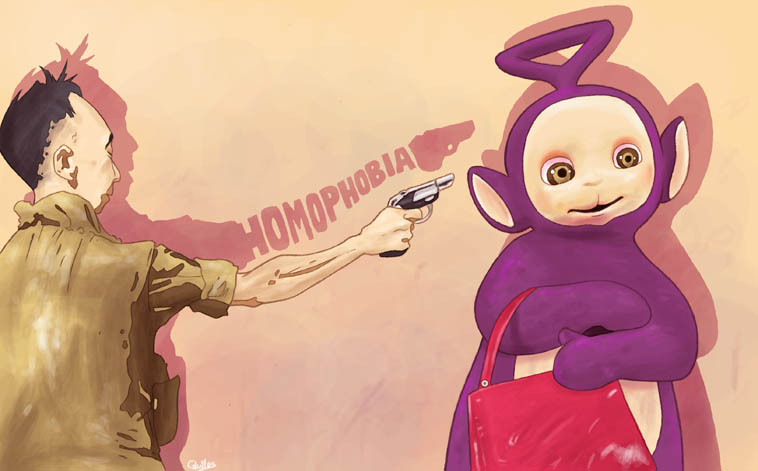
In India, the rise of right-wing Hindutva ideology has led to an aggressive push for so-called “traditional values,” often at the expense of LGBTQ+ rights. Ironically, many of the most vocal proponents of this ideology are themselves closeted gay men who weaponise religion to mask their own identity. Reports have surfaced of right-wing influencers and politicians using gay dating apps like Grindr while simultaneously advocating for laws and policies that suppress queer visibility. Instead of standing in solidarity with LGBTQ+ individuals, they become enforcers of homophobia, believing that condemning others will prevent scrutiny of their own lives.

In deeply conservative Muslim communities, homosexuality is often criminalised or considered a grave sin. Yet, time and again, stories emerge of married Muslim men engaging in same-sex relationships in secret while maintaining a facade of religious piety. Some of these men actively promote patriarchal religious norms, oppressing women and policing public morality while secretly violating the very rules they impose on others. Their hypocrisy is glaring—they demand the privilege of secrecy while ensuring that openly queer people face persecution.

Perhaps the most well-documented example of religious hypocrisy comes from Christianity, particularly within the Catholic Church. The Vatican has faced countless allegations of sexual abuse by priests, bishops, and even cardinals—men who preach celibacy and moral purity yet have used their positions of power to exploit the vulnerable. The systemic cover-up of these crimes, where the Church has moved abusive priests instead of holding them accountable, is a testament to how religious institutions prioritise image over integrity. Evangelical preachers in the U.S. have also been caught in scandals involving extramarital affairs, drug use, and financial fraud—all while condemning homosexuality and “immorality” in public sermons.

The ultra-Orthodox Jewish community, known for its rigid religious laws, has also had its share of hypocrisy. Reports have surfaced of rabbis involved in sexual abuse cases, often targeting young boys or vulnerable women within their own communities. Despite strict religious codes governing gender segregation, modesty, and sexual behaviour, some of these leaders have abused their positions while continuing to enforce these restrictive rules on others.

As someone who has chosen to live openly, I find this behaviour unacceptable. The issue isn’t that people struggle with faith and identity—many LGBTQ+ individuals grapple with religious teachings that condemn them. The problem arises when, firstly, They betray the communities they belong to. Instead of standing with other queer people who are fighting for acceptance, they work against them, reinforcing homophobic narratives to protect their own secrets. Secondly, when they uphold oppression while privately benefiting from the freedoms they deny others. Openly queer individuals must fight for their right to exist, while these hypocrites live their truth in secret and then turn around to punish those who do so openly. Finally, when they use religion as a tool of control rather than personal faith. Instead of questioning outdated doctrines, they weaponise them to maintain their power and influence.

Faith and identity do not have to be at odds. Many queer people find ways to reconcile their spirituality with their truth. But doing so requires honesty, not deception. The real moral failure is not in being gay, struggling with faith, or questioning religious doctrine—it is in preaching one thing while living another, in punishing others for sins you yourself commit, and in using religion as a shield for your own hypocrisy.

True morality is not about pretending to be virtuous—it is about having the courage to live authentically, even when it is difficult. Those who continue to live a lie while condemning others will eventually be exposed. And when they are, they will not be remembered for their faith, but for their betrayal.

A Tribute on Women’s Day

I was born into a family of women. Strong, resilient, extraordinary women. My father was a nonstarter—an abusive alcoholic who checked out of his responsibilities early. My paternal uncle, a brilliant painter, struggled with schizophrenia and spent most of his life lost in his own world. Neither of them held jobs. The real backbone of our family was my aunt, Harwant Kaur.

And before her, there was my grandmother—a woman who knew struggle from the moment she was born. She lost her family and home to Partition, only to marry a man who could never truly love her. My grandfather, a chemical engineer, had been married before, and when his first wife died, his grief never left him. My grandmother was left in the shadow of that loss. She gave him four children, but when he died young, she was just 26, left alone to raise six children with nothing but sheer determination.

Her husband’s property was taken from her by her own relatives. She fought for years in court while her two daughters—Rajinder and Harwant—held the family together from a young age. These women didn’t just survive; they built a life from nothing.

My mother followed a similar path of resilience. She married my father at 19, and within a few years, her dreams were crushed under the weight of his addiction. He lost his job, never worked again, and she became the sole provider for our family. But unlike the generations before her, she made a different choice—she saved, she invested, and she bought a home in Mumbai. She was the only one in the family who took that financial leap, ensuring that we had a roof over our heads.

My sister, too, grew up carrying the weight of our family’s trauma. She married late in life and tried hard to fit into a society that often demands more from women than it does from men. But through everything, she stood by me. I am gay, and I chose to live life on my own terms. I came out at 16 to my aunt and my mother, and by 19, the entire family knew. If it weren’t for their support, life would have been much harder. They loved me unconditionally, and that is a testament to the kind of women they were—women who gave love despite their own battles, who stood by their family even when life gave them every reason to walk away.

Today, my mother is the only surviving member of that generation. She has made her own mistakes, as we all do, but she gave us a home and security in a world that offered her none. I only wish people today were more aware of the psychological effects of abuse on children. She tried her best to protect us, but I still slipped through the cracks. I manifested my pain as depression and anxiety, but I survived. And through it all, these women remained my strength.

Beyond my immediate family, my world has always been full of women. My extended family consists mostly of cousin sisters. I have no cousin brothers, except for those who are three times removed. So, I have always seen the world through the lens of women—brilliant, gracious, strong, determined, independent women. They taught me how life works.

Growing up, I didn’t just admire them—I wanted to be them. As a child, I dressed up in women’s clothes, put on makeup, and embraced femininity. I wanted to be interesting. I wanted to be strong. I had no male role models to look up to, no one to shape my understanding of masculinity. Instead, I saw these empowered women around me and thought, This is who I want to be.

At the same time, I longed for the love of men—because I was gay. It took me years to unlearn the rigid ideas of masculinity and femininity that society imposed on us. I realised I didn’t have to choose between being strong and being soft, between being masculine and embracing the femininity I admired. I could simply be me. Fluid. Beautiful. Whole. And I understood that gender roles were nothing but illusions—because the strongest, most “manly” people I had ever met were women.

Even in the world of cinema, my inspirations were powerful women. Marilyn Monroe, Sophia Loren, Gina Lollobrigida, Asha Parekh—women who defied expectations, who owned their space, who lived on their own terms. Even today, I find films without strong female characters dull and lifeless. Ocean’s 11 and Ocean’s 12 were only interesting because of Julia Roberts and Catherine Zeta-Jones. Julia Roberts remains one of my favourites—an epic woman in every sense. Marilyn Monroe shaped my ideology of beauty, elegance, and tragedy. And then there was Princess Diana—a woman I adored, who captivated the world and paid the price for being extraordinary. It always struck me that so many empowered women lead tragic lives, and I’ve often wondered why.

I think we, as a society, need to be kinder. We need to stop assigning rigid roles to men and women. There should be no rules dictating how a man should behave or how a woman should live. The lines between masculinity and femininity need to blur because, in truth, we are all fluid in our own way.

The women in my life have done everything men were “supposed” to do—and they did it beautifully. They ran households, fought battles, made sacrifices, and carried entire families on their shoulders. If strength is defined by resilience, then women have been stronger than most men I’ve ever met. And I hope that in my own way, I have lived up to their example.

So, on this Women’s Day, I honour them. I honour my grandmother, my mother, my aunts, my sister, and every woman who has shaped me. I honour the women who inspired me, the ones I grew up watching on screen, and the ones who continue to challenge the world.

And I honour myself—not because I give them all the credit for who I am, but because I, too, have fought my battles. I have faced my own demons, stood my ground, and remained true to myself. Yes, I have been shaped by the women around me, but I have also built my life through my own character and my own determination.

Women have spent generations fighting for the right to exist beyond definitions, beyond limitations. And I celebrate them for it. Because, truly, without them—where would humanity be?

Gen X

Born in the hazy summer of ’75, I straddle two worlds. A world where whispered secrets in hushed tones were the currency of connection, and the digital roar of today. A world where a clumsy fumble for the right cassette tape was the soundtrack to a Friday night, and now, instant access to any song ever conceived is at my fingertips. This liminal space, this bridge between the analogue and the digital, has shaped me, challenged me, and ultimately, liberated me. But my journey has been deeply marked by personal struggles, too, struggles that were often silenced in the pre-internet era.


Growing up, life wasn’t always easy. Being different in a less accepting time meant enduring the sting of prejudice, the isolation of feeling like an outsider. My father, a man of the Boomer generation, struggled to understand my sexuality. His alcoholism fuelled a volatile temper, and from the ages of 13 to 19, my home became a battleground. Physical and emotional abuse were a regular occurrence, a brutal consequence of his inability to accept who I was. These were wounds, both visible and invisible, that I carried in silence. In my generation, such experiences were often endured privately. We believed, or were led to believe, that this was simply “the way things were.” There was no readily available support network, no online community to offer solace or share similar experiences. Interpersonal relationships were forged in the crucible of face-to-face interactions, often fraught with the anxiety of revealing my true self, a self that was deemed unacceptable by my own father.


It was my sister, bless her open-minded heart, who offered a glimmer of understanding. She recognised that my sexuality was not something to be controlled or condemned. The women in my family, too, showed a degree of acceptance, though often tinged with a grudging tolerance rather than the wholehearted embrace that Gen Z enjoys today. Their acceptance, while appreciated, lacked the open-minded celebration of difference that now seems more commonplace. It was a different time, a time when even well-meaning individuals struggled to fully comprehend the complexities of sexual identity. Even my sister’s acceptance, though genuine, proved to have its limits. Years later, in my 40s, as she prepared for her wedding, she asked me to hide my sexuality for the sake of her in-laws. This request, from someone I considered an ally, cut deeply. It was a stark reminder that even those closest to us can sometimes falter when faced with societal pressures. It highlighted the subtle but pervasive homophobia that still existed, even within my own family. It was a painful lesson in conditional acceptance, a reminder that the fight for true equality was far from over. It was a blow, a betrayal of sorts, that echoed the silent acceptance of abuse that I had witnessed in my youth. But in my 40s, I had found my voice. I had learned to value my authentic self above all else. I told her, with a firmness born of years of struggle and self-discovery, that if I couldn’t be accepted for who I was, I would not be attending her wedding.


Ironically, it’s technology that has, in many ways, given me my voice. The internet, for all its flaws, has provided a platform to connect with like-minded individuals, to find community, to celebrate diversity. It has allowed me to explore my identity, to find my tribe, to finally feel seen and heard. In my early 20s, as the internet began to emerge, I tentatively sought connection, a lifeline to others who understood. It wasn’t easy. Access to gay media, information about gay lifestyles, and a broader understanding of how inclusive work cultures should function was limited. But even then, the seeds of connection were being sown. I found support, albeit in smaller measures, and began to understand that I wasn’t alone.
This generation, Gen Z, with their fluid identities and fearless self-expression, inspires me. Their willingness to challenge norms and push boundaries reflects a world I longed for as a child, a world where difference is celebrated, not condemned. They are the change, the adaptation, and I admire them for it. While I know they face their own battles against bigotry – for prejudice sadly persists – the ability to find support and community online is a powerful tool they wield, a tool we lacked in my youth.


The Millennials, perhaps, are the truly lost generation. Caught between the analogue world of my youth and the digital explosion of Gen Z, they seem to be a transitional generation, navigating a world in constant flux. For those of us born in the mid-70s, the change was gradual. We adapted slowly, absorbing the new technologies as they emerged. We experienced the world before the internet, and we witnessed its birth and evolution. This gradual transition allowed us to integrate the digital world into our lives without losing touch with the values and experiences of our past. It also gave us time to process and understand the changing social landscape, including evolving attitudes towards sexuality and gender identity. My own journey of understanding and self-acceptance was intertwined with this gradual shift. Through my studies in psychology and English literature, I began to understand the importance of empathy, acceptance, and celebrating diversity, lessons that were often hard-won in my personal life.


My 40s, finally, became my decade. It was a time of self-acceptance, of embracing my identity without apology. The scars of the past, though still present, no longer defined me. I learned to set boundaries, to refuse to tolerate disrespect, to live authentically and unapologetically. This newfound confidence, this refusal to “take shit from anybody,” is a product of my journey, a journey that spans the analogue and digital worlds, a journey that has taught me the true meaning of resilience and self-love. It’s a journey that has also taught me the importance of forgiveness, not necessarily for those who have hurt us, but for ourselves, to allow us to heal and move forward.


We, the generation born between ’69 and ’82, are indeed a unique breed. We are the bridge between two worlds, fluent in the languages of both. We remember the crackle of the radio and the flickering glow of the television, but we also understand the power of the internet and the potential of virtual reality. We value tradition, but we also question and challenge, driven by reason and critical thinking. We have seen the world change dramatically in our lifetimes, and we have adapted and evolved along with it. We understand where we come from, and we have a unique perspective on where we are going. Perhaps, then, it is our generation that is best equipped to lead, to guide, to bridge the gap between the past and the future.