When Sinners Preach Sanctity

Religious faith has long been considered a moral compass, guiding individuals on how to live righteous lives. Yet, history and modern reality prove that some of the most vocal defenders of religious purity are also the worst offenders of the very principles they claim to uphold.

From conservative Hindutva proponents who are secretly gay to Muslim men leading double lives, from Christian priests accused of sexual abuse to ultra-Orthodox Jewish leaders involved in scandals—this hypocrisy is not exclusive to any one faith. It is a pattern seen across religions, where individuals who should be champions of morality use their power and influence to condemn others while indulging in the very acts they claim to oppose.

As an openly gay man who values honesty—especially with those I love—I find this behaviour deeply reprehensible. Not because people struggle with faith and identity (many do), but because these individuals actively harm others to maintain their false facade of righteousness.

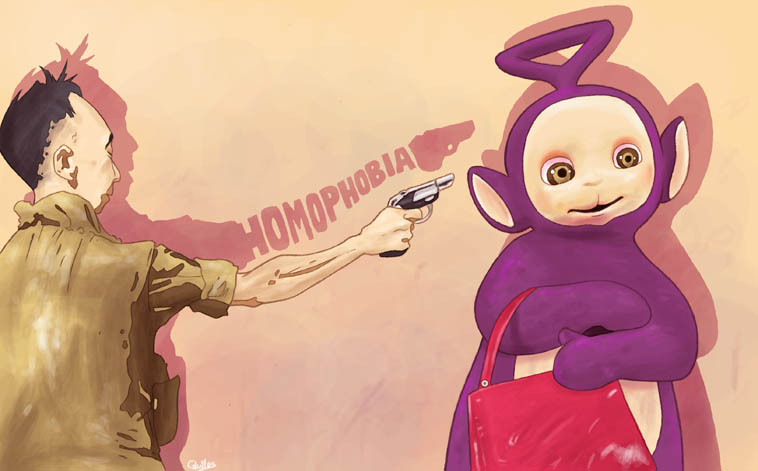
In India, the rise of right-wing Hindutva ideology has led to an aggressive push for so-called “traditional values,” often at the expense of LGBTQ+ rights. Ironically, many of the most vocal proponents of this ideology are themselves closeted gay men who weaponise religion to mask their own identity. Reports have surfaced of right-wing influencers and politicians using gay dating apps like Grindr while simultaneously advocating for laws and policies that suppress queer visibility. Instead of standing in solidarity with LGBTQ+ individuals, they become enforcers of homophobia, believing that condemning others will prevent scrutiny of their own lives.

In deeply conservative Muslim communities, homosexuality is often criminalised or considered a grave sin. Yet, time and again, stories emerge of married Muslim men engaging in same-sex relationships in secret while maintaining a facade of religious piety. Some of these men actively promote patriarchal religious norms, oppressing women and policing public morality while secretly violating the very rules they impose on others. Their hypocrisy is glaring—they demand the privilege of secrecy while ensuring that openly queer people face persecution.

Perhaps the most well-documented example of religious hypocrisy comes from Christianity, particularly within the Catholic Church. The Vatican has faced countless allegations of sexual abuse by priests, bishops, and even cardinals—men who preach celibacy and moral purity yet have used their positions of power to exploit the vulnerable. The systemic cover-up of these crimes, where the Church has moved abusive priests instead of holding them accountable, is a testament to how religious institutions prioritise image over integrity. Evangelical preachers in the U.S. have also been caught in scandals involving extramarital affairs, drug use, and financial fraud—all while condemning homosexuality and “immorality” in public sermons.

The ultra-Orthodox Jewish community, known for its rigid religious laws, has also had its share of hypocrisy. Reports have surfaced of rabbis involved in sexual abuse cases, often targeting young boys or vulnerable women within their own communities. Despite strict religious codes governing gender segregation, modesty, and sexual behaviour, some of these leaders have abused their positions while continuing to enforce these restrictive rules on others.

As someone who has chosen to live openly, I find this behaviour unacceptable. The issue isn’t that people struggle with faith and identity—many LGBTQ+ individuals grapple with religious teachings that condemn them. The problem arises when, firstly, They betray the communities they belong to. Instead of standing with other queer people who are fighting for acceptance, they work against them, reinforcing homophobic narratives to protect their own secrets. Secondly, when they uphold oppression while privately benefiting from the freedoms they deny others. Openly queer individuals must fight for their right to exist, while these hypocrites live their truth in secret and then turn around to punish those who do so openly. Finally, when they use religion as a tool of control rather than personal faith. Instead of questioning outdated doctrines, they weaponise them to maintain their power and influence.

Faith and identity do not have to be at odds. Many queer people find ways to reconcile their spirituality with their truth. But doing so requires honesty, not deception. The real moral failure is not in being gay, struggling with faith, or questioning religious doctrine—it is in preaching one thing while living another, in punishing others for sins you yourself commit, and in using religion as a shield for your own hypocrisy.

True morality is not about pretending to be virtuous—it is about having the courage to live authentically, even when it is difficult. Those who continue to live a lie while condemning others will eventually be exposed. And when they are, they will not be remembered for their faith, but for their betrayal.

How Women Can Be Their Own Worst Enemies

We talk so much about men being the problem—and let’s be real, patriarchy is a man-made hellscape—but what we don’t talk about enough is how often women themselves keep this toxic cycle alive. It’s not just men enforcing these outdated, oppressive rules. Sometimes, it’s mothers, aunts, teachers, older sisters—the very women who should be fighting for the next generation but instead become their biggest roadblock. And it’s not always because they’re evil or malicious. A lot of times, it’s because they never had the chance to break free themselves.

When Women Become the Enforcers of Patriarchy

Ever met a woman who’s so bitter about her own lack of choices that she makes damn sure her daughter has just as few? It’s tragic, but it happens all the time. A mother who was forced into an arranged marriage at 18 won’t let her daughter marry for love because she wasn’t allowed to. A woman who had to give up her education to be a housewife makes sure her daughter stays “in her limits” instead of pursuing a career. It’s the whole “If I suffered, so should you” mentality.

Why? Because freedom can feel like an insult to those who never had it. Instead of seeing their daughters break the cycle and being proud, they see it as a slap in the face. A reminder of what they never got. And so, they pull their own daughters back into the same trap, justifying it as “tradition,” “duty,” or “the right way for a woman to be.”

Audre Lorde said it best: “The master’s tools will never dismantle the master’s house.” If women keep enforcing the same patriarchal rules that were forced on them, how does anything ever change?

Women Who Defend Their Own Oppression

Then there’s another category: the “pick me” women. The ones who will do anything to be validated by men, even if it means throwing other women under the bus. These are the ones who say, “I’m not like other girls,” who shame feminists, who defend men like Andrew Tate, and who parrot the same misogynistic nonsense they’ve heard from their fathers, brothers, and boyfriends.

This isn’t new. It’s the same reason so many women campaigned against their own right to vote back in the early 20th century. It’s why you’ll find women justifying domestic abuse, policing other women’s clothing, or preaching that a woman’s biggest achievement is “being a good wife and mother”—even when it’s clear they themselves are miserable in those roles.

It’s internalised misogyny at its finest, and it’s exhausting.

Queer Men and the Femme Stigma

As a queer person, I understand this on another level. The world punishes femininity—whether it’s in women or men. One of the reasons so many gay men get bullied isn’t just because they’re gay; it’s because they’re femme. Because in this cis male-dominated world, nothing is seen as more pathetic than a man who acts like a woman. It tells you everything you need to know about how society sees women.

And let’s not forget, a lot of homophobic bullying by boys? It’s done to impress girls. I’ve seen it firsthand—boys making fun of the “gay kid” just to get a few laughs from the girls around them. And some of these girls? They laugh because deep down, they’ve been taught that men being soft, vulnerable, or feminine is disgusting. They’ve learned that from their mothers, who learned it from their mothers, and the cycle goes on.

Let’s break this pattern!

We can’t just say “men need to do better” and leave it at that. Because the reality is, if women are still raising their daughters to be obedient and their sons to be dominant, nothing really changes.

• Teach kids young. This isn’t just about telling girls they can be strong; it’s about telling boys they can be soft. That crying isn’t weak. That being kind isn’t “gay.” That respect isn’t conditional.

• Call out internalised misogyny when you see it. If a woman is tearing another woman down, question it. Ask why. Make her reflect.

• Stop raising women to suffer. If you’re a mother, an aunt, a sister, an older cousin—don’t clip another girl’s wings just because yours were clipped. Let her fly.

At the end of the day, we’re all hurting in one way or another. The least we can do is stop adding to each other’s pain. Instead of telling people to “rise above” their suffering, maybe we should start pulling through it together.

Abuse

From the age of 13 to 19, I endured physical abuse from my father, and as a gay teen, this had a profound impact on me. Beyond the trauma any child experiences from abuse, my sexuality made me a particular target for my father’s rage, which was fuelled by his homophobia. What should have been a safe space, my home, became a place of fear and isolation.

The beatings weren’t constant, but they came when I challenged his authority. These moments left me with deep emotional scars, especially when I realised that the very person who should protect me from the world’s cruelty was the one inflicting it. Like many queer teens, I was already grappling with internalized shame due to societal rejection. But when that rejection comes from your father, it cuts way deeper. His abuse reinforced the debilitating belief that I was undeserving of love simply because of who I was.

A father, in most cultures, represents the ultimate symbol of masculine protection. For me, already feeling distant from these expectations, his violence only reinforced the notion that I wasn’t “man enough” not just by his but by society’s standards. Yet, despite his aggression, I refused to believe I deserved it. I learned to stand my ground outwardly, though inside, I was terrified.

What was not standard was my reaction to this abuse. Unlike others who may internalize such hatred, my response to the abuse was different. Rather than feeling shame about my sexuality, I grew more determined to embrace it. I devoured any knowledge I could find about gay pride. I fully understood by 15, that society expected something I could never give. While the abuse made me feel as though I was being punished for who I was, it didn’t lead me to hate myself. Instead, I became prouder, hungrier to learn about myself, and more resolute in my identity.

The violence instilled a deep wariness towards men, making me see them as potential bullies who, like my father, would hate me. This abuse also left me with profound trust issues, especially in forming healthy relationships. The painful irony is that I feared the very people I longed to be loved by. Emotional safety felt elusive, and I was constantly bracing for betrayal or harm. Anxiety has been the undercurrent of all my relationships with men, rooted not in who they are, but in how I see myself, deep down. When these relationships fail, I often end up blaming myself, unable to hold the men I love accountable, even when they cause me pain. I do stand up for my beliefs and fight when wronged, but there’s always that nagging fear that pushing too hard might drive my partner away. The fear of abandonment overrides my sense of self.

It’s no surprise that physical abuse during adolescence can lead to severe mental health problems. For gay teens, the risk is even higher. Depression, anxiety, PTSD—these are just some of the effects I’ve struggled with. To this day, I can’t enter a room full of men without feeling a wave of panic. Every slammed door brings back memories of my father’s drunken rages.

The abuse left me feeling powerless and ashamed that I couldn’t stop it myself. It only ended when my sister and grandfather witnessed it firsthand, which ultimately led to the tearing apart of my parents’ already frayed marriage. Over time, I let go of the bitterness towards my father, replacing it with indifference. But his homophobia never died. I remember, at 35, after a Pride meeting at home, he admitted he knew I was “like this” since I was two. Those words indicated he still held my sexuality against me.

I remember just two incidents when he did anything remotely fatherly. Once, when he was terribly low and horribly drunk, he had hugged me. I won’t forget his smell or the mixed emotions coursing through my body at that display of abject emotion. I remember every detail of that scene, predominantly because it had never happened before or after. The second thing he did was tell me to get into the stream of Arts instead of Commerce or Science. He was lying in bed and I was discussing college with my mother when he said, “you need to get into Arts.” And I did, never regretting the choice once.

As the years passed, I don’t pretend the abuse didn’t shape me. It did. I became clingy in emotional relationships, seeking validation from men even though I could manage well on my own. Authority figures still unsettle me, and I often assume they’re entitled bullies. But the abuse also made me stronger, more capable of standing up to those who try to control or demean me. It instilled a fierce pride in my queer identity. It’s why I came out to my mother at 16 and to the world by 20. It turned me into an activist, someone who wears their heart on their sleeve and fights for acceptance. I wouldn’t change any of my experiences because, in the end, it made me who I am.

Abuse takes a terrible toll, but it doesn’t have to define your life. For me, it became the catalyst for pride, resilience, and a commitment to live authentically. The scars remain, but they remind me of how far I’ve come.