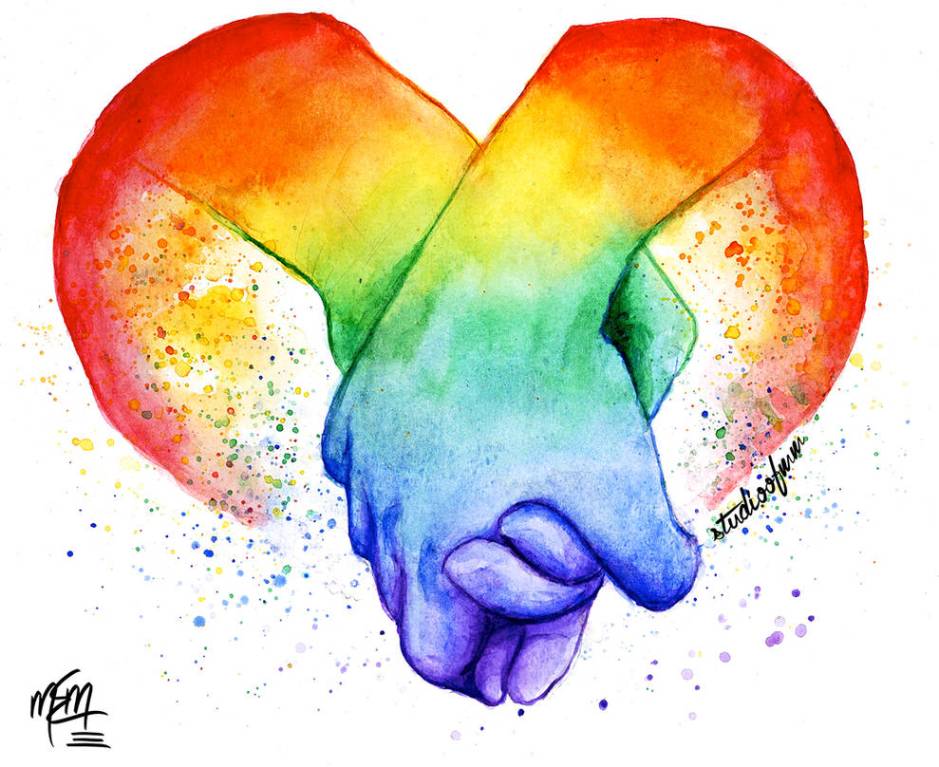

Love Languages

There’s a peculiar kind of grief in being surrounded by people you love and yet feeling untouched — not emotionally, not intellectually, but physically. For those of us whose love language is physical affection, the need to be held, touched, kissed, cuddled — is not a luxury, it’s a lifeline. Without it, we don’t just feel lonely; we feel withered.

I have always wanted to be held. Not just in fleeting embraces or in transactional foreplay, but in the quiet, steady ways that bodies communicate love — arms around shoulders, limbs entangled in sleep, breath synchronised in the hush of night. I fall asleep best when someone’s hand is atop my body, not in lust but in love. And yet, despite this deep yearning, I find myself in relationships with men who either cannot, or will not, offer that kind of touch.

It’s a cruel mismatch. A man whose language is touch falling in love with men who speak love in acts, or words, or in silence. And when you are six feet tall — tall enough to be imposing — it becomes even harder to fold yourself into someone’s arms and feel held. When the men I love are shorter, smaller, more delicate, they assume I am the one who will wrap them. I must become the blanket, the protector, the pillar. But I ache to collapse into someone too.

So then, there’s how I look. There’s a particular injustice in gay culture — assumptions wrapped in desire. Because I am tall and masculine-presenting, most men assume I’m a “top.” But I am not. Nor am I a “bottom.” I’m a side — someone who doesn’t enjoy penetrative sex but cherishes all the other physical intimacies: the grind, the kiss, the sensuality of skin on skin. And for the longest time, there was no ready vocabulary for all of that. So I get approached by men who want to be topped — who want from me the very thing I don’t find natural to give. They long for the same care and physical affection I do — to be cradled and dominated in a way I cannot perform without a deep dissonance.

And now I find myself in what many might envy or judge — a polyamorous relationship with two men. A throuple. But love doesn’t multiply without friction. One of them is deeply sexual. He identifies as versatile, but prefers anal sex. He tries to meet me halfway, because he loves me. I see that. But still, there is a chasm between my need for slow, non-sexual physicality and his need for release. And try as we might, love doesn’t always stitch the gaps between bodies.

My other partner, meanwhile, doesn’t like touch at all. His love language is acts of service. He’ll run errands for me, cook, fix things, do what needs doing. But in bed, he shrinks from closeness. And it is agonising to be in bed with two men, night after night, and feel untouched. To feel like a satellite in the very centre of love.

People think polyamory solves problems of lack. That if one person can’t give you something, the other will. But life and time touch all forms of love. What if the very thing your soul craves most — to be held, to be touched — becomes absent? And what if the only thing you are left holding is your own longing?

I don’t know if all relationships will end in heartbreak. I hope not. I believe I am loved. And I love them. But love feels incomplete, when your primary language is unheard. When you’re the one always reaching out, and no one ever quite meets your arms halfway.

There’s a wound in this. It bleeds in silence. And it aches most not in rejection, but in the quiet lack of reciprocity. Touch, for some of us, is not foreplay. It is prayer. It is home.

And I wait to be let in.

Hidden Hypocrisy

I have always been baffled—no, repulsed—by the hypocrisy of men who live double lives. These are men who pray, fast, go to temples, churches, mosques, or synagogues, who post about their faith and devotion—yet behind closed doors, they are deceiving the very people who trust them the most. They are closeted gay men married to women, lying to their spouses, their families, and even to themselves. I see them, and I wonder: how do they sleep at night? How do they stand before their god and pretend to be righteous while actively living a lie?

I know this is how the world works. I know people lie, that deception is everywhere. But that knowledge doesn’t make it any easier to stomach. It disgusts me to see a man post a picture of himself praying, knowing full well that he is cheating on his wife with other men. Or seeing another man cry over his religious faith, when he himself is engaged in an affair while maintaining the outward appearance of a devoted husband and father. Is this what faith is? Is this what religion teaches—to uphold appearances at any cost while destroying lives behind the scenes?

The phenomenon of closeted gay men marrying women isn’t new. Studies across the world show that thousands of gay men, fearing societal rejection, enter into heterosexual marriages. In India, a 2009 study by the Humsafar Trust found that nearly 70% of gay men in Mumbai were married to women by the age of 30. In smaller cities, the number was as high as 82%. A 2018 survey by Planet Romeo revealed that one-third of gay and bisexual men in India were married to women, and 72% had no intention of ever coming out. What about their wives? Only 16% knew about their husbands’ true orientation.

In the United States, a study by the Williams Institute estimated that around 2 million LGBTQ+ people in the country have entered into different-sex marriages, many due to religious or societal pressure. Among them, the vast majority identified as Christian. In Latin America, where Catholicism plays a dominant role, closeted gay men have historically been pressured into marrying women, with little space to live openly.

This is not just a phenomenon limited to conservative religious societies. Even in more liberal Western nations, where acceptance of LGBTQ+ people is significantly higher, many men still feel compelled to marry women due to cultural and familial expectations. Across South Asia, the Middle East, parts of Africa, and highly traditional communities in the West, the story remains the same: men pretending to be straight to meet societal norms, using women as a shield to maintain their façade.

What sickens me most is the blatant religious hypocrisy. These men claim to be devout. They attend church, pray five times a day, fast, go to temples, celebrate religious festivals. They publicly uphold their faith as a symbol of their righteousness. But when it comes to honesty, to the most fundamental principles of integrity, they fail. It’s like they believe that as long as they pray, as long as they follow the outward rituals, everything else is forgiven. But what about the wives they deceive? The families they manipulate?

I see them posting religious messages, celebrating festivals, and talking about morality while lying to their partners. And I want to shake them and ask: do you even believe in the God you claim to serve? Because if they did, surely they would be terrified of the weight of their deceit. Surely they would know that no amount of prayer can erase the damage they cause.

This is not an attack on faith. In fact, I believe true faith should encourage honesty, self-reflection, and compassion. But these men pick and choose which parts of their religion they want to follow. When it comes to cheating, lying, and leading double lives, they conveniently ignore the moral teachings of their own faith. But they’ll be the first to condemn others for so-called “sins” while refusing to acknowledge their own deception.

Living a double life isn’t just morally bankrupt—it’s also mentally exhausting. These men often suffer from severe anxiety, depression, and identity crises. The strain of keeping up a lie for years, sometimes decades, eats away at them. Meanwhile, their wives endure heartbreak, confusion, and a loss of trust when the truth finally emerges.

And then there are the children. How many families have been broken because a man decided to pretend? How many lives are shattered when, after years of deception, the truth comes out? A woman who thought she had a loving husband realizes she was nothing more than a cover story. Children grow up sensing something was always “off” about their father but not understanding why. And the man himself—if he even has a conscience—must live with the guilt of having built his life on lies.

I am not against faith. I am not against religion. But I am against false piety, against men who hide behind religion while doing everything their faith supposedly condemns. I have no patience for cowards who choose deception over truth, who destroy innocent lives just to maintain their fake image.

If you are a closeted man struggling with your sexuality, do not drag another person into your internal battle. Do not marry a woman just to please your family or to appear “normal” in society. And if you are already married and living this lie, then face your truth—for your sake, for your wife’s sake, for your children’s sake.

And if you are one of those men who pretend to be pious while knowing full well what you are doing in secret—then do yourself a favour and stop praying. Because no god worth worshipping would ever reward a liar.

Am I Gay Enough? The Side Debate and the Pressures of Conformity

I’ve been in a loving gay relationship for 25 years. I’ve been attracted to men for as long as I can remember—my first love was Superman when I was five. Yet, here I am, still having to defend my sexuality because I identify as a side. Apparently, for some, that disqualifies me from being “properly” gay. It’s absurd, but it’s also revealing. It shows how much pressure we, as gay men, place on each other to conform—not just to straight norms, but to the rigid sexual roles we’ve constructed within our own community.

Growing up, I knew that straight people expected me to conform to their world. They wanted me to be straight, to marry a woman, to have kids, to blend in. And when that failed, they at least wanted me to be the right kind of gay—either the tragic figure hiding in the closet or the overly sexualised stereotype. But what I didn’t expect was that, even after coming out, I’d have to deal with a different kind of policing—from my own people.

At some point, gay men started mimicking the worst aspects of straight culture, forcing labels on each other: top, bottom, versatile. As if our entire existence boils down to what we do in bed. It’s ironic—our community has fought against being reduced to just sex, yet we’ve turned around and done the same to ourselves. If you don’t fit into these roles, you’re treated as an anomaly, an incomplete gay man. Before I even knew what “side” meant, guys used to tell me I was into “body sex,” and I suppose that’s what they meant—that I preferred intimacy without penetration. But instead of that being just another way to be, it became something that needed justification.

When I first read the Huffington Post article in 2013 about sides, it was a revelation. Until then, I had internalised the idea that maybe I was broken, that I was missing some essential “gay” experience. Because that’s the message that gets drilled into us—not just from straight people but from within the LGBTQ+ community itself. The idea that real sex has to include penetration, that masculinity is tied to what you do in bed, that the spectrum of gay relationships has to mimic the dynamics of straight ones. And if you don’t fit in? You’re sidelined. (Pun fully intended.)

It’s exhausting to navigate a world where both straight and gay people are telling you how to be. Straight society pressures us to assimilate, while gay culture tells us to conform in a different way—be masc, be a top, be a bottom, fit into a category. If you’re anything outside of that, you’re made to feel less valid, less desirable, even less gay. It’s ridiculous. My 25-year relationship with a man, my lifelong attraction to men, my love, my desire—those define my sexuality. Not some arbitrary checklist of sexual acts.

The truth is, being gay isn’t about what you do in bed. It never was. It’s about who you love, who you desire, who you build a life with. And no one—not straight people, not other gay men—gets to tell you that you’re not gay enough.