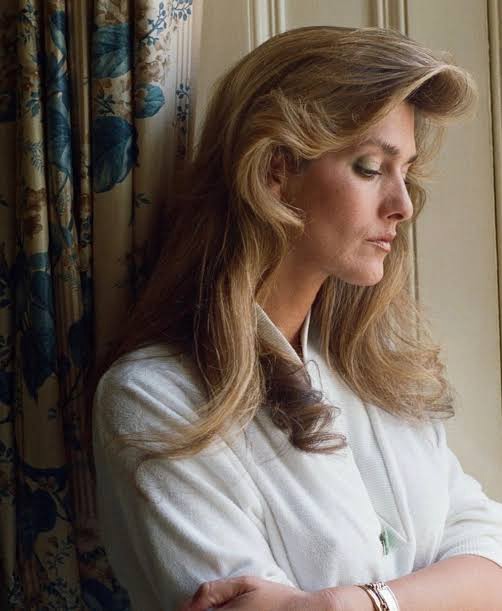
Growing up, I didn’t have many gay icons to look up to. Representation in the media was scarce, especially when it came to people living authentically in their sexuality or gender identity. But then, one day, I came across an article in a magazine about a model named Caroline Cossey. Caroline, who had transitioned from male to female, in 1974, had faced enormous challenges throughout her life. She underwent hormone therapy and sex reassignment surgery, which allowed her to fully transition from male to female. After her transition, she went on to have a successful career as a model and actress. Despite all the obstacles, she managed to thrive, making her story a beacon of hope for people like me who were still trying to figure out their place in the world.
I remember feeling proud of Caroline. She had fought for her right to be herself, living life on her terms. She became a Bond girl in 1981, when she appeared as an uncredited extra in the James Bond film For Your Eyes Only. Furthermore, she was the first trans model to appear in Playboy magazine. After her appearance in For Your Eyes Only, Cossey was outed as transgender by the British tabloid News of the World. She was devastated and considered suicide but decided to use her outing to fight for equal rights for trans people. She won her case against the government and was legally recognized as a woman. She also became an activist, appearing on television and radio shows to raise awareness for trans people.

For a young gay person like me, growing up in Mumbai, India, in the 80s, this was revolutionary! I had read about other public figures who came out much later in their lives—people like Rock Hudson, who kept his sexuality hidden until he was dying of AIDS, and Sir Ian McKellen, who only publicly declared he was gay in 1989. Richard Chamberlain came out as gay in 2003! These men were icons too, my aunts, mum, talked about them. But they didn’t represent the same kind of courage I saw in Caroline, who was part of a community constantly forced to fight for recognition. It was a story of defiance and survival, and it resonated deeply with me.
You see, in a 2021 interview to People Magazine, Kate Winslet said, “I cannot tell you the number of young actors I know — some well known, some starting out — who are terrified their sexuality will be revealed and that it will stand in the way of their being cast in straight roles. Now that’s f***ed up.”
“I’m telling you,” she continued. “A well-known actor has just got an American agent and the agent said, ‘I understand you are bisexual. I wouldn’t publicise that.’ I can think of at least four actors absolutely hiding their sexuality. It’s painful. Because they fear being found out. And that’s what they say. ‘I don’t want to be found out.'”
So, the visibility and challenges trans people face put them at the frontlines of many queer movements, while other parts of the LGBTQ+ community may have historically experienced greater social invisibility or assimilation, especially cisgender gay men. The bravery and resilience of trans individuals continue to be critical to advancing equality for all queer people.

My discussions with my family were often about trans people. I remember very fondly the movie, Some Like It Hot. The climactic last line of the movie: “Nobody’s perfect,” delivered by Osgood Fielding III when Jerry (in drag as Daphne) reveals he is a man, is a moment of comic genius with deep subversive undertones. In a society where rigid gender norms and heteronormativity dominated, the line’s nonchalant acceptance of Jerry’s true identity subtly challenged the boundaries of traditional gender roles and expectations. It normalizes the idea that love and connection transcend societal definitions of gender, nudging audiences toward acceptance and inclusion. This clever, light-hearted dismissal of societal norms helped advance queer representation in cinema at a time when such topics were largely taboo. The film’s ending is a brilliant celebration of human imperfection, signalling that love, in its various forms, needs no apology or justification.
I’ll never forget my aunt asking me if I wanted to transition from male to female. I didn’t—it wasn’t about that for me—but I realized how little people understood the nuances of gender and sexuality. Back then, in the 80s and 90s, being effeminate meant enduring constant bullying, both from classmates and strangers on the street. I was harassed and beaten for simply being myself, and the world seemed hostile to anyone who didn’t conform to traditional ideas of masculinity. So my aunt wanted to know if I was trans. I wasn’t. I am gay. But I can now fully appreciate what she had asked me back then. If a woman born in 1939, could ask me this, I don’t understand the hate most people have for the community.
Maybe it stems for the fact that it was always the trans people—the drag queens, the trailblazers at Stonewall—who stood on the front lines. Historically, trans people have often been at the forefront of LGBTQ+ movements, and this is largely because their identities and bodies have been highly visible, making them more vulnerable to societal prejudice, discrimination, and violence. This forced them to become outspoken advocates not only for themselves but also for the broader queer community, even when gay and bisexual people remained closeted or less visible.
Additionally, trans people face multiple layers of marginalization, including both gender and sexuality, which has often placed them in direct conflict with oppressive systems, necessitating their leadership in activist spaces. Trans people have always been at the forefront of LGBTQ+ advocacy, and for that, I hold a deep respect for them. They’ve earned the right to live in bodies that reflect who they truly are, just as much as anyone has the right to make choices about their own body. It’s no different from someone getting a tattoo or choosing to have an abortion—our bodies are ours to decide what to do with.
This is why J.K. Rowling’s views on trans people are so disturbing to me. In 2019, she tweeted comments that were shockingly transphobic, and since then, she’s doubled down, allying herself with groups that push harmful rhetoric. For someone who once created a world that spoke to so many outcasts, her words felt like a betrayal. I used to admire characters like Remus Lupin, with his hidden struggles, and even saw Dumbledore’s late revelation as a way of introducing queer representation. But looking back, it feels like tokenism—a marketing ploy that never fully embraced the complexities of queer identity.
In her recent speeches, Rowling has made statements like “lesbians don’t have penises,” which is not just ignorant, but exclusionary. She’s taking a stand that is harmful, aligning with groups that dismiss the validity of trans lives. It’s not just disappointing, it’s dangerous. Her tribe of supporters claims to champion women’s rights, but they fail to understand that bodily autonomy, including the right to transition, is central to that fight. If you can’t accept someone’s right to live in their own body, how can you claim to support anyone’s freedom?
When I first saw Caroline Cossey in Cosmopolitan as a Bond girl, I was mesmerized. I thought, here is someone who defied the odds, someone beautiful, successful, and unafraid to live her truth. Her story gave me courage. Over time, I found strength in the stories of people like her. I read books about sexuality and found solace in fantasy fiction, in worlds where differences were celebrated. The X-Men comics, with their allegories of being “othered,” spoke to me in ways that traditional narratives didn’t.
Characters from The Lord of the Rings or even Harry Potter once felt like kindred spirits, but after Rowling’s tirades, it’s hard to see those stories the same way. She’s shown that she doesn’t understand the diversity of human experience, and worse, she’s actively working against the progress that communities like mine have fought so hard for.
Yes, I understand the nuances of freedom of expression and the complexities of cancel culture. But standing up against harmful rhetoric is not cancel culture—it’s about drawing a line where human dignity is concerned. If respecting someone’s pronouns or accepting their right to transition makes the world more diverse and beautiful, then that’s a future I want to be part of.
I’m grateful for the trans people who have fought and continue to fight for the right to be themselves, because they’ve paved the way for so many of us. And for that, I will always stand with them.
 Hearts Still Care
You must be logged in to post a comment.