I am gay. I knew what to call myself at the age of thirteen. How? I was teased in school. Before that I knew that I liked guys. Sexually. My sexual awakening happened when I saw Christopher Reeve fly through the sky in 1980 as Superman. He was and still remains a fantasy for me. I didn’t know why I liked him. I just did. Now of course, I know plenty of reasons why I did. Daddy issues, idol issues, the need to be protected by someone larger that life who was male, a plethora of reasons, actually. Almost ascribing to all the clichés one can think of.
No, I found out what to call myself by a boy in school who wanted me. When I didn’t really understand what he was after, he didn’t have the guts to actually voice it out himself, and what followed was him name calling. One of the names being ‘gay’. I began to read about it and what followed was a journey of self discovery. I read and I read and I read. I devoured everything that came my way in book form. The book that really was an eye-opener was Nancy Friday’s “Men in Love” – gosh, that book was really something. I learnt how to notice my body, how men would think, what different kinds of sexual thought pervaded the human mind. I realised early that sexuality is fluid and I wasn’t the only one who fantasized – and that my fantasies were pretty ‘vanilla’.
Through my teens, I was awkward, a book worm, a geek, a nerd, a momma’s boy. Name a derogatory word, in the likes of ‘pansy’, ‘sissy’ and I have been called it. It was difficult growing into someone who wasn’t afraid of the world. I didn’t know I had it in me when I was mocked in front of an entire Economics class, during high school, in what was termed as ‘Icy Day’, a day where boys and girls sent out anonymous mint candies to people they liked. Someone, presumably a secret male admirer, had sent me scores of them and each of them had messages that were read out before the entire class. Pithy messages in Hindi declaring infatuation – and of course, I smiled through it all. Intuitively, I knew I was the butt of a joke. The class laughed and I smiled. Inwardly, I was frozen.
When I left, the class representative, his name was Shiamak, came up to me and asked me, ‘are you gay?’ I looked up at him and said, coolly, ‘why? Are you asking me out on a date?’ Post that burn, he never said anything to me and no one ever teased me in that year.
I learned to walk differently, I dressed differently, I moved out of a zone and into another. Much later, I realised something. Throughout my formative years, I had no real male figure to look up to, I was surrounded by these amazingly accomplished women, who I wished to emulate and be like. So I adopted their mannerisms and affectations. Moreover, I was under the impression that to attract a man one needed to be like a woman.
As I grew and educated myself on the gay subculture, I realised that I could choose to be who I am and I had to act like no specific gender in order to be liked. I read and books like ‘The Persian Boy’, ‘Men in Love’, ‘Maurice’, and movies like ‘My Beautiful Laundrette’, ‘Get Real’, ‘Victor Victoria’, made me appreciate who I could be, and I became me. The three years of degree college, immersing myself in Literature and Psychology, molded me into someone who had no reservations of being effeminate and no remorse about being manly. I understood that there was no such word as ‘normal’ and one needs to just be true to himself.
I came out to my mother at the age of sixteen. My first step to being out as a gay man. The process wasn’t a painful one, but the anxiety that formed its prologue was agony. The fear of a boy trying desperately not to allow the love his mother has for him change, on account of something he cannot change, is always filled with such pathos and such trepidation. Someone asked me why do gay guys celebrate pride – in my head, there are a million reasons, but the most important one is this: A homosexual child has years of either fear, or resilience, or anxiety, or loss, or merciless browbeating, or sacrifice, or pain, or confusion, or pressure, or regret or all of it together until that moment when he recognises who he is, and takes the step out of a dark closet. That step, to me, is why we have Pride.
Over the years, I have struggled, not greatly, but in the countless, little moments, when a student pokes fun, or when a family member smirks at another, or when the doorman gives you an all-knowing look, or a straight friend makes a casual remark that is hurtful… and these are many… but in effect, these mean little when I expect two entities to appreciate the fact that I have rights just as any straight man. The first being my family and the second being my country.
I have been proud of both, throughout my life. My family is fantastic, anyone who has met them knows this to be true. My country is mine – the place where I was born, the climate I love, the people who recognise me as a part of the earth I played on. I refused to give it up for a land of opportunity. I fell in love with someone who wanted me to move with him to a foreign land… and I gave that up because of these two entities. I do not regret that move. Never have.
Until the Supreme Court verdict upholding Section 377 in 2013. It broke my heart. Then in 2014, my family supported a rise to power that spoke clearly against homosexuality. That shook my belief in the support system I had. It wasn’t cataclysmic, it was insidious and it was there. I didn’t understand the logic behind it. My faith was shaken.
The second time that happened was from the only other safe ground I have left to me. The Community. I have always looked to the gay subculture as my second family. I got into the ‘circuit’ when I was recovering from the heartbreak of a first love. I could never gain complete succour from people who loved me but were straight. Somehow in my mind, they didn’t really understand what had happened. They blamed the boy I was in love with as having a bad character, but it was deeper that that. He wanted to be famous and his career wouldn’t make any concession for his being gay. He was scared, true, but he was scared because he was gay. He had something to lose, something he wanted desperately. Only another gay person could relate to this feeling of seclusion, and yet of being one. It is a paradox.
So I found my place to be, at twenty-two, at a meeting I was randomly invited to. You know the feeling where you hear people speak a language and you instantly recognise it as your own? That was what happened. I revelled at finding this safe zone. This place where I could talk and be heard and more importantly, be understood, because of the advantage of common experience. It felt liberating.
Over the years, I realised that human beings do not think collectively. Which is fine. But they also do not like to think about a thought opposed to their own. In the past few months, I have realised this to be glaringly apparent. On gay dating apps, there are words like ‘straight-acting’, ‘no fems’, ‘no sissies’… these transport me back into that corridor outside that classroom with that boy whose sole purpose at that point in time was to belittle my spirit, to hollow out something that he would never understand. I am instantly transported back to that time when a gay friend of mine says that walking the Pride is unnecessary but he will be there at the party that happens post it.
But of late, that corridor seems to be the world, including the one in which I thought I was safe and secure. The term internalised homophobia has more than one meaning. It’s not necessarily self-hate because of being queer, it could just as easily be hate towards the other, because the rainbow flag apparently has begun to discriminate from within. People see what they want to see, blinders can also be rainbow coloured. The plight of common experience is not enough anymore to bind people together. We are caught up with our own petty grievances. This is what enrages me.
I have been cheated. Over and over and over.
Where is this united front that we talk about? We smile at each other, the way I smiled so long ago, on that day of those icy declarations that froze my heart. People say I love you and go and vote for someone who agrees with the fact that I am a criminal. We decide to walk hand in hand in Pride, but cannot wait to accuse the other for personal gain, when the gain basically is for part of the larger community any which way. We cannot see beyond the circles of what we consider Right. Common experience has no value. A common enemy has no prestige. Different though is irrelevant. But one’s own differences should be appreciated?
I will walk the Pride. I will continue to love my families, the straight and the gay. But this year, I will do this with a part of me dead.


 Mel Gibson is back, and he uses some very good actors, like Vince Vaughn and Sam Worthington, to bring his vision to life. The battle scenes are crafted almost like they echo the burst of a machine gun. I always equate a great battle scene to the first few minutes of Saving Private Ryan, and the battle reenactment of Okinawa, though doesn’t surpass Spielberg, it surely stands beside. The utter chaos of War is what Gibson tried to show and for me he succeeds brilliantly.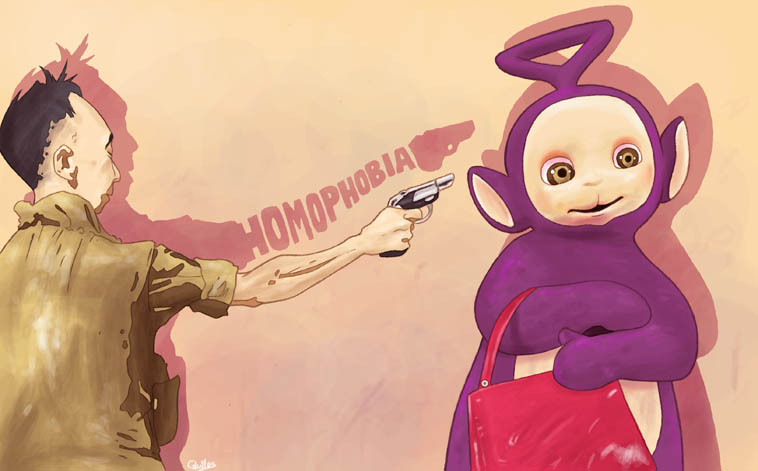
 Hearts Still Care
You must be logged in to post a comment.