Who I Am: My Sun, Moon and Rising

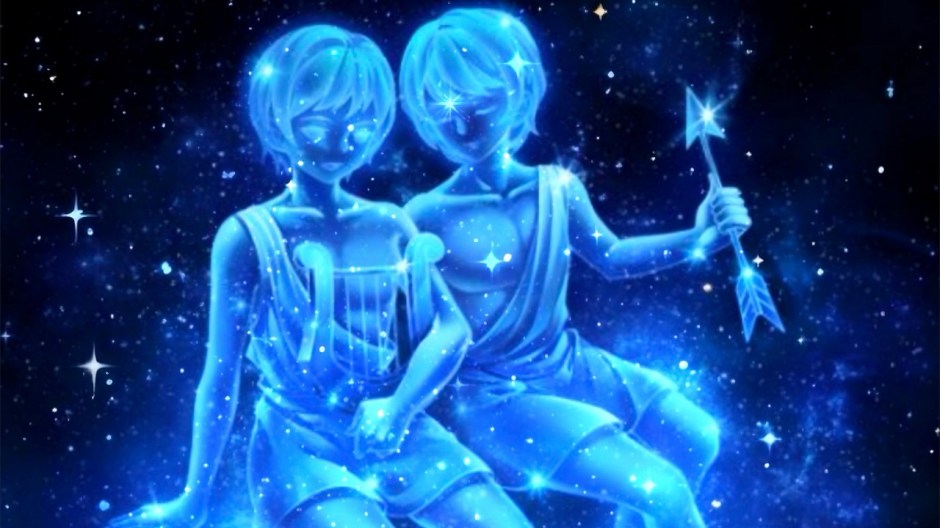
I was born on 28th May 1975, in suburban Mumbai at 11:18 in the morning. My Western chart’s three most telling placements are my Gemini Sun, Capricorn Moon, and Leo Rising. They describe how I think, how I feel, and how the world meets me — and together they feel like the truest shorthand for the life I’ve lived.

☀️ My Sun in Gemini — How I am at my core

At my core I am a communicator. Gemini gives me curiosity as a kind of hunger: for books, film, conversations and the small, sharp truths people carry. I make sense of the world by talking about it, writing about it, translating what’s messy into language. That impulse — to tell the truth of myself — is what made me come out early and live openly. My mind moves fast; I see life in fragments that I stitch into meaning.

That speed can also scatter me. I fall in love with ideas and people easily, and sometimes I have to remind myself that depth often takes time. Still, my voice is my anchor: saying what I mean, and meaning what I say, is how I stay whole.

🌙 My Moon in Capricorn — How I feel and need to feel safe

Emotionally I am Capricorn — reserved, steady, and responsible. Where Gemini speaks, Capricorn quietly does. I meet pain with discipline; I show care through reliability, not theatre. Growing up with the kind of father I had taught me very young that I had to be practical to survive. That lesson hardened into a protective instinct: I take on duties, I make people safe, I build order from chaos.

This Moon makes me cautious with my heart. I don’t spill feelings lightly; vulnerability feels risky. The upside is that when I commit, I commit deeply and sustainably. The downside is I can carry burdens alone, prefer to “fix” rather than ask to be held, and sometimes confuse duty for love. I’ve also learned that my responsibility can look like a saviour complex — I have to remind myself that helping shouldn’t come at the cost of my own well-being.

🌅 My Leo Rising — The face I wear to the world

The world meets me as Leo rising: warm, dignified, and creative. People notice me when I enter a room. It’s not vanity so much as presence — I like to make things beautiful, to perform, to dress, to dance, to put heart into how I show up. That outer radiance is a kind of invitation: come closer, I’m safe to love.

Leo rising also means I crave recognition. When I’m unseen by those I love, it hurts more than I let on. But my Capricorn Moon gives me the patience to keep giving anyway; my Gemini Sun finds the words to explain it. The result is a person who shines deliberately — not for applause, but so others feel allowed to shine too.

🌟 The whole picture — how the three work together

Gemini gives me voice and curiosity. Capricorn gives me steadiness, discipline and a protective streak. Leo gives me warmth and the courage to be seen. Put together, I am someone who speaks truth, builds safe spaces, and leads with heart. I show love by being practical and reliable; I speak love through stories, writing and conversation; I offer presence by being visible and generous with my creativity.

There’s a tension, certainly — between a Moon that guards and a Rising that wants notice — but that tension is also my strength. It keeps me honest, expressive and dependable all at once.

✨ For readers: what a Gemini Sun / Capricorn Moon / Leo Rising person is like

Quick with ideas and stories, but emotionally steady and discreet. Generous and warm in public, quietly dutiful in private. Shows love by doing: practical help, protection, consistency. Needs recognition and also privacy — respect both.

My chart says what I already live: I am here to speak my truth, to love with responsibility, and to shine without apology. That is how I choose to move through the world.

Persona

I was born on 28th May 1975 at 11:18 in the morning. That places me firmly in what the world calls Generation X — a generation sandwiched between the Baby Boomers before me and the Millennials after me. But more than a label, being born in this year carries its own set of imprints, shaped by the times I grew up in, the struggles I witnessed, and the values I absorbed.

As a child of the late 70s and 80s, I learned independence early. Ours was the era of the “latchkey kid” — children coming home to empty houses, learning to fend for themselves while parents worked or coped with their own lives. That gave me resilience and self-reliance, but also a sceptical streak. I don’t trust institutions blindly. I don’t get swept away by polished appearances. I have learned to question, to test, and to rely on my own compass.

At the same time, the world around me was shifting rapidly. I grew up analogue — cassettes, VHS tapes, handwritten letters — and yet, by the time I was an adult, I had to embrace the digital: computers, email, the internet. This made me bilingual in technology, able to move between patience and immediacy, slowness and speed.

I have never chased after big cars, big houses, or big titles. That was more the ambition of the Baby Boomers, the generation before me. They grew up believing institutions would reward hard work, that careers and wealth were the ultimate markers of success. For me, success has always meant something else. It has meant honesty, integrity, and above all, love. I want to be recognised for who I am, not for what I own.

The Millennials who came after me are different again. They are digital natives, born into an already connected world. They live more publicly, more networked, more visible. They expect recognition because visibility is woven into their way of life. I, on the other hand, carry privacy within me. I know how to be authentic even if unseen. My connections are selective and intentional, not about likes or followers but about trust and meaning.

So who am I, born in 1975? I am a realist who still dares to hope. I am someone who values freedom over conformity, and authenticity over ambition. I am empathetic to a fault, shaped by my own scars but unwilling to let them harden me. I am not defined by institutions or possessions, but by the honesty with which I live and the love I give.

I stand as a bridge: between the Boomers’ ambition and the Millennials’ visibility, between the analogue patience of yesterday and the digital urgency of today, between the scepticism I earned and the empathy I refuse to let go of.

And if there is one thing my timeline has taught me, it is this: my worth is not negotiable. I am worth recognition. I am worth appreciation. I am worth love. And I know it.

My Bridge to the LGBTQ+ Community

This bridge I carry inside me extends into my queer identity too. I came out at a time when there were no roadmaps, no rainbow flags on every street, no social media to find solidarity. It was a lonelier and riskier act, but one I chose because I knew my life could not be built on lies.

Those who came before me often had to stay hidden, and those who came after me are growing up in a world where visibility is possible, even celebrated in some places. I exist between these worlds — old enough to remember secrecy and silence, yet young enough to embrace openness and change.

That is why I make my home, my words, and my life into spaces of honesty. I want younger queer people to see that living authentically is not just a slogan but a survival strategy, and older ones to know that their quiet endurance was not wasted — it built the ground we now walk on.

My generation carries both the scars and the hope, and in that tension I have found my purpose: to live, to love, and to keep the bridge open.

My Era

Here’s a concise, evidence-informed portrait of what people born around May 1975 (late Generation X) typically shared as formative childhood influences—blending global events with what generational psychology consistently finds for this cohort.

Your cohort at a glance

Cohort: Late Gen X (circa 1965–1980) Childhood: 1980s (primary school years) Adolescence: Early–mid 1990s (secondary school/uni entry)

Shared formative experiences (global)

Cold War backdrop & its end: Nuclear anxiety (drills, pop-culture doomsday), then sudden relief and optimism with the Berlin Wall (1989) and USSR collapse (1991). 24-hour TV news & shared global moments: CNN, live coverage of the 1991 Gulf War, mega telecasts like Live Aid (1985)—teaching that the world’s crises and concerts could be experienced in real time. Technological shift: analogue childhood → digital teens: Cassette tapes, VHS, arcade consoles and 8-bit games in childhood; then home PCs, dial-up internet, email, and early mobile phones in adolescence—producing “tech bilinguals”. MTV generation & global pop culture: Music videos, globalised fashion, and cross-border youth culture (Madonna, Michael Jackson, hip-hop’s rise, blockbuster cinema) shaping identity and aesthetics. Public tragedies as TV classroom: Challenger (1986), Chernobyl (1986), famines, and earthquakes—early lessons in risk, fallibility, and media spectacle. Health crises entering everyday talk: The AIDS epidemic normalised conversations about sex, stigma, and public health; it also seeded long-term empathy for marginalised groups. Economic whiplash & globalisation: Early-80s recession, late-80s recovery, then early-90s slowdown—plus offshoring and brand globalisation—teaching financial caution and adaptability. Parenting & family structure shifts: Higher divorce rates, dual-income households, and “latchkey kid” independence fostered self-reliance, pragmatism, and a low-drama, fix-it-yourself ethos. Education culture changing: Rising standardised testing and credential focus, but still pre-“helicopter” oversight—encouraging problem-solving without constant adult mediation. Civic pluralism awakening: The late 80s/early 90s saw visible movements for LGBTQ+ rights, anti-apartheid activism, and environmentalism—introducing a values frame of fairness + personal freedom.

Likely psychological imprint

Independent, sceptical, and self-taught: Learned to handle things solo, distrust hype, and figure out new tech and systems on the fly. Pragmatic idealists: Care about fairness and inclusion, but insist on practical ways to make change. “Tech-bridge” confidence: Comfortable translating between older analogue habits and newer digital platforms. Boundary-aware in relationships: Early exposure to instability made many Gen-Xers prize honesty, steadiness, and clear limits. Media-literate: Grew up decoding spectacle vs substance—and value candour over performance.

Regional notes (India-relevant, if it speaks to your story)

While your question is global, many in India born in 1975 also internalised: 1975–77 Emergency (as family memory), 1983 Cricket World Cup nation-building pride, 1984 tragedies (Operation Blue Star/anti-Sikh violence; Bhopal disaster), and 1991 economic liberalisation—a pivot from scarcity to possibility. Cable TV in the 90s brought MTV, global sport, and advertising into living rooms, accelerating the Gen-X blend of thrift + aspiration.

In one line

Born in 1975, you’re part of a generation raised on independence and realism—shaped by Cold War endings, MTV beginnings, analogue roots, digital adolescence, and a lifelong instinct to value honesty, competence, and love over show.