Does My Vote Count?

Today, Mumbai votes in the BMC elections.

And I almost didn’t go.

Not because I don’t care — but because I am exhausted by a society that has lost its moral compass, and by institutions that no longer protect the innocent — human or animal.

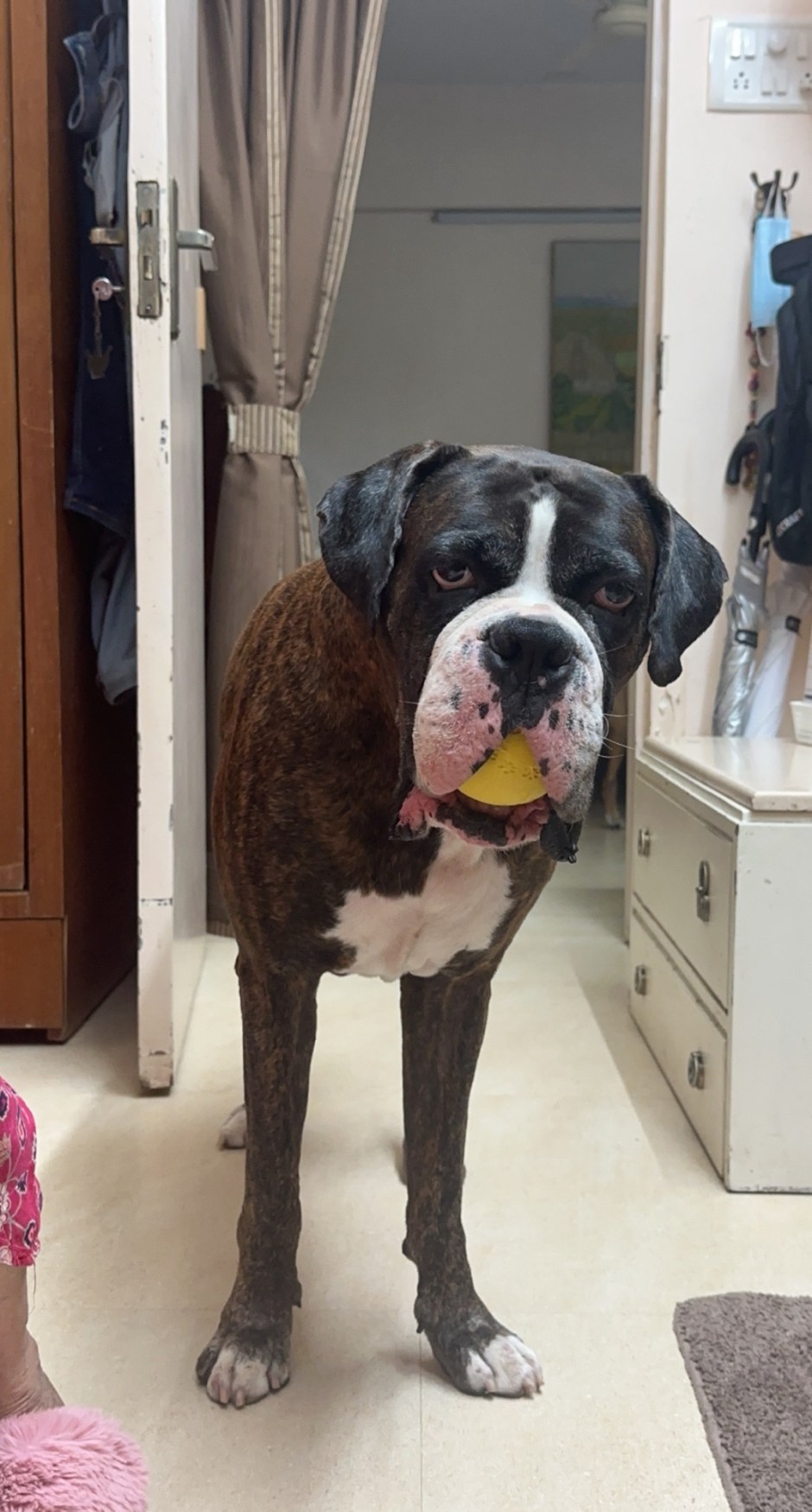
I am an animal lover.

And what I’m witnessing in this country — especially in my city — feels like a slow, sanctioned slide into brutality.

Stray animals are being turned into a convenient villain.

Dogs who have lived alongside humans for generations are suddenly being described as a “menace”, a “threat”, something to be eradicated. Not managed. Not cared for. Removed.

And this language is no accident.

It is the language of a society that no longer wants responsibility — only control.

Instead of investing properly in Animal Birth Control programmes, vaccination, civic education, and enforcement of existing animal welfare laws, we are watching a dangerous narrative take hold: that animals must disappear so humans can feel comfortable.

That is not civilisation. That is moral regression.

What has shaken me most is not social media hysteria — it is the Supreme Court of India itself.

Judges of the highest court — the very institution meant to protect the voiceless — are asking animal welfare advocates to “take the dogs home”.

As if compassion is a private hobby.

As if the state has no responsibility towards animals it has failed to manage humanely.

During hearings, judges made remarks about dog bites that were steeped in fear, prejudice, and anecdote, not evidence or constitutional values. One judge asked whether a person bitten by a dog would have to “live with that mental state for life”.

To which Menaka Guruswamy, an advocate fighting for animal rights, calmly replied that she herself had been bitten many times — and stood before the court in perfectly good health.

That response should have prompted reflection.

Instead, what followed felt plebeian, reactionary, and disturbingly dismissive of science, law, and empathy.

This is the same court that speaks eloquently about dignity and rights — yet seems willing to reduce animals to disposable nuisances to appease public anger.

If the highest court can be swept up by populist cruelty, where does that leave the rest of us? And the animals we care for?

Mumbai Is Being Strangled — And No One Is Listening

In my own city, the assault is everywhere.

Relentless construction has turned daily life into a health hazard.

Protected mangroves — our natural lungs and flood barriers — are being cut down in the name of “development”.

The air is toxic. Pollution has kept me sick for months. My entire family is unwell.

Walking is an obstacle course.

Pavements are dug up. Roads are cratered. Traffic screams into your face, horns blaring without pause.

I cannot walk my dogs properly.

Sometimes, I cannot walk myself.

And yet, when people complain, they are bullied into silence — reminded of the “powerful people” others know, the influence they wield, the consequences of speaking up.

I won’t even get into how trees from the Sanjay Gandhi Park were cut down years ago or how the Aravallis are now in danger. 

This is happening because there is no fear of the law anymore. Only machismo. Only intimidation.

Fear Is the Default State for Women

My mother and my sister live with fear — especially after dark.

Not abstract fear. Practical fear. The kind that makes you change routes, rush home, avoid confrontation, and stay quiet.

Women are not safe in this country.

And the most terrifying part is not crime — it is the belief that justice is reserved for those with money and power.

A woman was reportedly picked up outside a police station itself in Rajasthan — and nothing could be done.

If safety cannot be guaranteed there, what does law enforcement even mean?

Taxes Paid, Dignity Denied

I pay taxes — heavily.

And what do I get in return?

A city that makes you sick.

Institutions that sound cruel and careless.

A society eager to eliminate animals rather than confront its own failures.

A civic system where votes feel like deposits into a bottomless pit of corruption and indifference.

Every election promises change.

Every election delivers more money to those in power — crores of rupees were spent on the BMC elections right now — and more suffering to those without voice.

Including animals.

So Why Did I Vote?

Honestly?

I don’t know if my vote will change anything.

But not voting felt like surrender — and I am not ready to surrender my belief that compassion still matters, even if the world around me seems to be abandoning it.

This is not just about governance.

It is about who we are becoming.

A society is judged not by how it treats the powerful — but by how it treats the vulnerable.

And right now, we are failing — badly.

Confused, frustrated, angry

It began with a sentence that stayed with me long after it was spoken. When I said it had been a month since we had made love, the partner I most desire looked at me and said, almost casually, that I was angry all the time. It wasn’t the first time. Over time, the language had been shifting. I was controlling. I was a perfectionist. Now, apparently, I was angry.

Maybe I am.

But I have begun to wonder if what he calls anger is actually frustration — the kind that comes from being starved of touch while being told you are difficult for wanting it. The kind that builds when you ask, quietly at first, to be held, to be wanted, to be made love to, and the asking itself becomes evidence against you. When longing is recast as a character flaw, something inside you hardens just enough to survive.

I don’t want constant sex. I want closeness. I want to be held at night. I want to feel a body reach for me without having to negotiate for it. I want desire to feel like an offering, not a concession. When those things don’t happen, when tenderness dries up and erotic attention becomes sporadic or withheld, the ache doesn’t disappear. It finds other outlets. I scroll, I watch porn, I masturbate daily — not because I am insatiable, but because something in me is trying to self-soothe what is not being met. And sometimes, lying there afterwards, I find myself asking the question I’m afraid to say out loud: if there are two men in my life, why do I still feel so alone?

In queer spaces, we are often encouraged to name ourselves early and clearly. To know whether we are tops or bottoms or sides, as if desire can be neatly categorised and remain stable across decades. I have moved between these words for years, trying to see which one fits. When I was a teen, I thought I was a bottom because surrender felt right in theory. Then, after I topped and tied bottoming, I didn’t like either experience. So, I thought I was a side because penetration was never central to my wanting. Then, with my last partner, there were moments when I surprised myself entirely, enjoying things I had once assumed were not for me. None of it followed a straight line. None of it stayed consistent. What I once mistook for confusion, I now recognise as responsiveness — to safety, to trust, to care, to timing.

What we rarely acknowledge is how deeply fear shapes desire. How avoidance can masquerade as preference. How wanting closeness without certain acts doesn’t make you less sexual, only more specific. And yet, there is pressure to present a stable, legible version of ourselves — one that partners can rely on, even if our own bodies are quietly asking for something different.

Alongside this uncertainty about sex lives something even more tender. I love being held. I love sleeping with an arm around me, the reassurance of touch in the dark. And yet, the partner I am most sexually drawn to is not the one who holds me at night. That care comes from my older partner, now, the one who steadies my day-to-day life. I sleep between them. Care on one side. Desire on the other. Somewhere in that arrangement, I began adjusting myself instead of asking to be met fully.

Over time, I taught myself how not to want. I stayed awake until exhaustion took over so I wouldn’t lie there missing what wasn’t coming. It’s a quiet grief, learning to dull a need because it feels inconvenient or unwelcome. From the outside, it might look like composure. On the inside, it feels like erasure.

When I confide in men outside this life, they sometimes say things that sound like promises. That they would never let me go untouched. That they would always hold me. I don’t dismiss them, but I don’t cling either. I’ve lived long enough to know how time works. How novelty softens. How desire changes. How even sincerity is no guarantee. So I accept the recognition, if not the reassurance.

All of this leaves me questioning structures I once took for granted. Whether committed relationships are meant to carry everything forever — desire, care, novelty, safety, touch — or whether that expectation itself is what exhausts us. Whether open relationships should be less of a scandal in queer lives and more of an honest response to how desire actually behaves. Whether love and sex are always meant to live in the same body, or whether insisting that they must is an unnecessary cruelty.

I don’t have answers. What I have is a growing refusal to be reduced — to a role, to a label, to an accusation of anger when what I am really expressing is hunger. Hunger for closeness. For tenderness. For being chosen without having to justify the wanting.

If any of this feels familiar, you are not alone. Many of us are renegotiating love quietly, in the middle of the night, teaching ourselves how to sleep, how to wait, how to endure without hardening. Confusion is not failure. It is what happens when we stop performing certainty and start telling the truth.

Sometimes, that is where living actually begins — not in neat resolutions, but in allowing ourselves to feel the full weight of what we want, and refusing to disappear just because it makes others uncomfortable.

On Looking Down, and Looking In

I met someone recently—someone I’d spoken to online—at a party I attended not long ago. In person, though, something felt immediately off. Not because of chemistry or the lack of it, but because of an almost compulsive need he seemed to have: to look down on everything around him.

The party wasn’t good enough.

The music wasn’t up to the mark.

The people weren’t interesting enough.

Nothing passed muster. Everything required commentary, and all of it was dismissive.

He told me he was 22. And instinctively, I wondered if this was an age thing. But then I stopped myself. I was once that age too. I don’t remember needing to belittle an entire room to feel significant within it.

What unsettled me more was the familiarity of it. I’ve encountered this posture before—among people I’ve known, been friends with, sometimes even admired at one point. A certain self-appointed elite, defined not by kindness or depth, but by what and whom they reject. How others dress. How they speak. What music they like. Where they come from. Everything becomes a metric for exclusion.

I’m not pretending I’m immune to prejudice. I’m not. I know exactly where mine lies.

I don’t tend to judge people by caste, class, race, or colour. But I do judge—quietly, perhaps arrogantly—on intellectual and emotional grounds. Empathy matters deeply to me. Curiosity matters. The ability to question inherited beliefs matters. And yes, I struggle with people who are blinded by unexamined faith or rigid dogma. That is my bias. I own it.

So the uncomfortable question arose: was I doing something similar to him, just dressed in better language?

I don’t think it’s the same. Or at least, I hope it isn’t.

Because there is a difference between choosing not to engage, and actively deriding. Between recognising incompatibility, and making contempt a personality trait. What I witnessed wasn’t discernment—it was dismissal masquerading as sophistication.

There’s something deeply sad about believing that to appear intelligent, dapper, or “above it all,” one must constantly signal what one is not. That one must shrink others to inflate oneself. It’s a brittle kind of confidence, and it cracks easily.

Perhaps age does play a role. At 22, there is often a frantic need to impress—by saying the right things, having the right opinions, aligning oneself with the “correct” tastes. Sometimes that performance hardens into habit. Sometimes it softens with time. I don’t know which way it will go for him.

What I do know is this: I don’t need to pull anyone down to feel whole. I don’t need to sneer at a room to belong in it. If I don’t resonate, I can simply step away—with grace.

We live in a world already cruel enough, stratified enough, lonely enough. Choosing empathy over elitism isn’t naïveté; it’s resistance.

And perhaps the real marker of maturity—emotional, intellectual, human—is not how sharply we judge, but how gently we hold our differences.