Self-worth

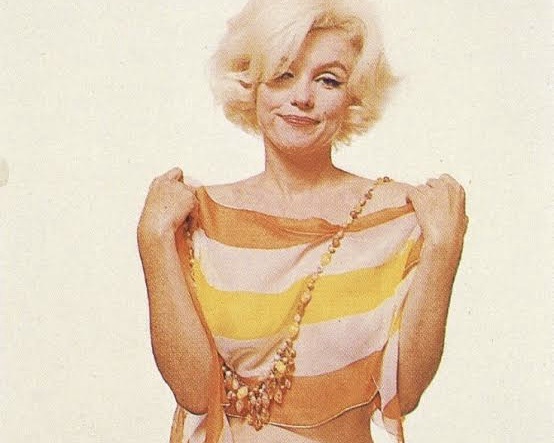
I was watching songs, clips, interviews of and on Marilyn Monroe today, and it took me back to when I first saw her on screen. I must have been seven or eight when I watched the unveiling of her statue in her iconic pose in The Seven Year Itch, mesmerised by that iconic moment—the white dress billowing around her, the radiant smile on her face. Back then, she seemed like a goddess, the epitome of beauty and joy. But as I grew older and learned more about her life, I realised how much that single image had cost her in reality.

That made me think about how much we, as individuals, shrink ourselves, twist ourselves, and dim our own light to fit the expectations of others. Earlier this week, a friend of mine—who once directed me in a stage musical—told me about a party he attended. There were Millennials and Gen Z boys raving about me, reminiscing about my performance in that play. The way I looked, the way I carried myself, the way I commanded the stage—those were the things they remembered most vividly. And it struck me, because I have never seen myself the way others apparently do.

For so long, I have felt like I wasn’t enough—not tall enough, not sexy enough, not thin enough, not thick enough. Always not enough. I have spent years looking in the mirror and seeing only what I lacked, never what I had. And I know this feeling has seeped into my relationships as well. I have always felt like the subordinate one, placing my lovers on a pedestal, convinced they were cooler, more desirable, more worthy than I was. My love for them made them grander in my eyes, while I shrank in my own.

Watching Marilyn’s documentary, I wondered how much of our self-perception is shaped by the expectations and judgments of others. She was adored, desired, envied—yet also ridiculed, diminished, and underestimated. Her beauty, her sensuality, the effortless way she captivated a room—she owned it, yet was punished for it. Even in 1962, when she filmed a nude scene for Something’s Got to Give, it was considered scandalous. And yet, decades later, it still holds power, still exudes that intoxicating mix of vulnerability and confidence.

In some ways, I see myself in her. I came out at 16, unapologetic about who I was. I have always flaunted my truth, never hiding my relationships, never pretending to be someone I’m not. I have loved openly, fiercely, without shame. And now, in a polyamorous relationship, I continue to live my life on my own terms. And yet—yet—that old, lingering feeling of inferiority remains. That quiet, insidious whisper that I am still not enough.

So I ask myself: How much of me have I given up to meet the expectations of others? How often have I dimmed my own brilliance to make others comfortable? How many times have I tried to fit into spaces and relationships that were never designed for me in the first place? And more importantly—why?

Marilyn was a woman who lit up the world, even as it tried to break her. And maybe that is the lesson here. That no matter how much the world tries to shape us into something smaller, something quieter, something more palatable—we have to fight to be ourselves. We have to own our space, our beauty, our chaos, our truth.

Because if we don’t—if we keep cutting ourselves down to fit inside someone else’s frame—what will be left of us in the end?

The Paradox of Belief

As a child, religion was joy. It was something to be celebrated, something woven into my life through festivals, rituals, and shared experiences. I had Christmas at school, Eid with friends, Diwali with family, Navroz from my mother’s side, and Gurpurab from my father’s. Each festival felt like an invitation to something bigger—a collective celebration of faith, culture, and belonging. Ganpati and Krishna were my favourites, deities I connected with through dance and devotion. Religion, in those days, felt vibrant, inclusive, and full of life.

Then, in 2013, I lost my faith. It had been unraveling for years, but that was the moment I could no longer hold on to it. I had believed in the ideal of God, in the idea that faith encouraged kindness, humility, and service. But as I looked around, I saw how rarely people lived by those principles. The more I questioned, the more I realised that religion—at least in the way it was practised—was not about morality, but control. It was about rules, about dictating who was accepted and who was condemned.

I still love the festivals; I still appreciate the philosophies embedded in different traditions. But I no longer believe in God. Instead, I have come to see atheism as its own paradox—a rejection of faith that, ironically, requires belief in the absence of divinity. In some ways, atheism becomes a religion, too.

One of the things that has always troubled me is how religion, once a search for meaning, has become a rigid structure—a system of laws that offers certainty to those who seek it. Structure is comforting; it provides uniformity, allowing people to live without questioning too deeply. But should faith be imposed? Should we be forced to follow beliefs that we do not hold in our hearts?

In Hinduism, the Bhagavad Gita says:

“Karmanye vadhikaraste, Ma phaleshu kadachana.”

“You have the right to perform your duty, but never to the fruits of your actions.”

This suggests that faith is not about rules, but about action—about doing what is right without attachment to reward or punishment. It is a personal journey, not a rigid doctrine.

Yet, for many, religion has become an obligation. It demands conformity, punishes dissent, and divides people into “believers” and “others.” I have seen it firsthand—in the hostility between Hindus and Muslims, in the weaponisation of faith in politics, in the way people are judged based on their religious identity rather than their character.

Even in my personal life, I have encountered this prejudice. Friends have questioned why I am in love with a Muslim man. Family and friends have warned me against involving myself with a Muslim household, insisting that “they” will never accept me. I am quite certain they are right and that I won’t be accepted. So, hatred is not exclusive to one group—I have seen the same prejudice mirrored in the Muslim world. It is exhausting, this endless cycle of division.

I often think of a scene from Anne of Green Gables. In it, Marilla tells Anne to kneel and pray. But Anne, with all her youthful sincerity, asks:

“Why must I kneel? Why can’t I go into an open field, look at the sky, and feel a prayer instead?”

That, I think, is the crux of what I believe. Faith—if it exists—should be personal. It should be something we define for ourselves, not something imposed upon us.

But the world does not see it that way. We live in a time when faith is rigid, where people demand uniformity, where questioning is met with hostility. And I find myself deeply disturbed by what this means for the future.

Still, the world will survive. It always does. And in the time I have left, I can only hope that humanity finds a way to embrace both reason and faith—not as weapons, but as paths to something greater than hate. But I doubt that will happen…

Meredith Grey and Me

I just saw a Grey’s Anatomy promo on Instagram, and the caption read, Mother’s back. The image showed Meredith Grey standing, clothed in sombre colours, with a look on her face that seemed to say, I’m here. I’ve achieved it all, and there’s still more to come.

A few minutes ago, my niece—my cousin sister’s daughter—sent me a clip from the Grey’s Anatomy Season 2 finale, where Izzie loses Denny. She was in shock, exclaiming, Oh my God, you actually saw this as it aired for the first time on television! And it’s true. That must have been sometime in 2007. And here we are, in 2025, and Grey’s Anatomy is still running. It’s been thirty years of her life traipsing along mine.

I’ve watched Meredith Grey evolve—sometimes in dramatic leaps, sometimes in that slow, existential, placid kind of way. And I’ve always equated myself with her because I’ve had people like Cristina and Derek in my life. And then there’s Alex, George, and Izzie. They’ve come and gone. And she’s the last one standing.

Meredith Grey is a survivor. She is dark and twisty, hardened by life’s relentless blows, yet fiercely resilient. She starts out as the vulnerable girl who pleads, Pick me, choose me, love me, but over time, she transforms into a woman who declares, I want you in my life if you want to be in my life. But if I have to choose, I’m going to pick me, I pick my kids, and I pick what’s best for us, and I’m not going to beg you to love me. That evolution is hard-earned, built through heartbreak, loss, and self-discovery.

She has endured profound grief—the loss of her mother, her sister Lexie, her best friend George, and, most devastatingly, Derek. Yet, she has never let grief consume her. She moves forward, not because it’s easy, but because she must. She finds ways to turn her pain into purpose, becoming a leader, a mother, and a legend in her field.

Meredith is also someone who stands by what she believes in, even when the world is against her. She challenges authority, fights for justice, and protects those she loves, even if it comes at great personal cost. She is messy, flawed, and sometimes infuriatingly stubborn, but she is also brilliant, compassionate, and endlessly strong.

Looking at Meredith, I see pieces of myself. Like her, I have endured loss—people I loved deeply are no longer around. And yet, like her, I have continued to stand. I have faced rejection, heartbreak, and opposition, but I have also held my ground, believing in what is right and refusing to let the world define me. Meredith is about 48 years old and I am 49 as I write this. Our world views match: I still remember her advert on the bulletin board for a room mate. She had written “no pets” but had also said “absolutely no Bush supporters”!

Meredith has Cristina—the person who gets her, the one who tells her the truth no matter what. I’ve had a person like that too, the kind who shapes you and leaves an imprint on your soul. But just as Meredith had to let people go—whether through distance, death, or circumstance—I, too, have watched relationships fade. And yet, I remain, learning, evolving, growing.

Like Meredith, I have always been drawn to the dark and twisty parts of life, the raw, unfiltered truths that others might shy away from. I have seen the cost of being the bright and shiny one, and I know now that it is the dark and twisty ones who survive. They are the ones who understand the weight of loss, the reality of struggle, and the necessity of perseverance.

When I saw this new image of Meredith, I felt something—a kind of liberation, a kind of peace, if you could call it that. Of course, it’s dramatic. Of course, it’s meant for publicity. But looking at her made me feel like she’s arrived. And so have I.

I also feel that I stopped watching the series after she left in Season 19. I haven’t watched it since. But looking at this picture, I think—maybe I should go back and watch all the episodes where she’s still there. Because Meredith Grey’s story is not just a television script; in many ways, it is mine too.