Losing Them, Finding Me

So, I would write a blog post on myself. I just had a skirmish with a friend who has known me for 16 years. And I look back on all the people who have come into my life and have been with me, loved me, partied with me, eaten with me, stayed in my house with me, known my family, created bonds of friendship—and then one day just decided to up and leave.

The friendship and the skirmish that I had today did not quite end the friendship itself, but that was because I stood my ground. And I always do, actually, because what happens with me is that I am a very honest person. I say things the moment I feel them, especially when I’m around people that I’m comfortable with and whom I think know me really well. So when they retaliate in indignation, it surprises me, because I think that they already know who I am. The way I behave shouldn’t be a surprise to them, and they shouldn’t be offended by it.

But that’s how it works, I think, with people—because they can’t be honest, they can’t be open, and they can’t address an issue when they’re thinking it or when they’re feeling it. So they store it inside and, in some way or the other, I feel that it comes out in the form of an outburst: a filling up of indignation, a filling up of animosity that surfaces when one least expects it—at a certain word that I say or at a certain experience that I narrate or talk about.

That being said, I have always prided myself on being someone who speaks his mind, and also being someone who tells people the truth—or at least my truth, the way I see things. And I communicate it openly and I communicate it well, because I have a thing with the way I speak: I can really, really talk, and I can express what I’m feeling very lucidly, very eloquently. I think the best part of me is that I’m honest. Sometimes I can be brutally honest, uncaring about how other people feel, which may be a negative on my part.

I also tend to think that people will relate with me and interact with me on the same page as when I first knew them. But as I have grown, I have realised that people grow too. I think I make a mistake in assuming that they stay the same. They grow up and form different opinions; they form a certain pride of character, a certain development of personality, which I take for granted. I don’t always understand that they have evolved into something different from what they used to be. So I interact with them at the same level that I used to at the get-go. I don’t take into consideration the fact that what I could say to them, I can’t say anymore. Because if they talk to me in a certain way, I expect them to keep talking to me in that way. But dynamics change, and I think that is my drawback. I don’t see people changing and I don’t change the way I deal with them over time. Maybe that’s the problem.

I have now come to a point in my life where I can say that I have also become extremely saddened—and apathetic, probably—towards how life is. I’ve realised that it can get really, really depressing, and I’ve had so much loss in it that I have become hardened by the fact. And I don’t care if I lose people along the way, because I think that the loss is not mine.

I have come to respect myself a great deal and to realise that people who are honest are few and far between, and people who are brave enough to speak the truth—or their own truth—are very rare. I am one of those people. I give of myself, I give of my time, I give of my energy, I give of my emotion, I give of my own space, I give up my private spaces, I give up time, I give up my home, I give up certain relationships that I should be paying more attention to. But I address the needs of everybody and I try to please everybody. I used to do that a lot, and I don’t get that in return. I need to, I think, stop doing that.

I was preparing for my 25th anniversary. I’m completing 25 years with my partner, and I thought of giving a large party, calling people, and celebrating with them. But I realised—after celebrating my 50th birthday this year—that a lot of people are not really appreciative of me. And I don’t seem to understand why I care so much. I am beginning to understand that I shouldn’t be caring so much.

I’ve come to that stage in my life where I feel that it’s all right to choose the people that I want to be with, and to cut off the people that I do not want to be with, those who bring me pain and problems. So I thought that I’ll spend the money on myself, on doing things that bring me happiness, and not on making a big do and letting everybody know that I’m celebrating my 25th. Because, eventually, it doesn’t matter, and they don’t really care about it. They just want a good time, and I’m tired of giving other people a good time and not having a good time myself at the end of the day.

I hope this makes sense. And I really don’t care now if I lose people—because if they could be lost, then it really wasn’t worth my time anyway.
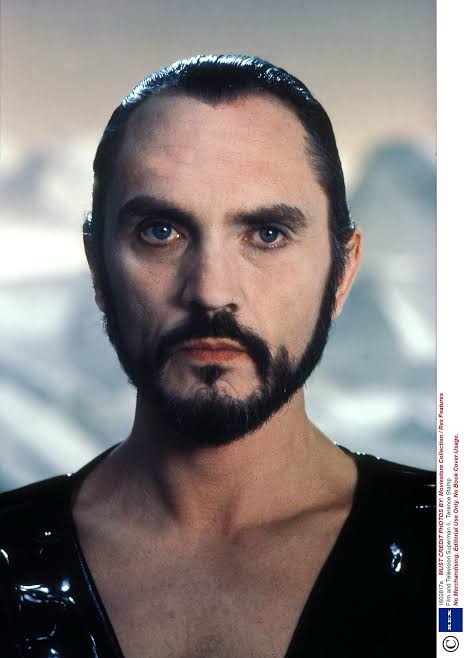
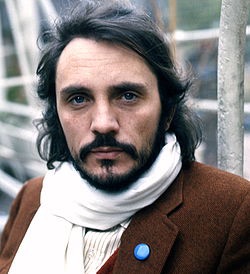
Farewell to Terence Stamp: A Regal Villain and a Fearless Diva

Today I received the sad news that Terence Stamp, an understated yet immensely distinguished and refined actor, has passed away at the age of 87. 🌹

Old age catches up with all of us, but this news struck me with a terrible sense of pathos. Terence Stamp was the actor I first saw as the antagonist to Christopher Reeve’s Superman. I was five when I saw the first film, and seven when I saw him again in the sequel as General Zod.

His Zod was unlike anything I’d seen before—commanding, regal, and filled with such dignity and menace that it left a lasting imprint on my young mind. For me, no later version of Zod ever came close. Zack Snyder’s interpretation simply didn’t have that same majesty, much like how Henry Cavill, in my opinion, could never quite capture what Christopher Reeve brought to Superman. But that’s just me, shaped by the magic of those formative years.

Bernadette

Of course, Terence Stamp was not just Zod. Years later, I saw him in Priscilla, Queen of the Desert—playing the marvellous diva Bernadette. He was born for that role. He brought elegance, courage, and sheer chutzpah to the screen, and for me, as someone connected to the homosexual subculture, it resonated deeply. To witness the same man who had once embodied the ultimate villain now shine as a gutsy, glamorous drag queen was extraordinary. It made my admiration for him reverberate through my life.

Hearing of his passing today brings with it the sadness of recognising that the people I grew up loving are slowly leaving us. That’s the way of life: people pass on, generations shift, and the torch is carried forward. I look ahead with interest at David Corenswet as the next Superman and Timothy Holt as Lex Luthor, but I can’t help but look back with gratitude at those who defined my childhood.

A Career of Depth and Range

Terence Stamp’s career stretched across six decades and showcased his extraordinary versatility. He made his film debut in Billy Budd (1962), earning an Academy Award nomination and a Golden Globe for his portrayal of the idealistic young sailor. He cemented his reputation with chilling performances in The Collector (1965) and later moved into international productions, including Fellini’s Spirits of the Dead.

In the 1980s, he appeared in Oliver Stone’s Wall Street (1987), proving his ability to remain relevant in every era. A new generation came to know his voice as Chancellor Valorum in Star Wars: The Phantom Menace (1999), and he never stopped surprising audiences with his range.

From swinging London in the sixties to blockbuster franchises and groundbreaking queer cinema, Terence Stamp moved seamlessly between worlds—always with refinement, depth, and magnetism.

Eternal Impressions

For me, he will always be remembered—not only as General Zod, but as Bernadette too. A legend who embodied both power and vulnerability, menace and elegance.

I hope the world remembers him as fondly as I do. I, for one, always will.

The Mirrors In the Mahal

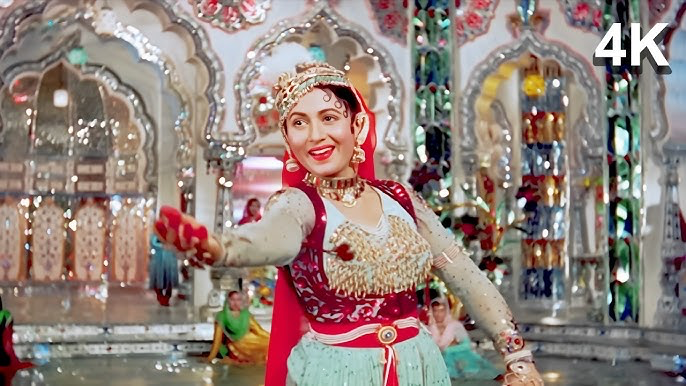
A friend of mine is doing a show, and he has asked me to perform to two songs. One, of course, is a Sit Down qawwali — but the second song is a dance number. Basically, it’s a courtesan’s number, it comes from one of my favourite movies. You guessed it. It is picturised on one of my favourite actresses, Madhubala. It is sung by one of my favourite singers, Lata Mageshkar. It is composed by one of my favourite composers — Naushad Sahab.

When I see it on screen, it reminds me of a revolution. It reminds me of how love conquers all. It is the song that led me into the revolution of being proud of who I am, being proud of the men that I fall in love with.

It’s basically been an anthem since — I can remember — in terms of identity, in terms of a reaction against hatred, a reaction against bullying, against prejudice and against my own dad at times. I used to dance to this when I was young, wearing a ghagra, and thinking that I was Madhubala, standing up for my lover and my own love.

As I grew up, I realised that it’s a feminist song. It is a song where a woman reclaims her own agency, and says that I don’t care what the world says to me, I have to live by my own beliefs and by the virtue of my love. As I grew, and I grew into my own homosexual identity, I realised that this is the song that empowers. It’s like a gay anthem, obviously. And so it’s like talking about the closet. It says:

प्यार किया तो डरना क्या?

It says:

पर्दा नहीं जब कोई खुदा से, तो बंदों से पर्दा करना क्या?

These words are epic. These lyrics are epic. These lyrics resound in my own head and in my own heart. It brought in its own life lesson on love. Or rather, how it ought to be. It taught me about the Self. How one should see one’s self and be true to it. 

So when this opportunity came to me, I jumped at it. Then, I thought that I could not do it — because there are so many hitches, actually. There are so many things that keep me second guessing. 

I used to be a Kathak dancer. But I stopped dancing because my left knee just gave out in 2010. And now, of course, I can’t dance on it. My orthopaedic surgeon has told me — when I went for a check-up — that I shouldn’t be dancing at all. I also have a rotator cuff injury in my right shoulder, since months which is excruciatingly painful.

I have mentioned all of this to my friend who is hosting the show — who’s doing the show. He gave me an option to drop out but he also believes in me. And I mean, there are those who love me — who said that I shouldn’t be doing it, because of the pain, because of what I may be going through, and because of what I may go through after the show.

There could be further knee damage. There could be further damage to my shoulder. But I seriously feel that I need to jump at this chance — in the sense of this particular song — because it’s something that I lived by, you see. It was something that brought meaning to my formative years. 

And I’ve seen the show on stage — Feroz Khan’s Mughal-e-Azam — that tours the world. And I’ve always loved the way the song has been choreographed. I’ve seen it twice now. And it’s epic — the way they do this song. It’s such a spectacle to love up to in entirety. 

Of course, I could never match up to the choreography. So I did the choreography myself. I’ve been practising for the last three weeks. And I told my friend that I may not do it — give me a few days. He’d given me about a fortnight to think about it and rehearse and see if I can choreograph it. And I have done so.

Initially, I thought that I would ask somebody else to dance the pure dance part before the number starts. But then I decided that that would be cheating. I had to do it myself. And I really have put in my time, my effort, my entire heart into this.

And I don’t know how it’s going to be — the show is in ten days — but I am preparing a costume, and I’m preparing the choreography. Even today, I rehearsed and I tweaked a little bit of the dance movements — to suit the fact that I can’t do 27 chakras in one go. But I managed to pull in about nine of them in the piece within the piece.

And my body doth protest. Right now, my neck is hurting, my knee is hurting, and my shoulder is hurting. So I’m in pain. I’m also very anxious — wondering whether I’ll be able to pull it off on stage, and wondering whether I’ll be able to, you know, live up to the beauty, the sheer magnificence of the song.

I’m going to try my best. And then, of course, let the chips fall as they may. But I just wanted to put this out there — as to why I want to do it, and what drives me to do it despite the problems that I’m facing. And I think it’s a chance for me to be beautiful, and proud, and magnificent — through the pain.

That’s why I’m doing it.