Saturation

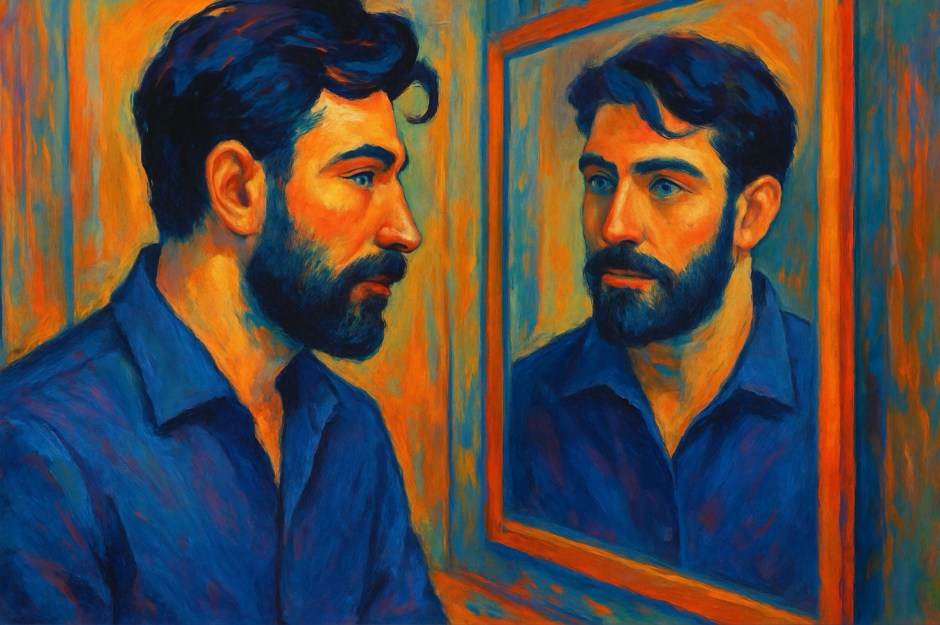
These days, I find myself utterly saturated with social media. The moment I pick up my phone, there’s a reflexive urge to open Instagram—to check who’s liked my pictures, to see who’s sent me a message. But what greets me more often than not is a reel. Just a forwarded reel. No greeting. No message. No real thought.

And within these reels, there could be something to say, of course. But no one seems to want to say it. Gone are the days when someone might send a poem, or a quote that made them think of you. Now, it’s all mindless content—videos that aren’t remotely funny, often accompanied by that insufferable, artificial background laughter I utterly abhor.

I suppose this is just the sign of our times.

So I’ve found myself pulling away. I don’t use my phone as much anymore. I go on social media only when necessary. I’ll put up a post now and then, perhaps out of a quiet desire to remain ‘relevant’—whatever that means—but even if I’m not, I’ve made my peace with that. I don’t fuss with hashtags anymore. I write what I feel, connect it to the photograph I’m sharing, and that’s that.

What keeps drawing me back, really, are the friends. The connections I’ve made on social media mean something. I remember how vibrant it felt during the lockdown—going live, making videos on TikTok, the spontaneity of it all. TikTok, in particular, had an algorithm that worked with you, not against you. It made the video-making process feel fluid and intuitive. Reels, in contrast, feels like a clumsy attempt to fill the vacuum left by TikTok’s ban in India. It simply doesn’t have the same finesse, and I often give up midway through making something.

These days, I browse through stories, maybe glance at my PS5 app. Occasionally, I stumble upon something brilliant on ChatGPT—some insight, some gem of knowledge. But it, too, is a paid service, and eventually, I run out of access for the day. I don’t even like reading on my phone anymore, though I do have a Kindle and a Books app with a few poetry anthologies. When I feel the pull, I’ll read a poem or two.

Phone calls never did appeal to me much. It’s strange to think that this sleek, beautiful device—once an extension of myself—is now being used less than ever. Two or three years ago, I would have been constantly on it. Now, not so much.

As for Twitter—yes, I’m calling it Twitter because X sounds like a porn channel. And let’s be honest, that’s what it’s become for many. I’ve nothing against porn, but Twitter has devolved into a space of relentless hate. It’s vituperative, caustic, and yes—toxic. I don’t use that word lightly, but it fits here.

I do have a Blue Sky account now. It’s a gentler place, kinder in tone. But truly, most of what I want to say these days, I say in my blog. I’ve begun consolidating my poetry, my art, my photography, and my prose—all in one space. And in doing so, I feel a sense of wholeness. A sense that I’m putting something meaningful out there.

Perhaps someone will read it. Perhaps they’ll resonate with it. Perhaps not.

But it’s mine. And it’s real.

I don’t know how many of you will agree with what I’ve said, but this is where I stand. This is how I feel these days.

And maybe you feel it too.

My Kids Have Fur

The other day, I visited my cousin’s house, and once again, I was reminded of the silent wall that often stands between how people say they love animals, and how little they actually see them. I understand that in many families, dogs are appreciated—even adored—but rarely do they cross that invisible line that transforms them from ‘pets’ to ‘children’. But for me and my sister, that line was crossed long ago. Our dogs are our children.

We’ve made a conscious choice to not have human children. As a gay man, I never felt the inclination or desire for biological parenthood. Biologically, I cannot reproduce with another man, and philosophically, I am what many would call an antinatalist. I look at the state of the world, the cruelty, the suffering, the apathy—and I know I couldn’t bring another life into this chaos in good conscience.

Instead, I chose a different path: to love, nurture, and raise animals. Not just the ones at home, but also the stray ‘kiddos’ I meet on the streets. I feed them, care for them, look after their health, and do what I can within my capacity. My home, however, belongs to my three kids—my dogs. They sleep on the beds, lie on the sofas, and follow house rules. They listen, they understand, and they love. They are gentle, warm, kind, and patient—qualities we often hope to cultivate in human children. But with these little ones, it comes naturally.

That’s why it hurts when people fail to see the depth of that bond. In my residential colony, I am often pulled up for the smallest things—a drool mark in the lift, a strand of fur on a step, a missed spot I forgot to clean after a late night. People look at us with disgust, as though we are encroaching on their pristine human world with something unclean. It’s funny how tolerant we pretend to be of differences—until that difference is actually different.

Children from our building often play with our dogs. They’ve never been harmed. In fact, it’s the toddlers who embrace our dogs most naturally, without prejudice or fear. But the adults? They carry biases so deeply embedded, they don’t even realise how cruel they sound. “Every dog bites,” they say. Just like they say, “Every man is a predator,” or “Every gay man will try to convert you.” It’s this knee-jerk vilification—of communities, identities, or species—that reflects something broken in the human condition. J.K. Rowling’s comments about trans people trying to erase women’s rights is just one such example of this prejudiced, uninformed thinking.

During my cousin’s gathering, there was a small incident. My sister poured some used water—water that our dogs had drunk from—into a sink where used utensils were kept. The vessels were already dirty, but the reaction was instantaneous. My cousin objected. She didn’t want the ‘dogs’ water’ to fall upon the humans’ dirty vessels. My sister took offence. To me, it was understandably so. For her, our dogs are family. They share our space, our lives, our routines. They’re not ‘less than’. But I tried to mediate—I told her we were in someone else’s home, and we had to respect their discomfort, even if it came from a place of “othering”.

But it’s these little moments that sting. Like when my cousin, on hearing that my partner and I were also celebrating 25 years together, said, “Oh, but ours is official.” As though two and a half decades of shared life, struggle, and love somehow means less because we don’t have a marriage certificate. As though our relationship is a placeholder, not a permanent bond.

For many people, I suppose it will always be: Your dogs aren’t children. Your love isn’t real. Your life isn’t equal. But for me, none of that changes what is true in my world. My children have paws. My relationship, though unofficial in the eyes of the law, is rooted in commitment and resilience.

We must learn to see with eyes wider than our biases, to feel with hearts larger than our traditions. Because love—be it between humans or between humans and animals—is never less valid just because it doesn’t fit a template.

If you’ve ever loved a dog, or any animal, bird, fish, like a child, you’ll understand. And if you haven’t, I hope one day you will.

Peace

 From the time I first understood the consequences of wars — the devastations of the First and Second World Wars — I have been a pacifist at heart. As I grew older, this conviction only deepened. Today, as we witness renewed conflicts — Ukraine and Russia, Israel and Palestine — I stand firmer than ever in my belief: all war is wrong.

War is a menace to human society. It is a tool not of the people, but of the powerful; a weapon wielded by those who profit from death and destruction. The arms industries, the merchants of ammunition, the political elites — they gain wealth, power, and dominion, while ordinary people pay with their lives, their homes, their dignity. War is capitalism in its ugliest, bloodiest form.

In my youth, like many, I once thought that wars were fought for ideals — for justice, liberty, validation, or the right to be seen. But life and literature taught me better. I read deeply — I read Aldous Huxley, Ernest Hemingway, J R R Tolkien, and, the war poets like Robert Graves, Rupert Brooke, Wilfred Owen, whose haunting lines exposed the shattered illusions of the battlefield. 

Owen’s famous lines from Dulce et Decorum Est come back to me:

“My friend, you would not tell with such high zest

To children ardent for some desperate glory,

The old Lie: Dulce et decorum est

Pro patria mori.”

There is no glory in war. There is only suffering. Soldiers often march to battle filled with ideals, but they return, if they return, carrying only trauma and grief.

I come from the land of Mahatma Gandhi — a land whose greatest hero showed that violence is not strength; that true power lies in non-violent resistance, in the refusal to harm another even in the face of cruelty. Gandhi, inspired by the teachings of many religions, and writers like Thoreau and Tolstoy, taught us that:

“An eye for an eye will leave the whole world blind.”

He proved that justice could be fought for — and won — without shedding another’s blood. Nelson Mandela, too, chose reconciliation over vengeance. Martin Luther King Jr., standing tall against the racism of America, knew that hatred could not drive out hatred. Only love could.

Even John F. Kennedy once said:

“Mankind must put an end to war — or war will put an end to mankind.”

It is a simple truth, yet it is ignored by those who stand to profit from chaos.

As a gay man, I have witnessed oppression firsthand. I have fought battles for dignity, for visibility, for the right to simply be. But I have never even contemplated lifting a hand, nor needed to. True change is not born from violence. The greatest revolutions — the ones that endure — are those of the spirit, not of the sword.

Even in revolutions that began with noble intent — the French Revolution, the Russian Revolution — violence bred new oppressors in the place of the old. It is a vicious cycle: violence begets violence, cruelty begets cruelty. What is won through blood is often ruled through fear.

Today, the spectre of nuclear catastrophe looms over us once again. Thinking about it fills me with dread. War no longer only kills soldiers — it threatens everyone, indiscriminately. It will rob the world of food, water, life itself. It will annihilate the innocent: children, animals, future generations yet unborn. And for what? For pride? For power? For profit?

The leaders who fan the flames of war today are as dangerous as Hitler, Mussolini, or any dictator of the past. They have not learnt. Or perhaps they have learnt — and simply do not care, because it does not cost them anything personally. It costs us. What do they accomplish? Nothing but ruin.

Yet despite all this sorrow, despite the darkness that so easily threatens to overwhelm the heart, I end this article in hope. Because hope — like love — is stronger than war.

As Aldous Huxley wrote:

“After silence, that which comes nearest to expressing the inexpressible is music.”

And if music, if poetry, if love, if gentleness survive, so does humanity.

Gandhi’s dream has not died. Martin Luther King Jr’s dream has not died. The dream of a world governed by love rather than fear, by understanding rather than force, is still alive in every heart that refuses to hate.

So what can one do?

One can live the revolution quietly.

One can refuse to hate. One can choose peace — again, and again, and again. One can nurture kindness, listen to the pain of others, speak for the voiceless, stand for what is right without lifting a weapon.

And in doing so, one builds the only kind of world worth living in.

As Rumi reminds us:

“Try not to resist the changes that come your way. Instead, let life live through you.”

Let love live through you.

Let peace live through you.

After all, Gandhi did say, “Be the change you wish to see in the world.”