Woord, Wort, Word

I have followed Devdutt Pattanaik’s writings for some time now. I have known him personally and have agreed and disagreed with him on several issues over time. We have quietly agreed and quietly agreed to disagree when certain matters were discussed. I can say with the least prejudice that he is a brilliant man and writes his books with a world view that doesn’t choose to misrepresent on any account. He reads, he understands and he explains his understanding of the story. That is what most scholars and readers of other works do. One can only seek to glean a proportion – small or large – of any body of knowledge, because in doing so one attributes one’s own self to the perception of it.

In the light of the video that I have just watched yesterday amidst the tumult of news coverage of the past few days, I wanted to write in a few things. These are my opinions. Last I heard, this was a free country and I exercise my right to talk about how I feel without defaming anyone I disagree with. I have been a student of literature, having acquired my Masters in English (it’s a little perverse that I find myself having to write this) and I have a certain view to share regarding language and how it can be used to communicate.

Let me take the example of Chaucer, whom I had an avid interest and respect for. Geoffrey Chaucer, attributed as the Father of English Literature, wrote avidly in the 1400s. He wrote in the English vernacular, which may seem incomprehensible to someone who isn’t familiar with modern-day English language, in the first place. I will not go into intrinsic details of which word then means what now because that is – not – the point. I will say that the language, since his time, has changed and many a word he used can and, maybe, does mean something different now. One has to understand that language cannot be taken ad verbatim when dealing with any literary – and if I have to be completely specific, poetical – work.

What we are taught, as literature students, is to read between the lines. Understand what the poet or the author has tried to communicate and derive lessons from the subject… and in some cases, just enjoy the work as it is, without any need to dissect or personalize. I talk of the language of English in which I have earned my Masters, but I will propound that any language can be placed into the realms of literature and literature, by default, stands a test in time, to see how universally appealing it can be.

I think what makes a book good – and perhaps even great – is a universal theme. Any idea that can be applied to someone’s life, regardless of cultural and geographical differences. An idea that can make you feel the human condition, about human concerns and human nature. Isn’t that what should be promoted in the state of the world that we live in? Maybe, I am wrong: maybe, all it takes for a book to be great is for it to be banned.

A very important factor in understanding what makes art art is the fact of how differently it can appeal to different people. I may look at a Khajuraho sculpture and see virtuosity and someone else may look at the same sculpture and see porn. Neither of our aspects can be wrong, it’s just another way of seeing the world through your own life experience. A word like ‘awful’ wasn’t used derogatorily earlier, it literally meant ‘worthy of awe’, as in ‘the awful majesty of God’.

But then, what makes a word real? Who has the authority to define a word? A person who writes dictionaries? But then again, what about the new words that crop up: don’t they deserve the right to be? Have you heard ‘ship’ being used as a relationship: as in, “So, if I think Ranveer and Deepika should be together, I ship Ranveer and Deepika”. And these words may or may not remain in their current connotations. Could this also not happen in the days when language was forming, maybe, over a million solar years ago?

So then, coming to the words of history and mythology specifically: the words itself have undergone through their own process of deconstruction. History basically is a recording of present facts as they are. It comes from the Greek word ‘histor’ which meant ‘a wise man’ and ‘historia’ which means ‘narrative’ – or literally ‘his story’. It could be derived from Old French ‘estoire’ which meant ‘story’ or from Latin’s ‘historia’ which meant ‘narrative of past events’. Mythology comes from the Greek word ‘mythos’ which actually meant ‘speech or discourse’, later it came to mean ‘fable or legend’.

Devdutt Pattanaik writes, “Linear religions, which have a start and a finish, need history. Cyclical religions, like the ones that thrived in India, seek to outgrow history. History is seen as delusion, a foolhardy attempt of man to define and limit time in ancient Indian philosophies. Science is unsure if time is linear or cyclical, if there is one world or multiple coexisting realities. It is still work-in-progress.”

But, we are talking about languages that were used and may or not be filled with words that are archaic, including the language itself. And then comes the question of the dialects that formed out of the language that is said to be its mother. Latin was for the cultured masses, the language Chaucer used was the lesser form that appealed to the masses, that did not know Latin. But who were the original writers of the language? Did they create dictionaries? Have the dictionaries, if found, not been altered by the minds who read them? What guarantee that they have been changed or they have not been altered?

Devdutt mentions, “Languages are like rivers, transforming and changing as they enter new terrain, mingling and merging like tributaries, and breaking out as branches. We must be wary of indulging the ego by declaring a particular language is ‘older’, ‘purer’, and ‘original’ as we may be tempted to by the qualification of ‘classical’. However, we must also not stop acknowledging the history and geography of a language.”

It comes down to the question of choice and the choice is of what you would like to believe. Is Othello then a hero, because he chooses to act before he thinks? Is Hamlet then the villain, because he thinks so much that he fails to act? Maybe if Shakespeare was around, he could tell us what to think or for that matter, how to. Maybe then I, too, can, with all the vastness of my knowledge (I did say I have a Masters in the English Language), tell him where he went wrong with his work? And, since we are talking about who should be able to use a particular language, we must ask the other philosophical – and thereby controversial – question of whether Shakespeare was the one to write the plays, or were they written by someone who was not of such humble origins and education as he was?
 

Being Superman

I was just talking to my boyfriend about what people do and how they would be perceived at doing something. I think there is a world of difference between doing something for the sake of doing it because it makes one feel good, and doing something for the accolades and the recognition one earns on the way.

My aunt, for example, has been diligently teaching children from sections of society that do not have the means to get taught. She has never talked about it for the reason of getting applause. She teaches. Students learn. Simple. My writing about it here may gain her appreciation, but again, this is a by the way.

Don’t get me wrong, I am not dissing the fact that fame can be used for a cause and also that a cause can bring in fame, that’s all well and done, but sometimes, it’s not necessary for Superman to bring down a plane and save hundreds of lives, sometimes, sometimes, it’s nice when he picks up a cat stuck high up in a tree and bring it down to the scared, little girl waiting for it, under the tree. No camera. No applause. Just Superman being Superman.

As Gandalf says, “Some believe it is only great power that can hold evil in check, but that is not what I have found. It is the small everyday deeds of ordinary folk that keep the darkness at bay. Small acts of kindness and love. Why Bilbo Baggins? Perhaps because I am afraid, and he gives me courage.”

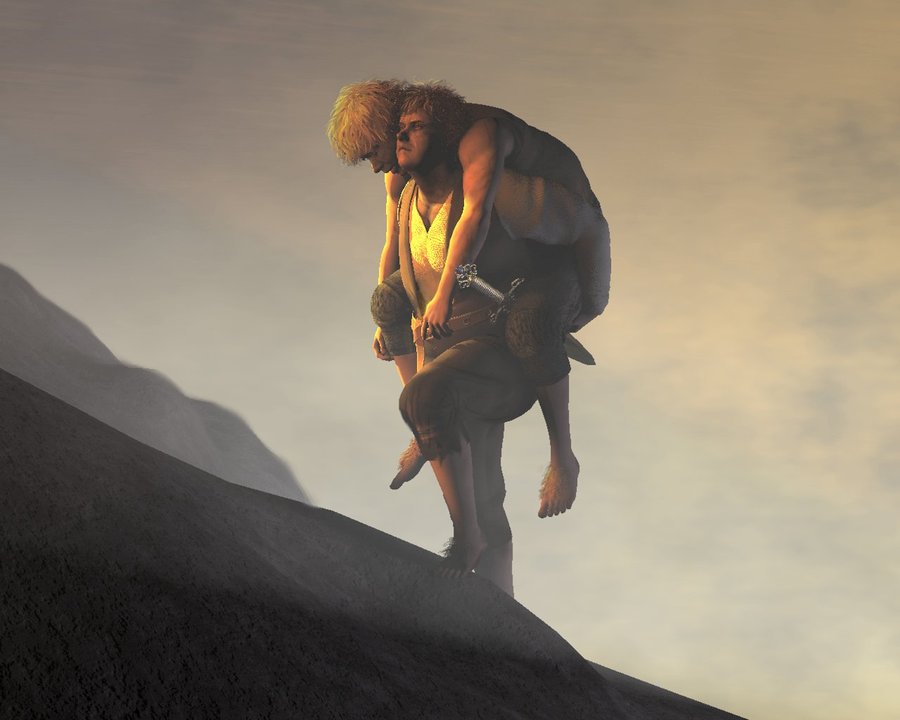
But apart from Bilbo’s journey, one of the heroes I shall always admire and respect is Samwise Gamgee. I think why should by now be understood.

Becoming Gollum

I have been sitting here, at my computer, reading messages coming to and fro from friends, people who used to be friends, family and wondering what it means to be a part of a community. Over the years, this sense of community has changed. I began life as a Sikh boy, loved by the women in his family, and probably, one male who happened to be my paternal uncle. I didn’t realise it then but the lack of male affection would play a large part in my psycho-sexual development. Family then was made up of these strong, Amazonian women – much like on the island of Themyscira. Loved and nurtured and protected.


Realising I was gay was not a gradual process, probably one of semantics; but never of nature or impulse. Sometimes, I wonder if life would have been simpler, if I would have been able to be sexually driven towards the opposite sex. Who knows? I sure as hell grew up with a very comprehensive knowledge of the workings of women. But hold on, I must correct myself, straight women. Because we all have breeds and distinctions, Lucy Davis, of course is very different from, say, Antiope. I have been rapped on the knuckles for not seeing that difference as a difference, very recently. I shall acknowledge and accept the difference, for straight men are quite different from gay ones.


I will however, be speaking my mind here and people who think that I am being politically incorrect and/or disrespectful can keep their thoughts to themselves. There are just about so many arguments that one can bear regarding martyrs and their complexes. But I digress and this is the last simile to an apology that I will be professing.


So, straight people are different from gay people. Naturally. We have our own problems. Then there are communities within communities. Let me just talk about the gay ones. We have a whole plethora of them. Each having their own issues and their own journeys. I begin by taking on the victim complex myself, hell, if you got things to cry and rant about, Let me partake in similar masochism. Or is it sadism? Who can tell the difference these days?


I learned that every path of every human being is their own and no one, no one gets to judge that. I learned this while being beaten by my father. I learned this when I was ostracized from groups who wanted to play games. I learned this when vendors would grab my arse because it had a swing in it when I was younger. I learned this when I learned to remove that sway from my arse and walk ‘how men should walk’. (No one pointed out how men should walk though – there were variations there, too.) I learned this when I saw how men treated men, women treated women, men treated women, women treated men, children treated children, and – well, you get the gist. Humanity sucks.


The third gay man I met broke my heart. I mean, all of you who have had your heart broken, and that’s one claim that everyone knows how to make, know how that can suck. The group that helped me, the only one that did, and I did reach out to the one already known, was the one that was just forming. Its first hundred members then. They helped. They helped by being there. By bringing a shattered self-esteem back, bit by bit, a kind word, a compliment, a pass and laughter. There was a lot of laughter back then. A lot of it. Sigh.


It had its first drag party in ’98. Everyone dressed up in drag. Even from the group that had let me down, they were there, too. Everyone knew how to adjust – or was I too young to notice what was happening, too ignorant of innuendo and malice? Or maybe too blind to what humanity has always been capable of? All said and done, I believed I had found a place to be and grow.


I did grow. I found love. I found company. Friends. I found that my family was a brilliant family and they had a place in this new-found company that eventually became family, too. When I had a heart break again, it was not as severely felt because I had so many shoulders to lean on and so many other avenues to which I was brought into.


Lights fade. Fights happen. There comes a time when even Frodo refuses to drop the Ring into the flames. And you go, “what the fuck?!” I realized that money matters to a lot of people. I realized that money does make the world go around. And in reality, the Ring does win. Human beings can be capable of the most terrible horrors. Rods in vaginas, puppies been thrown from buildings, infants being raped, homosexuals being tied to fences and left to the elements, friends turning on each other for profit margins, families breaking apart over property and again, money.


Time wore on, relationships I had hung my faith on, shattered. Ultimately, faith, itself, shattered. I began seeing the world askance, away from the rose tints of equality. There was no such thing as equality. So, I turned to diversity. The thing I so unwillingly mention in the first paragraph itself. Straight women are different from gay women, gay boys are different from straight boys. Well, huzzah, for diversity, huzzah for all the colours in the rainbow. Somewhere over the rainbow remains a song, I don’t think the somewhere is the destination, Dorothy had it right: we aren’t in Kansas anymore. (Thankfully?)


I stuck to ideals for a couple of decades. You know the spiel: loyalty, fidelity, honour, code, right, left, yada yada yada. When I hit my late thirties, I realized that it’s all a crock to bring about some mimicry of civility, an act in which you can either gain thunderous applause, or get booed off stage – either way, you go back to your dressing room and rub the make-up off and go back to a bed, misunderstood and spent.


You see, the people who said you could look to them for help, turned their backs. The ones who said you were good enough, found other people who were better. The ones you sheltered in your home, offering them food, and solace (don’t forget the fucking solace), said that they never needed you, in the first place. They didn’t know what they were thinking back then. But, fucktards, if you could think, and decipher your cock from your arsehole, you wouldn’t have needed me to point the two apart, would you have? You can’t blame me for pointing to your cock, if you don’t have it now, can you?


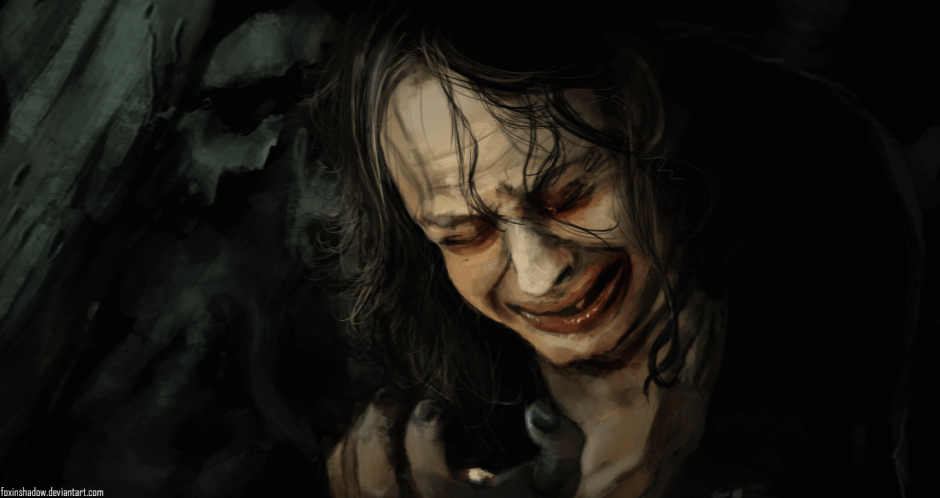
I was thinking in the depths of what now appears to be nothing where there was a facsimile of a soul leaves much to be desired in the constraints of action. Everything has become a little worse than Death. When mom faced cancer, we strove against it. But what do you know, there are things worse than Death. For all those naysayers and peeps who talk about how Padmavati didn’t need to walk into a pyre, don’t really know what they are on about. The Nazgûl exist. The blades, they pierce virtue with, exist. The wounds they leave behind exist. There is no Glorfindel to carry you over the Bruinen. The real fuck up is that Valinor doesn’t exist. Frodo, in this day and age, is essentially fucked. All that’s left to him is to become Gollum – look out, here comes the video game.